BrightStar
BlogMy Tickets
BlogMy Tickets
Saved events
Help & contactSign UpLog in
Events
  • Browse All Events
  • Yoga
  • Meditation
  • Breathwork
  • Qigong
  • Sacred Music
  • World Music
  • Medicine Music
  • Sound Healing
  • Ecstatic Dance
  • Ceremony
  • Plant Medicine
  • Energy Healing
  • Satsang & Wisdom
  • Tantra
  • Retreats
  • All Categories →
Destinations
  • Bali
  • Sedona
  • Los Angeles
  • Costa Rica
  • Tulum
  • Byron Bay
  • San Francisco
  • Austin
  • New York
  • San Diego
  • Denver
  • Seattle
  • Portland
  • Miami
  • London
  • Maui
  • Boulder
  • All Cities →
Platform
  • For organizers
  • Join the Movement
  • Sell Globally
  • For Creators
  • For Teams
  • For Writers
  • For Teachers
  • For Kirtan Artists
  • For Studios
  • For Festivals
  • For Retreat Centers
  • For Nonprofits
  • Brand Ambassador
  • Free Ticketing
  • Pro
  • Amplify
  • The Ecosystem
Features

Ticketing and checkout

  • Ticket categories
  • Assigned seating
  • Custom questions
  • Coupon codes
  • Smart pricing
  • Ticket sharing
  • Waitlist
  • Flexible refunds
  • Digital waivers
  • Tip jar
  • Donations and sliding scale
  • Embed widget
  • Mindful checkout
  • Recurring events
  • Private sessions
  • Online courses
  • Summits
  • Rooms and stays
  • Ticket scanner

Marketing and growth

  • Abandoned cart recovery
  • Visitor recovery
  • Upsells and add-ons
  • Affiliate engine
  • Upsell affiliate network
  • Brand ambassador
  • Meta retargeting
  • Verified buyer network
  • Outbound email marketing
  • Email sequences
  • SMS and WhatsApp
  • Event upsell network
  • Direct mail campaigns
  • SEO engine
  • Syndication
  • Event sharing
  • Custom event pages
  • Artist profiles
  • Link in bio
  • Event blog
  • Blog newsletter

Payments

  • Payments, powered by Stripe
  • Buy now, pay later
  • Apple Wallet
  • Multi currency

Data and operations

  • Team access
  • Message center
  • Reports
  • Analytics reporting
  • Performance reporting
  • Customer data
  • Integrations
  • Switch from another platform

AI

  • Assistant
  • AI FAQ assistant
  • All Features →
Company
  • About
  • FAQ
  • Contact
  • Blog
  • Glossary
  • Guides
  • Inspiration
  • Help Center
  • API Docs
  • Brand Assets
  • Press
  • Terms of Service
  • Privacy Policy

Events

  • Browse All Events
  • Yoga
  • Meditation
  • Breathwork
  • Qigong
  • Sacred Music
  • World Music
  • Medicine Music

Destinations

  • Bali
  • Sedona
  • Los Angeles
  • Costa Rica
  • Tulum
  • Byron Bay
  • San Francisco
  • Austin

Platform

  • For organizers
  • Join the Movement
  • Sell Globally
  • For Creators
  • For Teams
  • For Writers
  • For Teachers
  • For Kirtan Artists

Features

  • Community Network
  • Abandoned Cart Recovery
  • Ticket Categories
  • Recurring Events
  • Assigned Seating
  • Affiliate Engine
  • Waitlist / Notify
  • All Features →

Company

  • About
  • FAQ
  • Contact
  • Blog
  • Glossary
  • Guides
  • Terms of Service
  • Privacy Policy
Read more

Events

  • Sound Healing
  • Ecstatic Dance
  • Ceremony
  • Plant Medicine
  • Energy Healing
  • Satsang & Wisdom
  • Tantra
  • Retreats
  • All Categories →

Destinations

  • New York
  • San Diego
  • Denver
  • Seattle
  • Portland
  • Miami
  • London
  • Maui
  • Boulder
  • All Cities →

Platform

  • For Studios
  • For Festivals
  • For Retreat Centers
  • For Nonprofits
  • Brand Ambassador
  • Free Ticketing
  • Pro
  • Amplify
  • The Ecosystem

Company

  • Inspiration
  • Help Center
  • API Docs
  • Brand Assets
  • Press

Ticketing and checkout

  • Ticket categories
  • Assigned seating
  • Custom questions
  • Coupon codes
  • Smart pricing
  • Ticket sharing
  • Waitlist
  • Flexible refunds
  • Digital waivers
  • Tip jar
  • Donations and sliding scale
  • Embed widget
  • Mindful checkout
  • Recurring events
  • Private sessions
  • Online courses
  • Summits
  • Rooms and stays
  • Ticket scanner

Marketing and growth

  • Abandoned cart recovery
  • Visitor recovery
  • Upsells and add-ons
  • Affiliate engine
  • Upsell affiliate network
  • Brand ambassador
  • Meta retargeting
  • Verified buyer network
  • Outbound email marketing
  • Email sequences
  • SMS and WhatsApp
  • Event upsell network
  • Direct mail campaigns
  • SEO engine
  • Syndication
  • Event sharing
  • Custom event pages
  • Artist profiles
  • Link in bio
  • Event blog
  • Blog newsletter

Payments

  • Payments, powered by Stripe
  • Buy now, pay later
  • Apple Wallet
  • Multi currency

Data and operations

  • Team access
  • Message center
  • Reports
  • Analytics reporting
  • Performance reporting
  • Customer data
  • Integrations
  • Switch from another platform

AI

  • Assistant
  • AI FAQ assistant
Get the app
Download on theApp StoreGet it onGoogle Play
© 2026 BrightStar. All rights reserved. BrightStar Selection · Photo credits · Changelog ·
Inspiration

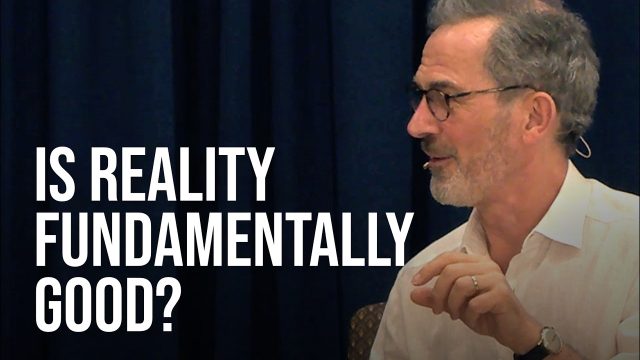
The Raw Experience of Awareness: What You Cannot Cease Being

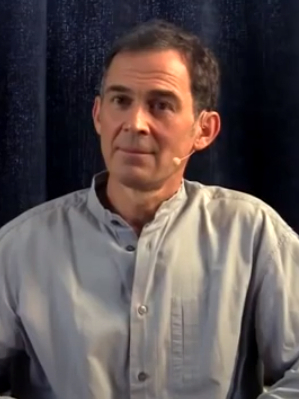
Rupert Spira
Rupert Spira
Nov 14, 2026
6 min read

From Rupert Spira

Watch · 5

Try something right now. Try to stop being aware. Not to stop thinking, or feeling, or doing something—but to cease the raw fact of consciousness itself, the capacity to know that anything is happening at all. It's impossible. No matter what you do, no matter what you release, the fundamental aliveness of awareness persists. That paradox sits at the heart of what spiritual traditions have known for centuries and what contemporary teaching increasingly emphasizes: awareness isn't a skill you acquire or a state you can lose. It's the ground of your being.

Read · 5 sections

The Difference Between Doing and Being

The confusion begins with language. When someone asks, "How can I be properly aware?" the question already contains a hidden assumption—that awareness is something that fluctuates, that comes and goes, that you can be half-aware or three-quarters aware or working toward being more aware. But this misunderstands the nature of what awareness is.

Spira makes a critical distinction: you can cease thinking. You can cease feeling. You can cease acting, relating, or doing any activity that occupies your time and energy. All of those are what you do. But there is one thing you cannot cease—being what you are. "You can only cease doing what you do," Spira explains in the retreat. "You cannot cease being what you are."

What you are, at the foundation, is the bare fact of consciousness itself. Not the content of consciousness—not the thoughts, perceptions, emotions, or sensations passing through awareness. Those all come and go. But the capacity to know that they're happening, the illuminated presence that observes the flow of experience—that is constant and unchangeable. It's the primary fact of your existence, prior to any other experience, prior to the arising of thought or perception.

No Degrees of Awareness, Only Degrees of What We're Aware Of

Once this distinction lands, the entire conversation shifts. The question "How can I properly be aware?" contains a fundamental misunderstanding. It assumes that awareness itself can fluctuate in quality or intensity. Spira uses a precise analogy: "It's like the sun asking, 'How can I properly shine?'"

The sun doesn't shine more on some days and less on others. It's always fully shining. What changes is the weather—clouds, dust, atmospheric conditions—but not the sun's essential radiance. Similarly, there are no degrees of awareness. There are degrees of what we are aware of. There are states of mind and conditions of the body. There are cloudier days and clearer days in consciousness. But awareness itself—the pure knowing, the pure illumination—is always completely on.

This reframing dissolves a category of spiritual anxiety. You cannot improve awareness. You cannot make it brighter or more present. What you can do is notice what obscures the awareness that's already fully present. You can observe the layers of thinking, feeling, memory, and sensation that seem to veil what you essentially are. But the awareness itself remains unchanged, undiminished, complete.

Your Original Face: Who You Are Before Experience

The Zen tradition has a name for this pre-experiential consciousness: your original face. It's described as who you are before thought and perception arose in you, sometimes poetically phrased as who you are "before you were born." That doesn't refer to literal birth—it means who you are before the birth of thought, perception, and experience.

To approach this experientially, imagine removing everything removable from your sense of self. Take away your thoughts—they come and go constantly, so they're clearly not essential to you. Remove your perceptions, your memories, your sensations, your feelings. Undress yourself of all the layers of experience that can be taken off. What remains? Something you cannot remove. Something essential. That irreducible fact of awareness—that is your original face. It's not a special state you achieve. It's what's already here when everything else falls away.

This is why awareness cannot be a practice or a goal. You cannot practice being what you already are. You can only notice, attend to, and recognize what's always been present. The question then isn't "How do I become aware?" but rather, "What keeps me from recognizing the awareness I already am?"

How Consciousness Veils Itself

Here's where the narrative becomes genuinely mysterious. Awareness doesn't become clouded by something outside itself. It veils itself through its own activity. Consciousness, Spira suggests, freely assumes the form of thinking, feeling, sensing, and perceiving. It's not forced to do this. It's not imprisoned by these activities. It engages in them willingly, the way an actor fully inhabits a role.

Spira uses the image of an actor named John Smith playing the character of King Lear. The actor doesn't force himself into the part against his will. He freely, creatively assumes all the gestures, motivations, and speech patterns of King Lear. And in doing so—in the depth of the performance—he forgets that he is John Smith. The role becomes so real to him that his own identity seems to disappear.

The same thing happens with consciousness. It freely assumes the role of a human being. It thinks thoughts, feels emotions, senses a body, perceives a world. And in the depth of this performance, it loses itself in its own creation. The original awareness seems to vanish, buried under layers of experience. The actor forgets he's the actor.

Yet—and this is crucial—consciousness never actually stops being what it is. John Smith is still John Smith, even when he's completely absorbed in playing King Lear. His essential identity hasn't gone anywhere. Similarly, awareness never ceases to be itself, even in the apparent forgetting. The veil is made of the veiled. The obscuration is the work of what's obscured. And because of that, the obscuration can never be complete. Some part of you always knows.

Where to go from here

The practical implication here is profound but quiet. You don't need to become aware. You need to stop looking for awareness in the wrong places—in improved states, in special experiences, in the future moment when you'll finally "get it." The awareness you're seeking is what's seeking. It's already here, fully present, always shining, waiting not to be achieved but to be recognized.

The only real work is in noticing: noticing how consciousness moves, how it assumes forms, how the ordinary activity of thinking and perceiving can seem to obscure the awareness at the heart of it all. And in that noticing, in that gentle attention, the original face reveals itself—not as something you become, but as something you recognize you've never ceased being.
Comments

Loading the conversation…

Transcript

[0:00] How can I properly be aware?

[0:20] >> All right, just try now as an experiment

[0:25] if you can cease being aware.

[0:30] Try now to cease being aware.

[0:57] Is there anything you could do

[1:00] or cease doing

[1:03] that would render you

[1:05] unaware?

[1:08] No.

[1:27] So, um

[1:30] if you wanted to

[1:31] cease thinking

[1:34] or cease feeling, or cease acting, or

[1:36] cease relating, or cease

[1:42] all of those activities you could cease

[1:46] because they are all

[1:48] what you do.

[1:51] They are not what you are. But, you

[1:54] cannot cease being what you are.

[1:58] You can only cease doing

[2:00] what you do.

[2:02] You can cease thinking. You can cease

[2:04] eating. You can cease talking. You can

[2:06] cease walking. You can cease

[2:08] everything you do, you can cease, but

[2:10] you can't cease being what you are.

[2:15] What you are is just the

[2:17] the bare fact.

[2:21] The raw experience of being aware.

[2:23] That's your That's your primary

[2:25] experience.

[2:27] It's not your experience. It It's It's

[2:29] what you are

[2:31] prior to the arising of any other

[2:33] experience such as a perception or a

[2:35] thought.

[2:37] So, when you say, "How can I

[2:40] properly be aware?"

[2:46] It suggests that being aware is a

[2:49] something that

[2:50] fluctuates in your experience, that it

[2:52] comes and goes. You're sometimes half

[2:55] aware or three-quarters aware or more

[2:57] aware or less aware, and

[3:03] it's like the sun asking, "How can I

[3:04] properly shine?"

[3:13] Awareness is just like the sun. It just

[3:16] It's just always fully on. There are no

[3:19] degrees of awareness. There There are

[3:20] degrees of what we are aware of.

[3:24] There are states of mind,

[3:27] conditions of the body,

[3:29] but there are no degrees or states or

[3:31] conditions of awareness.

[3:34] It's just always on, always

[3:38] shining, if I can use the word shining.

[3:40] What I mean by shining is just pure

[3:42] knowing,

[3:43] pure pure illumination.

[3:49] The question, "How can I properly be

[3:52] aware?" um contains within it a

[3:54] misunderstanding. I'm trying to expose

[3:56] the misunderstanding rather than answer

[3:58] your question.

[4:00] Am I Are you understanding me, Ryan?

[4:04] >> Yeah.

[4:24] >> In the Zen tradition, they they refer to

[4:27] being aware as your

[4:32] as your original face.

[4:36] It's

[4:37] what you are

[4:39] prior to thought and perception.

[4:42] Or sometimes they say it's who you are

[4:44] before you were born.

[4:47] That means it's who you are before

[4:48] experience was born in you, before

[4:50] thought and perception was born in you.

[4:53] You remove thought and you remove

[4:54] perception. You remove memory. You

[4:56] remove everything that can be removed.

[4:58] You you you undress, so to speak. Take

[5:00] off everything, all the layers of

[5:02] experience that can be taken off. And

[5:05] you're left with something that you

[5:07] can't remove, something that is

[5:09] essential to you. Something that is

[5:10] essential to you can't be removed from

[5:13] you.

[5:14] Your thoughts are obviously not

[5:15] essential to you. They're always coming

[5:17] and going, but

[5:19] being aware is is

[5:21] can't be removed from you. It's what you

[5:24] It's the essence of yourself. It's your

[5:26] original face. It's who you are prior to

[5:29] thought and perception, prior to

[5:31] experience.

[5:34] And then the experience of being that

[5:36] aware then gets covered up. It it covers

[5:39] itself in in in thought, perception,

[5:42] memory, sensation, feeling. All the

[5:44] These are like layers of clothing

[5:48] that consciousness, so to speak, puts

[5:50] on. It doesn't put them on from the

[5:51] outside. It freely assumes the form of

[5:54] thinking, feeling, sensing, and

[5:55] perceiving. And in doing so,

[5:57] it seems to veil itself with its own

[5:59] activity. It's like the actor John Smith

[6:02] playing the part of King Lear and

[6:04] veiling himself with his own acting. He

[6:06] John Smith freely

[6:08] plays the part of King Lear and then

[6:10] forgets that he is John Smith.

[6:15] It It's the same

[6:18] consciousness freely assumes plays the

[6:20] part of a human being.

[6:22] Thinking, feeling, sensing, and

[6:24] perceiving, and in doing so loses itself

[6:26] in its own creation.

[6:30] Whilst never actually ceasing to be

[6:32] itself.

[6:33] Run, am I making experiential sense? Do

[6:36] not rationally, I know you understand me

[6:37] intellectually, but can you relate to

[6:39] what I'm saying in your experience?

[6:44] >> I understand what you're saying, really.

[6:46] >> Okay. Okay.

[6:47] >> I just don't know how to say it. Really.

[6:49] >> Okay.

Rupert Spira

Rupert Spira

Artist

British non-dual teacher and ceramic artist. His teaching, deeply influenced by Francis Lucille and the lineage of Atmananda Krishna Menon (Direct Path), is unusually clear and precise — meeting both the experiential and the conceptual in equal measure. Often described as the most accessible contemporary voice of the perennial non-dual understanding.

View profile
Explore Topics
AwarenessConsciousnessNon dualityOriginal faceZen tradition
Frequently Asked Questions

Frequently Asked Questions

No. You can cease thinking, feeling, or doing activities, but you cannot cease being what you are—awareness itself. Awareness doesn't come and go or exist in degrees. What changes is only what you're aware of, not awareness itself.

Your original face is the pure consciousness that exists prior to thought, perception, and experience—who you are 'before you were born,' meaning before the birth of thought and perception. It's the irreducible essence of awareness that cannot be removed from you.

Consciousness doesn't hide forcibly—it freely assumes the form of thinking, feeling, and perceiving, the way an actor inhabits a role. In deep engagement with these activities, it forgets its own nature, yet never actually ceases to be what it is.

The sun is always fully shining; it doesn't shine more or less. Similarly, awareness is always completely on with no degrees of intensity. What varies is only what obscures or reveals our awareness of it, not awareness itself.

No. Awareness isn't something you can practice or improve because you already are it. The only work is recognizing and attending to the awareness that's already fully present, not achieving a state you don't yet possess.

Awareness is the unchanging consciousness that knows; experience is what changes within it—thoughts, feelings, perceptions, sensations. Experience comes and goes, but awareness, the knowing itself, never changes.

You might also like

View All
Who Are You Before Your Roles? Rupert Spira on Peace
Inspire

Who Are You Before Your Roles? Rupert Spira on Peace

Must you give up being a parent, doctor, or partner to find inner peace? Rupert Spira's answer turns on the words "I am" and the space that …

9 min read
Is Ultimate Reality Fundamentally Good or Void?
Inspire

Is Ultimate Reality Fundamentally Good or Void?

Does ultimate reality hide in emptiness, or is it pure presence and love? A spiritual teacher explores how direct experience, not philosophy…

6 min read
Medicine Buddha Practice: Feeling Beneath the Thinking
Inspire

Medicine Buddha Practice: Feeling Beneath the Thinking

Lama Rod Owens opens a Monday-night Medicine Buddha session six years into the practice, teaching how to feel an experience instead of think…

10 min read
Improvising Mantra: How Friday Night Songs Keep Changing
Inspire

Improvising Mantra: How Friday Night Songs Keep Changing

A violinist's daughter who never plays a song the same way twice explains why her Friday night chants keep changing. Here's what improvisati…

9 min read
See allYou might also like→

Continue your journey

More wisdom and gatherings from across the BrightStar directory.

More Articles

Browse the full library of teachings, interviews, and guides.

Back to all articles →

Teachers & Artists

Explore the lineages, musicians, and guides of the conscious world.

Explore artists →

Find an Event

Kirtan, retreats, sound baths, breathwork, festivals — happening soon.

Browse events →