The cabin boy Pip, adrift in Herman Melville's *Moby Dick*, encounters the divine in the sea—and it drives him mad. "God's foot upon the treadle of the loom," he cries, before declaring: "God's truth is man's insanity." The question lingers across centuries: Is ultimate reality fundamentally good, or is it an indifferent void that shatters the mind that truly grasps it? This is not idle theology. It shapes how we understand ourselves, our suffering, and what we are made of at the deepest level.
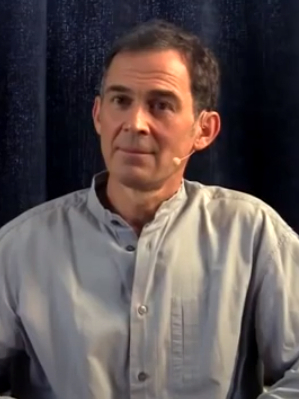
Most people assume the path to ultimate reality runs through the external world. We observe, measure, analyze. But Rupert Spira points to a logical flaw in this approach: we know the world only through sense perception. Perception is mediated, filtered, already one step removed from its source. "Whatever the ultimate nature of reality is, must also be the ultimate nature of ourself," Spira teaches. "We are not able to investigate the ultimate nature of reality by exploring the world because we only know the world through our sense perceptions. So, our only chance of knowing the ultimate reality is to explore our experience of ourself."
This reversal is decisive. Rather than building a cosmology from external observation, the investigation turns inward—into the one thing we know most directly: our own being, our own awareness. This is not introspection in the modern psychological sense. It is the removal of everything borrowed, constructed, or learned, leaving only what remains when the furniture of experience falls away.
Spira describes a specific practice undertaken during his retreats: the systematic removal of perceptions, sensations, thoughts, and images until nothing remains. At the beginning of such a retreat, if asked "When you've removed everything, what do you experience?" nearly all participants would answer: nothing. A void. Absence. The Buddhist concept of sunyata—emptiness—seems to be confirmed. If you stop there, the conclusion appears inevitable: ultimate reality is vacant, indifferent, the ground of nothing.
But Spira introduces a crucial distinction. That void is not final. It is the absence of *experience*, but absence itself is only meaningful in relation to something that was present. In other words: nothing is something. Otherness is required to conceptualize emptiness. But what if that relationship—the memory of something being there—itself dissolves? "If that memory disappears, what previously appeared as a void is now revealed as the presence of awareness."
By week's end, the same participants give a radically different answer to the same question. "What do you experience when everything is removed?" None of them say nothing. They say: the presence of being.
This presence is not a thing. It cannot be observed or objectified. It is what remains when the subject-object split dissolves. Spira describes it as "a presence, a field, if we can call it a field, of pure unity." There is no distinction in it. No observer separate from the observed. No self distinct from other. No thing and its opposite waiting to clash.
And this is where the question of goodness finds its answer. Goodness, as traditionally conceived, is the opposite of evil. It requires a counterpart. But in this placeless place of pure unity—the absence of otherness itself—what is there to oppose anything? What could evil spring from when separation, the root of all harm, does not exist? "There's no enmity. There's no hatred. There's no sorrow. There's no separation. There's no evil."
Spira reaches for the most precise word available: love. Not love as sentiment or emotion, but love as the fundamental condition of non-separation. "It is the absolute absence of otherness or separation, and therefore no evil can come from it. It's pure love. It's pure unity, pure absence of separation."
Yet Spira is careful not to let language calcify into dogma. The terms good and peaceful are approximations, pointers useful only insofar as they reference their opposites. Strictly speaking, this presence is prior even to those concepts. It is not peaceful because there is no turbulence to contrast with peace. It is not good in opposition to evil. These words are scaffolding, necessary for thought but ultimately transcended by direct experience.
He turns to John Milton's *Paradise Lost*, where the poet declares of God's works: "These thy glorious works, Parent of good, almighty, thine this universal frame, thus wondrous fair, thyself how wondrous then, unspeakable." The word *unspeakable* carries the burden. The ultimate cannot be contained in language. But the attempt to speak it—to invoke goodness, unity, love—comes closer to truth than the claim that reality is vacant indifference.
The crux of Spira's teaching rests on a single step, easily missed. When the mind first empties itself, what it encounters feels like nothing—the cessation of the familiar content of consciousness. But cessation is not the same as non-existence. The capacity for experience remains. Awareness itself remains. And when the mind stops relating that awareness to what it has lost—when the "part that passing away has to pass away," as Spira says—something previously unseen comes into focus.
This is not a recovery of something lost. Nothing was ever absent. The presence of being is not achieved; it is revealed. The void is unmasked as sheer presence, the ground of all knowing. And in that ground, there is no otherness to generate harm.
The implications are radical. We do not live in a cosmos of blind matter and random force, only secondarily prodded into meaning by human consciousness. Nor do we inhabit an empty void waiting to be filled by our projects and fears. The ultimate nature of reality, known in the most direct way available to us—through the investigation of our own being—is fundamentally whole, unified, and therefore fundamentally good. Not good as a moral concept imposed from outside. Good as the nature of reality itself, prior to and beyond all opposition.
Spira's teaching points toward a simple but demanding practice: turn inward with the full force of sincere inquiry. Ask not "What is out there?" but "What am I?" Remove layer by layer what you have been told, what you have learned, what you appear to be. Wait in that emptiness not as a void to be feared but as an invitation to discover what remains when everything else has been stripped away. The answer cannot be thought; it can only be lived. But countless practitioners testify that when that presence reveals itself, the question of whether ultimate reality is good ceases to be philosophical. It becomes self-evident, and the mind that once was tormented, like Pip adrift in the sea, finds itself home.