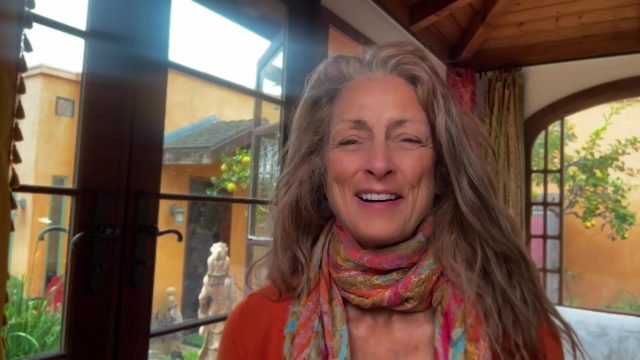
In a clip barely longer than a breath, the teacher Radhika Das offers a single image that many spiritual traditions return to: we are all visitors to this material world. The line is spare, almost a sentence you could say aloud at a bus stop, yet it carries a complete view of why we are here and where we are headed. It asks the listener to stop treating the world as a home to be owned and start treating it as a place to pass through with purpose.
The clip is built around a contrast. A resident settles in, claims property, and expects permanence. A visitor arrives knowing the stay has an end. Radhika Das states the premise directly at the opening of the video:
"We are all visitors to this time, this place. We are just passing through." (Radhika Das, video, 0:00)
She then names what the visit is for. "Our purpose here is to observe, to learn, to grow, to love, and then we return home," she says (0:09 to 0:18). The sequence matters. Observing and learning come first, growth and love follow, and the return is the destination the whole journey points toward. The purpose is not to build a comfortable life and defend it, but to use the time well.
The clip's companion text, which accompanies the video, grounds this in the Bhagavad-gītā. It quotes verse 8.15:
"After attaining Me, the great souls, who are yogīs in devotion, never return to this temporary world, which is full of miseries, because they have attained the highest perfection." (Bhagavad-gītā 8.15)The word "temporary" is doing the heavy lifting. The verse does not ask us to despise the world; it asks us to measure it correctly. Something temporary can be enjoyed, but it should not be mistaken for the final address.
Radhika Das's closing advice in the video description turns the teaching into practice: enjoy the journey, be kind to fellow travellers, hold things lightly, and keep chanting your way home. Each instruction follows from the visitor's stance. If you know you are leaving, you grip less tightly, and you treat the people beside you as companions on the same road.
A 22-second clip can plant an idea but cannot unfold it. To go deeper into the teaching behind this image, start with the Bhagavad-gītā itself, particularly chapter 8, where verse 15 appears in its full context. Radhika Das's longer talks and writings on the Gita and on bhakti practice are the natural next step for anyone who wants to see how she develops these ideas across a fuller teaching.