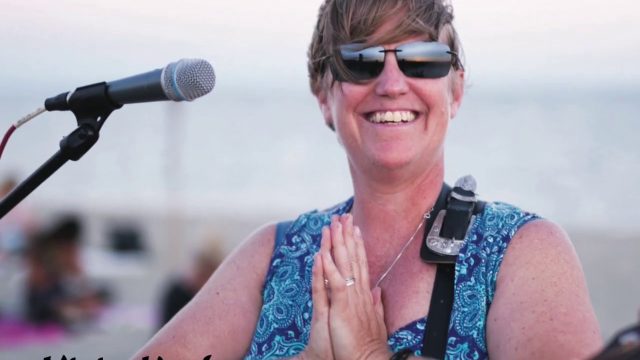
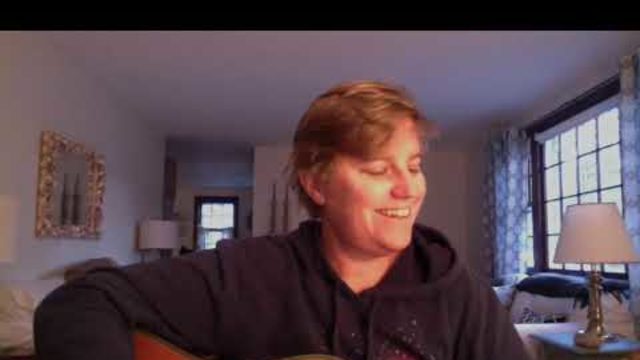
The invitation arrives quietly: freedom is not something to be won from the world, but something to be recognized and cultivated from within. This is the central teaching that animates Alicia Mathewson's work as both a dharma teacher and musician — a recognition that liberation begins not with changing our circumstances, but with fundamentally shifting how we relate to ourselves and the constraints we carry in consciousness.
Most people spend their lives waiting for the conditions outside to shift. Once we get the job, the relationship, the house, the security — then, we believe, we will finally be free. But this framing mistakes freedom for circumstance, autonomy for acquisition. The teaching that "freedom is an inside job" inverts that sequence entirely. It suggests that the chains binding us are largely internal: patterns of thought, inherited beliefs, emotional armor, and stories about who we are and what is possible. These structures feel as immovable as walls, but they are not.
When Mathewson speaks to this truth, she does so from lived experience, not abstraction. She has spent years working with students, creating sacred music, and exploring the direct experience of what it means to release conditioning and step into authentic choice. Her 2016 album Be The Light carries this philosophical spine — the recognition that the light we seek is not external, not distant, but available to us now, in the very act of turning our awareness inward.
The path Mathewson points toward is neither mystical nor vague. It begins with honest observation: What beliefs do I hold about my limitations? Where did they come from? Which of them are actually mine, and which did I inherit — from family, culture, trauma, or fear? This inquiry itself is already liberating, because awareness of a pattern is the first step toward choice about it.
Inner freedom, in this view, is not the absence of difficulty. It is the gradual shift from being driven by unconscious reactions to having agency in response. It is the difference between being swept along by a current and learning to navigate it. As we become more conscious of how we construct meaning and identity, we realize we have been the architects all along — which means we can rebuild.
For an artist like Mathewson, this principle has direct bearing on her work. Music becomes a vehicle for exploring and expressing this freedom — not as escape, but as a way of embodying and transmitting the experience of liberation to others. When we create or move or speak from that inner freedom, it resonates differently. There is an authenticity, a lack of pretense, that listeners recognize and respond to. It invites them to ask: What would it feel like to create, to live, from that same place?
The music on Be The Light reflects this inquiry. It is not designed to comfort or entertain in a conventional sense, but to stir something awake in the listener — a recognition of their own capacity for inner freedom, their own light.
There is a paradox embedded in this teaching: in order to be free, we must first become aware of the ways we are not. We must look honestly at our constraints, our fears, our self-imposed limitations. This can feel like the opposite of liberation — like swimming against the current, like making things harder before they become easier. But this is where the work lives. Freedom requires us to stop blaming the world for our bondage and to take responsibility for the patterns we have internalized and continue to reinforce.
This is not a message of toxic positivity or victim-blaming. Mathewson's teaching acknowledges that many of us have inherited real trauma, real injustice, real obstacles. But even within those constraints, there remains a degree of freedom in how we relate to them, process them, and gradually move beyond them. That freedom is never complete — there is always another layer of conditioning to examine, another belief to question — but it is always available.
How does one begin to live this teaching? Mathewson's approach, rooted in both dharma and art, suggests several pathways. Meditation and contemplative practice create the space in which we can observe our patterns without being completely identified with them. Conscious creativity — music, writing, movement — becomes a way to express and explore that freedom in real time. Community and teaching create accountability and reflection. And perhaps most crucially, curiosity: approaching ourselves with genuine interest rather than judgment, asking what wants to emerge if we release the grip of our self-concepts just slightly.
The teaching is not that we will become perfectly free or transcend all limitation. Rather, it is that freedom is a direction we can move in, a quality we can cultivate, an orientation available to us in any moment. Each time we notice a reactive pattern and choose a different response, each time we question an inherited belief, each time we create or speak or move from authentic choice rather than conditioning — we are exercising freedom. And the more we exercise it, the more real it becomes.
To explore more of Mathewson's work, visit her website at www.aliciamathewson.com or listen to Be The Light on her Bandcamp at aliciamathewson.bandcamp.com. Her music and teachings continue the inquiry into inner freedom and authentic expression, offering both inspiration and practical guidance for those ready to examine their own relationship to liberation and choice.