In contact improvisation, one of the most foundational patterns is called "the table"—a configuration where one dancer becomes the support and the other explores movement across that stable form. It sounds simple until you realize the depth: there are actually five distinct ways to enter this shape, each one opening different possibilities for connection, balance, and creative play between partners.
The table begins with one person on their hands and knees, creating a low, stable platform. The second person then engages with this form by moving across it—and how they enter matters profoundly. The person providing the table remains grounded on their knees and hands with a slight arch in the back, creating comfort and stability for themselves while offering the other dancer a responsive, living piece of furniture to interact with.
In the first variation, the moving dancer approaches hands-first with their belly against their partner's back. This naturally leads to a curling-over motion, where the supporting person uses their own body awareness to prevent the participant from collapsing too heavily onto the floor. The key is active support—not rigid resistance, but responsive presence. The moving dancer rolls and curves over the table, and the table dancer adjusts to maintain safety and flow.
The second way reverses the contact: the moving dancer travels across the table with their back against their partner's back. This configuration opens what the teacher describes as "fun possibilities"—different weight distributions, different balancing challenges, and entirely different shapes that emerge from spine-to-spine contact rather than front-to-back.
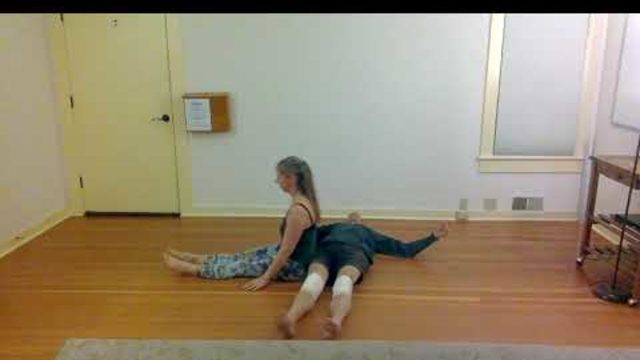
A third approach involves the moving person starting already on the floor in a seated position, then gradually putting their weight onto the table dancer with their legs first. From here, the moving dancer might spiral, turn, or shift direction in whatever way feels natural and safe. The table dancer learns to follow in "interesting waves," remaining responsive rather than fixed. This reveals one of contact improvisation's core principles: the person providing the table isn't locked into that role. They're allowed to abandon being the table and shift into movement themselves when the dance calls for it.
The fourth entry pattern has the moving dancer approach feet-first, climbing or rolling onto their partner's back leading with the lower body. This reversal of the hands-first approach creates its own arc of possibilities: how the dancer rises onto the partner's back, what happens during that ascent, and how they descend all differ from the front-first entry.
A fifth way—entering from the side—places the moving dancer's body against the side of their partner's body. This lateral approach creates opportunities for balancing in ways the other entries don't. The teacher emphasizes playfulness here: "treat this person that you're on like a human jungle gym." This isn't crude or careless; it's an invitation to explore with curiosity and trust.
Across all five approaches, there's a single principle that transforms the table pattern from acrobatics into contact improvisation: sensitivity in weight-sharing. When a dancer goes onto their partner, the instruction is specific: "pour your weight." Rather than gradually settling or tentatively perching, the moving dancer treats themselves "like a sandbag," actively transferring their mass into their partner in a controlled, present way. This isn't about being heavy; it's about being honest with your weight.
This approach serves a practical and ethical purpose. If a dancer is truly pouring their weight—meaning they're actively directing it rather than collapsing or bracing—they can respond immediately if their partner signals no or stop. There's no awkward untangling, no risk of falling. The dancer can retreat cleanly because they never gave up control of their own center. It's a physical expression of consent and care built into every moment of contact.
One remarkable variation the teacher demonstrates is a seamless transition into a headstand-like position when dancers approach back-to-back with hands leading. Rather than the contact breaking, the dancers can roll, follow, and maintain connection through the transition. The moving dancer rolls and continues; the table dancer follows. As the teacher notes with evident delight, "isn't that fun?" The point isn't the acrobatic achievement—it's that the conversation between bodies never stops.
A crucial detail often overlooked: when the table dancer is on their hands and knees, they should keep their feet flat and down, rather than rising up onto the toes. This protects the ankles from strain, ensuring the person providing support can remain comfortably in the position for the duration needed. It's a small thing that prevents injury and allows the dance to continue.
Contact improvisation is built on exploration within constraint. By understanding these five distinct entries into the low table pattern, dancers gain a toolkit. Each approach teaches different lessons about weight, balance, momentum, and response. Each one requires the supporting dancer to listen differently. And each one opens different creative possibilities once the dancers are in contact. Learning them in a systematic way, as this series presents, gives newer dancers enough vocabulary to begin improvising with confidence and sensitivity.
If you're new to contact improvisation, practice these table patterns with a partner who shares your commitment to consent and communication. Start slowly with each entry point. Notice how your body learns to respond differently to hands-first versus feet-first approaches. Explore the difference between supporting and dancing, then discover how those roles can blur and shift. Most importantly, treat your partner as the teacher treats the person learning alongside them—with curiosity, care, and genuine delight in what emerges when two bodies move together with presence and trust.