BrightStar
BlogMy Tickets
BlogMy Tickets
Saved events
Help & contactSign UpLog in
Events
  • Browse All Events
  • Yoga
  • Meditation
  • Breathwork
  • Qigong
  • Sacred Music
  • World Music
  • Medicine Music
  • Sound Healing
  • Ecstatic Dance
  • Ceremony
  • Plant Medicine
  • Energy Healing
  • Satsang & Wisdom
  • Tantra
  • Retreats
  • All Categories →
Destinations
  • Bali
  • Sedona
  • Los Angeles
  • Costa Rica
  • Tulum
  • Byron Bay
  • San Francisco
  • Austin
  • New York
  • San Diego
  • Denver
  • Seattle
  • Portland
  • Miami
  • London
  • Maui
  • Boulder
  • All Cities →
Platform
  • For organizers
  • Join the Movement
  • Sell Globally
  • For Creators
  • For Teams
  • For Writers
  • For Teachers
  • For Kirtan Artists
  • For Studios
  • For Festivals
  • For Retreat Centers
  • For Nonprofits
  • Brand Ambassador
  • Free Ticketing
  • Pro
  • Amplify
  • The Ecosystem
Features

Ticketing and checkout

  • Ticket categories
  • Assigned seating
  • Custom questions
  • Coupon codes
  • Smart pricing
  • Ticket sharing
  • Waitlist
  • Flexible refunds
  • Digital waivers
  • Tip jar
  • Donations and sliding scale
  • Embed widget
  • Mindful checkout
  • Recurring events
  • Private sessions
  • Online courses
  • Summits
  • Rooms and stays
  • Ticket scanner

Marketing and growth

  • Abandoned cart recovery
  • Visitor recovery
  • Upsells and add-ons
  • Affiliate engine
  • Upsell affiliate network
  • Brand ambassador
  • Meta retargeting
  • Verified buyer network
  • Outbound email marketing
  • Email sequences
  • SMS and WhatsApp
  • Event upsell network
  • Direct mail campaigns
  • SEO engine
  • Syndication
  • Event sharing
  • Custom event pages
  • Artist profiles
  • Link in bio
  • Event blog
  • Blog newsletter

Payments

  • Payments, powered by Stripe
  • Buy now, pay later
  • Apple Wallet
  • Multi currency

Data and operations

  • Team access
  • Message center
  • Reports
  • Analytics reporting
  • Performance reporting
  • Customer data
  • Integrations
  • Switch from another platform

AI

  • Assistant
  • AI FAQ assistant
  • All Features →
Company
  • About
  • FAQ
  • Contact
  • Blog
  • Glossary
  • Guides
  • Inspiration
  • Help Center
  • API Docs
  • Brand Assets
  • Press
  • Terms of Service
  • Privacy Policy

Events

  • Browse All Events
  • Yoga
  • Meditation
  • Breathwork
  • Qigong
  • Sacred Music
  • World Music
  • Medicine Music

Destinations

  • Bali
  • Sedona
  • Los Angeles
  • Costa Rica
  • Tulum
  • Byron Bay
  • San Francisco
  • Austin

Platform

  • For organizers
  • Join the Movement
  • Sell Globally
  • For Creators
  • For Teams
  • For Writers
  • For Teachers
  • For Kirtan Artists

Features

  • Community Network
  • Abandoned Cart Recovery
  • Ticket Categories
  • Recurring Events
  • Assigned Seating
  • Affiliate Engine
  • Waitlist / Notify
  • All Features →

Company

  • About
  • FAQ
  • Contact
  • Blog
  • Glossary
  • Guides
  • Terms of Service
  • Privacy Policy
Read more

Events

  • Sound Healing
  • Ecstatic Dance
  • Ceremony
  • Plant Medicine
  • Energy Healing
  • Satsang & Wisdom
  • Tantra
  • Retreats
  • All Categories →

Destinations

  • New York
  • San Diego
  • Denver
  • Seattle
  • Portland
  • Miami
  • London
  • Maui
  • Boulder
  • All Cities →

Platform

  • For Studios
  • For Festivals
  • For Retreat Centers
  • For Nonprofits
  • Brand Ambassador
  • Free Ticketing
  • Pro
  • Amplify
  • The Ecosystem

Company

  • Inspiration
  • Help Center
  • API Docs
  • Brand Assets
  • Press

Ticketing and checkout

  • Ticket categories
  • Assigned seating
  • Custom questions
  • Coupon codes
  • Smart pricing
  • Ticket sharing
  • Waitlist
  • Flexible refunds
  • Digital waivers
  • Tip jar
  • Donations and sliding scale
  • Embed widget
  • Mindful checkout
  • Recurring events
  • Private sessions
  • Online courses
  • Summits
  • Rooms and stays
  • Ticket scanner

Marketing and growth

  • Abandoned cart recovery
  • Visitor recovery
  • Upsells and add-ons
  • Affiliate engine
  • Upsell affiliate network
  • Brand ambassador
  • Meta retargeting
  • Verified buyer network
  • Outbound email marketing
  • Email sequences
  • SMS and WhatsApp
  • Event upsell network
  • Direct mail campaigns
  • SEO engine
  • Syndication
  • Event sharing
  • Custom event pages
  • Artist profiles
  • Link in bio
  • Event blog
  • Blog newsletter

Payments

  • Payments, powered by Stripe
  • Buy now, pay later
  • Apple Wallet
  • Multi currency

Data and operations

  • Team access
  • Message center
  • Reports
  • Analytics reporting
  • Performance reporting
  • Customer data
  • Integrations
  • Switch from another platform

AI

  • Assistant
  • AI FAQ assistant
Get the app
Download on theApp StoreGet it onGoogle Play
© 2026 BrightStar. All rights reserved. BrightStar Selection · Photo credits · Changelog ·
Inspiration

The Precept Crisis: Why Monastic Training Holds Buddhism's Future

SA
Sravasti Abbey
Nov 15, 2026
8 min read

From Sravasti Abbey

Watch · 8

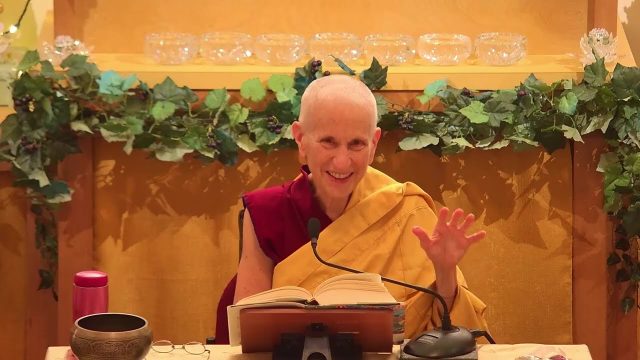
One month after taking full ordination in Singapore, Venerable Thubten Ngawang found himself sitting across from Gishien, a Leaki monk staying at the Tibetan Buddhist Center. What began as a casual conversation to ease jet lag became an urgent conversation about the fragility of Buddhism itself. Gishien didn't mince words: the Dharma as a living tradition was becoming increasingly precarious, and the numbers told a stark story.

Read · 8 sections

The Demographic Collapse of Monastic Communities

The decline Gishien described wasn't speculative. Within days of that conversation, Venerable Thubten came across a Tibetan Review article titled "China's restrictions, exile conditions responsible for dive in Tibetan monastic enrollments." The data was jarring. In the 1980s and 1990s, there had been a large influx of Tibetan monastics moving to India; now it had dwindled to five or six per year. Even more striking: of the 38,000 monastics in Tibetan monasteries and nunneries across the Himalayan regions of India, only 28 were of Tibetan origin. Sixty-eight percent were Himalayan; 4% were foreign practitioners. Less than a third of the monastic population maintaining one of Buddhism's oldest lineages were actually Tibetan.

Gishien's assessment cut to an uncomfortable truth: small centers and monasteries lacked the economic sustainability to endure. His prescription—larger, government-funded institutions—revealed an even deeper problem: most modern governments have little interest in funding religious institutions, let alone specifically supporting Buddhism. The infrastructure that once held monastic life together was simply evaporating.

The Rarity of Ordination Itself

When Venerable Thubten arrived at the full ordination ceremonies in Taiwan, he discovered the conversation wasn't limited to Tibetan Buddhism. The teachers, guides, and preceptors there spoke of declining numbers of candidates coming to full ordination. The ceremonies themselves had become staggeringly rare—and expensive. A single triple platform ordination (a four to six week process) cost approximately one million Singapore dollars to organize. This required hundreds of lay volunteers, multiple senior guides, and an intricate coordination that most institutions simply couldn't sustain.

The historical record underscored the rarity. The ordination where Venerable Thubten took his vows was only the sixth triple platform ordination ever held in Singapore, a Buddhist-majority nation. At Schwan Lin Monastery, where the monks trained, it was only the second full ordination in the institution's history—the previous one having occurred roughly 60 years earlier, in 1958. When ordination ceremonies become events separated by decades, the continuity of living transmission fractures.

The Symbolic Moment: Who Will Carry the Torch?

During the procession to the ordination platform—a tent erected in a parking lot next to a highway, a detail that itself speaks to Buddhism's diminished social standing—something shifted in Venerable Thubten's awareness. As the last of 36 monks walking toward ordination, he found himself positioned directly in front of the most junior preceptors, with the senior masters following behind. The candidates were leading the preceptors to the ordination platform. In that reversal, he saw the dharma's desperate arithmetic: "Come, ordain us. Please ordain us as we lead you to the platform."

Walking back after taking full ordination, the weight became concrete. The preceptors were aging. Some were not in robust health. And they had just entrusted a new generation with the vinaya—the ethical discipline and monastic code—upon which all of Buddhism's institutional continuity depends. This was not a ceremonial gesture. The preceptors kept emphasizing the same message: Learn fast. Impermanence is real. This was a race against time.

What Vinaya Actually Is—and Why Its Loss Matters

Master Binyan, a senior Taiwanese vinaya master and one of the principal teachers at the ordination, offered a teaching that cut to the heart of the crisis. "If you don't learn vinaya," he said, "you are not a real monk or nun." This wasn't dogmatism; it was diagnosis. Vinaya—often translated as "ethical discipline" or "monastic code"—is the framework through which Buddhist practitioners understand and work with their own afflictions and habits. It is the lived technology of transformation.

Master Binyan elaborated: "Even one precept can help you so much. All the precepts are dealing with our afflictions. And you can tell where your defilement is by which precept you dislike." This inverts the common assumption that precepts are external restrictions imposed from above. Instead, they function as mirrors. The precept we resist most fiercely usually indicates the exact edge where we most need to grow. Learning vinaya means learning to live with intention, to understand why a particular guideline exists, and to apply it consciously in a modern context utterly different from the one in which it was formulated.

The conversation Venerable Thubten and his cohort have begun in their ongoing vinaya classes addresses this directly: how do we take a precept created in a vastly different time, place, and culture and use it skillfully in our daily lives? This work of translation and integration is not bureaucratic compliance. It is the actual practice of Buddhism.

The Buddha's Final Teaching on What Keeps the Dharma Alive

Master Binyan's insistence that "without vinaya there would be no dharma in this world" echoed something Venerable Thubten had read in the Patimokkha—the recitation of precepts that fully ordained monastics chant every two weeks. This is advice the Buddha gave just before entering parinirvana, Buddhism's term for final liberation. The Buddha said: "If this sutra remains long in the world, the Buddha Dharma will be widespread. And because it is widespread, Nirvana can be attained. Failure to keep the Patimokkha Sutra and to conduct the patada as it should be is like the setting of the sun. When darkness shrouds the entire world."

The Buddha did not say the Dharma depends on impressive meditation experiences, philosophical sophistication, or mass conversions. He said it depends on the monastic community's willingness to maintain ethical discipline together, to hold the form even when it becomes difficult, even when no one is watching, even when institutions are fragile and funding is scarce. The preservation of vinaya is the preservation of the conditions under which the entire tradition can survive.

The Numbers: Buddhism in Decline Globally

When Venerable Thubten researched the broader state of Buddhism globally, the picture darkened further. According to the Pew Research Center, Buddhism comprises roughly 7% of the global population. But retention is collapsing. In the United States, 84% of people raised Buddhist have left the tradition. In Western nations broadly, Buddhism is declining. Monasteries face the dual pressure of fewer candidates entering monastic life and fewer lay Buddhists supporting institutions financially or through participation.

Yet within this crisis lies a specific insight: the problem is not primarily theological or philosophical. The problem is structural. Buddhism requires large groups of monastics who stay together in harmony, who train together, who maintain standards together. As Venerable Thubten's teachers emphasized, you cannot maintain vinaya alone. The precepts are not an individual achievement; they are a collective practice.

What Needs to Happen: Sustaining a Living Tradition

The magnitude of what is being asked of this new generation of monastics becomes clear only when you understand what is actually at stake. The vinaya—the living, embodied transmission of how to practice Buddhism in community—is being held in the hands of aging teachers and newly ordained monks in a world that offers no institutional support for such work. Governments don't fund it. Wealthy donors are increasingly rare. The cultural soil that once supported monastic life has largely eroded.

Yet the alternative—the "setting of the sun" the Buddha warned about—is unthinkable to those who understand what vinaya actually preserves. It is not a set of arbitrary rules. It is the accumulated wisdom of how human beings can live together ethically, support each other's practice, and pass on the dharma to future generations. Without it, Buddhism becomes what it increasingly already is in the West: a collection of individual practices, psychological techniques, and philosophical interests—valuable perhaps, but severed from the living transmission that the Buddha established.

Venerable Thubten's ordination was not a personal milestone; it was an act of accepting responsibility for a fragile lineage. His teachers made clear there is no time for leisurely learning. The race is against clock. The question is whether a new generation of monastics, trained in this critical moment, can find ways to sustain and adapt vinaya for a world that no longer naturally supports it—and whether lay Buddhists will understand that their own practice depends on the monastic community's ability to do that work.

Where to go from here

If you practice Buddhism, the question becomes personal: What does it mean to support the monastic community that maintains the lineage? This might mean financial support, but it also means understanding that the precepts your teachers recommend are not abstract ideals—they are tools tested across centuries of communal practice. For those exploring Buddhism, recognizing that the tradition faces a genuine structural crisis may clarify why teachers emphasize commitment, community, and the importance of finding authentic guidance. The preservation of Buddhism is not inevitable. It depends on choices made right now by practitioners willing to invest in its continuity.

Comments

Loading the conversation…

Transcript

[0:02] It has now been one month since the day

[0:05] I took full ordination in Singapore.

[0:09] It was October 11th. Of course,

[0:11] Singaporean time and day.

[0:14] So in my last BBC I spoke about the

[0:18] experience in a very personal way

[0:22] and I thought today to share the

[0:25] experience from very different

[0:26] perspective

[0:28] and that is the perspective of what it

[0:31] means globally what it means for

[0:34] Buddhism to have this full ordination.

[0:39] So why I'm thinking about this is the

[0:42] first few days I was in Singapore as I

[0:44] was trying to recover from jet lag

[0:46] before going into a very intense

[0:49] program. Um, I had the opportunity to

[0:52] stay at the Tibetan Buddhist Center in

[0:54] Singapore and the amazing opportunity to

[0:58] meet Gishien who's a Leaki monk. Um and

[1:03] he was uh very

[1:05] really warm and hospitable and he um

[1:10] spent like many hours with me uh the few

[1:14] days I was uh staying there and we had

[1:17] very lovely informal conversations.

[1:20] And what really struck me about these

[1:23] conversations which was he really spoke

[1:26] about the state of Buddhism in the world

[1:30] and what it means for Buddhism to have

[1:33] longevity and how currently it is quite

[1:37] fragile.

[1:39] Um he mentioned about the declining

[1:41] numbers of Tibetan monastics.

[1:45] And interestingly, as I was preparing

[1:47] for this talk, I looked online and in

[1:51] the Tibetan Review, there was just this

[1:54] past Sunday, there was an article

[1:56] entitled China's restrictions, exile

[2:00] conditions responsible for dive in

[2:03] Tibetan monastic enrollments.

[2:07] And um reading through this article, it

[2:09] was talking about how in the 80s and 90s

[2:12] there was this, you know, large influx

[2:15] of Tibetans into India and now it's like

[2:19] a trickle of that. Um I think it said

[2:22] five or six per year or something. Uh

[2:26] really decreased. and it was talking

[2:29] about how I don't know exactly how they

[2:31] got this number but out of the 38,000

[2:35] monastics

[2:36] uh in Tibetan

[2:39] uh monasteries and nunneries in the

[2:41] Himalaya Himalayan regions in India um

[2:45] only 28 of those are Tibetan

[2:48] um 68%

[2:50] are Himalayan and 4% foreigners

[2:55] so less than a third are actually

[2:57] Tibetan

[2:58] origin.

[3:00] Um he also giant also spoke about the

[3:04] fragility of small centers and small

[3:08] monasteries and nunneries and how they

[3:11] don't have the sustainability to last

[3:13] long term.

[3:15] and his advice to the world, but he was

[3:19] telling me um was that we need as a a

[3:23] Buddhist family to have larger

[3:26] institutions that are governmentfunded.

[3:31] But I think also this requires that we

[3:34] have governments that want to fund

[3:36] religion in this way and specifically

[3:39] Buddhism in this way.

[3:42] Um, so that was the first few days of

[3:46] being in Singapore and I was like, "Oh,

[3:48] wow." And now I'm about to go to a full

[3:50] ordination.

[3:52] And I get to the full ordination and

[3:54] what do they talk about? The teachers,

[3:57] the guides, the preceptors, the

[3:59] declining numbers of um, candidates

[4:02] coming to full ordination in Taiwan.

[4:06] Um and the rarity and difficulty of

[4:10] organizing these triple platform

[4:12] ordinations which are four weeks or six

[4:15] weeks

[4:17] um which cost a lot of money. Uh we

[4:21] heard an estimate around a million sing

[4:25] dollars to put this one on.

[4:29] So when you think about that, wow, that

[4:32] is huge. A huge amount of money and

[4:35] time. Then Wakaria spoke about the

[4:37] hundreds of lay volunteers needed. Um

[4:41] many guides and preceptors

[4:45] um and it's rare. So the day before

[4:49] [snorts] the full ordination, we heard

[4:52] um that this was going to be the sixth

[4:55] triple platform ordination in Singapore.

[4:58] I did some research. I found at least

[5:00] four, but there might be one that's not

[5:03] recorded. I don't know. But um not many.

[5:07] Of course, Singapore is new and

[5:09] relatively new in the world. Um but it

[5:12] is a Buddhist country. So to think that

[5:15] this is only the sixth one. And then um

[5:19] it's only the second one or it's the

[5:21] second full ordination at Schwan Lin

[5:23] Monastery, which is where the monks were

[5:26] training. The previous one, the only one

[5:29] they've had there was 60 years ago about

[5:32] about 60 years ago in 1958.

[5:38] Um, so these are quite rare.

[5:42] So the day of the the ceremony

[5:46] [clears throat] um

[5:49] there was this very meaningful moment

[5:51] and it actually happened twice.

[5:55] We were processing from where we had

[5:58] begun the ceremony, which was kind of in

[6:01] the main temple

[6:03] um one of the main uh halls in the

[6:06] temple complex. And we were going to

[6:08] process out to the ordination platform

[6:12] which was constructed in a tent in the

[6:15] parking lot right next to the highway.

[6:19] Um, and so we were going to do this long

[6:21] procession.

[6:23] And so then the monks start walking out

[6:29] starting with the very first monk, the

[6:31] the lead novice. And since I was the

[6:34] last monk, number 36,

[6:37] um, then I was walking out. Behind us

[6:41] were the preceptors.

[6:44] So for me this was significant.

[6:47] We are leading the candidates are

[6:49] leading the preceptors.

[6:52] Come, you know, this is what we're kind

[6:54] of I was thinking. Come ordain us.

[6:57] Please ordain us as we lead you to the

[7:01] platform.

[7:03] And then of course at the at the end we

[7:05] were also leading them back to take a

[7:07] group photo in the the hall that we had

[7:09] begun in. But for me this was so

[7:12] significant because I was the dividing

[7:15] point between the candidates and the

[7:18] preceptors. So, one of the um I don't

[7:22] know maybe the the most junior of the

[7:24] senior witnesses was right behind me as

[7:28] I was walking and I thought wow

[7:32] they are giving us this responsibility

[7:35] to carry on the vanaya the Buddha Dharma

[7:40] in this world they are entrusting us

[7:43] with this [snorts]

[7:45] like passing on the torch

[7:48] and before it was like whoa that's a lot

[7:51] of responsibility.

[7:53] Um and then of course after I took the

[7:56] Florin nation we were walking back it's

[7:59] and now we are entrusted with this and I

[8:03] thought okay okay don't freak out

[8:05] because there's time right there's time

[8:09] to learn and then they kept saying you

[8:11] need to learn fast

[8:14] and it's true because impermanence is

[8:17] real right and the preceptors were not

[8:21] so young right? And actually not so

[8:24] healthy. And to think that it's it's

[8:28] really a race against the clock. We need

[8:31] to learn quickly because we are

[8:33] entrusted with this incredibly valuable,

[8:36] precious

[8:38] um

[8:39] jewel which is the vaniah and the

[8:42] dharma.

[8:44] So we had um many classes with master

[8:48] binyan and vinch children and master

[8:50] binyan had had a long relationship and

[8:53] um there's been an ongoing dialogue with

[8:56] master binyan he's a very senior uh

[8:59] monastic and banaya master in Taiwan and

[9:04] [clears throat] he was one of the

[9:05] acharas and I thought to share some of

[9:08] his um gems of wisdom

[9:12] um he said past masters worked very hard

[9:15] with tough training

[9:18] and so we you need to really appreciate

[9:21] the efforts of these previous masters.

[9:26] He said you must have great

[9:28] determination and you need to be gentle

[9:31] and obedient.

[9:34] Um you need to subdue your ego

[9:38] and we have to force ourselves to learn.

[9:42] If you don't learn vania, you are not a

[9:45] real monk.

[9:47] He was talking to monks or a real nun.

[9:51] So this was whoa. Okay.

[9:55] And he said even one precept can help

[9:59] you so much.

[10:01] All the precepts are dealing with our

[10:03] afflictions.

[10:05] And you can tell where your defilement

[10:07] is by which precept you dislike.

[10:12] That was interesting and true. It's like

[10:15] why does that have to be a precept?

[10:18] Um and he says you need to learn until

[10:22] you know how to use that particular

[10:24] precept in your daily life.

[10:26] And I'm very much appreciating our

[10:29] conversations in our vania class with

[10:31] venerable children in the community

[10:33] where we're really discussing how do we

[10:36] take this precept that was um created in

[10:41] a very different time and place and

[10:43] culture and how do we use it in our

[10:46] daily life and to have that ongoing

[10:49] conversation.

[10:52] And master binyan said that without

[10:54] vanaya there would be no dharma in this

[10:57] world. We have to maintain and uphold

[11:01] the vanayiah. Without vania future

[11:04] monastics won't know wrong and right.

[11:09] And so this reminded me of what uh the

[11:12] fully ordained recite in pada each uh

[11:16] every two weeks. And this is the advice

[11:20] that the Buddha gives right before

[11:22] passing into Perry Nirvana.

[11:24] And and this is just part of it. But he

[11:26] says, "If this sutra remains long in the

[11:30] world, the Buddha Dharma will be

[11:33] widespread.

[11:35] And because it is widespread, Nirvana

[11:38] can be attained.

[11:40] Failure to keep the Praimok Sutra and to

[11:42] conduct the patada as it should be is

[11:45] like the setting of the sun. when

[11:48] darkness shrouds the entire world.

[11:53] So I did a bit of research on the state

[11:56] of Buddhism in the world to you know

[12:00] kind of check out maybe you could say

[12:03] what these teachers have were telling

[12:05] me.

[12:08] And so according to this website our

[12:10] world and data

[12:13] Buddhists in the world have decreased um

[12:16] from in 2010

[12:19] they made up or we made up uh 4.9%

[12:24] of the global population

[12:27] and in 10 years in 2020

[12:30] made up 4.1%.

[12:33] So that's a drop of8% globally.

[12:37] According

[12:38] to the Pew Research Center, Buddhism is

[12:41] the only major religion with a shrinking

[12:44] number of followers.

[12:47] And this is data from 2008 to 2024.

[12:52] For every 12 adults to join Buddhism,

[12:56] 22 have left.

[12:59] And this has is mainly in Asia uh

[13:03] specifically in mainland China, South

[13:06] Korea and Japan.

[13:09] Um, interestingly, in our little bubble

[13:12] of the world in the US,

[13:15] um, from the same time, well, that from,

[13:18] uh, 2010 to 2020, there's been an 22%

[13:22] increase in Buddhist in the US, although

[13:27] it still makes up only 1.3% of the US

[13:30] population.

[13:32] So, it's a big increase, but a very

[13:34] small number when you think about this

[13:37] globally.

[13:39] And interestingly

[13:41] um also just in general especially in

[13:44] western

[13:46] um countries the number of people that

[13:49] are religious at all is declining right

[13:55] so Australia I think was the most

[13:57] declined but in the US um 84%

[14:02] I think from 2010 to 70% in 2020. 20.

[14:09] So this decrease in people being

[14:11] religious or identifying as religious.

[14:16] And so this thinking about this data and

[14:20] hearing from these teachers really makes

[14:22] me reflect

[14:24] um like what is the longevity of

[14:27] Buddhism on this planet

[14:30] and how do we really sustain the dharma

[14:34] in this world knowing that the numbers

[14:38] are going down in terms of the

[14:40] followers.

[14:42] And so I think this the answer to this

[14:44] question um of course it's answered by

[14:47] the Buddha and it was also answered by

[14:50] master binyan in our classes

[14:55] and this was the class where he was

[14:56] speaking about karmans. So these are

[14:59] official SA activities

[15:03] and for a SA uh for a a SA Karman you

[15:07] need at least four fully ordained

[15:09] monastics you need a SA

[15:12] and he was talking about um like for

[15:15] example for B shoes for fully ordained

[15:17] monks well one Bshu can do certain

[15:21] things two or three can do other things

[15:25] four can do things like pada

[15:29] Five can do things, 10 could give full

[15:32] ordination,

[15:34] and 20 are needed for certain repentance

[15:37] ceremonies.

[15:39] And so when you think about it,

[15:42] [clears throat]

[15:43] well, we need groups.

[15:46] We need large groups of monastics who

[15:49] are living together, staying together

[15:52] harmoniously.

[15:54] And this is exactly what the Buddha

[15:56] said.

[15:57] always stay together in harmony

[16:00] according to the Buddhist words.

[16:04] So to really carry on this vania and

[16:09] dharma,

[16:11] monastics must come together

[16:13] and we've heard from venerable

[16:16] there aren't many large especially

[16:20] western monastic communities.

[16:24] one, two monastics living together,

[16:28] their impact is limited.

[16:31] It's short-lived.

[16:34] We really must come together, especially

[16:37] as Westerner, Western Buddhist where we

[16:41] have this increase in interest in

[16:44] Buddhism. We must come together to

[16:47] sustain the dharma. So it's not just

[16:51] about my practice,

[16:54] it's about the sustainability of the

[16:56] dharma in the world. And so because of

[16:59] that, we have to come together. We have

[17:03] to set down our preference to be alone

[17:07] and really come together because it's

[17:09] only together as a group of fully

[17:11] ordained monastics that we actually that

[17:14] there actually is a chance for the

[17:17] dharma to be sustained in this world.

Sravasti Abbey

Artist

Watch more from Sravasti Abbey on YouTube.

Explore Topics
Vinaya ethicsMonastic declineBuddhism crisisDharma transmissionOrdination ritual
Frequently Asked Questions

Frequently Asked Questions

Multiple factors contribute: political restrictions in Tibet limiting emigration to India (down from large flows in the 1980s-90s to just 5-6 per year), economic unsustainability of small monasteries, lack of government funding for religious institutions, and declining numbers of people entering monastic life in Western nations (84% retention failure in the US). The infrastructure that once supported monastic communities has largely eroded.

Vinaya is the ethical discipline and monastic code—a framework for understanding and working with one's afflictions through lived practice. According to Master Binyan, Buddhism cannot survive without it. The Buddha taught that failure to maintain vinaya is like 'the setting of the sun'—it extinguishes the entire tradition. Vinaya works not as external rules but as mirrors showing where practitioners most need to grow.

Full ordination ceremonies have become extraordinarily rare. In Singapore, a Buddhist-majority nation, there have been only six triple platform ordinations on record. At Schwan Lin Monastery, the most recent ordination before 2026 occurred 60 years earlier in 1958. Each ceremony costs roughly one million Singapore dollars and requires hundreds of volunteers, making them unsustainable in most communities.

According to the teachers in this talk, no—not in its full form. Buddhism requires large groups of monastics trained in vinaya who stay together in harmony. The Buddha explicitly taught that the dharma depends on preserving the monastic code. While lay Buddhism offers value, severing it from living monastic transmission turns Buddhism into individual practices rather than a continuous lineage.

Of the 38,000 monastics in Tibetan monasteries and nunneries across the Himalayan regions of India, only 28 are of Tibetan origin—less than 0.1%. Sixty-eight percent are Himalayan practitioners and 4% are foreign. This reflects the collapse of monastic enrollment from Tibet due to Chinese restrictions and decreased emigration.

In the Patimokkha (recited by fully ordained monastics every two weeks), the Buddha's final teaching states: 'If this sutra remains long in the world, the Buddha Dharma will be widespread.' He warned that failure to maintain the Patimokkha and monastic discipline is 'like the setting of the sun. When darkness shrouds the entire world.' This positions vinaya maintenance as the central condition for Buddhism's survival.

Buddhism is declining significantly in the West. The Pew Research Center reports that 84% of people raised Buddhist in the US have left the tradition. In Western nations broadly, Buddhism is not growing. This is partly because Buddhism has become disconnected from its monastic foundation and functions instead as individual practices or psychological techniques rather than as a living communal lineage.

You might also like

View All
Preparing for Death Every Day: The 11 Thoughts
Inspire

Preparing for Death Every Day: The 11 Thoughts

A Buddhist nun explores using the 11 thoughts to train the mind now for clarity and peace at life's end, turning ancient doctrine into daily…

8 min read
Mindfulness of Six Sources: Breaking the Cycle of Affliction
Inspire

Mindfulness of Six Sources: Breaking the Cycle of Affliction

Learn how Buddhist mindfulness practice reveals the chain of perception, feeling, and craving that binds us to suffering—and how awareness i…

6 min read
Heart of the Path: A Week in Costa Rican Kirtan Retreat
Inspire

Heart of the Path: A Week in Costa Rican Kirtan Retreat

Krishna Das and Nina Rao lead an immersive week-long retreat in Costa Rica combining kirtan, mantra practice, yoga, and open dialogue for sp…

5 min read
Medicine Buddha Practice: Reaching for Healing in Community
Inspire

Medicine Buddha Practice: Reaching for Healing in Community

A community-led Medicine Buddha session shows healing practice as something you can reach for in pain. René Rivera recounts doing exactly th…

8 min read
See allYou might also like→

Continue your journey

More wisdom and gatherings from across the BrightStar directory.

More Articles

Browse the full library of teachings, interviews, and guides.

Back to all articles →

Teachers & Artists

Explore the lineages, musicians, and guides of the conscious world.

Explore artists →

Find an Event

Kirtan, retreats, sound baths, breathwork, festivals — happening soon.

Browse events →