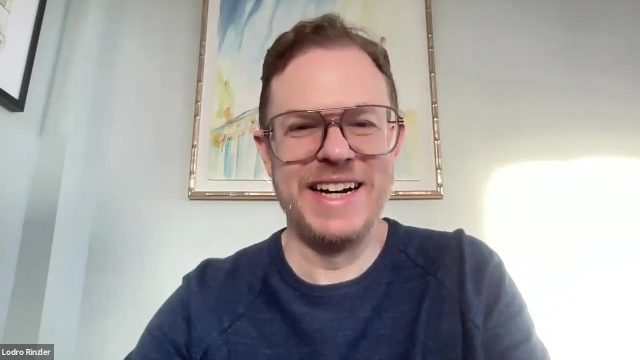
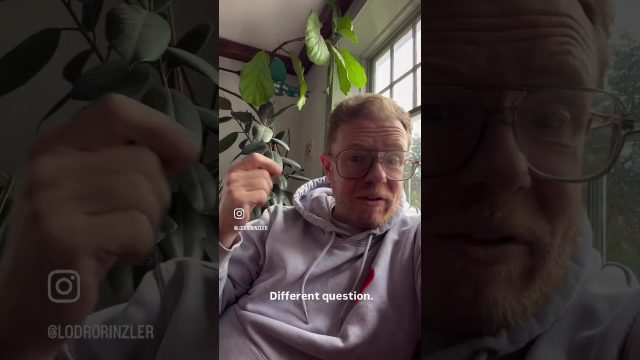
Many people wake up already braced. Lodro Rinzler opens his 52-second Thanksgiving clip with that observation: the people he talks with often start the morning with anxiety and a pressing sense that they must enter the day immediately and get a great deal done. His answer is a practice small enough to fit inside a single half-minute. Each morning, before the list and the inbox take over, ask one question: what am I grateful for today? Then let the answer arrive, however modest it is.
Rinzler says he has woken up with this question for the last decade or so (0:07). The practice is not a formal sit or a visualization. It is a single prompt, held for about thirty seconds, that turns attention toward what is already in place rather than what is missing or pending.
The examples he gives are deliberately ordinary (0:16–0:31). He mentions the roof over his head, the fact that he can still see or hear his loved ones in the room across the hall, the dogs, and the community around them. "Very simple things," he says. That plainness is part of the method. The question does not require a dramatic blessing to answer; it asks the mind to notice what is already working.
"Just 30 seconds of turning my mind towards what's already working, what's actually I'm thankful for." (Lodro Rinzler, in the video, 0:33)
He is also clear about timing. Although the clip is framed around Thanksgiving, he says the aim is to train the mind to do this first thing in the morning (0:40–0:46). The holiday is the occasion; the habit is the point. Calling the result "an absolute game changer," he adds, "I promise" (0:44–0:46). That is his claim, offered from his own daily experience, and it is one worth testing for a week rather than taking on faith.
Why the morning? The clip does not spell out a full theory, but its logic is visible in the opening. If the first thing you reach for is a problem to solve, the day starts in deficit. A single, bounded question placed before the rush gives the mind a different first direction. Nothing about the practice requires a particular feeling. It requires only that you ask, listen for an answer, and let the answer be simple.
This clip is a doorway, not a full curriculum. It offers one practice and one reason to try it. To go deeper into Rinzler's approach to meditation, explore the rest of his work on the Lodro Rinzler | Meditation channel. Tomorrow morning, before your phone or your to-do list, try the thirty seconds: ask what you are grateful for today, and notice what answers first.