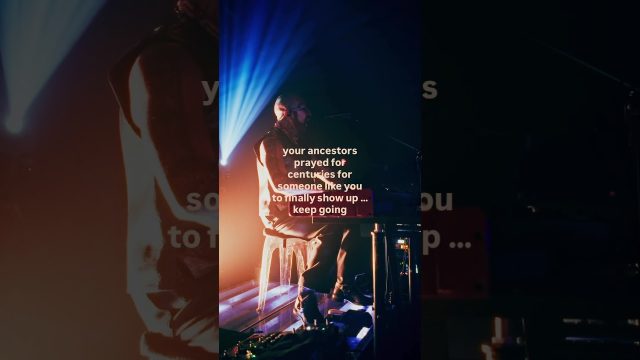
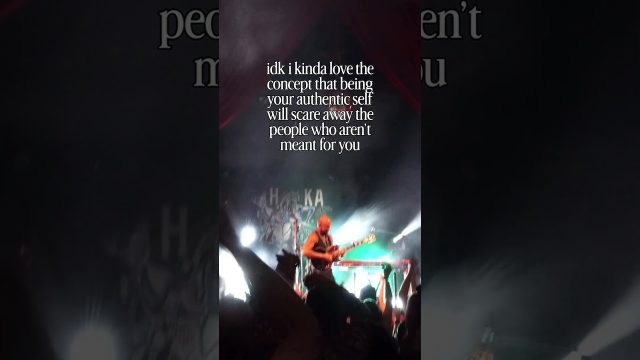
A twenty-two-second clip from the band Nahko and Medicine for the People offers one short sung refrain, "I am on your side. We're on time," looped over musical breaks and posted with the hashtags #livemusic and #inspiration. Nothing else arrives in the clip. There is no spoken framing and no description, only the words "good things coming" and "keep shining" in the caption. That leaves the phrase to carry the whole message, and in a clip this brief it carries more than its length suggests.
Stripped of the music, the sentence is plain. A first-person voice tells the listener that it is on their side, then adds that the timing is right: "we're on time." The two halves do different work. The first is about relationship and presence, the sense of having company. The second is about timing, the idea that the moment you are in is not late or wrong. Read together, they form a small piece of reassurance: you are not alone, and things are arriving when they should.
The transcript shows the phrase sung three times in the clip, at roughly the zero, nine and eighteen-second marks, with instrumental gaps in between. Repetition is one of the oldest tools in sung devotional and communal music. A line that returns again and again stops feeling like a statement and starts to feel like something a listener can hold onto. Over twenty-two seconds, that gives the message three chances to land, and each return makes the words sound a little more settled, less like a sentiment and more like a truth the band has decided to repeat.
The hashtag #livemusic matters here too. A refrain like this is written to be sung to a room, where a crowd can pick up the words on the second or third pass and the phrase becomes shared. Even seen through a phone screen, the clip keeps that intent: short, direct, meant to be felt quickly.
Two caveats belong in any honest reading. The transcript is machine-generated, so the exact wording may differ slightly from what was sung. And a clip this short cannot show where the refrain sits in a full song, whether it is a chorus, a bridge, or a closing line. Those answers live in the complete recording, not the fragment.
If this twenty-second refrain stayed with you, the most useful next step is to hear it in context. Look for the band's full recordings and live performances on their channel, where the line can be heard inside a complete song and its place in the set becomes clear. Listening to the whole piece will show how the reassurance of "I am on your side" builds, and whether the "we're on time" that closes the refrain is answered or left hanging.