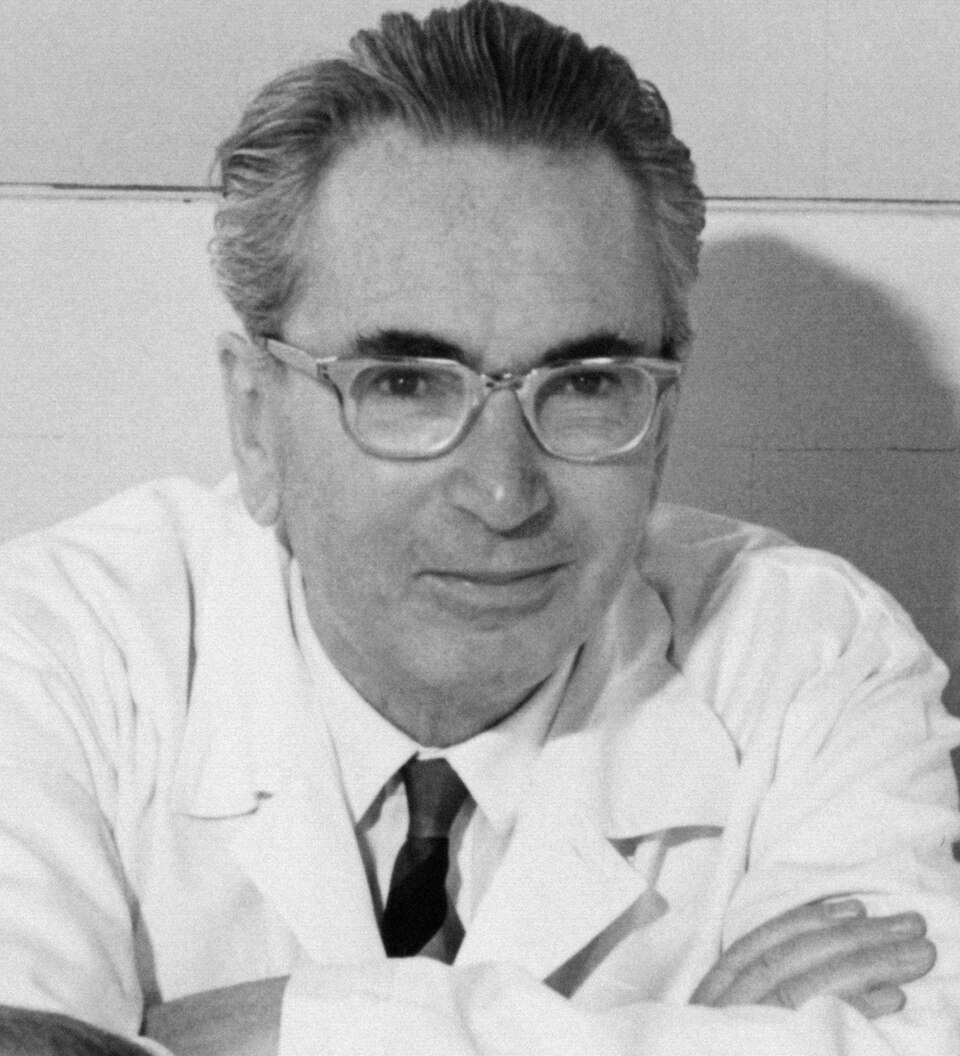
Viktor Frankl
Austrian neurologist, psychiatrist, Holocaust survivor, and founder of logotherapy — the 'third Viennese school' of psychotherapy after Freud and Adler — whose 1946 book Man's Search for Meaning, written in nine days after his liberation from Nazi concentration camps, has sold more than sixteen million copies and is regularly named among the most influential books of the twentieth century. Born in Vienna in 1905, Frankl survived Theresienstadt, Auschwitz, Kaufering, and Türkheim; his wife Tilly, mother, and brother were killed. From the camps he distilled a single conviction: that human beings can find meaning even in unavoidable suffering, and that the last of human freedoms is the freedom to choose one's attitude in any given set of circumstances. He went on to write more than thirty books, hold professorships at Harvard and Stanford, and lecture at over two hundred universities. Frankl died in Vienna in 1997.
quotes in library
Quotes by Viktor Frankl
110 quotes“Don't be ashamed to weep; 'tis right to grieve.”
“Tears bear witness that a man has the greatest of courage, the courage to suffer.”
“There were no tears available to comfort a man who had lost what he had most valued.”
“The way in which a man accepts his fate and all the suffering it entails, the way in which he takes up his cross, gives him ample opportunity — even under the most difficult circumstances — to add a deeper meaning to his life.”
“It may remain brave, dignified and unselfish.”
“Or in the bitter fight for self-preservation he may forget his human dignity and become no more than an animal.”
“Here lies the chance for a man either to make use of or to forgo the opportunities of attaining the moral values that a difficult situation may afford him.”
“And this decides whether he is worthy of his sufferings or not.”
“Such considerations may give the impression of being too remote from real life. But although they are remote from the average normal person, they can apply to anybody.”
“Dostoevski said once, 'There is only one thing that I dread: not to be worthy of my sufferings.'”
“These words frequently came to my mind after I became acquainted with those martyrs whose behavior in camp, whose suffering and death, bore witness to the fact that the last inner freedom cannot be lost.”
“It can be said that they were worthy of their sufferings; the way they bore their suffering was a genuine inner achievement.”
“It is this spiritual freedom — which cannot be taken away — that makes life meaningful and purposeful.”
“For what then matters is to bear witness to the uniquely human potential at its best, which is to transform a personal tragedy into a triumph.”
“To turn one's predicament into a human achievement.”
“When we are no longer able to change a situation — just think of an incurable disease such as inoperable cancer — we are challenged to change ourselves.”
“For success, like happiness, cannot be pursued; it must ensue, and it only does so as the unintended side-effect of one's personal dedication to a cause greater than oneself.”
“Or as the by-product of one's surrender to a person other than oneself.”
“Then in the long run — in the long run, I say! — success will follow you precisely because you had forgotten to think about it.”
Explore More Teachers
Discover wisdom from 500+ spiritual teachers across all traditions.
Browse All Teachers