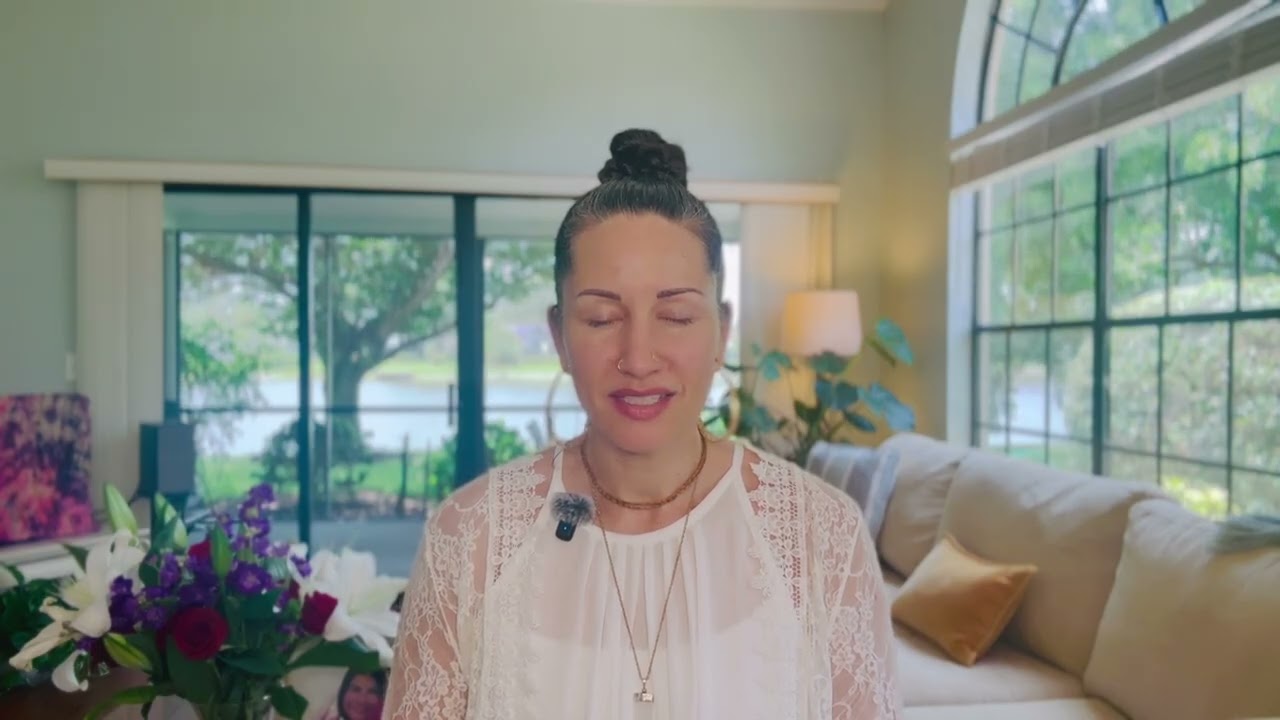
Julie Ela Grace's guided meditation "Meditation for Release & Renewal," posted to YouTube in April 2020, runs just under eighteen minutes and asks you to do something most meditations only hint at: lie down, let the body go heavy enough to feel like it is sinking into the floor, and then let it float away from the room altogether. From there the practice becomes a sequence of images. A tide rolls in over a warm beach, carries off whatever you have been holding, sunlight and a healing light pour into the cells, and the session closes by widening a set of wishes from yourself to someone you love to every living creature. This article walks through how that structure works and why its order matters.
Nothing exotic. Julie opens by inviting you to find a comfortable position, "preferably on your back," with a practical allowance: "if you struggle with lower back sensitivities it might help to bend your knees placing your feet on the floor" (video, 0:27). Your legs can extend and splay, your shoulders can open, and your palms can face up or down. She is clear that the goal is not perfect stillness. If you drift toward sleep, she says, "that is okay too."
The breathing comes next, and it is the piece people tend to rush. She asks you to inhale through the nose and then "exhale sigh or blow the air out of the mouth," repeating this a few times while you imagine that each inhale draws in calm and each exhale releases "whatever tension or stress is currently residing in your body" (video, 1:25). The audible exhale does real work here. It signals to the nervous system that the out-breath is allowed to be longer and louder than usual, and it gives the mind a physical marker for letting go before any imagery arrives. Only then does she ask you to let the natural breath take over again.
The relaxation that follows is top-down. Once the eyes close and the lids feel heavy, Julie takes a single sensation of calm and moves it through the body in a deliberate path: up to the crown, over the head, into the brow and the corners of the eyes, the mouth and the jaw, down the neck, through the shoulders, out through the arms and into the fingertips, then through the back, chest and belly, into the hips, down the legs and out to the feet. Each stop is named, which keeps attention from wandering and gives the imagination something concrete to work with.
The sequence is worth noticing because it treats relaxation as something that travels rather than something you force. You are not told to relax the jaw by gripping and releasing it. You are asked to carry a sense of calm to the jaw the way you might carry a warm cloth across a room. By the time the descent reaches the feet, she describes the whole body as "heavy relaxed completely safe and secure" (video, 4:10). That phrase, safety, is set up early and comes back again and again. Every later image is built on the feeling that the body has been made secure first.
This is the most unusual move in the practice. Once the body is heavy, Julie asks you to "imagine that the laws of physics of space and time no longer apply," and to feel the body begin to move "beyond this realm beyond the room in which you find yourself" (video, 4:50). The meditation then has you drift and fall through space and time until you land on a shoreline, feeling the sand as warm and the sunlight on your skin.
The purpose of that abstraction seems to be distance. A person who has spent the day replaying an argument or carrying a worry is usually still inside the same room, the same timeline, the same version of events. Moving the body out of that frame, even in imagination, creates room for something to change. The shoreline is not an escape. It is a new location chosen because it feels pristine and safe. Julie even names it as "a healing space as if you have come to a beautiful temple" (video, 6:36). The sacred-space language matters: the practice is asking you to treat the place where you release as something worth respecting.
This is the heart of the meditation, and it is where the title's word "release" becomes concrete. Warm water rolls up over your skin and rolls back out again, and with each wave you are invited to imagine letting go of "something that you've held on to that you no longer need" (video, 7:24). The meditation then becomes specific about what that something might be. Anger is first. Then grief, which she locates physically: "if you're holding on to grief often stored in the lungs imagine breathing it out with every wave" (video, 8:14). Then sadness, frustration, resentment, and fear, each rolling out with the tide.
Two details here are worth dwelling on. The first is that she pairs the emotion with the body, asking "do you feel a release in certain parts of your body" (video, 8:00). Emotions are not kept only as thoughts. Grief in the lungs is a specific image, and it asks the listener to look for where the feeling sits. The second is the use of the breath as the mechanism. The waves and the exhale are the same motion. When she says "you can use your breath here to blow it out," the imagery and the physiology are doing one job together (video, 9:26). Letting go is not framed as a decision you make once. The meditation invites repetition: "just keep letting go as much as you need."
"You are worthy of happiness joy and peace holding on to our negative feelings only harms ourselves. You are worthy of being free let it go." (Julie Ela Grace, video, 9:45)
That affirmation is the hinge between release and renewal. Letting go is framed not as punishment for holding on but as a reminder that holding on hurts the person doing it. The meditation then shifts to opening: shoulders relaxing a little more, chest opening, palms open.
Release alone would leave a vacuum, and the meditation addresses that directly. Once you have felt yourself emptied "of anything that keeps you low," Julie asks you to look up at the sky, which she describes as casting "a healing light right down to you" (video, 10:51). You breathe that light in, see it shimmering in whatever colors you like, and imagine it permeating the skin and descending "into the trillions of cells in your body." It pours through veins, muscles, tissues and bones, until you feel yourself as "a cleansed body of light" (video, 11:30).
The metaphor is a practical one. The first half of the practice removes weight. The second half fills the space that weight left with something you can actually feel, which is warmth and brightness rather than blankness. Julie then makes the claim explicit: you are "a being of light," capable of "great compassion and love," and able "to heal yourself and others" (video, 12:40). Whether or not a listener takes that as a literal teaching, it gives the practice a direction. The release is in service of a return to something you already are.
The meditation ends with a structure that will be familiar to anyone who has practiced loving-kindness. After you float back through space and time, land in your body, deepen the breath and draw movement back into your fingers and toes, you press up to sitting and bring the hands into Anjali mudra at the heart center. Then the phrases begin, said silently: "may I be happy may I always feel safe may I be free" (video, 15:27).
From there the circle widens in three steps. First a loved one, "human furry or otherwise," held in the heart with the same three wishes. Then "this earth and all its creatures," with the wishes becoming "may all creatures be happy may all creatures always feel safe may all creatures be free" (video, 16:00). The order is deliberate. Having just spent most of the session on your own release and light, you are asked to extend those same wishes outward, moving from self to beloved to all beings. The meditation closes by bowing to yourself and "honoring your beautiful light," a reminder that the widening began with you.
The meditation is about seventeen and a half minutes long, and it works best when you have that stretch of time without interruption. Lying down is suggested, and it is fine to use a bed, though the instructions also say that drifting off is acceptable. If your lower back is sensitive, bend the knees and keep the feet on the floor, as Julie suggests. Keep the exhales audible if that feels natural. Let the imagery be as vivid or as simple as it wants to be. The meditation does not require you to see the waves clearly. It asks you to feel them move.
If the grief-in-the-lungs image or the anger-on-the-tide image lands strongly, it may be worth returning to them in shorter sessions, focusing on one emotion at a time, rather than trying to release everything in a single sitting. The structure supports that. Each wave in the middle section is a separate act of letting go, and you can stay with one for as long as you need before the next.
If this practice speaks to you, the most useful next step is to sit with the sequence itself rather than only reading about it. Try the body scan on its own for a few days, then add the shoreline, then the light, then the closing wishes. Notice which stage you want to linger in and which you want to move through quickly. Julie's original video, posted in April 2020, is still available on her channel, and listening to her voice guide each transition is different from reading a description of it. Treat the meditation as a structure you can return to, not a script you need to perfect.
Most of all, take seriously the meditation's own closing advice. Bow to yourself, honor the time you have given yourself, and carry the wishes it ends with into the rest of your day.