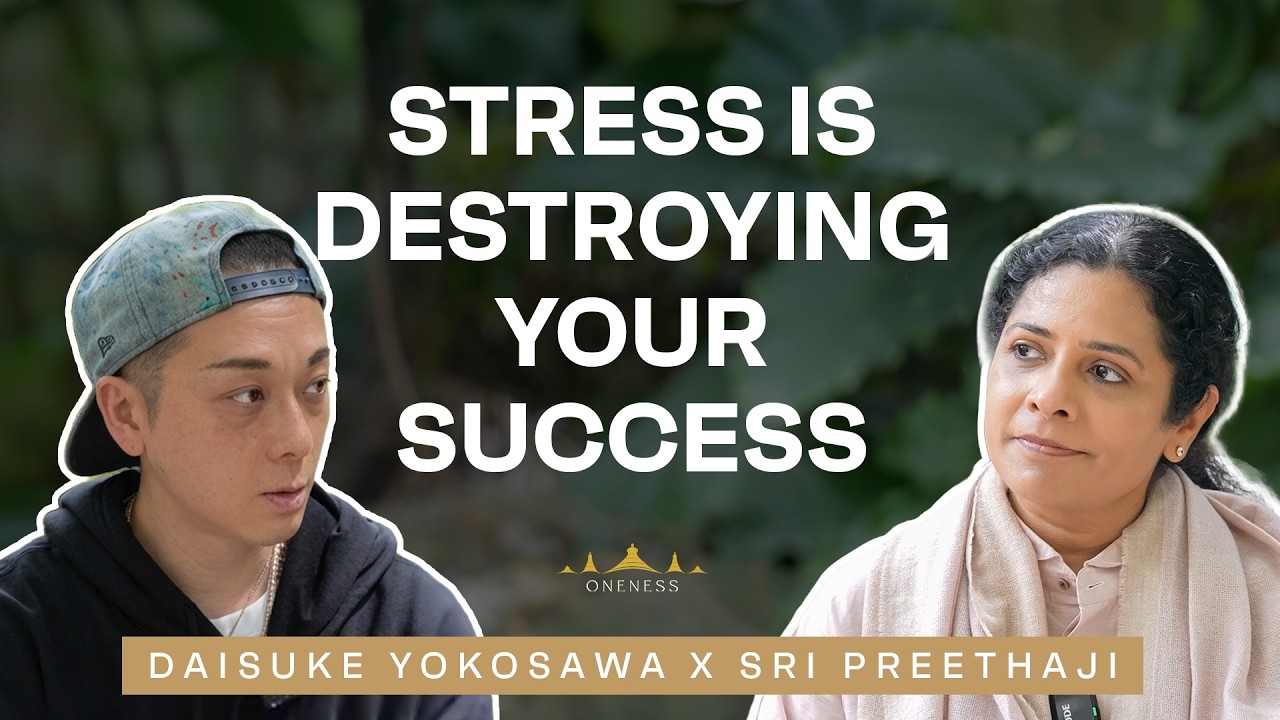
Sri Preethaji, co-founder of the Oneness Movement, outlines how individual spiritual awakening and consciousness work form the foundation for collective human evolution. The Oneness Movement operates on the premise that separation is an illusion and that humanity's fundamental nature is interconnectedness—a realization that, when embodied at scale, catalyzes genuine social and spiritual transformation. Rather than ideological frameworks, the movement emphasizes direct experience of non-duality and the mechanisms through which individual consciousness shifts ripple into collective systems.
What is the Oneness Movement?
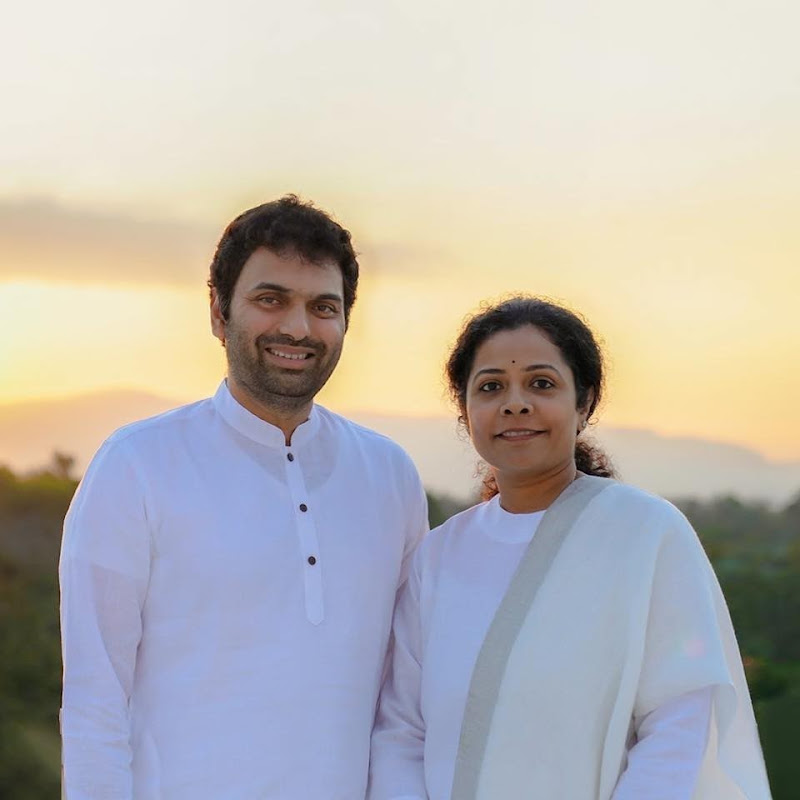
The Oneness Movement, co-founded by Sri Preethaji and Sri Krishnaji, is a global spiritual initiative designed to facilitate mass awakening. Unlike religious organizations or philosophical schools, the movement operates as a laboratory for consciousness itself. Its core insight is that suffering—both individual and collective—stems from the illusion of separation, and that healing emerges when human beings directly experience their fundamental unity with all existence.
The movement does not impose beliefs but rather creates conditions and technologies through which individuals can have direct, non-conceptual experiences of interconnection. This distinction is crucial: the Oneness Movement is not asking people to believe in unity; it is offering methodologies to know it viscerally.
How Does Individual Transformation Link to Collective Awakening?
Sri Preethaji emphasizes that individual consciousness is not separate from collective consciousness. When one person awakens to the reality of non-duality—to the understanding that the boundaries between self and other are mental constructs—that shift does not remain isolated. Consciousness operates holistically; a shift in one location of the field affects the entire field.
This is not metaphorical. The movement suggests that as individuals embody states of unity, acceptance, and love, they become transmitters of these frequencies into their families, communities, and networks. The ripple effect compounds as more people undergo genuine transformation. Instead of waiting for systemic change to affect individuals, the Oneness Movement inverts the logic: it works on consciousness directly, trusting that shifts in human perception inevitably reshape institutions, relationships, and social structures.
What Does Direct Experience of Oneness Mean?
A central practice within the Oneness Movement is facilitating direct, non-dual experience—moments in which the experiencer moves beyond the thinking mind and encounters reality unmediated by concepts. This is distinct from intellectual understanding. A person can read about non-duality, affirm the principle, and still operate from a sense of fundamental separation. Direct experience, by contrast, reorganizes the nervous system and the way consciousness relates to itself.
Sri Preethaji points to the fact that such experiences are reproducible and can be catalyzed through specific protocols and environmental conditions. This is why the Oneness Movement invests heavily in what it calls "deeksha"—a transmission or initiation intended to activate dormant capacities for unity consciousness in the recipient. Through such mechanisms, awakening is not treated as a rare achievement but as an accessible state that can be cultivated systematically.
What Role Does the Oneness Temple Play?
The Oneness Temple, located in Puducherry, India, serves as a physical anchor for the movement's work. It is not a place of worship in the traditional sense, but rather an energetic and organizational hub designed to support the emergence of unity consciousness. The temple's architecture and environment are intentionally constructed to facilitate states of heightened awareness and direct experience.
Visitors and practitioners report profound shifts in consciousness when present at the temple. Sri Preethaji describes this as a space where the field of unity consciousness is so concentrated and accessible that individuals can more easily slip beyond the habitual patterns of separation-based thinking. The temple functions as both a literal sanctuary and a symbol: a physical manifestation of the consciousness the movement seeks to awaken globally.
How Does the Oneness Movement Address Modern Suffering?
Sri Preethaji identifies the root of modern suffering—loneliness, anxiety, meaninglessness, relational breakdown—as stemming from the experience of separation. When human beings operate from the assumption that they are isolated egos defending themselves against a hostile world, suffering becomes inevitable. Conflict, competition, exploitation, and disconnection follow logically from this false premise.
Rather than addressing symptoms—offering self-help techniques, therapy, or ideological solutions—the Oneness Movement targets the root: the illusion of separation itself. When this illusion dissolves in direct experience, the behaviors and structures built on it naturally begin to shift. A person who genuinely knows their unity with all life cannot exploit, harm, or dominate others without immediately feeling the wound in themselves.
This approach does not dismiss the value of conventional healing or social reform. Rather, it situates them within a larger context: without shifts in consciousness, external changes remain unstable and subject to the same separatist logic. But when consciousness itself transforms, external change becomes organic and sustainable.
What Are the Practical Mechanisms of Awakening in This Movement?
The Oneness Movement employs several distinct approaches to catalyze consciousness shift:
- Deeksha: A direct transmission offered by trained facilitators designed to awaken the receiver's capacity for non-dual experience and unity consciousness.
- Residential Programs: Immersive experiences at the Oneness Temple and other centers where practitioners spend extended time in an environment saturated with unity consciousness.
- Online Communities and Global Networks: Digital platforms through which the movement extends its reach and creates supportive fields of collective intention across geography.
- Teacher Training: Development of facilitators who can offer deeksha and guide others in their awakening process, enabling the movement to scale its impact.
- Life Transformation Programs: Structured protocols addressing specific challenges—relationships, work, health, purpose—from within a consciousness-first framework.
None of these mechanisms rely on belief or ideology. They are designed as technologies—repeatable, testable, and verifiable through direct experience. A participant need not accept any doctrine; they need only participate and observe what unfolds in their own awareness.
How Does Unity Consciousness Reshape Relationships?
One of the most visible domains of transformation in the Oneness Movement is relational. People report dramatic shifts in their marriages, families, and friendships after experiencing direct awareness of unity. Defensiveness softens. The need to control, manipulate, or prove oneself diminishes. Genuine acceptance and love emerge not as efforts but as natural expressions of unity.
Sri Preethaji explains this as a consequence of the fundamental shift in perception. When you know, not merely believe, that another person is not separate from you—that their joy is your joy, their suffering your suffering—relationship becomes an expression of self-care and self-love. Harm, criticism, and withdrawal become irrational because they would be acts against oneself.
This is not sentimentality or forced niceness. It is a restructuring of the nervous system and the sense of self that makes healthy, authentic relating inevitable rather than aspirational.
What Is the Vision for Global Impact?
Sri Preethaji articulates a vision in which enough humans undergo the shift from separation consciousness to unity consciousness that it tips the collective field. This is not utopian fantasy but a recognition of how consciousness operates. When a critical mass of individuals embodies non-dual awareness, institutions, governance, economics, and culture automatically reorganize around that foundation.
Wars cannot persist in populations that know their fundamental unity. Exploitation becomes psychologically impossible. Cooperation, creativity, and mutual flourishing become the natural operating system. The Oneness Movement is thus not a spiritual hobby or personal self-improvement project; it is positioned as the most practical response to the crises—existential, relational, and systemic—facing humanity.
This vision does not require belief in metaphysics or religion. It requires only that enough people have direct experience of the reality that separation is a mental construction and that at the deepest level, all consciousness is one.
Where to Go From Here
If you are curious about the Oneness Movement, the most direct path is experiential. The movement offers online deeksha sessions, introductory programs, and access to its global community. Rather than reading about unity consciousness, participants are invited to taste it directly through guided processes.
For those interested in deeper engagement, residential programs at the Oneness Temple provide immersive experiences designed to stabilize non-dual awareness and integrate it into daily life. The movement also offers training for those called to become facilitators, extending the work into their own communities.
Skepticism is welcome. Sri Preethaji does not ask for faith—only for openness to direct investigation of consciousness itself. If you have felt disconnected, isolated, or uncertain about the deeper nature of reality, the Oneness Movement offers a methodology to know, not believe, the answer.