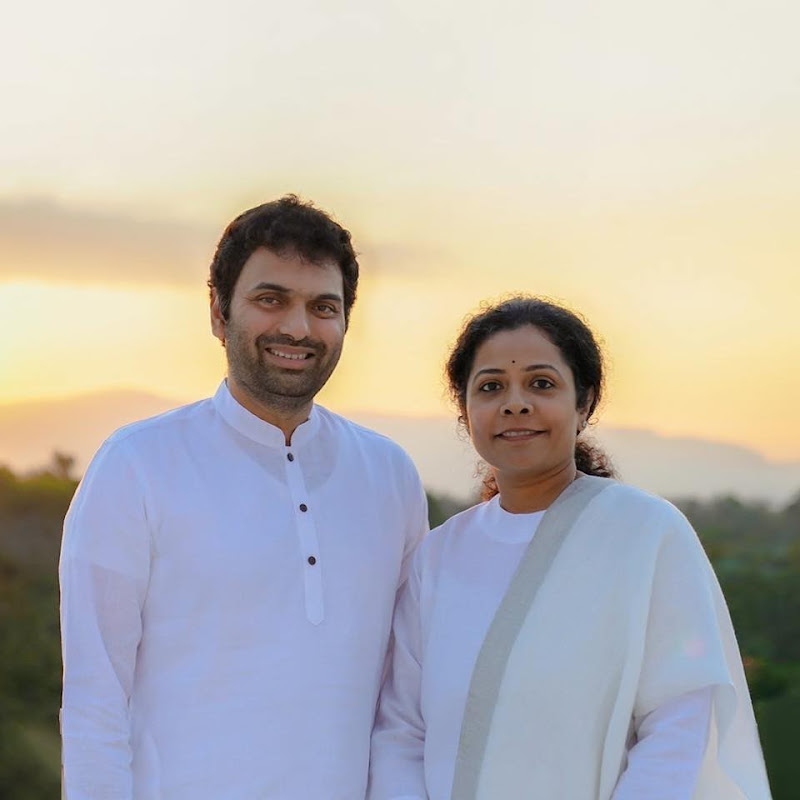
Riddhi, as presented in the Oneness Abundance Festival, refers to a state of prosperity and miraculous flourishing rooted in spiritual alignment rather than material striving. The Oneness Movement, led by Mukti Guru Sri Krishnaji alongside Sri Preethaji, positions Riddhi not as a goal to be chased but as a natural consequence of inner awakening. The festival itself functions as a container—a deliberately constructed spiritual environment—where seekers can experientially connect with the source of abundance itself.
The core insight here is that abundance and miracles are not outcomes of external effort or visualization techniques alone, but rather emerge when consciousness shifts into alignment with what the tradition calls "grace." This represents a departure from conventional abundance-focused workshops that emphasize manifestation through willpower or positive thinking.
The description of Riddhi as a "divine space of happening" points to a specific understanding of how transformation occurs. In this framework, a "space of happening" is not a classroom where information is transmitted, but rather an energetically activated environment where grace operates directly. Participants do not learn techniques and then apply them; instead, they enter a field where the very possibility of abundance is awakened within them.
Sri Krishnaji's role as Mukti Guru (a liberating teacher) suggests that the festival is structured around removing inner obstacles to abundance rather than accumulating new knowledge. The word "Mukti" means liberation, indicating that the real work is the dissolution of limiting beliefs, fear patterns, and contracted states of consciousness that prevent the natural flow of prosperity.
Many abundance programs frame prosperity as something to be acquired through specific actions—affirmations, visualization, strategic planning. The Riddhi framework, by contrast, emphasizes awakening to abundance as an intrinsic dimension of consciousness itself. When the Oneness Movement speaks of "miracles," they are likely referring to the experience of needs being met, opportunities arising, and synchronicities occurring naturally when one's inner state is aligned with the deeper flow of existence.
This is consistent with non-dual spiritual traditions where the individual self is understood not as separate from the universe, but as a localized expression of it. From this perspective, abundance is not something external that must be obtained; it is something discovered to have always been available once the separative sense of self dissolves or significantly softens.
The festival's emphasis on "awakening" suggests that seekers begin in a state of disconnect from their natural prosperity. This disconnect is typically rooted in unconscious patterns—conditioning about scarcity, unworthiness, or the belief that abundance must be earned through suffering. The Riddhi festival appears designed to interrupt these patterns through direct exposure to a field of grace.
When consciousness "awakens," according to this model, the experience of lack transforms. Needs still arise, but they cease to carry the charge of desperation. Resources that were always present become visible. Opportunities that were previously filtered out by a contracted nervous system now register and become accessible. This is not magical thinking; it reflects the psychological truth that our perception and access to resources is directly shaped by our internal state.
The practical dimension of attending a festival like Riddhi involves surrendering the agenda-driven mindset and entering as an open participant. The "space of happening" is not something to be optimized or controlled; it is something to be received. This requires a willingness to set aside doubt and the constant evaluating mind that questions whether something is "working."
For seekers accustomed to self-improvement frameworks, this can feel risky—there are no techniques to master, no homework to complete. Yet this absence of methodology is itself the point: the festival creates conditions for grace to operate without the interference of the small self trying to manage the outcome. The transformation that occurs is thus less attributable to any individual effort and more attributable to a shift in one's relationship with existence itself.
For those interested in exploring abundance from a consciousness-centered rather than technique-driven perspective, the Riddhi festival offers an entry point into the Oneness Movement's broader teachings. The experience points toward an understanding of prosperity that is not fragile or dependent on maintaining constant vigilance. Instead, it suggests that when the obstacles to grace are cleared—through the direct work of such festivals and the guidance of awakened teachers—abundance becomes a natural expression of aligned living. Further exploration of the Oneness Movement's teachings on consciousness, grace, and the nature of transformation would deepen understanding of how inner awakening translates into outer flourishing.
]]>