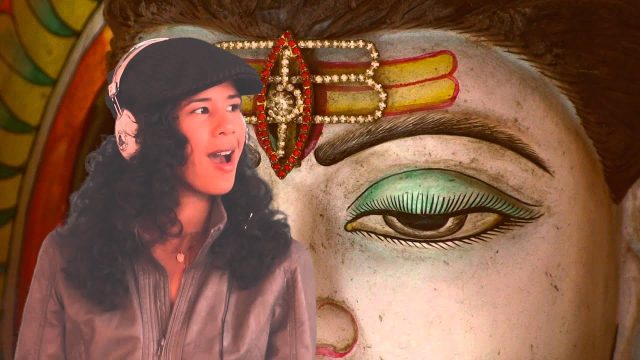
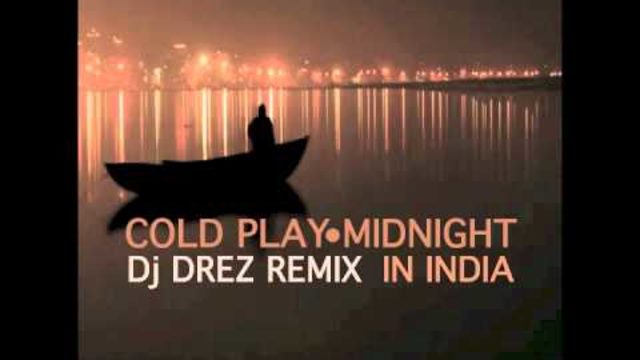
In January 2015, a four-minute video appeared on YouTube showing a DJ and friends dancing through town—not in a club, not at a festival, but in the streets, moving to a rhythm that seemed to belong everywhere and nowhere at once. The video was a preview of something larger: an electronic music project called India Beat Crush, released in February that year, that would encapsulate a growing movement in contemporary music where the pulse of the dancefloor meets the resonance of ancient Indian classical traditions.
DJ Drez, an electronic musician and producer working at the crossroads of modern production and traditional South Asian sounds, made his statement quietly but visibly. Rather than release a standard album teaser with studio clips or performance footage, he chose a street scene—friends dancing, bodies in motion, joy as the message. That choice, itself, was instructive. It suggested something fundamental about the work: that the marriage of electronic beats and Indian musical language wasn't an academic exercise or a novelty mashup, but something meant to move people, to bring them together, to feel alive.
The India Beat Crush EP arrived at a moment when electronic music producers were increasingly looking beyond Western house, techno, and hip-hop lineages for sonic inspiration and structure. The rise of global production tools and streaming platforms had made it possible for artists anywhere to study, sample, and integrate traditions previously locked behind geographical and cultural gatekeeping. But integration and exploitation are different things, and DJ Drez's work suggested a respect—a listening—rather than a raid.
Indian classical music operates on principles fundamentally different from Western pop and electronic music. Rather than fixed harmonic progressions, it builds from a raga—a melodic framework with specific notes, ornamentations, and emotional associations. Rather than the four-on-the-floor kick drum of house music, Indian percussion (tabla, mridangam, or dhol) speaks in conversational rhythmic cycles called taals, which can be hypnotic, complex, and entirely resistant to the click-track quantization of a DAW. Where Western electronic production tends toward the sterile precision of the grid, Indian classical music thrives in the microtonal and the breathing, the spaces between the notes.
When an electronic producer ventures into that territory without flattening it, without reducing it to a sample loop, they're attempting something technically and culturally intricate. The India Beat Crush project suggested DJ Drez understood this. The title itself—"crush"—implies pressure, intensity, the meeting of two forces. It's not a fusion (a word that can imply equal parts or a smooth blend) but a compression, a collision, a bringing-together of weight.
The choice to premiere the work through street footage rather than a studio session or staged performance video deserves attention. In 2015, when dubstep drops and trap hi-hats dominated YouTube's music-video culture, to show friends dancing joyfully to Indian-electronic hybrid sounds in daylight—not in a warehouse rave, not in a spiritually-coded meditation video, but in the everyday—was quietly radical. It positioned the music not as a niche category or a world-music curiosity, but as something ordinary people, in ordinary spaces, could move to and enjoy.
This democratizing impulse aligns with a larger shift in conscious electronic music of the mid-2010s. As producers from countries with strong classical traditions (India, West Africa, the Middle East, Indonesia) gained global platforms, they began creating work that neither abandoned their lineage nor trapped it in amber. Instead, they asked: what happens if we build rhythm and production around what we already know? What if the studio becomes a site not of erasure but of extension?
The India Beat Crush EP arrived on iTunes on February 3, 2015, following the January teaser. While the initial YouTube video accumulated modest but steady views—59,744 by public count—it signaled something happening beneath the surface of mainstream electronic music discourse. The project found audiences on streaming platforms and among listeners already exploring the growing catalog of electronic producers integrating non-Western classical traditions: artists like Susana Baca remixed by electronic producers, or the rise of Afrobeat and grime producers in London studying and sampling highlife records from decades prior.
What made India Beat Crush distinctive was its refusal of the "world music" ghetto even as it embraced Indian classical vocabulary. The music wasn't presented as exotic or as a corrective to Western electronic music's supposed emptiness. It was simply offered: here is a way of making music that honors both the lineage and the dancefloor, that understands the tabla not as a texture to layer over a 4/4 kick drum, but as a conversation partner with the sequencer.
For DJ Drez, the India Beat Crush project fit into a broader artistic commitment to building bridges between electronic music culture and spiritual and classical traditions. The project name itself suggests what his practice would continue to investigate: how to bring pressure—intention, focus, creative force—to the meeting place between the ancient and the contemporary, the transcendent and the embodied. In a cultural moment when "world music" remained a category unto itself, and when electronic music often presented itself as futuristic and therefore implicitly rootless, his work asked a different question: what if the future of electronic music is precisely its willingness to deepen its roots?
The video's community aspect—friends dancing together, the emphasis on collective joy rather than singular genius—also prefigured a larger conversation that would intensify in the late 2010s and beyond: that electronic music at its best is a participatory culture, not a spectator sport. The dancefloor is not a stage but a shared ritual space. The beat is not a product but an invitation.
For listeners encountering DJ Drez's work, India Beat Crush serves as an entry point to a larger ecosystem of electronic producers engaging seriously with non-Western classical and folk traditions. Exploring artists like Bonobo (who integrates field recordings and traditional instruments), Jon Hopkins' collaborations with global musicians, or the broader "global bass" movement can deepen understanding of how electronic production is being remade in the 21st century as a truly global conversation rather than a Western export.
Listeners interested in Indian classical music itself—ragas, taals, the philosophical and emotional frameworks underlying the tradition—might explore recordings of sitar players like Ravi Shankar or Nitin Sawhney, or percussionists like Zakir Hussain. Understanding those lineages enriches how one hears the electronic production that samples or responds to them. And for those curious about DJ Drez's ongoing practice, his official site and streaming platforms remain the primary way to access and follow his work as it continues to evolve.