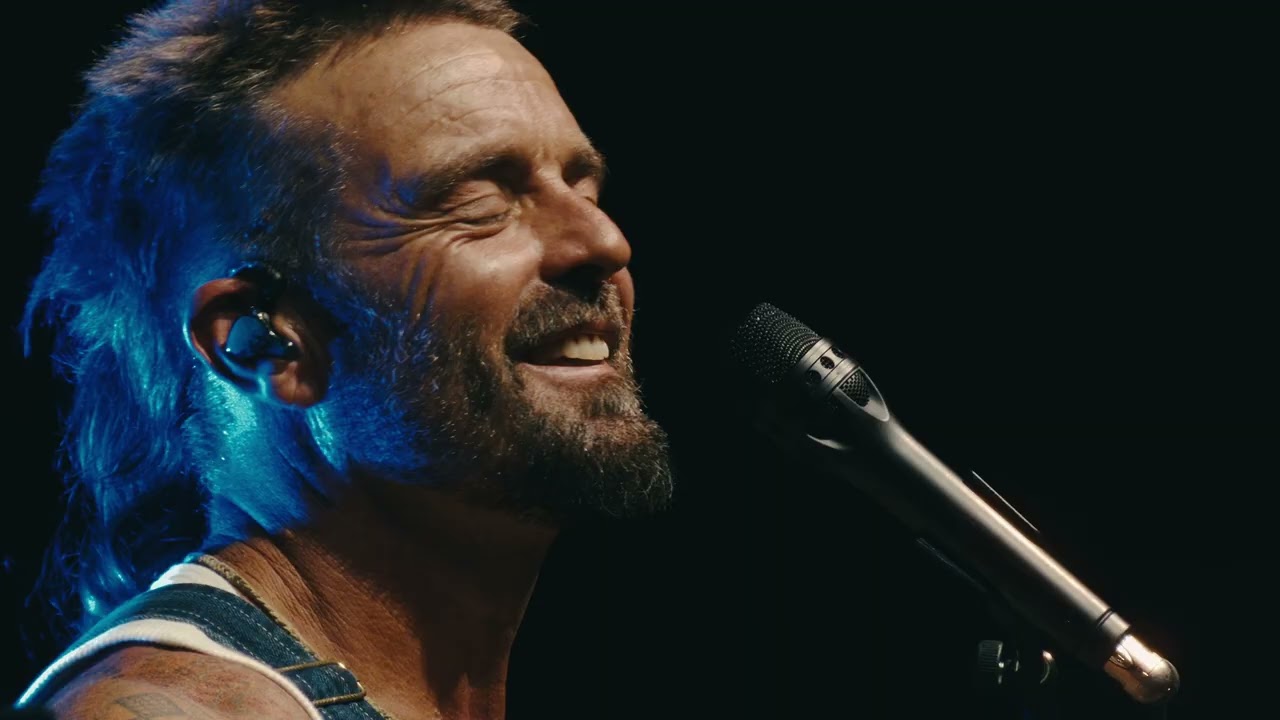
Rudd opens by reflecting on the long gestation of the NANNA album, a dream he carried for years but refused to rush. His reluctance to proceed until "everything was really right" is not hesitation born of doubt, but rather a disciplined spiritual practice. He identifies four dimensions of readiness that had to align: spiritual alignment, musical capability, mental clarity, and physical health. This framework suggests that authentic creative work cannot be rushed or forced—it requires the artist to become a vessel capable of channeling something true.
The patience Rudd describes is active rather than passive. He lived into his readiness through his "journey," his "lessons," some of which were "tiring," "painful," and "hard to understand." This accumulated experience—years of spiritual practice, musical development, and life's difficulties—prepared him to recognize and receive the right collaborators when they appeared. Readiness, in Rudd's telling, is not a destination but the result of sustained commitment to understanding oneself and one's craft.
One of the most striking aspects of the NANNA creation story is the absence of traditional selection processes. Rudd notes that "we had no auditions or no process where people were eliminated or people tried out and the right people presented." This reversal of conventional music industry practice—where producers and bandleaders typically audition many musicians and winnow down to the best—suggests an entirely different model of creative assembly.
Instead of Rudd seeking out musicians, "the right players with all the right stories" appeared organically once he reached his own state of readiness. "The people that first presented for the instruments are the ones that are in the band now," he explains. This seamless alignment points to what Rudd frames as a calling—a mutual recognition between himself and the collaborators that they were meant to work together. The band is not assembled through competitive audition but through synchronicity and shared purpose.
This approach aligns with spiritual traditions in which the right teachers, allies, or collaborators appear when the student is ready to receive them. Rudd's experience suggests that once he had done the deep internal work, external circumstances simply reflected that readiness back to him.
Throughout the reflection, Rudd emphasizes the presence and agency of ancestors. He describes the musicians and the album itself as "called in"—brought forth not primarily by his will but by something ancestral working through him. "It's like our ancestors have all sat down together and had a cup of tea and said all right let's put all this this mob together to create this bang," he explains.
This perspective reframes authorship and ownership. Rudd explicitly resists taking full credit for the work: "It's hard for me to really... take ownership of it in any way. I just feel really honored to be part of it." He describes being "almost given the keys to call in a series of really heavy ancestors that all sat together and went right this is what we need to put together for these reasons." The ancestors, in his framing, are intelligent agents with intentions and reasons for the project.
The phrase "really heavy ancestors" suggests not merely sentimental connection to the past, but engagement with lineages of power, knowledge, and purpose. These are ancestors with something to say, and the NANNA album becomes their vehicle of expression. Rudd and the musicians may not consciously understand the full scope of what they're creating, but they are entrusted with the work: "the people that are part of this project may not understand the full bigger picture of what this is but we've got it."
Rudd uses the language of calling twice: first to describe his own relationship to the project, then to situate the band members within it. "It feels like a calling you know, and that I was meant to answer that call," he says, adding the crucial caveat: "but I I had to be ready to answer that call." A calling, in this understanding, is not a summons that overrides choice—it requires preparation and active readiness. One must become capable of hearing it and responding to it.
The calling is also collective. The musicians experienced it too, showing up and presenting themselves at the precise moment they were needed. This mutual recognition of a shared purpose binds the group beyond contractual or professional obligation. The calling is the deeper coherence that makes the project feel necessary rather than arbitrary.
Rudd's account of his preparation for the album acknowledges the role of difficulty. His journey involved lessons that were "sometimes tiring and sometimes painful sometimes hard to understand." Rather than being obstacles to creativity, these experiences were essential to it. His suffering and confusion "all sort of manifested into this Amazing Project," suggesting that adversity was not separate from his creative work but integral to it.
This echoes a wider spiritual and artistic principle: that integration of struggle and pain deepens the artist's capacity to channel genuine work. An artist who has not faced difficulty cannot access certain depths of understanding or resonance. The long, sometimes painful journey winds up "through the SS of my feet into my lungs"—a somatic, embodied process of transformation that prepares the whole being, not just the mind or technical skill.
Rudd's account of the NANNA creation offers several pathways for further exploration. Those interested in the relationship between spiritual practice and artistic authenticity might examine how readiness—across multiple dimensions of being—shapes what work can flow through an artist. The rejection of audition-based selection in favor of organic assembly raises questions about how intuition and synchronicity operate in collaborative creation.
The ancestral framing of the work also invites inquiry: what does it mean to understand oneself not as the originator of one's creative output but as a channel for something elder and larger? And how does that reframing change the burden of authorship, allowing the artist to be simultaneously fully committed and emotionally unattached?
For musicians and creators, the practical challenge becomes clear: the work is less about competitive skill acquisition and more about becoming a suitable vessel through sustained practice, spiritual work, and integration of life's difficulties. The NANNA album emerges not from Rudd's will alone, but from his willingness to wait, to grow, and to recognize the right collaborators when they appear.
]]>