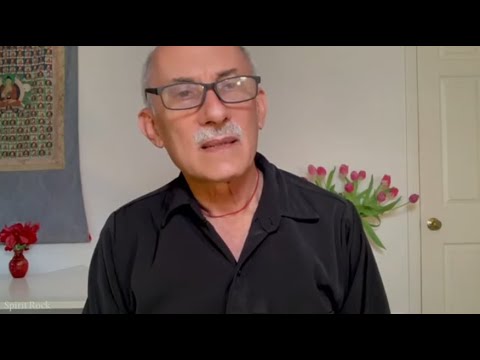
Activism rooted in anger and burnout often undermines itself. Jack Kornfield teaches that the most effective social justice work requires us to ask: "Who are we when we stand up for justice, and how beautiful and joyful can we be?" This approach integrates Buddhist mindfulness with engaged activism, suggesting that our inner state—our presence, compassion, and joy—is inseparable from the impact we make in the world.
Activism is often framed as serious, urgent, and even grim. Social injustice is real, and the problems are severe. Yet Kornfield's central question reframes the entire conversation: yes, we must stand up for justice—but who are we in that stance? Are we operating from exhaustion, righteousness, and burnout, or from a place of genuine presence and care?
This isn't about dismissing the urgency of social problems. Rather, it's about recognizing that how we show up matters as much as what we're fighting for. A person who organizes from burnout, anger, and a sense of depletion will organize differently—and often less effectively—than someone who brings presence, embodied joy, and genuine connection to the same work. The quality of our being shapes the quality of our doing.
Buddhist mindfulness practice cultivates a particular kind of awareness: the ability to be fully present with what is happening, both internally and externally, without being overwhelmed or consumed by it. When applied to activism, this changes everything.
Rather than collapsing into despair about the scale of suffering, or becoming rigid and dogmatic in pursuit of change, a mindful activist can hold both the seriousness of injustice and the beauty of life at the same time. They can listen deeply to those affected by injustice. They can make strategic decisions from clarity rather than reactivity. They can collaborate with others without burning out or burning bridges.
Kornfield's background as a Buddhist monk—training under teachers like Ven. Ajahn Chah in Thailand and Burma—gives weight to this perspective. These monastic traditions have long emphasized that inner peace and outer action are not separate. A person who cultivates awareness of their own mind becomes capable of more compassionate, effective action in the world.
Burnout in activist spaces is endemic. People pour themselves into causes, often working without rest, without joy, without community care. The result is exhaustion, disillusionment, and departure. Kornfield's question implicitly addresses this: if we're not joyful, if we're not beautiful in how we show up, the work itself becomes unsustainable.
Part of this is structural—activist work often demands impossible labor from volunteers with finite energy. But part of it is also about the inner orientation activists bring. If activism is rooted in anger at injustice (rather than love for justice), the activist's own nervous system remains activated, contracted, depleted. Anger is a valid response to harm, but it's not a sufficient foundation for long-term change-making.
Joy, by contrast, is generative. It sustains. When activists cultivate joy—genuine delight in connection, in community, in the work itself—they create sustainable systems. They model what they're fighting for. They attract others. They think more creatively.
Kornfield's teaching draws on a core Buddhist insight: the world we create through our actions reflects the inner state from which those actions arise. If we fight for justice from a place of hatred, we embed hatred into our movements. If we organize from joy and presence, we create different possibilities.
This doesn't mean toxic positivity or denial of harm. It means that an activist can fully acknowledge injustice while also choosing to cultivate presence, beauty, and even joy in response. These aren't contradictory. A person can be clear-eyed about systemic racism while bringing genuine warmth and connection to their co-organizers. A person can recognize ecological destruction while finding and sharing moments of beauty and awe.
In fact, the capacity to hold both—to see clearly without becoming consumed—is precisely what enables sustained, strategic action. It's the difference between activism as reactivity and activism as a deliberate practice.
Kornfield doesn't outline a step-by-step guide in the brief talk, but the implication is clear: the practices he teaches—meditation, mindfulness, heartfulness—are directly applicable to activist work. Regular meditation practice trains the nervous system to remain calm and clear even amid difficulty. Loving-kindness practice (metta) cultivates the capacity to care for others without losing oneself. Mindful listening strengthens the ability to hear and understand those most affected by injustice.
Beyond formal practice, activists can ask themselves: How am I showing up? Am I burnt out, or am I present? Am I operating from anger, or from love? What would it look like to bring more beauty, more joy, more genuine connection to this work?
These aren't soft questions. They're strategic questions about the foundations of effective change-making.
Kornfield's phrasing—"how beautiful and joyful can we be"—suggests a particular vision of activism. It's not activism that's grim, self-sacrificing, or puritanical. It's activism that's alive, connected, generative.
Beautiful activism might include:
- Spaces where people feel genuinely welcomed and valued, not just used for labor
- Celebration of wins, no matter how small, and acknowledgment of effort
- Practices of mutual care within activist groups—slowing down to check in, to rest, to reconnect
- Attention to how spaces are organized—are they joyful? beautiful? do they reflect the values we're fighting for?
- Collaboration rooted in genuine connection rather than just shared enemies
- Integration of art, music, and embodied practice alongside strategy and analysis
This is not decoration on top of "real" activism. It's foundational. It's what makes activism sustainable and actually effective.
Kornfield spent years training as a Buddhist monk in rigorous monastic environments. He learned directly from masters of meditation and ethical practice. He then dedicated his life—since 1974—to translating these insights for Western practitioners. Co-founding the Insight Meditation Society and Spirit Rock Meditation Center, he helped establish institutional spaces for contemplative practice grounded in ethics and engagement.
His teaching on activism isn't theoretical. It emerges from decades of practice, from deep understanding of how human minds actually change, and from commitment to bringing these insights into the world. When he asks "how beautiful and joyful can we be" while fighting for justice, he's drawing on traditions that have long understood that inner transformation and outer action are inseparable.
If you're engaged in activist work—or considering it—Kornfield's question invites reflection. Start by noticing your own inner state. Are you burnt out? Angry? Disconnected from joy? These aren't moral failures. They're information. They're signals that something in how you're approaching the work might need to shift.
Explore meditation practice, either through guided resources or through a local sangha (community). Notice what happens when you bring even five minutes of daily mindfulness to your life. How does that shift how you show up in activist spaces?
In your activist work, experiment with bringing more intentional presence and care. Slow down slightly. Check in more deeply with co-organizers. Notice moments of beauty and connection. Celebrate. This isn't sentimental. It's strategic. It's how movements sustain themselves and actually win.
Finally, consider: Who do you want to be when you stand up for justice? Not just what do you want to fight against, but who do you want to become? How beautiful and joyful can you be? That question is worth sitting with.