BrightStar
BlogMy Tickets
BlogMy Tickets
Saved events
Help & contactSign UpLog in
Events
  • Browse All Events
  • For Seekers
  • Yoga
  • Meditation
  • Breathwork
  • Qigong
  • Sacred Music
  • World Music
  • Medicine Music
  • Sound Healing
  • Ecstatic Dance
  • Ceremony
  • Plant Medicine
  • Energy Healing
  • Satsang & Wisdom
  • Tantra
  • Retreats
  • All Categories →
Destinations
  • Bali
  • Sedona
  • Los Angeles
  • Costa Rica
  • Tulum
  • Byron Bay
  • San Francisco
  • Austin
  • New York
  • San Diego
  • Seattle
  • Portland
  • Miami
  • London
  • Maui
  • Boulder
  • Oakland
  • All Cities →
Platform
  • List Your Event Free
  • Autopilot
  • Join the Movement
  • Sell Globally
  • For Creators
  • For Teams
  • For Writers
  • For Teachers
  • For Kirtan Artists
  • For Studios
  • For Festivals
  • For Retreat Centers
  • For Nonprofits
  • Brand Ambassador
  • Free Ticketing
  • Elevate
  • Amplify
  • The Ecosystem
Features

Ticketing and checkout

  • Ticket categories
  • Assigned seating
  • Custom questions
  • Coupon codes
  • Smart pricing
  • Ticket sharing
  • Waitlist
  • Flexible refunds
  • Digital waivers
  • Tip jar
  • Donations and sliding scale
  • Embed widget
  • Mindful checkout
  • Recurring events
  • Private sessions
  • Online courses
  • Summits
  • Rooms and stays
  • Ticket scanner

Marketing and growth

  • Abandoned cart recovery
  • Visitor recovery
  • Upsells and add-ons
  • Affiliate engine
  • Upsell affiliate network
  • Brand ambassador
  • Meta retargeting
  • Verified buyer network
  • Outbound email marketing
  • Email sequences
  • SMS and WhatsApp
  • Event upsell network
  • Direct mail campaigns
  • SEO engine
  • Syndication
  • Event sharing
  • Custom event pages
  • Artist profiles
  • Link in bio
  • Event blog
  • Blog newsletter

Payments

  • Payments, powered by Stripe
  • Buy now, pay later
  • Apple Wallet
  • Multi currency

Data and operations

  • Team access
  • Message center
  • Reports
  • Analytics reporting
  • Performance reporting
  • Customer data
  • Integrations
  • Switch from another platform

AI

  • Maestro
  • AI FAQ assistant
  • All Features →
Company
  • About
  • FAQ
  • Contact
  • Blog
  • Glossary
  • Inspiration
  • Help Center
  • API Docs
  • Brand Assets
  • Press
  • Terms of Service
  • Privacy Policy

Events

  • Browse All Events
  • For Seekers
  • Yoga
  • Meditation
  • Breathwork
  • Qigong
  • Sacred Music
  • World Music

Destinations

  • Bali
  • Sedona
  • Los Angeles
  • Costa Rica
  • Tulum
  • Byron Bay
  • San Francisco
  • Austin

Platform

  • List Your Event Free
  • Autopilot
  • Join the Movement
  • Sell Globally
  • For Creators
  • For Teams
  • For Writers
  • For Teachers

Features

  • Community Network
  • Abandoned Cart Recovery
  • Ticket Categories
  • Recurring Events
  • Assigned Seating
  • Affiliate Engine
  • Waitlist / Notify
  • All Features →

Company

  • About
  • FAQ
  • Contact
  • Blog
  • Glossary
  • Inspiration
  • Terms of Service
  • Privacy Policy
Read more

Events

  • Medicine Music
  • Sound Healing
  • Ecstatic Dance
  • Ceremony
  • Plant Medicine
  • Energy Healing
  • Satsang & Wisdom
  • Tantra
  • Retreats
  • All Categories →

Destinations

  • New York
  • San Diego
  • Seattle
  • Portland
  • Miami
  • London
  • Maui
  • Boulder
  • Oakland
  • All Cities →

Platform

  • For Kirtan Artists
  • For Studios
  • For Festivals
  • For Retreat Centers
  • For Nonprofits
  • Brand Ambassador
  • Free Ticketing
  • Elevate
  • Amplify
  • The Ecosystem

Company

  • Help Center
  • API Docs
  • Brand Assets
  • Press

Ticketing and checkout

  • Ticket categories
  • Assigned seating
  • Custom questions
  • Coupon codes
  • Smart pricing
  • Ticket sharing
  • Waitlist
  • Flexible refunds
  • Digital waivers
  • Tip jar
  • Donations and sliding scale
  • Embed widget
  • Mindful checkout
  • Recurring events
  • Private sessions
  • Online courses
  • Summits
  • Rooms and stays
  • Ticket scanner

Marketing and growth

  • Abandoned cart recovery
  • Visitor recovery
  • Upsells and add-ons
  • Affiliate engine
  • Upsell affiliate network
  • Brand ambassador
  • Meta retargeting
  • Verified buyer network
  • Outbound email marketing
  • Email sequences
  • SMS and WhatsApp
  • Event upsell network
  • Direct mail campaigns
  • SEO engine
  • Syndication
  • Event sharing
  • Custom event pages
  • Artist profiles
  • Link in bio
  • Event blog
  • Blog newsletter

Payments

  • Payments, powered by Stripe
  • Buy now, pay later
  • Apple Wallet
  • Multi currency

Data and operations

  • Team access
  • Message center
  • Reports
  • Analytics reporting
  • Performance reporting
  • Customer data
  • Integrations
  • Switch from another platform

AI

  • Maestro
  • AI FAQ assistant
Get the app
Download on theApp StoreGet it onGoogle Play
© 2026 BrightStar. All rights reserved. Photo credits ·
Inspiration

Finding Meaning When Lost: A Three-Part Framework

Arthur Brooks
Arthur Brooks
Nov 7, 2026
8 min read

From Dr. Arthur Brooks

Watch · 7

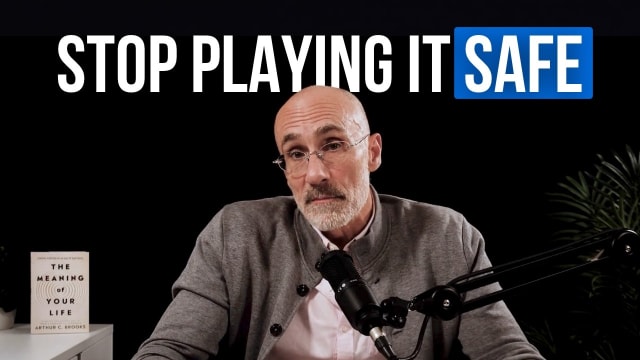
You're adrift. No clear purpose, no sense of what gives your life meaning—and everyone around you seems to have figured it out. The first thing you need to know is that chasing what you enjoy and chasing what means something to you are not the same pursuit. Pleasure and purpose operate on different branches of the same tree. This distinction matters because a life optimized for enjoyment alone can leave you feeling fundamentally empty, while a life built on meaning—even one that includes sacrifice and hardship—can feel profoundly full.

The confusion between these two paths has convinced many people that they need to solve both puzzles simultaneously. In reality, finding meaning is more foundational. And it doesn't require having all the answers today.

Read · 5 sections

Why Meaning Requires Moral Clarity First

The most common mistake people make when searching for meaning is starting from the outside in: "What should I do? What path should I take?" The more effective approach is internal. Begin by asking yourself a deceptively simple question: What do I think is right and wrong?

This is the first pillar of the framework. Write it down. Carl Jung, the Swiss psychiatrist, argued that the foundation of happiness is knowing what you believe and then living according to it. Conversely, unhappiness emerges from systematic violation of your own moral code. You believe one thing is right, but you're repeatedly doing the opposite. That internal conflict—that betrayal of your own principles—corrodes your sense of self and your capacity to see yourself as a person of integrity.

This isn't abstract moralizing. Consider a practical example: someone asks you, "What's a decent way to treat a partner on a date?" You articulate your answer—honesty, respect, care. Then the question becomes: "Are you actually living that way?" When the answer is no, when you recognize the gap between your stated values and your actual behavior, you've identified the source of a specific kind of unhappiness that no achievement or pleasure can mask.

This is why a person who is cheating on their partner, for instance, experiences a particular form of distress. They're not primarily suffering from external consequences (yet). They're doing what theologians and philosophers across traditions call "sin"—not as cosmic offense but as self-harm. In Islamic, Christian, Jewish, Hindu, and Buddhist teachings, sin is understood as doing violence to yourself, to your own sense of propriety. You're weakening your ability to see yourself as an upright person, as someone you respect. And we have a deep psychological need to hold that self-image.

This is also why New Year's resolutions about weight loss sometimes work when reframed correctly. The goal isn't about achieving defined abdominal muscles. It's about becoming the person you believe you should be—someone who honors their own values and treats their body with the respect it deserves. The shame you feel about your eating habits isn't really about sugar consumption; it's about the gap between your stated commitment to your health and your actual choices. Close that gap, and something shifts.

The practical first step: take out a piece of paper. Write down what you believe is right and wrong. Write down your moral non-negotiables. Don't overthink it. Don't worry if it seems naive or incomplete. This is your moral foundation. Then, make a plan. How will you begin to live in accord with this philosophy? The specificity matters. Vague commitments fade. Written commitments, paired with concrete actions, begin to reshape your identity and your relationship to yourself.

How Contemplation Creates Space for Deeper Thinking

The second pillar is contemplation. And it's almost certainly something you're not doing enough of.

In a world of relentless distraction—notifications, news feeds, the constant hum of information—contemplation has become radically countercultural. Yet it's essential. When you remove distraction and simply sit with your own mind, something remarkable happens. Your brain's default mode network activates. You begin to think about things that actually matter. You circle back, unbidden, to your moral foundations. You start processing the deeper patterns in your life.

Contemplation doesn't require elaborate ritual. It can be as simple as sitting still without your phone for five minutes. Looking out a train window. Prayer, if that fits your tradition or temperament. Formal meditation. The mechanism is the same: silence, presence, the absence of external stimulation. Ellen Langer, the Harvard psychologist who brought mindfulness to the West decades ago, emphasizes that the best place to practice this might be the most ordinary: putting away your phone, placing your hands in your lap, and watching the world pass by on the train. It's not sexy. It's not Instagrammable. It works.

One practical gateway is gratitude listing. We are, by evolutionary design, resentful creatures. We have a negativity bias—we pay attention to what went wrong at dinner far more readily than what went right. This served our ancestors well; the snap of a twig meant danger. But in a modern context, this bias leaves us perpetually discontent, blind to what's actually working in our lives. Spending even a few minutes contemplating what you're grateful for—the sources of that gratitude, the texture of appreciation—counterbalances this ancient wiring. It also naturally reconnects you to your values. What you're grateful for often reflects what you actually believe matters.

If you were raised in a religious tradition but no longer practice it, you don't have to abandon the tools the tradition offered. Prayer, for instance, is fundamentally an exercise in gratitude and presence. You don't need to pray to something to benefit from the practice of praying—of sitting in thankfulness for the nature of your life and your capacity to perceive it. The contemplative machinery remains useful even when the metaphysical furniture has changed.

Why Wisdom Reading Anchors Everything

The third pillar is what might seem quaint in a digital age: reading. Not doom-scrolling news. Not entertaining fluff. Real reading. The kind of reading that engages your mind with serious ideas, with the distilled wisdom of people who have thought deeply about how to live.

Start with 15 minutes a day. That's enough to begin rewiring your intellectual and spiritual diet. Over time—weeks, months, a year—this small habit accumulates. You'll encounter ideas you've never considered. You'll find your own inchoate intuitions reflected back at you in language you didn't have before. You'll absorb the patterns of thinking that characterize wisdom traditions.

This is where the Bhagavad Gita, the Stoic philosophers, the great religious and philosophical texts come in. These aren't museum pieces. They're manuals for a life of meaning. They address, with precision earned over centuries, the exact questions you're wrestling with. How do you live with integrity when circumstances push against your values? How do you maintain equanimity in a world of change? How do you distinguish between what's worth wanting and what merely distracts?

Reading is also a form of contemplation in itself. When you're genuinely engaged with a text, you're in a state of deep attention. You're thinking slowly, following an argument, allowing your mind to work in ways that scrolling never permits. The practice of serious reading, pursued regularly, fundamentally changes how you think and what you're capable of noticing in your own life.

Putting the Framework Together

The three pillars are distinct, but they reinforce each other. You clarify your moral principles. You create space—through contemplation—to process them and to notice when you're living in or out of alignment with them. You read wisdom traditions and contemporary writers who've thought deeply about meaning, and you encounter language and frameworks that give shape to your own understanding.

None of this requires a retreat to a monastery or a dramatic life overhaul. It requires 15 minutes of reading, five minutes of sitting still, and an honest piece of paper with your principles written on it. It requires saying no to some distractions and yes to some silence. It requires acting on what you've written, imperfectly but deliberately.

The honest truth is that many people are "that person"—adrift, without clear answers to either enjoyment or meaning. But as one observer noted in conversation about this framework, being in that position is "a great place to be cuz it means the start of my adventure." You're not locked into a false identity. You have the rare opportunity to actually choose what you believe and who you want to become, and then to build that person deliberately, day by day.

The beginning of that adventure isn't mysterious. It's as ordinary and profound as putting on your shoes and walking outside—aware, intentional, and grounded in your own carefully considered values.

Where to go from here

If this framework resonates, the next step is immediate and simple: write down your moral philosophy. Don't wait for perfect clarity. What do you believe is right and wrong? What would you need to change in your daily life to live in accordance with those beliefs? Then commit to 15 minutes of meaningful reading per day—begin with a text from a wisdom tradition that calls to you, or with contemporary writing on meaning and values. Carve out five minutes of daily contemplation, whether that's sitting quietly on a train, prayer, formal meditation, or a gratitude listing. These three practices—clarity of principle, contemplative silence, and engagement with wisdom—form the foundation upon which a meaningful life is built. You don't need to have all the answers now. You need to begin.

Comments

Loading the conversation…

Transcript

[0:00] So, a lot of people will say, "If I

[0:01] figure out what I enjoy, then I'll find

[0:03] my meaning." No, those are different

[0:04] It's different You're over on that

[0:06] branch of the tree. You're trying to get

[0:07] over on this branch of the tree.

[0:08] Different questions.

[0:09] >> So, I'm that person. Say I'm that person

[0:11] now, and I don't have answers to either.

[0:13] You tell me it's That's a great place to

[0:14] be cuz it means the start of my

[0:15] adventure. What do I do? Put my shoes on

[0:18] and leave the house? What what

[0:20] Do you want to

[0:20] >> So, there's a a lot of different

[0:22] protocols you can actually start

[0:23] depending on where where you are in your

[0:24] life. One of the things that I actually

[0:26] recommend is reading more. Not reading

[0:28] garbage and dumb stuff. Not even reading

[0:30] the news. I put people on a protocol of

[0:33] 15 minutes a day of of of real reading.

[0:36] Actually, there's a three-part plan. You

[0:37] want to hear the three-part plan to

[0:39] actually start figuring out the answers

[0:40] to these questions?

[0:41] You don't have to answer the questions

[0:42] directly, but number one is start

[0:45] thinking to yourself,

[0:46] "What do I think is right and wrong?

[0:49] What are my moral principles? What are

[0:51] my moral non-negotiables?"

[0:54] That's the moral basis of living. It's

[0:55] the foundation of actually figuring out

[0:58] the answers to your questions.

[0:59] >> So, for me that might be I think like

[1:01] free speech is important, for example.

[1:03] >> Mhm.

[1:03] >> Um

[1:04] >> Treating people with dignity.

[1:05] >> Equality.

[1:05] >> Yeah.

[1:06] >> Right.

[1:06] >> Okay, so so that's that's number one is

[1:09] the moral foundations and thinking about

[1:10] that. You know, I I ask my students to

[1:12] take out a piece of paper and write

[1:14] start writing things down that they

[1:16] think. "Here are the things that I

[1:17] actually think are right and wrong. Here

[1:20] the basis of the way that I want to

[1:21] live." Now, this is a very Jungian idea.

[1:23] Carl Jung said that the basis of

[1:25] happiness is figuring out what you

[1:27] believe and acting according to it,

[1:28] living according to it. That the basis

[1:30] of unhappiness

[1:31] is living not in accord with your own

[1:35] morals.

[1:36] >> [gasps and sighs]

[1:37] >> In other words, I believe these things

[1:38] are right and wrong, and I'm

[1:39] systematically violating them. In other

[1:40] words, it's so incredibly empowering

[1:42] when I talk to a young woman or man, and

[1:44] I say, for example,

[1:47] "What do you think is a decent way to

[1:48] treat a member of the opposite sex

[1:51] when you're on a date?" And they'll tell

[1:53] me, and I say, "Are you acting according

[1:54] to that?" And they're like, "No." I

[1:55] said, "That's why you're unhappy."

[1:57] According to Carl Jung, but also

[1:58] according to common sense.

[2:00] Once you know what that is and say, "I'm

[2:02] going to start acting and living

[2:04] according to my own principles." Your

[2:06] life starts to change.

[2:07] >> Why is that? So, say someone right now

[2:09] is, for example, cheating on their

[2:10] partner. Why Why does that make him them

[2:12] unhappy?

[2:13] >> That's making them unhappy because

[2:14] that's doing violence to their own sense

[2:16] of propriety. You're hurting yourself.

[2:18] You know, the most ancient

[2:21] wisdom traditions and religious

[2:22] traditions, when they talk about sin,

[2:24] you know, in Islam and Christianity and

[2:25] Judaism and Hinduism and

[2:28] name the religion, there's a concept of

[2:29] sin, right? Sin in almost every

[2:32] religious tradition is not offending

[2:33] God, it's hurting yourself. It's self-

[2:37] destructive behavior. You're doing

[2:40] something not in accord with the way

[2:42] that you want to live, and in so doing

[2:44] you're weakening yourself. You're making

[2:46] it harder for you to understand

[2:49] understand yourself as a good person, as

[2:51] a person of integrity, as an upright

[2:53] person, which we actually need. And

[2:55] again, there's a lot of go back to the

[2:56] social psychology research on this. We

[2:58] need to see ourselves as good people.

[3:00] >> It goes back to your point as well about

[3:02] helplessness and agency, because if I

[3:04] know that that is bad, but I can't seem

[3:06] to stop myself doing it, I'm telling

[3:08] myself that I'm low agency and I'm

[3:09] helpless.

[3:10] >> I'm a victim of my own sin.

[3:12] >> Yeah.

[3:12] >> I'm a victim of my own weakness. I'm a

[3:14] victim of my own impulses. And so, this

[3:16] is one of the reasons that people will

[3:17] be like,

[3:19] "I hate how I eat."

[3:21] >> Mhm.

[3:22] >> What are they actually saying? They're

[3:23] not saying that I I hate, you know, I

[3:25] mean, like I I'm a sugar fiend. I love I

[3:27] just can't get enough of it. I don't

[3:29] drink alcohol, but I drink I eat tons of

[3:30] sugar. I eat lots of sugar. I shouldn't

[3:33] do it. Now, it doesn't offend my sense

[3:34] of propriety to be sure, right? But I

[3:36] could get to the point where I'm so

[3:38] unhealthy that I hate that about myself

[3:40] because I'm actually hurting myself, but

[3:42] I'm being controlled by my impulses.

[3:44] This getting in line with your own views

[3:47] and making a plan, and this is where the

[3:49] New Year's resolutions about taking off

[3:51] the weight actually

[3:53] makes sense because it's not about the

[3:56] ab veins. It's about being morally

[3:58] consistent with your own view of the

[4:00] person that you want to be is what this

[4:01] comes down. But you can't do it till you

[4:03] lay it out. Until you actually put it in

[4:05] black and white. Write down your moral

[4:07] philosophy. I don't care how dumb it is.

[4:09] Write down your moral philosophy and say

[4:11] make a plan to start living according to

[4:12] it. That's the base of the pyramid.

[4:14] There's two other parts, okay? The

[4:16] second part is a contemplative

[4:17] tradition.

[4:19] Is contemplation. You need more

[4:22] contemplation so as to you can

[4:24] experience transcendence.

[4:26] There's a bunch of different ways to do

[4:27] this, right? Um this is why everybody

[4:30] wants to do mindfulness meditation.

[4:32] That's all that is. Is basically is

[4:34] sitting still without your phone.

[4:38] And and and and focusing on being alive.

[4:41] So you know a lot of ways to do it.

[4:42] There's informal ways to do it. My

[4:44] colleague Ellen Langer, have you had her

[4:45] on the show?

[4:46] >> No.

[4:46] >> Super interesting person. She actually

[4:48] was the one who brought the concept of

[4:49] mindfulness to the west about 30 years

[4:52] ago.

[4:52] >> Wow.

[4:53] >> She wrote a book called Mindfulness.

[4:54] She's a She was the first woman tenured

[4:56] in the psychology department at Harvard.

[4:58] She's phenomenal and she's just

[5:00] absolutely first rate. And And she says

[5:02] that mindfulness is best practiced if

[5:04] you're sitting on the train by putting

[5:05] away your phone, putting your hands in

[5:06] your lap, and looking out the window.

[5:08] >> Can they listen to this podcast while

[5:09] they do that because

[5:10] >> No.

[5:10] >> [laughter]

[5:11] >> You should listen to the podcast but not

[5:13] during those periods.

[5:14] >> Okay.

[5:14] >> And start with 5 minutes of a of just

[5:17] simple contemplation of life. Now, there

[5:19] are other ways to do it. Prayer is a

[5:20] really good way to do it, too. Religious

[5:22] traditions are excellent at doing it,

[5:23] but people

[5:25] in a distracted world don't do that at

[5:27] all. You need to be in your head.

[5:29] You need to stop distracting yourself

[5:31] and systematically stop distracting

[5:33] yourself because

[5:34] in your default mode network, you'll

[5:37] actually start to think about things

[5:39] that actually matter including the

[5:41] things that are in the fundamental moral

[5:42] basis that you've that you started to

[5:43] formulate. You need contemplation.

[5:46] >> I was thinking about this last night. I

[5:47] don't know why I thinking about this but

[5:49] it's how weird I am. I was thinking

[5:50] about why I don't pray anymore because

[5:53] [clears throat] I grew up in a Christian

[5:55] faith until the age of about 18 and I

[5:58] stopped praying because I no longer have

[6:00] the Christian faith but but I was

[6:02] thinking last night it doesn't mean I

[6:03] need to give up the prayer which is just

[6:04] an exercise in gratitude to be thankful

[6:06] for the nature of my life and that would

[6:08] serve if and I don't have to pray to

[6:10] something. I can just pray

[6:12] for gratitude.

[6:13] >> can contemplate. You can contemplate the

[6:15] source of your gratitude. So gratitude

[6:16] listing is really important way for you

[6:18] to focus

[6:20] uh on the the

[6:21] we're we're resentful creatures because

[6:23] we have a negativity bias. We have a

[6:24] tendency to pay attention to the

[6:26] negative things in our lives

[6:27] disproportionately because that tendency

[6:29] serves us for survival. You know you

[6:32] [clears throat] don't you pay attention

[6:33] to the worst thing that happened at the

[6:34] dinner not the best thing that happened

[6:35] at the dinner for a reason. I mean

[6:37] we've evolved to

[6:39] the snap of the twig behind you does not

[6:41] make you think oh bet that's my friend.

[6:44] So the very top is wisdom and that

[6:46] requires reading.

[6:48] Or or you know

[6:50] uh the the accumulation of knowledge.

[6:52] Not everybody's a big reader and there's

[6:53] so many different ways to get good

[6:55] information at this point.

[6:56] >> Podcasts.

[6:56] >> Po- podcasts for example but the whole

[6:58] point is is reading or or acquiring

[7:01] information in the wisdom tradition.

[7:04] So uh you know read the Stoic

[7:06] philosophers. Read the Nicomachean

[7:09] Ethics of Aristotle. Read the Bhagavad

[7:12] Gita.

[7:13] Read the Quran.

[7:14] Read the Bible. Read read read and start

[7:17] with 15 minutes a day of that kind of

[7:19] reading which you can go years saying I

[7:20] wish I read and you don't. Right? I mean

[7:22] it's it's crazy. We'll spend all this

[7:24] time scrolling Instagram

[7:26] when we can spend just 15 minutes a day

[7:28] reading the Meditations of Marcus

[7:29] Aurelius

[7:31] and and the Letters of Seneca and it'll

[7:33] be incredibly enriching. Right? It's

[7:36] like wow boom. Starting at 15 minutes a

[7:39] day. So

[7:40] do the work. What do I believe?

[7:43] Spend some time in contemplation

[7:46] and do the reading. Your life's about to

[7:48] change.

[7:49] That's the protocol. That's the Tibetan

[7:51] Buddhist protocol for actually finding

[7:54] starting to find meaning in your life,

[7:55] but I've I've prescribed this to others

[7:58] and I've done it myself and this really

[7:59] works. It helps you find on the path to

[8:02] the answers to those questions.

Arthur Brooks

Arthur Brooks

Artist

Seattle-born musician and composer who blends classical and contemporary music with social science, exploring happiness, community, and human connection through albums, books, and public speaking.

View profile
Explore Topics
MeaningValues alignmentContemplationMoral philosophyPurpose
Frequently Asked Questions

Frequently Asked Questions

Meaning and enjoyment are different pursuits on different branches of the same tree. A life optimized for pleasure alone can leave you feeling empty, while meaning often involves sacrifice and difficulty but provides deeper fulfillment. Finding meaning requires first understanding your principles and values, not just what makes you happy in the moment.

According to Carl Jung and confirmed by psychology research, unhappiness emerges from systematic violation of your own moral code. When you betray your stated principles—say, believing in honesty but cheating—you do violence to your sense of propriety and weaken your ability to see yourself as a person of integrity. This internal conflict corrodes your self-image, which we psychologically need to maintain.

Begin with three concrete practices: (1) Write down your moral principles—what you believe is right and wrong; (2) Practice 5 minutes of daily contemplation (sitting quietly, prayer, meditation, or gratitude listing) to process your values; (3) Spend 15 minutes daily reading serious wisdom literature or philosophy. These foundational practices don't require you to have all the answers upfront.

Contemplation removes distraction and allows your brain's default mode network to activate, enabling you to think about things that actually matter. When you sit still without your phone and create mental space, you naturally circle back to your core values and begin processing deeper patterns in your life. Even five minutes of daily contemplation can counterbalance our evolutionary tendency toward negativity bias.

Reading wisdom traditions and serious philosophical texts exposes you to centuries of distilled thinking about how to live with integrity and purpose. Even 15 minutes of daily reading changes how you think and what you notice in your own life. These texts address the exact questions you're wrestling with and provide language and frameworks that give shape to your own emerging understanding of meaning.

Yes. Prayer is fundamentally an exercise in gratitude and presence—you don't need to pray to something to benefit from the practice itself. If you no longer hold religious beliefs, you can still practice contemplation, gratitude listing, sitting in silence, or engaging with the philosophical aspects of wisdom traditions. The contemplative machinery remains useful even when the metaphysical framework has changed.

You might also like

View All
Falling in Love Today: Risk, Complements and Heartbreak
Inspire

Falling in Love Today: Risk, Complements and Heartbreak

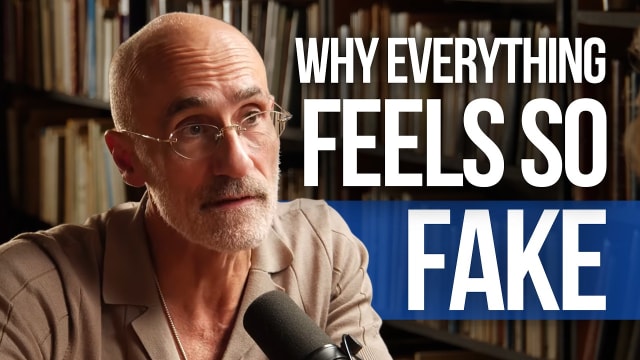
Arthur Brooks argues that young people are taking fewer romantic risks than earlier generations, and that the pain of rejection and breakups…

9 min read
Phones, Boredom, and the First Hour: Escaping Modern Life's Trap
Inspire

Phones, Boredom, and the First Hour: Escaping Modern Life's Trap

Arthur Brooks argues the problem isn't the phone itself but what it crowds out: boredom, reflection, and real-world connection. He also offe…

10 min read
Sacred Feminine Power: Chanting Devi Beyond the Mat
Inspire

Sacred Feminine Power: Chanting Devi Beyond the Mat

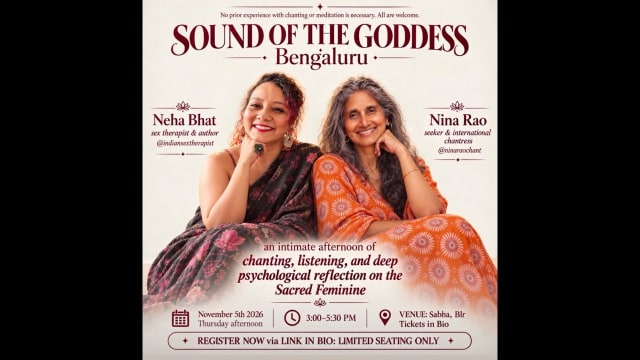
An in-person gathering in Bengaluru merges ancient devotional chanting with modern psychotherapy to explore how the Goddess archetype illumi…

8 min read
Work Isn't Your Spiritual Problem—Attachment Is
Inspire

Work Isn't Your Spiritual Problem—Attachment Is

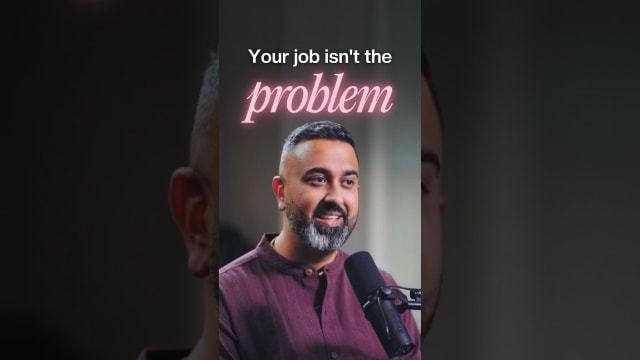
The Bhagavad Gita teaches that career and ambition aren't obstacles to spirituality—attachment, ego, and ownership are what bind us.…

2 min read
See allYou might also like→

Continue your journey

More wisdom and gatherings from across the BrightStar directory.

More Articles

Browse the full library of teachings, interviews, and guides.

Back to all articles →

Teachers & Artists

Explore the lineages, musicians, and guides of the conscious world.

Explore artists →

Find an Event

Kirtan, retreats, sound baths, breathwork, festivals — happening soon.

Browse events →