Transcript
[0:19] ourselves to relax
[0:22] and be there for our breath, our body,
[0:26] our feelings, our perceptions,
[0:29] our mental formations,
[0:32] and just be there for ourselves and use
[0:34] mindfulness of breathing to come back
[0:37] and just breathe.
[0:40] So enjoy sitting for a while before we
[0:43] start for the talk. Thank you.
[2:18] >> [music and bell]
[2:39] [music and bell]
[3:03] [music and bell]
[3:44] >> Good morning
[3:46] dear friends.
[3:49] Welcome
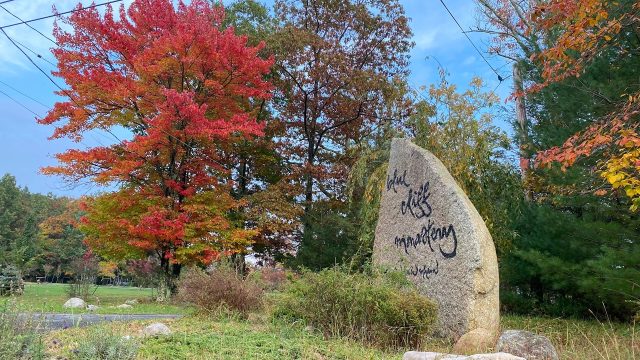
[3:51] to Blue Cliff Monastery for the day of
[3:53] mindfulness.
[3:57] Even though outside
[4:00] a little a cold, but inside I feel so
[4:03] warm.
[4:05] Because the energy of everyone
[4:08] together
[4:10] generate the energy of compassion and
[4:16] peaceful. So I feel very warm in the
[4:20] meditation hall.
[4:22] Or maybe the heat from the floor.
[4:31] Maybe the heat from the floor.
[4:37] And this weekend we have 15 young
[4:44] men and women
[4:47] from the Brown
[4:52] come to stay for the weekend.
[4:55] And today
[4:59] they join with us. Are you here who are
[5:02] from Brown?
[5:04] Can you raise your hand?
[5:06] Thank you. Thank you.
[5:14] I really admire of you
[5:17] to come to stay for the weekend.
[5:21] Before some university they just come
[5:25] for Sunday.
[5:28] But you are stay for the weekend
[5:32] stay here, practice sitting meditation,
[5:36] walking meditation, eating meditation,
[5:39] and community service meditation with
[5:41] us.
[5:42] I am really
[5:45] happy and really admire of you.
[5:49] You are young but you know this
[5:51] practice.
[5:52] So I feel that so lucky you are.
[5:56] And
[6:01] because I was traveling sometime in the
[6:05] past
[6:06] and knew that some people they spoke
[6:09] with me that
[6:11] they are like 80 years old.
[6:16] They just
[6:17] meet this kind of practice meditation.
[6:21] So they regret
[6:23] you know when they were young they could
[6:24] not see this practice.
[6:27] So but
[6:29] you are so lucky that you know this
[6:31] practice.
[6:33] You know the way of the practice
[6:35] meditation and mindfulness. So
[6:40] in order to transform our suffering and
[6:42] we see the clear the path
[6:46] we want to go in our life the direction
[6:49] to go
[6:51] Yeah so
[6:54] try to feel that you are lucky
[6:56] person
[6:58] and most of us we are lucky person.
[7:01] So we we encounter this practice. I feel
[7:04] that.
[7:05] So that's why we are the same
[7:08] mind
[7:10] same
[7:11] you know
[7:14] aspiration that's why we come together
[7:16] here
[7:17] to to listen to each other to share
[7:21] with each other and practice together.
[7:25] And also yesterday I met a lady she said
[7:29] have you finished your sutra yet?
[7:32] I said
[7:33] not yet.
[7:35] She said oh yeah because this course on
[7:38] happiness happiness cannot hurry.
[7:41] Happiness take time.
[7:45] I said yes yes.
[7:48] Happiness take time.
[7:50] Take time step by step
[7:54] and mindful step. So today
[7:57] I'm I'm going to continue the sutra this
[8:00] course on happiness.
[8:02] I hope today we'll be finished and then
[8:04] next time I will teach another sutra
[8:07] So hope hope today we will finish the
[8:10] sutras. Only the last three verses. So,
[8:14] three verses.
[8:16] So, I want to uh share with you today
[8:20] um so everybody want happiness. So,
[8:22] today we continue to learn the sutra
[8:25] about happiness.
[8:28] And
[8:29] share something if come up in my mind.
[8:33] I want to share with you um
[8:36] especially for young students, young
[8:40] people
[8:41] including you. Don't worry.
[8:43] [laughter]
[8:44] We are all young. Because I remember
[8:46] Tai, he said when he was 75
[8:50] he said I'm still young.
[8:53] Well, his hearts
[8:55] still, you know, very young. He can talk
[8:58] with the young people. He organizes and
[9:01] give a Dharma talk for the wake up
[9:03] retreat and so on. So,
[9:05] even though we are old of body, but our
[9:08] mind's still very young because we can
[9:11] talk with young people, we can organize
[9:15] uh with young people and we receive the
[9:17] energy um from
[9:20] young people really, you know,
[9:23] determined to do something very
[9:25] meaningful, you know.
[9:27] So, I really like that.
[9:34] And
[9:35] uh so please I would like to invite
[9:37] brother
[9:38] to read this course on happiness.
[9:42] And then I wish so on the screen so you
[9:44] can see or listen.
[9:50] Uh if you don't mind, could you please
[9:52] come here
[9:53] for the Sangha can uh
[9:56] enjoy uh you are reading the sutras with
[10:00] the community.
[10:04] Thank you.
[10:15] >> So I was
[10:17] given
[10:19] a few times for this course on
[10:21] happiness, but this is I hope this is
[10:23] last time
[10:24] to finish this course. So
[10:28] just yeah, so please read the whole
[10:30] sutras
[10:32] and I will teach the last three verses.
[10:38] >> Hello dear community.
[10:41] Discourse on happiness.
[10:44] I heard these words of the Buddha one
[10:46] time when the Lord was living in the
[10:48] vicinity of Savatthi
[10:50] at the Anathapindika Monastery in the
[10:52] Jeta Grove.
[10:54] Late at night a deva appeared
[10:57] whose light and beauty made the whole
[10:59] Jeta Grove shine radiantly.
[11:02] After paying respects to the Buddha
[11:05] the deva asked him a question in the
[11:07] form of a verse.
[11:09] Many gods and men are eager to know what
[11:12] are the greatest blessings that bring
[11:14] about a peaceful and happy life.
[11:18] Please Tathagata
[11:19] will you teach us?
[11:22] This is the Buddha's answer.
[11:25] Not to be associated with the foolish
[11:27] ones,
[11:28] to live in the company of wise people,
[11:32] honoring those who are worth honoring.
[11:34] This is the greatest happiness.
[11:38] To live in a good environment,
[11:40] to have planted good seeds,
[11:42] and to realize that you are on the right
[11:44] path.
[11:45] This is the greatest happiness.
[11:49] To have a chance to learn and grow,
[11:51] to be skillful in your profession or
[11:53] craft,
[11:55] practicing the precepts and loving
[11:56] speech.
[11:58] This is the greatest happiness.
[12:01] To be able to serve and support your
[12:03] parents,
[12:04] to cherish and love your family,
[12:07] and to have a vocation that brings you
[12:08] joy.
[12:09] This is the greatest happiness.
[12:13] To live honestly, generous in giving,
[12:17] to offer support to relatives and
[12:18] friends, living a life of blameless
[12:21] conduct,
[12:23] this is the greatest happiness.
[12:26] To avoid unwholesome actions,
[12:29] not caught by alcoholism or drugs,
[12:32] to be diligent in doing good things,
[12:35] this is the greatest happiness.
[12:38] To be humble and polite in manner,
[12:41] to be grateful and content with a simple
[12:43] life,
[12:44] not missing the occasion to learn the
[12:46] Dharma,
[12:47] this is the greatest happiness.
[12:51] To persevere and to be open to change,
[12:54] to have regular contact with monks and
[12:56] nuns,
[12:57] and to fully participate in Dharma
[12:59] discussions,
[13:01] this is the greatest happiness.
[13:04] To live diligently and attentively,
[13:07] to perceive the noble truths and to
[13:09] realize Nirvana,
[13:11] this is the greatest happiness.
[13:14] To live in the world with your heart
[13:16] undisturbed by the world,
[13:18] with all sorrows ended,
[13:20] dwelling in peace,
[13:22] this is the greatest happiness.
[13:25] For those who accomplish this,
[13:27] unvanquished wherever they go,
[13:30] they are
[13:31] always they are safe and happy.
[13:33] Happiness lives within oneself.
[13:39] >> Thank you.
[13:59] So today we continue the verse
[14:02] to live dili- diligently and
[14:05] attentively,
[14:07] to perceive the noble truths
[14:10] and to realize Nirvana. This is the
[14:13] greatest happiness.
[14:23] So these verses talk about um
[14:29] the noble truths
[14:33] and Nirvana. That's so hard about
[14:35] Nirvana. [laughter]
[14:37] The the people think that Nirvana that
[14:40] we need to die
[14:42] in order to go to Nirvana.
[14:45] But I'm not dying yet.
[14:47] So how can I share about Nirvana
[14:50] and
[14:51] uh about the noble truths?
[15:01] So I will write down for
[15:04] about the noble truths.
[15:15] Ill-being
[15:22] and the second
[15:24] the making of ill-being.
[15:45] Third
[15:49] well-being
[16:01] and the fourth
[16:11] the path [clears throat]
[16:15] of
[16:18] well-being.
[16:30] So can you see?
[16:32] Okay, this is the fourth
[16:36] noble truth
[16:39] very important in the Buddhist teaching.
[16:43] This is the first talk the Buddha given
[16:46] to the five monks
[16:49] at the Deer Park Garden.
[16:51] Not Deer Park Monastery in California.
[16:55] We have another center called Deer Park
[16:57] Monastery in Escondido in California.
[17:02] So this is the first Dharma talk the
[17:04] Buddha given to the monks
[17:08] at the Deer Park
[17:10] Garden
[17:11] in India.
[17:13] So about the ill-being, the making of
[17:16] ill-being, the well-being, the path of
[17:19] well-being.
[17:21] So
[17:23] so this
[17:24] teaching very important in the Buddhism
[17:27] talk about suffering
[17:29] and the cause of suffering
[17:32] and the happiness
[17:34] and the path leading to happiness.
[17:38] So he always mentioned
[17:42] you know
[17:43] a lot of people at that time were asking
[17:47] to him
[17:48] about after you die and where will you
[17:51] go?
[17:52] Or
[17:54] so so before you
[17:57] you are born
[17:58] what were you?
[18:00] Some question like that. He didn't
[18:02] answer.
[18:03] He said I
[18:06] I I am only teaching about the suffering
[18:09] and the way to end of the suffering.
[18:13] That's the that's the main of his
[18:16] teaching.
[18:18] So about this.
[18:22] That's the main teaching of the
[18:23] Buddhism. Um, so he teach about
[18:28] the suffering
[18:30] and the happiness.
[18:32] we have suffering, but we know the way
[18:36] of practice.
[18:38] So we could transform the suffering
[18:40] become happiness.
[18:43] So there are
[18:46] um there are the
[18:48] eight
[18:49] uh noble paths.
[18:52] Um
[18:55] so there are like
[19:00] so the path
[19:03] um
[19:05] the first like right view
[19:18] and the second
[19:21] right thinking
[19:31] and the third
[19:34] right speech.
[19:41] Okay.
[19:46] And the four
[19:49] right action.
[19:55] Fifth, I hope I remember.
[19:57] [laughter] If I forget, remind me, okay?
[20:00] Right action and right
[20:03] livelihood.
[20:13] And the sixth
[20:17] uh right religion.
[20:26] >> And the seven,
[20:29] right mindfulness.
[20:39] And the eight,
[20:42] right concentration.
[20:50] Okay, I remember. Yeah.
[20:56] When you teach you can, you know, you
[20:59] learn.
[21:01] That's the way how you remember the
[21:02] sutra
[21:04] the
[21:07] teaching.
[21:09] So yeah.
[21:12] So this is the path.
[21:18] Yeah.
[21:20] This is the path.
[21:22] The path
[21:24] how to practice this path in order to
[21:28] transform
[21:30] suffering
[21:31] in order to gain happiness.
[21:35] Yes.
[21:36] If you don't remember you can write and
[21:38] learn by heart.
[21:40] Um
[21:42] so very important this teaching.
[21:45] I remember sister Flower she talked
[21:48] before. So I just
[21:51] um because the sutra mentioned about
[21:53] noble truths so I just review a little
[21:56] bit for
[21:57] for us can uh
[21:59] memory of this.
[22:01] Um
[22:03] so because why we have the suffering?
[22:05] Because we have wrong view.
[22:07] This is right view, not wrong view.
[22:09] Because
[22:10] this is the right
[22:13] and this is the wrong.
[22:16] So may we may be put
[22:19] like this.
[22:22] But this is the wrongs.
[22:25] Yeah.
[22:29] This is the wrong one.
[22:31] But this is the right one.
[22:37] So
[22:38] when we practice this
[22:42] this is the right view
[22:44] right thinking, right speech, right
[22:46] action, right livelihood, right
[22:48] diligence, right mindfulness, right
[22:50] concentration. But when we have
[22:53] suffering, this is the wrong.
[22:57] Go here.
[22:59] Yeah.
[23:02] Oh, maybe look like somebody.
[23:05] Wrong views, wrong thinking, wrong
[23:09] speech, wrong action, wrong livelihood,
[23:12] wrong diligence, wrong mindfulness,
[23:15] wrong concentration.
[23:17] This
[23:19] leading to suffering.
[23:25] Because when we have suffering in our
[23:27] life,
[23:28] the nature separate from ourselves.
[23:31] That's a wrong views.
[23:36] But the right view, the nature is
[23:38] interweave with us, cannot separate.
[23:41] You eat,
[23:43] you live, you drinking water
[23:47] with the
[23:48] environment that's connected to us,
[23:52] cannot separate. If you remove all that
[23:56] elements like the waters, the air,
[24:01] you know, the soil, the food, the bread,
[24:04] the noodle, spaghetti, pizza, and so on.
[24:07] Remove all of that and you cannot exist,
[24:10] right? So all of that is
[24:13] interweave with our life, ourselves.
[24:17] So that's
[24:20] the teaching called inter
[24:22] being.
[24:28] Interweave, everything connected.
[24:32] So, the nature connected with us and we
[24:34] are connect to the nature. That's why we
[24:36] protect the environment.
[24:38] In the 13
[24:40] um 13 precepts in a 14
[24:44] five mindfulness trainings
[24:46] say that
[24:48] protecting the environment.
[24:51] We don't harm the environment.
[24:54] Um
[24:55] we do uh right livelihood
[25:00] because we want to protect environment
[25:03] like we
[25:04] some don't want to cut down the forest
[25:07] in order to make a farm to raise
[25:10] animals, to selling meat
[25:13] because when we cutting down a lot of
[25:15] forest that's polluted the environment
[25:18] and our next children
[25:22] next descendants
[25:25] may
[25:26] may sick, you know.
[25:28] When we isolated with the environment
[25:30] that we are getting sick.
[25:33] So, that's why you are lucky that you
[25:35] come today.
[25:37] You be in the nature, walk with us, you
[25:39] know.
[25:41] This beautiful nature because we don't
[25:43] cut down the trees.
[25:45] We protect the trees. Only some trees
[25:47] that old
[25:49] and
[25:51] accidentally dying
[25:53] by the storm and so on, you know, it's
[25:56] fall down and we cut we don't cut the
[25:57] tree.
[25:59] So, we protect the environments. That's
[26:00] why when you come here you see that
[26:03] fresh air
[26:05] and peaceful environment, the deer
[26:09] come to live with us
[26:11] and even though the bear
[26:13] [laughter]
[26:14] by the winter the bear go to sleep. You
[26:16] don't worry, it's okay.
[26:21] They only come in the summer.
[26:24] But they don't harm us, you know. They
[26:27] they walk away.
[26:30] So, don't afraid.
[26:31] So,
[26:33] don't think that I only come the winter
[26:35] and not summer. I'm so scared of bear. I
[26:37] don't come. Don't worry. We live here
[26:39] for many years.
[26:41] So
[26:43] So very peaceful the environment that
[26:46] why the animals live with
[26:49] uh you know the trees, all living beings
[26:51] live with us because we do uh
[26:55] practice life
[26:57] livelihood.
[26:59] We you know.
[27:01] So um we don't
[27:03] uh let the wrong view
[27:07] wrong view
[27:08] that the environment separates from
[27:11] ourselves.
[27:13] And we do whatever we explode the
[27:16] resources and we harm the environment.
[27:20] We cut down the forest, polluted the
[27:23] rivers and you know
[27:25] and so on.
[27:27] So we need to aware of that that we are
[27:29] into are with the nature. So that's why
[27:33] we have the right views.
[27:35] So right view
[27:37] practice right views
[27:39] leading to happiness, well-being.
[27:44] Yeah.
[27:45] So if when we apply this teaching into
[27:48] our daily life we can know the the
[27:51] direction we go
[27:53] so make us happy
[27:56] in our life
[27:57] and the people around us.
[28:00] So when we come here
[28:02] we learn how to
[28:04] uh practice walking meditation and
[28:07] sitting meditation.
[28:10] So we can bring home to continue to
[28:13] nurture that.
[28:15] Uh maybe you could not do every day like
[28:17] here
[28:18] but you do maybe once a week.
[28:20] At the weekend you stay home. You may
[28:23] invite your partner. Okay, now we can
[28:26] have lunch
[28:29] or dinner mindful dinner together.
[28:32] Only 15 minutes we don't talk. We enjoy
[28:34] the food
[28:36] together, being together.
[28:38] So after 15 minutes and then we can
[28:40] share and talk. Can we do that? So we
[28:43] can invite, you know, we not invite our
[28:45] friends, our partner to do that.
[28:48] So that's bring the teaching to to home
[28:51] to continue to nurture our a practice.
[28:55] Otherwise, we come here only a few days
[28:58] and then we come home.
[29:00] So we lose the practice and could not
[29:03] could not nurture
[29:05] the practice anymore, the happiness
[29:07] anymore. The happiness slowly go away.
[29:11] So bring the practice
[29:13] to home
[29:14] to continue to
[29:17] to to practice with our partner, our
[29:19] friends, our family.
[29:23] And
[29:26] last week
[29:30] last week also
[29:38] too heavy.
[29:43] Last week um
[29:47] I heard
[29:49] the story two story
[29:53] from mother and son.
[29:57] She really love him
[30:00] and parents love him.
[30:02] Um but she she the first college show.
[30:06] He's the first college.
[30:08] He likes to hang out with friends
[30:12] midnight until morning
[30:14] until like two or three a.m.
[30:18] So he went to college and then came
[30:21] home, do homework and have family and so
[30:24] on.
[30:26] But he likes to hang out with friends
[30:29] because he feel lonely
[30:31] because their parents busy to work and
[30:33] busy to organize things and no time uh
[30:37] much for him.
[30:38] And he like to he likes to to be with
[30:41] his friend.
[30:43] So at midnight and his friend after work
[30:46] and then
[30:47] they hang in together. They go to um
[30:51] McDonald's or something
[30:54] to eat.
[30:56] And sometimes go
[30:58] he goes to gambling too.
[31:03] So his mom so worries about him
[31:06] and said you can goes but please come
[31:09] back at midnight
[31:11] at 12.
[31:13] So don't stay late. I'm worries I could
[31:15] not sleep
[31:18] uh because I'm waiting until you came
[31:20] home and then I I
[31:22] I knew that you opened the door and then
[31:24] I I I knew that you already home safe
[31:27] and then I go to bed. I I
[31:30] I I I am sleeping.
[31:32] So he she shares that with
[31:35] her son
[31:37] um and then he
[31:39] yeah he accepted and then he changed
[31:42] um for two weeks and after that he
[31:47] go back to his schedule.
[31:50] And midnight he went out
[31:53] with his friends.
[31:55] And she suffered so much. She worries.
[31:58] She love him but she worries. She could
[32:00] not
[32:01] help
[32:03] to help.
[32:05] And I said with her that you need to
[32:07] organize activity, family being together
[32:11] so he don't feel lonely.
[32:13] Like you go organize family dinner
[32:16] together, family like um went out
[32:20] together
[32:22] um um
[32:24] activity of the family so he feel
[32:27] embraces. He feel be there for him so he
[32:30] don't feel lonely. He don't go with
[32:34] uh so late with his friend.
[32:36] And
[32:38] but she so busy she don't have time to
[32:40] do that.
[32:41] And then later on, he's keep
[32:44] doing his
[32:47] schedules and going late. And so she's
[32:50] suffering a lot.
[32:53] And he also suffering
[32:56] because when he came home and his mom
[32:58] with him and
[33:01] said this or that, why I love you but
[33:03] you don't you know you don't care for me
[33:05] and
[33:08] family this family care for you a lot.
[33:10] You honor your friends then me. You
[33:14] don't worries about me. You only care
[33:16] about your friend and so on. She's so
[33:19] suffering so mad of him.
[33:24] So I said
[33:26] because he's young he want he want to be
[33:29] friends with others and hang out with
[33:31] others.
[33:32] So
[33:35] find a way to sit down and talk with him
[33:39] so because of misunderstanding.
[33:42] The mother the parents love the children
[33:45] but the children love parents so but
[33:47] they have their own style of life,
[33:49] right?
[33:50] They are young. I said
[33:53] when were you young did you do the same?
[33:57] She said yes sometimes. [laughter]
[34:01] I did my parents also worries about me
[34:04] too.
[34:05] So I said yeah that's you may forgive
[34:07] your son okay and praise your son.
[34:10] Let him go
[34:12] sometime. Don't be strict because
[34:15] Vietnamese family they so strict.
[34:17] They so stay home and if you don't
[34:20] follow my rules go out of my house and
[34:24] you do your own life.
[34:27] And she said that and one day she came
[34:29] home from work
[34:33] and
[34:35] and her son about to go in the car about
[34:39] to go
[34:40] to be be with friends.
[34:43] And then she said,
[34:46] please stay home. This is weekend, so we
[34:48] can be together.
[34:50] She said, mom, today my friends birthday
[34:55] and my friends have worked for a week
[34:58] and now being together so long.
[35:01] She said, no, [snorts] please stay home
[35:03] and he wants to go. He on the car ready
[35:06] to go. And she in front of the car said,
[35:09] you want me to die?
[35:11] [panting]
[35:12] I'm dying in front of you. And he he he
[35:15] knew that she love she love him, so she
[35:18] never die.
[35:19] [laughter] So he still go go the other
[35:21] way.
[35:24] And she so mad and suffering,
[35:27] so deeply suffering.
[35:30] And she want
[35:32] kick out him like you move out. You
[35:35] don't If you live in my house, you
[35:37] follow my rules. If you don't follow my
[35:40] rules, you go out of my house and live
[35:42] your own life.
[35:44] And I said, please calm down.
[35:48] Practice right mindfulness.
[35:50] [laughter]
[35:52] Breathe, you know, breathe. When you are
[35:54] angry, don't talk.
[35:56] Don't talk, don't do anything. Just come
[35:59] back to yourself and breathe.
[36:03] Breathe and calm down yourself first.
[36:06] Be stable and peaceful
[36:08] before you start conversation. If you
[36:11] are angry, you talk and then that's so
[36:13] wrong
[36:14] and leading to suffering, ill-being
[36:17] leading.
[36:19] You are suffer, your son suffer, your
[36:22] husband suffer,
[36:23] you know, your daughter suffer, all
[36:26] family suffer because
[36:28] the suffering is leading
[36:31] go around all member in family.
[36:33] Everybody worries and
[36:35] nobody talk to each other, you know.
[36:39] So the energy
[36:41] in the house so heavy
[36:43] and he doesn't want to come home
[36:45] anymore. He's afraid.
[36:47] When he did wrong,
[36:49] and then he feel guilty, he's he don't
[36:51] want to come home.
[36:52] And he called his friend,
[36:55] and his friends
[36:57] text me and call me.
[36:59] And
[37:00] how can you help my friend now? He's so
[37:03] worried. He don't want to
[37:05] come home because he come home, his mom
[37:08] don't talk to him and
[37:11] parents and
[37:13] sister and so on.
[37:15] So he starts so depressed.
[37:19] And he want to move out. And I say don't
[37:23] do that. Just just breathe and calm down
[37:26] yourself.
[37:28] And that night he stay away from home.
[37:31] He stay somewhere in
[37:34] friend house.
[37:36] And then I I I
[37:38] I help, I call him and then please come
[37:42] home to apologize to your mom and say
[37:44] sorry,
[37:46] you know, and so on, so we can start to
[37:49] talk and find a way how to balance, you
[37:52] know,
[37:55] work
[37:57] and play and balance, be with family.
[38:01] And then they sit, they talk.
[38:03] And now now they are in peace.
[38:06] Hopefully they continue in peace.
[38:09] And I invite him to come for the holiday
[38:11] retreat
[38:12] this
[38:13] this year.
[38:16] So and the practice beginning anew.
[38:20] So if you go to the retreat, you may
[38:22] learn about practice beginning anew.
[38:25] That's very powerful practice
[38:28] to reconcile
[38:29] between partner
[38:31] and friends and families and
[38:34] you know.
[38:36] So
[38:39] yeah, mindful mindful breathing really
[38:42] helpful.
[38:44] Mindful breathing whenever you have
[38:47] anger, you have fear, you have so
[38:49] worries, anxious,
[38:52] just use mindfulness of breathing,
[38:54] right, mindfulness right there.
[38:56] And
[38:57] just breathe.
[38:59] Take deep breath and breathe.
[39:02] Breathe in, breathe out.
[39:05] Feel calm and also can walk out to the
[39:07] nature, you know.
[39:09] Walk out to the nature
[39:12] to enjoy the fresh air, enjoy steps.
[39:15] So calm down
[39:17] before we start
[39:19] over the conversation and talk and
[39:22] discuss and organizing things.
[39:25] Otherwise when we are in mad
[39:28] so
[39:29] don't talk. Make the situation is
[39:32] getting worse.
[39:34] No way out. So the way out is in, right?
[39:38] Come back
[39:39] in inside.
[39:41] So that's the way out.
[39:44] Use mindfulness of breathing and
[39:46] mindfulness walking
[39:48] in order to calm ourselves down,
[39:50] calm our mind.
[39:54] So a lot
[39:56] on this teaching but you may
[39:59] learn and study more,
[40:01] you know, right views and right
[40:04] thinking, right speech.
[40:06] So when we have wrong and everything
[40:08] wrong
[40:10] and our views wrong and then wrong
[40:13] thinking, wrong speech, you know,
[40:16] we talk not really nice anymore
[40:20] and everything wrong. So
[40:23] start with the right mindfulness,
[40:27] right views.
[40:30] So that's about the main teaching of the
[40:32] Buddhism
[40:33] that student can learn and and and go in
[40:37] deep of the teaching from
[40:40] from YouTube, [laughter]
[40:41] from our teachers, from the Dharma
[40:44] teachers.
[40:45] So
[40:48] all are you come here for the retreat
[40:51] to learn more with us.
[40:54] In the retreat like we have
[40:56] holiday retreat, summer retreat.
[40:59] We learn more and practice more
[41:02] this.
[41:04] So today just talk a little with that
[41:06] and then we go to the
[41:08] yeah, we have
[41:10] go to the verse to live in the world
[41:14] with your heart undisturbed by the world
[41:19] with all sorrows ended
[41:21] dwelling in peace.
[41:23] This is the greatest happiness.
[41:28] So when you know the practice well
[41:31] in your heart
[41:33] and then wherever you you go you are
[41:34] free.
[41:36] You don't disturb it by the foolish one
[41:40] like we just read in the sutra
[41:43] you know.
[41:45] They say this or that you are not
[41:47] trigger your anger.
[41:49] Like I am here
[41:51] for 10 years. I I have been in this
[41:54] monastery for 10 years.
[41:56] I sit
[41:58] even though monks and nuns but sometimes
[42:00] we have suffering too.
[42:03] So that's normal. That's we are human
[42:05] beings. That's normal.
[42:07] So I sit next person
[42:09] but when he sit he just twist his hands
[42:12] and make sound
[42:14] or he keep moving. When he starts
[42:16] sitting and then he take the candy out
[42:19] he start the candy you know
[42:22] because yeah, just like that.
[42:24] And and I sit next to him. At the
[42:27] beginning I feel so
[42:29] so so
[42:30] tired so
[42:32] because the sound make me I don't like
[42:34] it when we are sitting meditation.
[42:37] So at the beginning I feel
[42:40] I don't like this. I want to move away
[42:44] from far away that person
[42:46] and then
[42:49] but
[42:51] we could not be go in the morning, we
[42:52] sit like formal.
[42:55] Like we sit follow the age of the ordain
[42:58] ordination. So we just we had to sit
[43:02] next the person that you ordain together
[43:05] all ordain, you know.
[43:07] You could not move. [laughter]
[43:09] Like you work in the you know company,
[43:11] like your boss like that, your you know
[43:13] co-worker like that, you cannot move.
[43:16] You may change your work, but here how
[43:18] can you change?
[43:20] You may change to sit with the sister
[43:22] maybe. [laughter]
[43:23] But the monk cannot sit with the sister.
[43:25] The sister side sit here, the monk sit
[43:28] there. But you are lay friend, you can
[43:29] sit both. But the monks and nuns we have
[43:32] the precepts. We sit separately.
[43:35] So I I have to accept that.
[43:38] You know, accept the cause
[43:40] make me suffer like the noise with the
[43:42] candies,
[43:45] the twists,
[43:46] your fingers make noise.
[43:49] So I have to breathe. Okay, calm down.
[43:51] [laughter]
[43:53] You sit, you deal with that.
[43:55] Maybe the way of suffering that's from
[43:57] you, not from outside.
[44:00] Because I remember the teaching that
[44:01] Thich he was in Vietnam
[44:05] during the Vietnam War, he is bombing,
[44:08] they are bombing, they were bombing and
[44:11] killing. But he still did sit in
[44:14] meditation. So I have that image. I say
[44:16] okay, you are sit in peace now in the
[44:18] meditation hall, not in the bombing, in
[44:21] the killing.
[44:22] Okay, calm [clears throat] down and sit,
[44:25] continue to sit and breathe.
[44:28] Just you know follow breathe, breathe.
[44:30] But only some day that you have a good
[44:33] mood, you have you know you sleep well
[44:35] and you can deal with that. But some day
[44:39] I
[44:41] could not sleep well. I feel something
[44:43] noise. I feel oh my god, why
[44:46] they
[44:47] people come for sit in meditation why
[44:49] still making noise? And why like that?
[44:53] You don't understand me,
[44:55] Um, I I I blame myself
[44:58] [laughter]
[44:59] the whole time of sitting meditation.
[45:02] That's not pleasant anymore. So I move.
[45:05] I
[45:05] slowly, gently walk away to far away to
[45:09] sit.
[45:10] So I know that at that day I could not
[45:12] deal with that why I am sitting there to
[45:15] to hold my suffering the whole time 45
[45:18] minutes, you know. I gently walk to the
[45:21] far
[45:23] to sit um
[45:25] to come down myself
[45:27] and to breathe and understand that
[45:29] person because maybe he
[45:31] he has the habit he could not transform.
[45:34] I give love and compassion to him.
[45:37] So I I I send the energy. I pray okay
[45:40] next time please calm, please peaceful.
[45:44] So the
[45:45] yeah
[45:46] yeah even though in a meditation hall
[45:49] like that
[45:50] how can we be outside, you know?
[45:53] Outside in the world
[45:55] a lot of difficulty and suffering.
[45:58] I know that you need to deal with that,
[46:01] you know.
[46:03] So
[46:04] in the monastery we have our
[46:06] own suffering. I know that you have your
[46:08] own suffering.
[46:10] So that's a normal.
[46:12] That's just the ill being
[46:15] the suffering.
[46:16] So but there
[46:19] is happiness, right?
[46:23] Ill being and well being at the same
[46:26] time. The Buddha always talk about
[46:29] suffering and happiness
[46:32] like the mud
[46:33] and the lotus flower.
[46:36] So the
[46:39] but
[46:40] yeah so that why
[46:44] we recognize that and we transform
[46:48] from our mind.
[46:49] We find the way to make it balanced like
[46:52] we
[46:53] do walking meditation or sitting
[46:55] meditation to see
[46:57] our mind. Yeah, sometime our mind very
[47:01] peaceful and calm
[47:03] and clear, and then we have the capacity
[47:06] to embrace
[47:08] those of but you know, those of
[47:11] um difficulty moment.
[47:13] But someday
[47:15] we are not feeling well, we are not you
[47:19] know
[47:20] good. So we may coming back to ourselves
[47:23] and take good care of ourselves.
[47:26] Um find
[47:28] good place
[47:29] to practice, to sit
[47:32] to come back to see our what happened
[47:37] inside of us.
[47:39] Uh sometime that
[47:41] the habit energy that come from
[47:45] our
[47:46] ancestor, our parents
[47:49] our environments, our class
[47:52] you know, that transmitted to us that
[47:54] the kind of habit
[47:56] you know
[47:58] just just making like that. But we
[48:00] understand and then we can
[48:02] can accept that and we can share
[48:06] and hopefully can transform, he can
[48:09] transform
[48:10] or she can transform that habit,
[48:13] hopefully.
[48:14] If not, we continue.
[48:17] We already marriage.
[48:18] [laughter]
[48:20] You marriage.
[48:22] We monastic marriage.
[48:24] We marriage our community.
[48:26] So we live together.
[48:29] Hard, right? You are marriage, you know.
[48:33] You marry someone, you know.
[48:35] Sometime you need to
[48:40] to forgive, to embrace
[48:42] um
[48:44] and to letting go
[48:46] in order to feel
[48:48] lighter
[48:49] in your heart.
[48:51] um
[48:52] we need to accept.
[48:54] Nobody can do um 100%
[48:58] uh good person.
[49:00] Sometime they have mistake, sometime
[49:02] they have shortcoming. That's normal. So
[49:05] we we sit down, we talk.
[49:08] I did talk.
[49:09] I did talk to that person. But sometime
[49:12] you know just the habit come back.
[49:15] Like like the son and mother talk but
[49:18] sometime
[49:19] the war fighting coming back. But
[49:23] patient
[49:24] patient sit down and talk and share
[49:28] you know.
[49:29] Like this morning I when I I walked out
[49:33] after the sitting meditation I met one
[49:35] lady she say hi brother DC
[49:38] uh I came here for the retreat. Yeah how
[49:41] have you been? I said I'm good and you
[49:43] how about you?
[49:45] Um I'm doing good too but I
[49:48] I divorced you know two years ago few
[49:51] years ago.
[49:54] Before I was suffering but now I'm I'm
[49:56] okay. I letting go.
[49:59] I knew that my life is having change
[50:03] you know.
[50:04] So I accept that.
[50:06] I practice with that.
[50:07] I have compassion with that.
[50:10] You know I am not suffering anymore.
[50:13] Before I was suffering a lot.
[50:15] So some day we may
[50:18] to understand and let go you know.
[50:21] Don't be attachment so much.
[50:23] Don't be uh
[50:25] so
[50:26] hard
[50:27] to that situation.
[50:30] So um we need to letting go in order to
[50:33] be free.
[50:35] Otherwise if we do attachment to our
[50:37] views
[50:39] wrong views
[50:40] uh misunderstanding and
[50:44] wrong perception that we may cause the
[50:47] suffering
[50:48] a lot in our life. So
[50:51] use mindfulness of breathing in order to
[50:55] um
[50:56] to accept and to be patient
[50:59] and uh
[51:01] and to sit down to talk. So, if you are
[51:04] married to someone,
[51:07] keep sit down and talk
[51:10] and find a way out and
[51:13] make a peace treaty.
[51:15] [laughter]
[51:16] Peace treaty
[51:18] write down. Okay,
[51:22] I'm going to bed at 11:00
[51:25] so
[51:26] [laughter] so please don't
[51:29] if you want to watch a TV, please go to
[51:32] next room or the living room and so on.
[51:35] So, make peace treaty.
[51:37] So, live in peace. Otherwise, we
[51:39] complain and we so heavy in our head and
[51:43] then
[51:44] and then could not hold anymore, you
[51:47] know.
[51:48] And we
[51:49] talk. Yeah, keep talking.
[51:52] And sit down and have
[51:54] mindful conversation
[51:57] in order to make
[51:59] our life better, happier each day.
[52:02] Don't keep in mind so long.
[52:05] That's make you heavy, heavy each day,
[52:07] heavy each day.
[52:11] Our life
[52:12] is very
[52:14] impermanent, changing.
[52:17] When [clears throat] we sleep and then
[52:18] somehow
[52:20] we don't could not breathe anymore and
[52:23] then next day we could not wake up.
[52:26] You know, our life very impermanent,
[52:29] changing.
[52:31] So, have compassion to our friends, our
[52:34] partner,
[52:35] our loved one.
[52:37] And accept that and
[52:41] yeah, when amongst the nuns we live
[52:42] together, we accept each other's
[52:45] shortcoming and each other have the
[52:47] habit.
[52:49] Also, I think that you too
[52:51] you are marry someone
[52:54] you need to have true love with that
[52:56] person or you are in love with someone,
[53:00] you need to practice true love
[53:03] with that person. The first is loving
[53:05] kindness,
[53:07] and the second is uh
[53:09] compassion,
[53:11] and the third is
[53:13] joy, and the four is
[53:16] um
[53:17] freedom, equanimity. The four
[53:21] the four elements of true love.
[53:24] If you don't know, you may buy the book
[53:27] called True Love from our teacher.
[53:30] Uh he wrote that book very nice, very
[53:33] small like this, but very detailed about
[53:37] the practice True Love,
[53:39] how we love our partner, how we love our
[53:41] husband, how we love our wife, how we
[53:44] love our children
[53:46] in a properly
[53:48] properly way of loving.
[53:52] So yeah, that lady said I thought
[53:56] I understand love, but after a few years
[54:00] now I found out I don't understand love.
[54:04] I was suffering a lot.
[54:07] I need to practice True Love.
[54:11] And before I thought
[54:13] if I was suffer with this man I find the
[54:17] other man, I would be happy, but I could
[54:19] not happy.
[54:21] And then yeah, I found out that
[54:24] because of me, because inside of me
[54:28] I could not transform
[54:30] myself, you know.
[54:33] So now I know the practice. I more
[54:35] transform myself, accept myself.
[54:38] I have my shortcoming, I have my
[54:40] mistake, I have my unmindful of you know
[54:45] speech,
[54:47] you know action
[54:49] and thoughts. So I have that too. I need
[54:51] to come back to transform the inside
[54:55] of my habit.
[54:58] So I at that time I love someone, I may
[55:02] uh more happy.
[55:04] So she said that
[55:07] um maybe she is here.
[55:11] Yeah.
[55:11] So, uh continue the last one, okay?
[55:15] Let's uh
[55:17] Yeah, that's last the same thing.
[55:20] For he
[55:22] or she who accomplished this
[55:27] and vanquished
[55:29] wherever she goes
[55:31] always he is they safe and happy.
[55:36] Happiness live lives within oneself.
[55:40] Yeah, the same thing I just talk.
[55:43] So, when you know the practice
[55:45] mindfulness
[55:48] uh you practice the four noble truth
[55:50] and the eighth uh
[55:53] uh
[55:54] four noble path
[55:56] that's
[55:57] wherever you go, you feel safe and happy
[56:01] and peaceful.
[56:03] So,
[56:06] so just
[56:08] I hope the student
[56:10] can continue to practice mindfulness
[56:13] and bring home
[56:15] to share with your family, to your
[56:18] friends
[56:19] and people in college that
[56:22] the mindfulness really helpful.
[56:24] And
[56:27] and follow that
[56:31] way
[56:32] that can transform ourselves and be
[56:34] happy happy person, be free.
[56:37] Okay, I can write down the four the four
[56:41] uh
[56:42] elements of loving kindness of true love
[56:45] for you.
[56:57] Okay, clean this.
[57:21] >> Okay, the first
[57:24] true love
[57:26] called loving kindness.
[57:37] Loving kindness, the second
[57:40] is compassion.
[57:49] The third
[57:51] is joy.
[57:54] The fourth
[57:57] is equanimity.
[58:08] A few minutes we will end.
[58:12] So loving kindness, compassion, joy,
[58:15] equanimity.
[58:17] Um when you practice true love, you love
[58:21] someone
[58:23] you may apply the teaching.
[58:27] Loving someone, love
[58:30] need to be go with understanding. Love
[58:32] someone but you don't understand that
[58:34] person, you make that person suffer.
[58:37] Like he spoke about the story.
[58:39] Someone loved him very much.
[58:41] They brought the durian fruit to to him
[58:45] and offered to him but he he could not
[58:47] eat the durian. He has allergy
[58:50] logic with the durian fruit and he's
[58:54] when he
[58:55] get the smell of durian, he so suffer.
[58:58] Yeah.
[59:01] So
[59:02] love someone, you need to understand
[59:04] that person, understand
[59:07] you know the suffering in that person,
[59:09] happiness in that person
[59:12] the way, you know.
[59:15] And a compassion is
[59:18] when we love someone, we need to be
[59:20] there to listen to that person,
[59:23] to understand that person, and to talk
[59:26] with the
[59:27] loving speech.
[59:29] Talk by love with speech,
[59:31] with the way to talk by using loving
[59:34] speech.
[59:35] And listen,
[59:37] give space for that person to talk.
[59:40] Sometimes they have difficulty with
[59:42] they,
[59:43] you know, could not talk, could not
[59:45] speak out. So
[59:47] I'm here, my dear.
[59:49] So please share with me what is your
[59:51] suffering. I'm here.
[59:54] So please share.
[59:55] So let's have compassion. Enjoy.
[59:58] Sometimes we love each other, but we
[1:00:00] make others suffer a lot.
[1:00:02] You're crying and you know, worries and
[1:00:05] so we may create joy.
[1:00:08] Invite that person for a hike,
[1:00:11] for you know, a tea, you know, sit down
[1:00:13] and
[1:00:15] tea meditation,
[1:00:17] you know, sharing, you know.
[1:00:19] Just simple thing, cooking together,
[1:00:21] pumpkin soup or something.
[1:00:24] Yeah.
[1:00:26] Equanimity, solidity, and freedom.
[1:00:29] Sometime in the person we love
[1:00:32] that
[1:00:33] we always, okay, this weekend you must
[1:00:35] be there, you know.
[1:00:37] Or I'm going shopping, you are driver.
[1:00:42] Or you know,
[1:00:43] you must something, you know.
[1:00:46] So we need to give space for that
[1:00:47] person. Sometime he or she want to come
[1:00:51] here, let him be free or she be free to
[1:00:54] come here to practice for a weekend
[1:00:56] traveling by herself or himself.
[1:00:59] Have space.
[1:01:01] So when he's
[1:01:03] or her has space in the heart, so they
[1:01:05] have space for you in your heart,
[1:01:08] in their their heart.
[1:01:11] And be stable.
[1:01:13] If you love someone, you are
[1:01:15] a solid person, stable. Use mindfulness
[1:01:18] of breathing
[1:01:20] to be stable. You don't go up and down,
[1:01:22] up and down so much
[1:01:24] and that your loved one will be worries
[1:01:27] and
[1:01:28] and will be suffer with you.
[1:01:31] So you be model or practice
[1:01:35] and peace.
[1:01:37] So
[1:01:40] be stable.
[1:01:42] When you have something happening,
[1:01:44] you may find a place to sit
[1:01:47] quiet, calm down
[1:01:49] before
[1:01:52] to discuss and find a way out.
[1:01:56] Solidity, that's the elements very
[1:01:58] important in true love.
[1:02:01] Solidity.
[1:02:04] Be stable
[1:02:06] and calm breathing in.
[1:02:09] I feel calm breathing out. I feel stay.
[1:02:13] I feel stable.
[1:02:14] I feel solid as a mountain.
[1:02:17] Yeah.
[1:02:18] I feel solid as a mountain.
[1:02:21] You say that sentence whenever you have
[1:02:23] up and down.
[1:02:25] Breathing in, I feel calm. Breathing
[1:02:28] out,
[1:02:29] I am solid as a mountain.
[1:02:33] Say to yourself
[1:02:34] and for a few breaths
[1:02:36] and then you feel really solid
[1:02:39] and you continue. That's a a place for
[1:02:42] your loved one can take refuge.
[1:02:45] Otherwise your loved one have up and
[1:02:47] down and you also do the same up and
[1:02:49] down and then both
[1:02:51] that's
[1:02:52] so much growing the the suffering,
[1:02:54] right?
[1:02:55] So one person have to be solid.
[1:02:59] Take turn.
[1:03:01] [laughter]
[1:03:02] Okay, thank you today the talk. Thank
[1:03:04] you so much
[1:03:06] for your listening and be there for
[1:03:08] for us.
[1:03:10] Have a nice day.
[1:03:22] >> [music]
[1:03:36] [music]
[1:03:37] [bell]
[1:03:41] [music]
[1:03:53] [music]