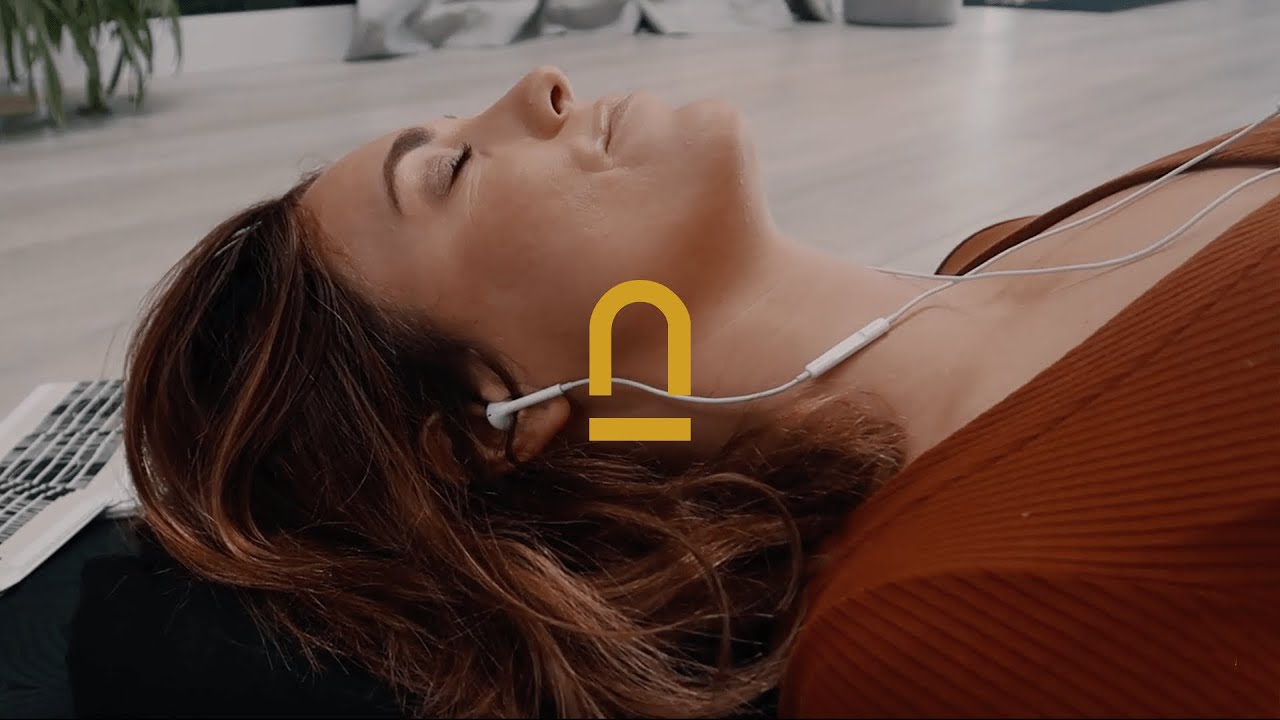
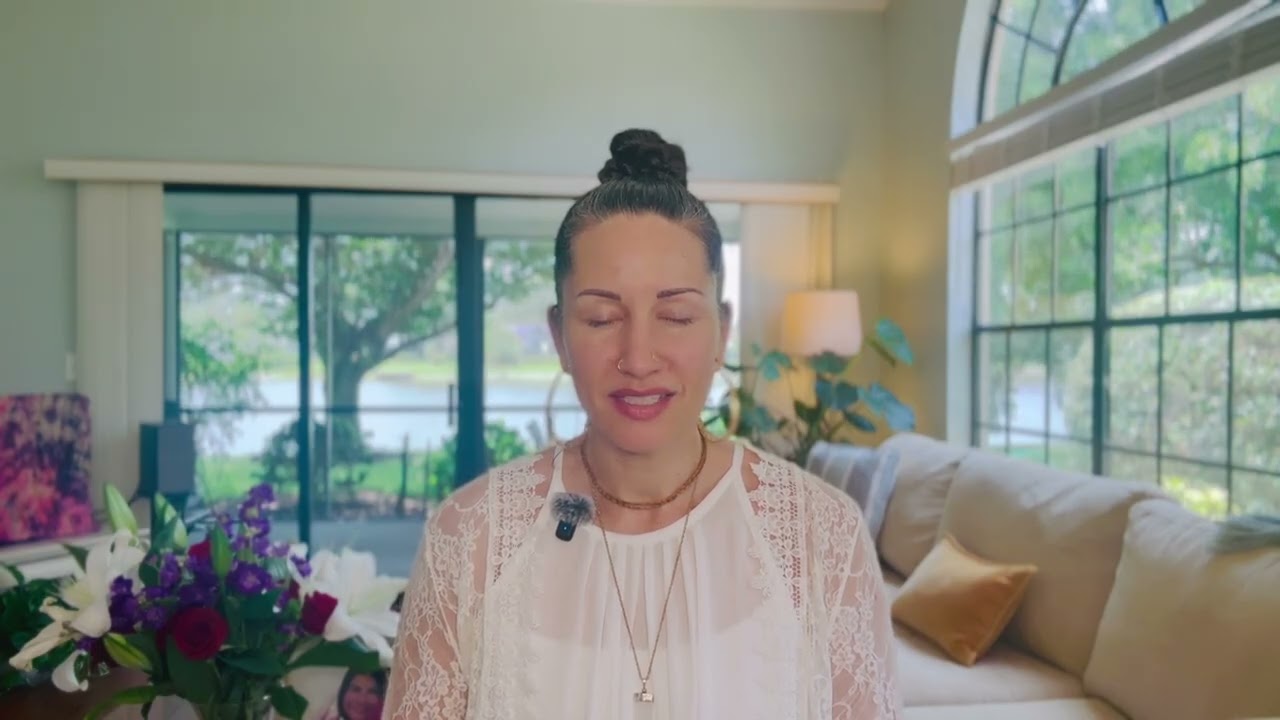
Forty-two minutes into a dark room, a voice asks you to make a fist, hold it, and then let it go. That is the first real instruction in Deeprelax Yoga Nidra Profound Deep Sleep Meditation, a guided session posted to the House of Deeprelax channel on May 9, 2019. Recorded by Eliane Bernhard, founder of House of Deeprelax, and introduced as the first English-language Deeprelax session after the studio's sessions had already reached many listeners in the Netherlands, the recording moves its listener through a clear sequence: deliberate tension, then release; breath imagined as a wave; a layered letting-go behind thought; a slow countdown into open awareness; and finally one sentence of intention. The practice is built with the precision of a well-arranged track, with each section setting up the next. What follows is a close listen to how that structure works, why the teacher asks you to tighten before you loosen, and what the session quietly asks of anyone who presses play at bedtime.
The opening is practical before it is poetic. Bernhard asks the listener to make themselves "as comfortable as can be," arms by the side, palms facing up, feet falling naturally open, with a bolster under the knees and a blanket over the body. The phrase she uses for this posture is "a position in which you can fully surrender to gravity." Nothing is being performed. The body is being placed in a supported shape so that the work can happen inside it.
Then comes the instruction that frames everything after it. "All you have to do," she says, "is stay connected to my voice and trust in my guidance, resolve to remain awake." That last clause matters, and it returns later in the session. Deep relaxation is being offered here as a state of attentive rest, not as a slide into unconsciousness. The listener is meant to lie down and stay present at the same time.
At about 1:42 the session moves into its first real technique. Bernhard directs the listener to focus on the legs, and as they inhale to "deliberately induce stiffness and tension in your hips, legs and feet." They hold. Then, on the out-breath, they let go and "relax your whole body" and "feel sensations in your legs." The cycle repeats for the legs, then moves to the arms and shoulders, where the listener makes fists, and finally to the whole body, including the belly, arms, shoulders and face.
This is an old and sensible device. The hold makes the release noticeable. A muscle that has been asked to work and then is allowed to stop gives a clearer signal of what "relaxed" feels like than a muscle that was never asked anything. For a listener who lies down at night with a body full of unspent effort, the sequence is a way of finding where that effort sits before asking it to dissolve. The instruction is precise about timing, too: inhale to tense, hold, exhale to release. The breath is doing the shaping work from the first minute.
Around the six-minute mark, at 5:58, Bernhard makes the breath the main tool of the session: "We will use the awareness of your breath as a tool to focus on your body." The image she builds is a wave, something that "comes and goes," bringing energy to each and every cell. The division of labor is simple and easy to remember. "On the inhale you are giving life," she says in substance, and on the exhale the listener releases what is no longer needed.
She borrows a term from the yogic tradition, prana, describing the "flow of prana life" moving through the body on each breath. She also gives an image of the lungs as bottles, filled from the bottom to the top, then emptied slowly all the way down. Attention then travels to the belly, then the whole upper body, which is asked to move with each breath. Listeners are invited to notice a tingling in the hands and to take it as "the presence of life itself." The breath is not being corrected or deepened for its own sake. It is being used as an anchor, a way of keeping the mind in the body without forcing anything.
"All you have to do is stay connected to my voice and trust in my guidance, resolve to remain awake." (Eliane Bernhard, in the session)
The middle of the session is where it turns inward. At 11:32 Bernhard asks the listener to "drop into a space behind all your thoughts and feelings," and frames the work as "releasing layer for layer." She describes a "very special and quiet place within yourself," behind storms, thoughts and worries, where "inner bliss" can be experienced. Phrases are repeated slowly, and one of them is an affirmation the listener is asked to take in: "I am totally relaxed and I let go of all control."
Then, at 12:22, the visualization becomes concrete. A dot of light is placed between the eyebrows and another under the feet. The listener feels a connection between the two points, breathing light up from the feet to the spot between the brows on the inhale, then letting the breath move down through the spine and out through the soles on the exhale. The exhale carries away what the session names directly: "dark thoughts and energy," "all negative thoughts about your life," "criticism." The imagery of the body as a warm bath follows, "as if you're stepping into a warm bath," with the instruction to "let the water hold you." The description of the session promises a journey into "the deep blue ocean," and the water imagery here is the audible center of that promise. It is not a metaphor added for color. It is the frame the whole recording rests on.
At about 18:00, the session moves into its most distinctive passage. Bernhard counts backward slowly, from ten to one, and at each number the body is described as more relaxed: "your body's relaxed, brain activity slowing down," then "everything is peaceful," then "your breathing is calm." When the count reaches one, the listener is told "you will let go of everything for a moment and experience total freedom."
What follows is the least conventional part of the recording. The focus on the breath is released. The listener is asked to "settle into a quiet mind," and then to let awareness expand into "a never-ending space behind your eyes," with "no fixation on objects, not even your breath." The image shifts to a space "floating somewhere between stars and planets, far far away." Whatever one makes of that imagery, the structure is clear. The session has spent its time giving the mind handles, the breath, the light, the body, and now it asks the listener to set them down and simply be the open awareness that remains.
The final movement, from about 20:10, is the most practical and, for many people, the most lasting. Bernhard invites the listener to imagine a large movie screen behind the eyes, showing "the movie of your life." The instruction is to step into a single moment: "a perfect moment in a nearby future of your life." She asks what that moment looks like, how it feels, who is there. The question is left open, and the silence is part of the instruction.
At 21:37 the listener is asked to turn that image into one sentence. "Start your sentence with I am," she says, and the sentence is to be used "as an intention, like a decision." The sentence is not described as a wish or a goal. It is a choice made from the quiet state the session has built, the kind of statement a person can carry back into an ordinary day. The recording then gently brings the listener back, with the body becoming alive again, moving the fingers and toes, and a closing invitation to notice what the listener feels grateful for.
The description suggests two ways in: listening "just before falling asleep at night," or starting the day "in the most relaxing way possible." The title promises a "deep sleep meditation," but the session is written around a paradox it keeps returning to. It asks you to lie down and fall into deep relaxation while also resolving to "remain awake." That tension is not a flaw. It is the practice. Yoga nidra, as taught in sessions like this one, aims to let the body rest while attention stays lightly on, so that the listener observes the process of letting go rather than vanishing into it. Listeners who expect a lullaby may find the countdown and the sentence-making more demanding than they anticipated. Those who want something to witness rather than something to fall into will likely find it more useful.
The session has been viewed 34,586 times on YouTube, a number that suggests people return to it, which is often how a practice like this earns its place. It is also one of a larger set of recordings the House of Deeprelax channel and its newer website point to as the source for more sessions.
The most useful way to approach this recording is not to hear it once as a curiosity but to take its structure apart and try the pieces. Start with the tension and release cycle on its own: the legs, the fists, the whole body, held for a few seconds and then let go on the exhale. Notice where the release is strongest. Next, spend a few minutes with the breath as a wave, inhaling energy and exhaling what is no longer needed, without trying to change the rhythm. Then try the countdown from ten to one, and when you reach one, let the breath go and rest in the open awareness behind the eyes for as long as it holds.
Finally, if you choose to work with the intention, let the sentence come from the quiet, not from effort. Begin with "I am," and let the rest of the line arrive on its own. The session is designed to be heard more than once, and each listen will likely reveal a different layer. For more of the House of Deeprelax sessions, the channel and the website named in the description are the places Bernhard points to. Press play at night, and let the water hold you.