Why Does Modern Education Fall Short of Our Children's Needs?
Contemporary education systems predominantly emphasize intellectual achievement, technical competence, and competitive excellence. While these metrics have their place, they frequently overlook the development of the heart—the capacity for compassion, empathy, and genuine respect for others. Children progress through years of schooling mastering subjects and skills, yet many emerge unprepared to navigate emotional complexity, to honor the dignity in others, or to contribute meaningfully to a more peaceful world.
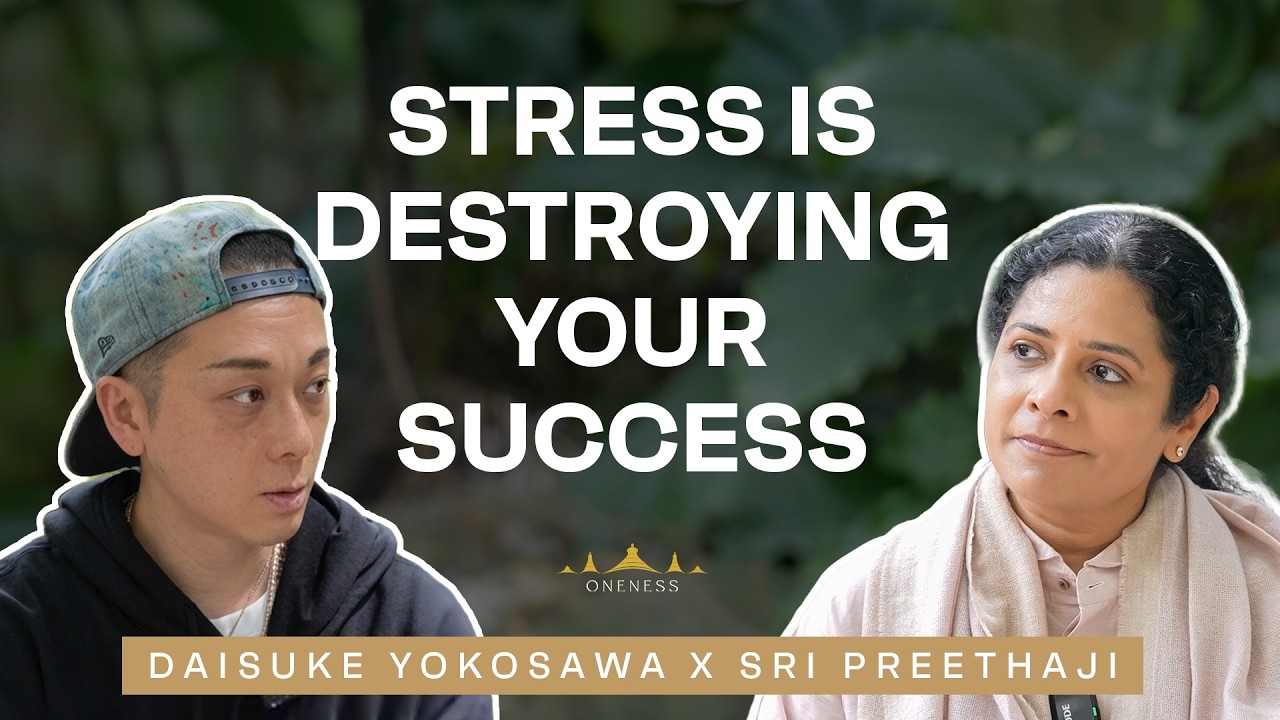
Sri Preethaji and Sri Krishnaji, spiritual teachers of the Oneness Movement, identify a crucial gap in how we structure learning experiences for young people. The education system treats knowledge acquisition as separate from character formation, academics as distinct from emotional and spiritual development. This compartmentalization creates graduates who may be intellectually capable but spiritually impoverished—skilled in their domains but potentially disconnected from compassion and the interconnectedness of all life.
What Does an Inner Revolution in Leadership Mean?
The teachers emphasize that systemic change in education cannot happen through policy reform alone. It requires something more fundamental: an inner transformation among those who shape educational systems—administrators, educators, policymakers, and cultural leaders. An inner revolution refers to a shift in consciousness where leaders themselves awaken to deeper values and become living examples of compassion and respect for life.
When leaders undergo this internal shift, they move from an ego-driven framework focused on achievement, competition, and control to a heart-centered orientation rooted in service, connection, and reverence for all beings. This transformation allows them to ask different questions: not "How can we produce the most successful students?" but "How can we nurture whole human beings capable of love and wisdom?" Not "How do we maximize test scores?" but "How do we cultivate hearts that care for the world?"
How Can We Nurture Compassionate Hearts in Children?
Nurturing compassion in children requires deliberate, systemic change across multiple dimensions of education. It is not merely adding a compassion elective or incorporating kindness posters on classroom walls. Rather, it demands that compassion becomes woven into the fabric of how schools operate—from curriculum design to teacher training to the daily interactions that constitute school culture.
This approach includes several interconnected practices:
- Emotional and relational learning: Creating space in the curriculum for children to develop emotional awareness, to recognize feelings in themselves and others, and to practice genuine listening and understanding.
- Modeling by adults: Teachers and administrators who have engaged in their own inner work become credible models of compassion. Children learn compassion not primarily through instruction but through witnessing it embodied.
- Service and engagement: Providing opportunities for young people to encounter diverse communities and lifeforms, to serve others, and to experience the joy that comes from contributing to wellbeing beyond themselves.
- Contemplative practices: Meditation, reflection, and mindfulness practices that help children develop the inner clarity necessary to recognize their own capacity for kindness and interconnectedness.
What Does It Mean to Instill a Deep Respect for All Life?
Respect for all life extends beyond abstract philosophy into concrete practice. It means teaching children to recognize the intrinsic worth and dignity of every being—not instrumental worth (what use is this to me?), but inherent worth. A butterfly, a spider, a person from a different culture, someone with a disability, an animal raised for food—all possess equal fundamental dignity.
This perspective fundamentally challenges how we teach subjects like biology, history, environmental science, and social studies. When we teach ecology, we move beyond systems and cycles to genuine reverence for the web of life. When we teach history, we attend to the experiences and humanity of all peoples, not just victors and the powerful. When we teach about other cultures, we cultivate respect rather than mere curiosity or tolerance.
Instilling this respect in children requires that educators themselves have begun to experience this shift in consciousness. It is difficult to teach what one has not felt. An educator who has undergone an inner revolution develops the capacity to perceive and reverence life in all its forms, and this becomes naturally reflected in how they teach and relate to students.
How Can Global Leaders Catalyze This Educational Transformation?
The teachers point to a critical leverage point: global leaders. When those holding positions of influence—in education ministries, universities, large school systems, and cultural institutions—undergo an inner revolution, their decisions ripple outward affecting millions of young people. A superintendent or education minister operating from a heart-centered consciousness makes different choices about curriculum, teacher training, assessment, and school culture than one operating from conventional paradigms of achievement and control.
This does not require waiting for perfect systemic reform. Leaders can begin immediately by:
- Creating space in their own lives for contemplative practice and inner work
- Studying and engaging with teachers and wisdom traditions that have cultivated compassion for millennia
- Bringing their emerging consciousness into their decision-making and leadership
- Supporting and training educators in parallel processes of inner development
- Making compassion and respect for life explicit priorities in institutional missions and practices
Why Does This Change Matter Now?
The world faces unprecedented challenges—climate disruption, social fragmentation, technological acceleration, and rising mental health crises among youth. These crises reveal the insufficiency of education systems focused narrowly on cognitive and economic preparation. Young people need more than job skills; they need meaning, connection, and the capacity to navigate complexity with wisdom and compassion.
Moreover, children raised with genuine respect for all life and developed compassion become adults capable of solving problems differently. They innovate not solely for profit but for the wellbeing of all stakeholders. They lead not through dominance but through service. They build societies that honor both human flourishing and the integrity of the natural world. This generation will inherit the consequences of how we educated the previous one; investing in their hearts may be the most practical decision we can make.
Where to Go From Here
If you are an educator, parent, or administrator, consider these starting points: Begin or deepen your own contemplative practice. Examine your own consciousness and the values you actually embody. Engage with the teachings of Sri Preethaji and Sri Krishnaji through their broader body of work and community. Connect with other educators and leaders who are undertaking similar inner work. Look for practical ways to infuse compassion and respect for life into your institution's actual practices, not just rhetoric. Start conversations with colleagues and peers about what education could become if we prioritized the heart alongside the mind.
The transformation of education does not require waiting for perfect conditions or systemic overhaul. It begins with inner change in those of us who hold influence over young lives, and it unfolds as we courageously reshape learning experiences to nurture the compassion and reverence that our world desperately needs.
]]