BrightStar
BlogMy Tickets
BlogMy Tickets
Saved events
Help & contactSign UpLog in
Events
  • Browse All Events
  • For Seekers
  • Yoga
  • Meditation
  • Breathwork
  • Qigong
  • Sacred Music
  • World Music
  • Medicine Music
  • Sound Healing
  • Ecstatic Dance
  • Ceremony
  • Plant Medicine
  • Energy Healing
  • Satsang & Wisdom
  • Tantra
  • Retreats
  • All Categories →
Destinations
  • Bali
  • Sedona
  • Los Angeles
  • Costa Rica
  • Byron Bay
  • San Francisco
  • Austin
  • New York
  • San Diego
  • Seattle
  • Miami
  • London
  • Maui
  • Boulder
  • Oakland
  • Berkeley
  • Hudson Valley
  • All Cities →
Platform
  • List Your Event Free
  • Autopilot
  • Join the Movement
  • Why we list
  • Sell Globally
  • For Creators
  • For Teams
  • For Writers
  • For Teachers
  • For Kirtan Artists
  • For Studios
  • For Festivals
  • For Retreat Centers
  • For Nonprofits
  • Brand Ambassador
  • Free Ticketing
  • Elevate
  • Amplify
Features

Ticketing and checkout

  • Ticket categories
  • Assigned seating
  • Custom questions
  • Coupon codes
  • Smart pricing
  • Ticket sharing
  • Waitlist
  • Flexible refunds
  • Digital waivers
  • Tip jar
  • Donations and sliding scale
  • Embed widget
  • Mindful checkout
  • Recurring events
  • Private sessions
  • Online courses
  • Summits
  • Rooms and stays
  • Ticket scanner

Marketing and growth

  • Abandoned cart recovery
  • Visitor recovery
  • Upsells and add-ons
  • Affiliate engine
  • Upsell affiliate network
  • Brand ambassador
  • Meta retargeting
  • Verified buyer network
  • Outbound email marketing
  • Email sequences
  • SMS and WhatsApp
  • Event upsell network
  • Direct mail campaigns
  • SEO engine
  • Syndication
  • Event sharing
  • Custom event pages
  • Artist profiles
  • Link in bio
  • Event blog
  • Blog newsletter

Payments

  • Payments, powered by Stripe
  • Buy now, pay later
  • Apple Wallet
  • Multi currency

Data and operations

  • Team access
  • Message center
  • Reports
  • Analytics reporting
  • Performance reporting
  • Customer data
  • Integrations
  • Switch from another platform

AI

  • Maestro
  • AI FAQ assistant
  • All Features →
Company
  • About
  • FAQ
  • Contact
  • The Ecosystem
  • Blog
  • Glossary
  • Inspiration
  • Help Center
  • API Docs
  • Brand Assets
  • Press
  • Terms of Service
  • Privacy Policy

Events

  • Browse All Events
  • For Seekers
  • Yoga
  • Meditation
  • Breathwork
  • Qigong
  • Sacred Music
  • World Music

Destinations

  • Bali
  • Sedona
  • Los Angeles
  • Costa Rica
  • Byron Bay
  • San Francisco
  • Austin
  • New York

Platform

  • List Your Event Free
  • Autopilot
  • Join the Movement
  • Why we list
  • Sell Globally
  • For Creators
  • For Teams
  • For Writers

Features

  • Community Network
  • Abandoned Cart Recovery
  • Ticket Categories
  • Recurring Events
  • Assigned Seating
  • Affiliate Engine
  • Waitlist / Notify
  • All Features →

Company

  • About
  • FAQ
  • Contact
  • The Ecosystem
  • Blog
  • Glossary
  • Terms of Service
  • Privacy Policy
Read more

Events

  • Medicine Music
  • Sound Healing
  • Ecstatic Dance
  • Ceremony
  • Plant Medicine
  • Energy Healing
  • Satsang & Wisdom
  • Tantra
  • Retreats
  • All Categories →

Destinations

  • San Diego
  • Seattle
  • Miami
  • London
  • Maui
  • Boulder
  • Oakland
  • Berkeley
  • Hudson Valley
  • All Cities →

Platform

  • For Teachers
  • For Kirtan Artists
  • For Studios
  • For Festivals
  • For Retreat Centers
  • For Nonprofits
  • Brand Ambassador
  • Free Ticketing
  • Elevate
  • Amplify

Company

  • Inspiration
  • Help Center
  • API Docs
  • Brand Assets
  • Press

Ticketing and checkout

  • Ticket categories
  • Assigned seating
  • Custom questions
  • Coupon codes
  • Smart pricing
  • Ticket sharing
  • Waitlist
  • Flexible refunds
  • Digital waivers
  • Tip jar
  • Donations and sliding scale
  • Embed widget
  • Mindful checkout
  • Recurring events
  • Private sessions
  • Online courses
  • Summits
  • Rooms and stays
  • Ticket scanner

Marketing and growth

  • Abandoned cart recovery
  • Visitor recovery
  • Upsells and add-ons
  • Affiliate engine
  • Upsell affiliate network
  • Brand ambassador
  • Meta retargeting
  • Verified buyer network
  • Outbound email marketing
  • Email sequences
  • SMS and WhatsApp
  • Event upsell network
  • Direct mail campaigns
  • SEO engine
  • Syndication
  • Event sharing
  • Custom event pages
  • Artist profiles
  • Link in bio
  • Event blog
  • Blog newsletter

Payments

  • Payments, powered by Stripe
  • Buy now, pay later
  • Apple Wallet
  • Multi currency

Data and operations

  • Team access
  • Message center
  • Reports
  • Analytics reporting
  • Performance reporting
  • Customer data
  • Integrations
  • Switch from another platform

AI

  • Maestro
  • AI FAQ assistant
Get the app
Download on theApp StoreGet it onGoogle Play
© 2026 BrightStar. All rights reserved. Photo credits ·
Inspiration

Cause and Effect: What Western Thought Gets Wrong

Alan Watts
Alan Watts
Mar 8, 2026
7 min read

From Be Here Now Network

In this brief but incisive segment from Being in the Way, Alan Watts critiques the Western obsession with linear causality—the idea that one thing causes another in a strict sequence—as a fundamental misrepresentation of reality. Rather than a chain of causes producing effects, Watts suggests that what we call "cause and effect" is better understood as an inseparable, mutual relationship where observer and observed, actor and action, form a single unified pattern. This distinction has profound implications for how we understand agency, responsibility, time, and our place in the cosmos.

Read · 7 sections

Why Does the West Believe in Linear Causality?

The Western intellectual tradition has long structured reality around a simple model: A causes B, which causes C. This framework feels intuitive because it mirrors how we narrate events. We see a billiard ball roll across a table, strike another ball, and watch it move—cause precedes effect in time, separated by a clear moment of impact. This logic underpins physics, law, medicine, and everyday reasoning about responsibility and change.

Watts points out that this model carries deep assumptions about time, control, and the nature of action. If cause truly comes before effect, then the past determines the present, and the present determines the future. This creates a sense that we are either victims of prior causes or wielders of causal power—agents who make things happen through willful intervention. The entire edifice of Western thought rests on this temporal, linear scaffolding.

Yet Watts invites us to question whether this framework actually describes how nature operates, or whether it is merely a useful story we tell ourselves—one that obscures deeper patterns.

What Is the Alternative to Linear Cause and Effect?

Rather than a sequence of separate events, Watts suggests that what we label "cause" and "effect" are better understood as two aspects of a single, unified pattern. This echoes Eastern philosophical traditions, particularly Taoism and Advaita Vedanta, where the apparent separation between agent and action, observer and observed, dissolves when examined closely.

Consider a river flowing downhill. We might say "gravity causes the water to flow," but the water, the gravitational field, the terrain, and the flow are not separate entities in a causal chain. They are aspects of one integrated system. The flow is not something gravity does to the water; rather, gravity and water-flowing are two names for the same event viewed from different angles.

Applying this to human action: when you raise your arm, do "you" (as a mind or will) cause your arm to move? Or are "your intention" and "your arm's motion" two descriptions of a single event—your whole body-mind acting as a unified organism? Watts suggests the latter is closer to reality. The separation between the one who acts and the action itself is linguistic convenience, not metaphysical truth.

How Does This Challenge Our Sense of Responsibility?

If cause and effect are not truly separate, then the moral structure of Western thought—built on the premise that an individual actor causes consequences for which they bear responsibility—requires reconsideration. This does not mean abandoning ethics or accountability. Rather, it shifts the ground on which we stand.

When we see ourselves as agents producing effects through the force of our will, we experience ourselves as separate from the world, pushing it around from the outside. This produces anxiety: am I in control? Do I have free will? What if I fail? When we recognize instead that our actions arise from the entire cosmos flowing through us—that we are not separate causers but expressions of a much larger pattern—the relationship to responsibility changes.

We remain responsive to our choices, but without the burden of imagining ourselves as isolated willpower. We are accountable without being isolated. This is not fatalism; it is integration.

What Does Eastern Philosophy Offer That Western Science Misses?

The classical Eastern view, which Watts draws on, treats causality not as a mechanical chain but as a web of relationships. In this view, every event arises in dependence on multiple conditions—what Buddhism calls dependent origination or pratītyasamutpāda. Nothing has a single, isolated cause; everything flows from the entire universe.

Modern physics has begun to converge on similar insights. Quantum mechanics reveals that observer and observed cannot be fully separated, that measurement itself affects reality, and that causality at the subatomic level does not work like billiard balls. Relativity shows that simultaneity is not absolute and that space and time are woven together. Yet these discoveries remain compartmentalized in academic physics; they have not transformed how the average person thinks about cause and effect.

Watts argues that Eastern philosophy grasped these truths intuitively long before Western science caught up. By treating the universe as an organic whole rather than a machine made of separate parts, these traditions avoided the false problem of trying to locate a single "first cause" or to explain how mind and matter interact.

How Does This View Change Our Experience of Time?

The linear cause-and-effect model assumes that time flows from past through present toward future, with each moment determined by what came before. This produces what Watts calls the "anxiety of temporal existence"—the sense that we are always trailing behind the present moment, always trying to catch up, always at risk that the future will betray us.

If, instead, cause and effect are aspects of a single pattern rather than a temporal sequence, then the present moment is not squeezed between a fixed past and an uncertain future. Rather, past, present, and future all participate in one unified event—what physicists call the "block universe" but what Watts knew as the eternal now.

This does not mean nothing changes. It means that change is not something that happens to a static reality; change is reality. The universe is not a thing that persists through time; it is time—endless flowing patterns without a fixed substance underneath.

Why Does This Matter for How You Live?

If you believe you are an isolated consciousness trapped in a body, trying to control a hostile or indifferent world through force of will, you live in perpetual tension. You fight against the grain of reality, exhausted by the effort to be the sole author of your own story.

If you recognize instead that you are an expression of the universe becoming conscious of itself, that your actions flow from the same intelligence that moves galaxies, then you can act without the paralysis of excessive self-monitoring. You can trust the wisdom of your body, the guidance of your intuition, the rightness of what naturally wants to happen.

This is not passivity. A river does not resist gravity; it flows with it, and in doing so, it shapes the landscape with tremendous power. Similarly, a person who acts in harmony with the whole—whose ego-driven agendas have relaxed—often accomplishes more than one locked in the illusion of isolated willpower.

Watts invites us to consider: what if the universe is not something you live in, but something you are? What if cause and effect are not separate forces you must manipulate, but one seamless dance in which you are already participating?

Where to Go from Here

To deepen this exploration, listen to the full episode of Being in the Way with Alan Watts (Episode 37), where this segment originates. Investigate Eastern philosophical texts on causality, particularly Buddhist teachings on dependent origination or Hindu Advaita Vedanta on the nature of the self and action. Explore how modern physics—especially quantum mechanics and relativity—has revealed the inadequacy of classical Newtonian cause-and-effect thinking. Most importantly, notice in your own direct experience how many of your anxieties stem from the belief that you are a separate agent struggling to control an external world. What shifts when you relax that assumption, even briefly?

Comments

Loading the conversation…

The Artist in This Story

Alan Watts

speaker and lecturer

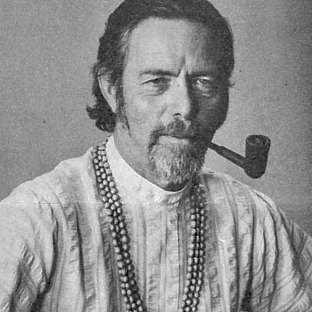
Speaker and lecturer Alan Watts, whose hundreds of hours of talks recorded from 1960 to 1973 on vinyl, tape reels, and cassettes continue to be shared today through the Alan Watts Org.

View profile
Explore Topics
Cause and effectAlan wattsCausalityEastern philosophyConsciousness
Frequently Asked Questions

Frequently Asked Questions

Western thought treats causality as a linear sequence—A causes B causes C—while Eastern philosophy sees cause and effect as inseparable aspects of a unified pattern. Rather than separate events in time, they are two perspectives on a single, integrated occurrence where observer and observed are mutually dependent.

No. Watts shifts the ground of responsibility: instead of imagining yourself as an isolated consciousness forcing your will on the world, he suggests you are an expression of the entire cosmos. You remain responsive and accountable, but without the burden of imagining you are the sole, separate cause of your actions.

Quantum mechanics reveals that observer and observed cannot be fully separated, that measurement affects reality, and that causality at the subatomic level is not deterministic like billiard balls. This aligns with Eastern philosophy's holistic view that cause and effect arise from interdependence rather than mechanical isolation.

Our nervous system and language evolved to carve reality into manageable categories and stories. The separation between agent and action, cause and effect, feels intuitive because it helps us navigate practical survival. But this utility does not make it metaphysically true.

Much anxiety comes from believing you are a fragile, isolated consciousness that must force the world to obey your will. Recognizing instead that you are an expression of a vast intelligence flowing through you allows you to act with trust rather than constant self-doubt and control.

If past, present, and future are not truly separate events in a sequence but aspects of one unified pattern, then the present moment is not squeezed between a fixed past and uncertain future. The universe is not something that persists through time; it *is* time itself—endless flowing patterns.

No. Change is real and fundamental; it is not that reality is static, but that change itself is the nature of reality. Likewise, your choices and actions matter profoundly, not despite the lack of isolated willpower but because you are a channel through which the whole universe acts.

You might also like

View All
Why Predictability Is an Illusion: Embracing Uncertainty
Inspire

Why Predictability Is an Illusion: Embracing Uncertainty

Predictability is a fundamental illusion that constrains how we live. Exploring uncertainty and the nature of control reveals deeper wisdom …

8 min read
Alan Watts' Veil of Thoughts: Money, Work & Civilization
Inspire

Alan Watts' Veil of Thoughts: Money, Work & Civilization

Alan Watts examines how abstract thinking obscures our relationship with money and work, and how civilization perpetuates illusions that dis…

7 min read
Sacred Feminine Power: Chanting Devi Beyond the Mat
Inspire

Sacred Feminine Power: Chanting Devi Beyond the Mat

An in-person gathering in Bengaluru merges ancient devotional chanting with modern psychotherapy to explore how the Goddess archetype illumi…

8 min read
Work Isn't Your Spiritual Problem—Attachment Is
Inspire

Work Isn't Your Spiritual Problem—Attachment Is

The Bhagavad Gita teaches that career and ambition aren't obstacles to spirituality—attachment, ego, and ownership are what bind us.…

2 min read
See allYou might also like→

Continue your journey

More wisdom and gatherings from across the BrightStar directory.

More Articles

Browse the full library of teachings, interviews, and guides.

Back to all articles →

Teachers & Artists

Explore the lineages, musicians, and guides of the conscious world.

Explore artists →

Find an Event

Kirtan, retreats, sound baths, breathwork, festivals — happening soon.

Browse events →