In a world of constant stimulation—notifications, meetings, decisions stacked on top of one another—the nervous system learns to live in a state of perpetual readiness. Your heart rate stays elevated. Your breath grows shallow. Your digestion suffers. The body's ancient defense mechanisms, designed to protect you from immediate physical threat, have become your baseline. What you need is not more input, but permission to rest—and the right frequency to guide you there.
Crystal singing bowls operate on a simple principle: sound vibrations can entrain the nervous system, gradually drawing it from sympathetic activation (fight-or-flight) toward parasympathetic calm (rest-and-digest). This is not mysticism. It is physiology. When you listen to sustained, harmonic frequencies—particularly those in the range of 40 to 100 Hz—your heart rate begins to synchronize with the rhythm of the sound. Your breathing naturally deepens. Your vagus nerve, the long highway of parasympathetic signaling that runs from your brainstem to your gut, activates. Digestion resumes. Inflammation quiets. Recovery begins.
The vagus nerve is the longest cranial nerve in your body—a wandering, ten-part superhighway that branches from your brain and descends through your neck, chest, and abdomen, touching nearly every vital organ along the way. Its name comes from the Latin "vagus," meaning wandering, and that is exactly what it does: it wanders through your body, carrying sensory information back to your brain and motor signals outward to your heart, lungs, and digestive system.
When your vagus nerve is in a state of tone—activated and responsive—you experience what neuroscientists call "vagal tone." High vagal tone correlates with better emotional regulation, lower resting heart rate, improved digestion, and greater resilience to stress. Low vagal tone, by contrast, is associated with anxiety, inflammation, poor digestion, and difficulty recovering from stress. The good news: vagal tone is not fixed. It can be trained, developed, and strengthened through deliberate practice.
Sound, particularly the pure harmonic frequencies of crystal singing bowls, is one of the gentlest and most accessible ways to activate and strengthen the vagus nerve. The bowls create a wall of sound that is not demanding—there is no particular breathing pattern to follow, no visualization to master, no effort required. You simply listen, and the nervous system responds.
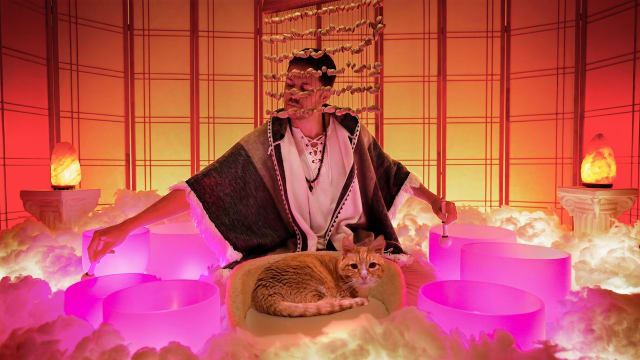
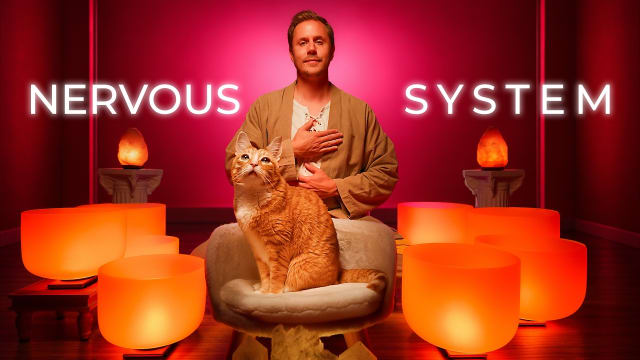
Crystal singing bowls are precision instruments, typically made from quartz that has been fused at extremely high temperatures into a vessel shape. When struck or rubbed with a mallet, they vibrate at a fundamental frequency determined by their size and thickness. These frequencies are not random; they are often tuned to match the resonant frequencies of different organs and energy centers in the body.
The mechanism is elegant: when you hear a sustained, pure tone, your auditory system processes it and sends that information to your brainstem. Your brain recognizes the frequency as safe, non-threatening, and rhythmic. In response, it downregulates arousal, lowers heart rate, and increases vagal parasympathetic signaling. Over time—especially with longer listening sessions—this becomes a kind of training. Your nervous system learns the association between the sound and the state of safety. Listening becomes easier, the descent into calm becomes faster, and the depth of relaxation becomes more complete.
This is why a three-hour sound bath is profoundly different from a ten-minute one. During the first hour, your system may still be processing the transition. By the second and third hours, you have moved beyond the threshold of relaxation into something deeper—a state of genuine physiological rest where real healing can occur.
It is important to be clear about scope: sound baths, while powerful for nervous system regulation, are designed to complement traditional medicine, not replace it. The creators of this practice are explicit about this boundary. Through relaxation and mindfulness induced by sound, the human body's natural healing processes are strengthened and accelerated. But they are strengthened, not substituted. If you have a diagnosed cardiac condition, serious digestive disorder, or anxiety that requires medical intervention, sound baths are best used alongside professional care, not instead of it.
What sound baths do offer is a space for your body to remember what regulation feels like. They offer a break from the constant low-grade stress that keeps your nervous system locked in alert mode. They offer permission to rest—something many of us have forgotten how to give ourselves.
The instructions are deliberately simple. Find a comfortable position—lying down is ideal, though seated is fine if that works better for your body. Choose a gentle listening volume; the goal is to hear the tones clearly without overwhelming yourself. Settle in and let the sound be a place to rest your attention.
There is no special breathing technique to perform. You are not being asked to visualize anything or to hold a particular intention. This is the beauty of pure sound healing: it works without your effort. Your attention can wander. Your mind can be busy. The frequencies will still reach your nervous system. The physiological response will still occur.
Use this practice when you need to unwind after a full day, when you are preparing for sleep, or when you simply need a moment of pause in a busy schedule. Some people make it a daily ritual. Others return to it during seasons of particular stress. Both approaches are valid. The only requirement is consistency enough to allow your nervous system to begin recognizing and responding to the signal of safety that the sound represents.
At the heart of sound healing is a principle called entrainment—the tendency of oscillating systems to synchronize with one another. When you expose a complex system (like a human nervous system) to a steady, rhythmic external frequency, that system tends to align itself with the external rhythm over time. This is not metaphor. It is measurable. Heart rate variability decreases. Brain wave patterns shift from beta (alert, analytical) toward alpha (calm, meditative) and theta (deeply relaxed, dreamlike). Breathing becomes more even. Muscle tension releases.
The crystal singing bowl, struck or bowed into resonance, provides precisely the kind of steady, harmonic signal that facilitates this entrainment. Unlike much popular music, which is designed to stimulate and engage, the singing bowl is designed to calm and regulate. It asks nothing of you except that you listen.
If you are new to sound baths, start with shorter sessions—30 to 45 minutes—and notice what shifts in your body and mood. You may feel more alert immediately after (a sign that your parasympathetic system is waking up after deep rest). You may sleep more deeply that night. You may find that your digestion improves, or that anxiety that usually rises in the afternoon no longer appears.
As you continue, you can gradually work up to longer sessions. A three-hour sound bath is an immersion—it is not meant to be squeezed into a busy day, but rather to anchor a day of genuine rest and recovery. Many practitioners recommend one longer session per week, supplemented by shorter sessions on days when stress runs high.
The key is consistency. Your nervous system responds to patterns. When you show it, again and again, that you offer yourself this time to rest, it begins to recognize the gesture and to trust it. Recovery deepens. Resilience grows. The baseline shifts.
Sound healing is a doorway into a broader approach to nervous system regulation: one that honors the body's wisdom and uses simple, accessible tools to facilitate its own healing. If crystal singing bowls resonate with you, explore other modalities like vagus nerve exercises (humming, gargling, cold water exposure), breathwork, and gentle movement practices. Each of these approaches—when practiced consistently—strengthens vagal tone and builds your capacity to recover from stress.
The ultimate goal is not to become a person who never experiences stress, but to become a person who can move through stress and return to baseline quickly and completely. Sound baths are one of the gentlest and most direct ways to teach your nervous system this skill. All they ask is that you listen.