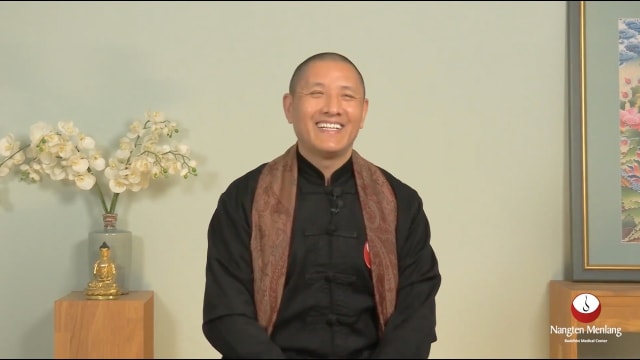
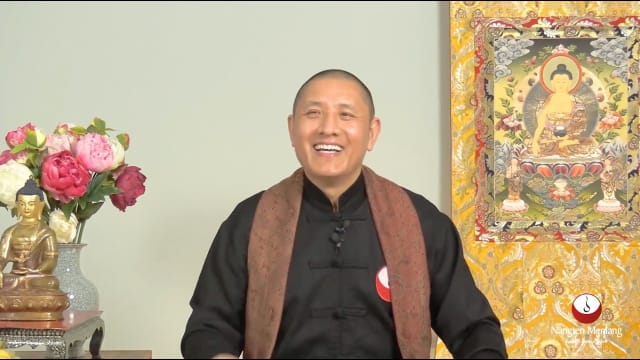
The mind wants what it cannot have—especially in meditation. Tulku Lobsang Rinpoche identifies a paradox that stops countless practitioners cold: the desire for the perfect practice becomes the reason no practice happens at all. We wait for the golden hour. We wait for the quiet afternoon, the unrushed morning, the retreat weekend that never quite materializes. And in waiting, the gap between intention and action grows wider.
Speaking during a recent visit to Buchinger Wilhelmi Marbella, Rinpoche offers a teaching that cuts through the noise of spiritual perfectionism with almost disarming simplicity. The purpose of meditation, he explains, is clear and straightforward: to calm the mind and achieve clarity. The mechanics are basic—keep your spine straight, relax your shoulders, release unnecessary effort, and maintain awareness. But it is the consistency of practice, not its length, that transforms everything.
The obstacle is rarely laziness. It is, Rinpoche suggests, a kind of spiritual vanity. "Many time because of our ego, we don't want small practice, we don't want three second practice, we don't want one minutes practice, we want one hour practice." This is the trap: the mind insists on magnitude. It rejects the modest offering as somehow beneath it, unworthy of the name "practice." But life does not bend to these requirements. Work, family, illness, fatigue, and simple circumstance interfere with the grand vision. The result is that people abandon meditation entirely rather than practice at a scale their actual life permits.
Rinpoche's proposal is radical in its humility. If you have one minute, practice one minute. If you have eleven minutes, practice eleven minutes. But if the day has given you nothing but a bathroom stall and ninety seconds between obligations, three seconds of remembering—of turning your awareness toward the breath, toward presence—is enough. "Because this help you to do continue," he says. The practice survives. The habit remains unbroken. Tomorrow is possible.
This is not settling. This is not a compromise for the weak-willed. It is architecture. The ego's demand for the perfect hour creates a binary choice: either I practice as intended, or I don't practice at all. Accepting the three-second offering collapses that binary. It becomes possible to practice every day. The streak continues. Momentum builds invisibly, day by day, in the smallest possible increments.
"Something consistent is the secret of the secret," Rinpoche concludes. The phrasing itself—redundant, emphatic—underscores how thoroughly this truth has been overlooked in a culture of spiritual aspiration. We know about consistency. We have read it in a thousand books. And yet we do not live it, because living it requires surrendering the fantasy of the perfect practice. It requires meeting ourselves where we actually are, not where we wish to be.
The teaching lands especially hard because it speaks to a particular modern affliction: the collapse of practice into an impossible standard. Many people who abandon meditation do so not because the method failed, but because they demanded too much of themselves at the beginning. They constructed a practice so ambitious that life could not accommodate it, then blamed themselves for falling short. Rinpoche offers a different calculus. If consistency is the goal, then the smallest daily practice that actually happens is infinitely more valuable than the largest practice that remains imagined.
The three-second practice is also neurologically sound. Habit formation requires repetition more than duration. The brain needs the signal to repeat, day after day, that this is now part of your life. Length amplifies that signal, but cannot substitute for it. A one-minute meditation every single day will reshape your mind more profoundly than a weekly hour-long session, because the daily practice builds a groove, a pathway that deepens with each traversal. Three seconds, then three seconds tomorrow, then three seconds the day after: this is how the mind learns.
Rinpoche's teaching also grants permission in a quieter way. For people whose lives are genuinely constrained—parents of infants, frontline workers, anyone in acute circumstances—the possibility of a three-second practice means the possibility of remaining a practitioner. You do not have to put meditation on hold until conditions improve. You do not have to wait for retirement or a sabbatical to maintain your connection to awareness. The practice is available now, in however small a form life permits.
The invitation is to experiment with what Rinpoche calls "the secret of the secret." Notice the moments when your ego dismisses a small practice as too insignificant to bother with. Feel the resistance to three seconds, to one minute, to anything less than the ideal. Then, deliberately, choose the small practice anyway. Watch what happens to your mind when you practice consistently, however modestly. Notice whether the three-second session today makes the three-second session tomorrow easier, and the one the day after that easier still. Over weeks and months, you may find that the small daily practice has quietly become substantial—not because the duration increased, but because the consistency transformed your relationship to meditation itself. At that point, the perfect hour-long practice, should circumstances permit it, will feel like a natural extension of a habit that was never broken, never abandoned, never placed on hold.