BrightStar
BlogMy Tickets
BlogMy Tickets
Saved events
Help & contactSign UpLog in
Events
  • Browse All Events
  • Yoga
  • Meditation
  • Breathwork
  • Qigong
  • Sacred Music
  • World Music
  • Medicine Music
  • Sound Healing
  • Ecstatic Dance
  • Ceremony
  • Plant Medicine
  • Energy Healing
  • Satsang & Wisdom
  • Tantra
  • Retreats
  • All Categories →
Destinations
  • Bali
  • Sedona
  • Los Angeles
  • Costa Rica
  • Tulum
  • Byron Bay
  • San Francisco
  • Austin
  • New York
  • San Diego
  • Denver
  • Seattle
  • Portland
  • Miami
  • London
  • Maui
  • Boulder
  • All Cities →
Platform
  • For organizers
  • Join the Movement
  • Sell Globally
  • For Creators
  • For Teams
  • For Writers
  • For Teachers
  • For Kirtan Artists
  • For Studios
  • For Festivals
  • For Retreat Centers
  • For Nonprofits
  • Brand Ambassador
  • Free Ticketing
  • Pro
  • Amplify
  • The Ecosystem
Features

Ticketing and checkout

  • Ticket categories
  • Assigned seating
  • Custom questions
  • Coupon codes
  • Smart pricing
  • Ticket sharing
  • Waitlist
  • Flexible refunds
  • Digital waivers
  • Tip jar
  • Donations and sliding scale
  • Embed widget
  • Mindful checkout
  • Recurring events
  • Private sessions
  • Online courses
  • Summits
  • Rooms and stays
  • Ticket scanner

Marketing and growth

  • Abandoned cart recovery
  • Visitor recovery
  • Upsells and add-ons
  • Affiliate engine
  • Upsell affiliate network
  • Brand ambassador
  • Meta retargeting
  • Verified buyer network
  • Outbound email marketing
  • Email sequences
  • SMS and WhatsApp
  • Event upsell network
  • Direct mail campaigns
  • SEO engine
  • Syndication
  • Event sharing
  • Custom event pages
  • Artist profiles
  • Link in bio
  • Event blog
  • Blog newsletter

Payments

  • Payments, powered by Stripe
  • Buy now, pay later
  • Apple Wallet
  • Multi currency

Data and operations

  • Team access
  • Message center
  • Reports
  • Analytics reporting
  • Performance reporting
  • Customer data
  • Integrations
  • Switch from another platform

AI

  • Assistant
  • AI FAQ assistant
  • All Features →
Company
  • About
  • FAQ
  • Contact
  • Blog
  • Glossary
  • Guides
  • Inspiration
  • Help Center
  • API Docs
  • Brand Assets
  • Press
  • Terms of Service
  • Privacy Policy

Events

  • Browse All Events
  • Yoga
  • Meditation
  • Breathwork
  • Qigong
  • Sacred Music
  • World Music
  • Medicine Music

Destinations

  • Bali
  • Sedona
  • Los Angeles
  • Costa Rica
  • Tulum
  • Byron Bay
  • San Francisco
  • Austin

Platform

  • For organizers
  • Join the Movement
  • Sell Globally
  • For Creators
  • For Teams
  • For Writers
  • For Teachers
  • For Kirtan Artists

Features

  • Community Network
  • Abandoned Cart Recovery
  • Ticket Categories
  • Recurring Events
  • Assigned Seating
  • Affiliate Engine
  • Waitlist / Notify
  • All Features →

Company

  • About
  • FAQ
  • Contact
  • Blog
  • Glossary
  • Guides
  • Terms of Service
  • Privacy Policy
Read more

Events

  • Sound Healing
  • Ecstatic Dance
  • Ceremony
  • Plant Medicine
  • Energy Healing
  • Satsang & Wisdom
  • Tantra
  • Retreats
  • All Categories →

Destinations

  • New York
  • San Diego
  • Denver
  • Seattle
  • Portland
  • Miami
  • London
  • Maui
  • Boulder
  • All Cities →

Platform

  • For Studios
  • For Festivals
  • For Retreat Centers
  • For Nonprofits
  • Brand Ambassador
  • Free Ticketing
  • Pro
  • Amplify
  • The Ecosystem

Company

  • Inspiration
  • Help Center
  • API Docs
  • Brand Assets
  • Press

Ticketing and checkout

  • Ticket categories
  • Assigned seating
  • Custom questions
  • Coupon codes
  • Smart pricing
  • Ticket sharing
  • Waitlist
  • Flexible refunds
  • Digital waivers
  • Tip jar
  • Donations and sliding scale
  • Embed widget
  • Mindful checkout
  • Recurring events
  • Private sessions
  • Online courses
  • Summits
  • Rooms and stays
  • Ticket scanner

Marketing and growth

  • Abandoned cart recovery
  • Visitor recovery
  • Upsells and add-ons
  • Affiliate engine
  • Upsell affiliate network
  • Brand ambassador
  • Meta retargeting
  • Verified buyer network
  • Outbound email marketing
  • Email sequences
  • SMS and WhatsApp
  • Event upsell network
  • Direct mail campaigns
  • SEO engine
  • Syndication
  • Event sharing
  • Custom event pages
  • Artist profiles
  • Link in bio
  • Event blog
  • Blog newsletter

Payments

  • Payments, powered by Stripe
  • Buy now, pay later
  • Apple Wallet
  • Multi currency

Data and operations

  • Team access
  • Message center
  • Reports
  • Analytics reporting
  • Performance reporting
  • Customer data
  • Integrations
  • Switch from another platform

AI

  • Assistant
  • AI FAQ assistant
Get the app
Download on theApp StoreGet it onGoogle Play
© 2026 BrightStar. All rights reserved. BrightStar Selection · Photo credits · Changelog ·
Inspiration

The Science Behind Psilocybin Microdosing: 25,000-Person Study

Paul Stamets
Paul Stamets
Nov 24, 2026
4 min read

From Paul Stamets

Watch · 5

When scientists design research that invites the public to become citizen scientists, something unexpected often happens: the data tells a story that surprises everyone. Such was the case with a landmark observational study on psilocybin microdosing that enrolled 25,000 participants and was published in Nature Scientific Reports. The findings suggest that mushrooms, long misunderstood and stigmatized, may offer genuine therapeutic pathways for some of the most common mental health challenges we face.

Read · 5 sections

How 25,000 Citizen Scientists Changed Our Understanding

What makes this research unusual is not just its scale but its design. Rather than a tightly controlled laboratory setting, researchers worked with a network of citizen scientists through Quantified Citizen, based in British Columbia. Participants self-reported their experiences with psilocybin mushrooms, establishing detailed baselines before involvement: their motivations for use, dosage amounts, and what other substances they combined with the mushrooms. This observational approach allowed researchers to capture real-world usage patterns in ways that traditional clinical trials often cannot.

The recruitment process revealed something fascinating. Researchers ended up with approximately 4,500 non-microdosers and a few hundred fewer microdosers enrolled in the study—a reversal of what might have been expected. This imbalance wasn't a flaw; it was a feature. The larger control group of non-users helped create exceptionally well-weighted comparison groups, allowing the editors at Nature Scientific Reports to place particular confidence in the study's methodology and results.

What Did the Data Actually Show?

The results, published across two papers, pointed to a consistent pattern: measurable improvements in depression, PTSD, and anxiety. These weren't marginal findings buried in secondary analyses—they were among the most significant measurements the study produced. For individuals struggling with these conditions, the implications are substantial. Depression affects over 280 million people worldwide; PTSD touches veterans, trauma survivors, and first responders; and anxiety disorders are among the most common mental illnesses. If a low-dose intervention with psilocybin could measurably shift these outcomes, the public health significance would be enormous.

What's important to understand is that this was an observational study relying on self-reporting. Participants tracked their own experiences, their own perceptions of improvement. This approach has real limitations—people's memories can shift, their expectations can shape their perceptions, and without double-blinding or placebo controls, some effects could theoretically reflect hope or attention rather than pharmacology. But the sheer number of participants, the detailed baseline data, and the strength of the improvements reported suggest something real was occurring.

Why This Study Matters More Than the Headlines Suggest

Large-scale observational research on psychoactive substances remains relatively rare, partly because of regulatory restrictions and stigma. This study represents one of the few attempts to quantify outcomes across tens of thousands of users in a systematic way. By enabling citizen participation, the researchers democratized the data-gathering process and created a resource that can answer questions conventional labs might never pose. Why are non-microdosers enrolling? What drove motivation? What combinations of substances were people exploring? These details, captured at scale, begin to paint a portrait of how people are actually using these medicines in their lives.

The publication of two peer-reviewed papers in Nature Scientific Reports—a respected outlet for rigorous empirical work—gives the findings institutional credibility. The journal's editors clearly saw value in the methodology, the sample size, and the balance of the comparison groups. That endorsement matters for shifting how the scientific community discusses psilocybin research.

The Road Ahead: From Observation to Understanding

This work doesn't answer every question. It doesn't establish causation with the certainty that randomized controlled trials can. It doesn't detail the neurobiology of how psilocybin shifts mood or processing. But it does something equally important: it establishes that across a large, diverse population, people are reporting measurable mental health improvements. That observation becomes the foundation for the next layer of inquiry—the mechanistic studies, the biomarker research, the work that asks not just "does this work?" but "how and for whom does this work best?"

What the study also demonstrates is that the future of psychedelic research may not look like the past. It may involve more citizen participation, more real-world data collection, more collaboration between grassroots communities and institutional science. In an era when traditional clinical trial enrollment for controversial substances remains difficult, the citizen science model offers a parallel path: rigorous, scaled, and grounded in lived experience.

Where to go from here

To explore the published research yourself, the full papers are available in Nature Scientific Reports. The full conversation between Paul Stamets and Dr. Andrew Huberman provides additional context on mushroom biology, immune function, and the research methodology. For those interested in the intersection of psychedelics and mental health, this study represents one of the largest and most systematic looks we have at real-world outcomes—a data set that will likely influence both future research directions and policy conversations for years to come.

Comments

Loading the conversation…

Transcript

[0:00] May I ask about the benefits and any

[0:03] potential side effects that were

[0:04] observed in this study on micro doing

[0:07] because I I know it's one of the few

[0:09] large subject number studies of micro

[0:11] doing and I know you were involved in

[0:13] this study so I just would love to

[0:14] highlight that for people.

[0:16] >> Well yes I was my colleagues as

[0:18] quantified citizen out of British

[0:20] Columbia. I think we got up to 25,000

[0:23] participants. We published two papers in

[0:25] nature the scientific reports

[0:27] observational studies. These are

[0:29] self-reporting. They were given

[0:31] basically they enrolled. They created a

[0:33] baseline and the motivation why you were

[0:36] taking salami mushrooms, how much you're

[0:37] taking, what are you combining it with,

[0:40] etc. The first paper we published in

[0:42] nature, we heard back from the editors.

[0:45] What they really liked about it is that

[0:46] the two groups are so well weighted. We

[0:49] had more non micro doers than we had

[0:52] micro doers in the study. 4,500 like

[0:55] non-micro dosers, a few hundred less

[0:57] micro dosers. So that was extraordinary.

[1:00] People were motivated to do a test and

[1:03] we had more non dosers and I thought,

[1:06] well, maybe they're trying to create

[1:07] their baselines, you know, or something

[1:08] like that, you know, I would I would you

[1:11] little citizen scientists, you know,

[1:12] this is citizen scientist effort. So

[1:14] that may indeed be what was happening.

[1:17] But of course the results showed

[1:20] tremendous improvement against

[1:22] depression and PTSD and anxiety. Those

[1:26] are the ones that really were

[1:29] significant in the measurements.

Paul Stamets

Paul Stamets

Artist

Mycologist and advocate who has dedicated his life to studying mushrooms and their transformative potential to heal people and restore the planet through medicine, agriculture, and environmental restoration.

View profile
Explore Topics
Psilocybin researchMicrodosingDepression anxietyCitizen sciencePsychedelics
Frequently Asked Questions

Frequently Asked Questions

Psilocybin microdosing involves taking sub-perceptual doses of psilocybin mushrooms—amounts too small to produce hallucinations or noticeable psychoactive effects. The study captured self-reported dosages and usage patterns, revealing how participants across different demographics were approaching the practice in real-world settings.

Observational studies like this one capture real-world behavior and outcomes across large populations, but they cannot establish causation with the same certainty as randomized trials because they lack double-blinding and placebo controls. However, 25,000 participants with detailed baseline data and well-weighted comparison groups provides substantial credibility for the patterns observed.

The transcript and published findings emphasize the significant improvements in depression, PTSD, and anxiety as the primary results. While the full papers in Nature Scientific Reports would contain detailed adverse event data, the highlighted focus was on therapeutic benefits rather than harms.

The researchers noted that this imbalance—approximately 4,500 non-users versus fewer microdosers—was actually valuable for creating well-weighted comparison groups. It may have reflected participants enrolling to establish baseline data or contribute to citizen science efforts before or instead of using psilocybin themselves.

Depression, PTSD, and anxiety were identified as the conditions with the most significant measurable improvements. These were the outcomes that most stood out in the statistical analyses reported from the 25,000-participant study.

Citizen science enables distributed, large-scale participation without the constraints of laboratory settings, allowing researchers to capture real-world usage patterns, motivations, and combinations of substances. This approach can generate insights that conventional trials might miss, though it trades some control for scale and authenticity.

You might also like

View All
Amanita Muscaria: History, Identification & Safety of Fly Agaric
Inspire

Amanita Muscaria: History, Identification & Safety of Fly Agaric

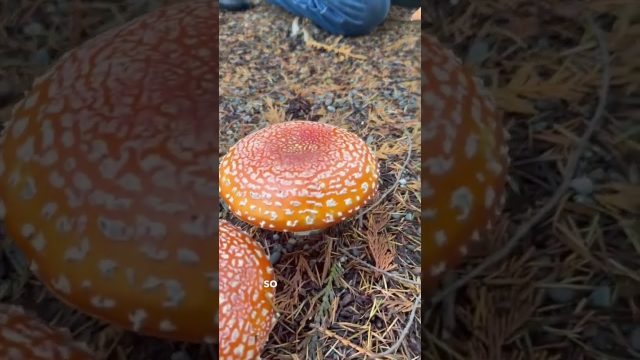
Amanita muscaria, the fly agaric, has ancient roots in pest control and cultural mythology. Despite its striking beauty, this mushroom poses…

6 min read
Winter Chanterelle: Late-Season Edible Mushroom Identification
Inspire

Winter Chanterelle: Late-Season Edible Mushroom Identification

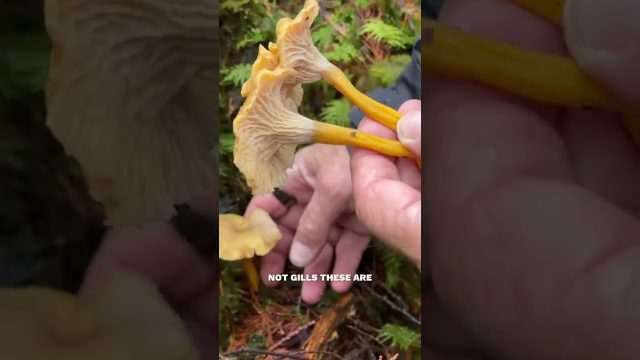
The winter chanterelle (Craterellus tubaeformis) is a cold-hardy edible mushroom that thrives in late-season forests. Its trumpet shape, rid…

6 min read
How Dopamine Resets Shape Recovery From Addiction
Inspire

How Dopamine Resets Shape Recovery From Addiction

Dr. Anna Lembke, Stanford's addiction medicine chief, explains dopamine dynamics and how the brain's reward system drives compulsive behavio…

9 min read
The Sublime Explained: Breaking Out of Everyday Consciousness
Inspire

The Sublime Explained: Breaking Out of Everyday Consciousness

Robert Greene defines the sublime as a doorway beyond the familiar circle of our thoughts, and explains why childhood wonder fades and how t…

9 min read
See allYou might also like→

Continue your journey

More wisdom and gatherings from across the BrightStar directory.

More Articles

Browse the full library of teachings, interviews, and guides.

Back to all articles →

Teachers & Artists

Explore the lineages, musicians, and guides of the conscious world.

Explore artists →

Find an Event

Kirtan, retreats, sound baths, breathwork, festivals — happening soon.

Browse events →