

Jenny Wessel
Musician
About
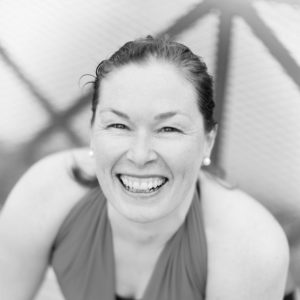
Jenny Wessel works under the name Livs Levande, with the words inspiration, joy and rest as her guiding thread. Her mantra, carried for many years, is that if you don't go within, you go without yourself. Her wish is to enrich other people's lives with joy, inspiration and rest, drawing on her knowledge and life wisdom.
Jenny Wessel works under the name Livs Levande, with the words inspiration, joy and rest as her guiding thread. Her mantra, carried for many years, is that if you don't go within, you go without yourself. Her wish is to enrich other people's lives with joy, inspiration and rest, drawing on her knowledge and life wisdom.
Movement has always been central to her life. Her parents introduced her to dance early, taking her along as a small child to folk dance, bugg and foxtrot evenings, and those forms are still a big part of her life. She danced hip-hop, streetdance and disco as a teenager, and trained in aerobics, step-up and water gymnastics during upper secondary school. She also competed in ten-dance for a year, then found that competing took away the joy for her, though she still loves watching dance competitions.
In 1999 she met Nia, a holistic movement form that puts well-being first and sees the person as a whole of body, mind, emotions and spirit. She describes it as a way of getting to know yourself through movement. She runs Nia Movement together with her friend Emma Stålvik.
Alongside dance and movement, her work spans music and meditative song, treatments, and art and creating.



FAQ
Questions
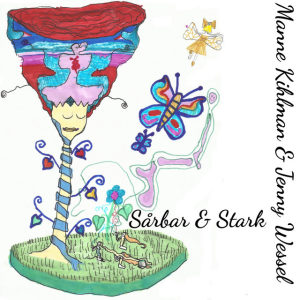
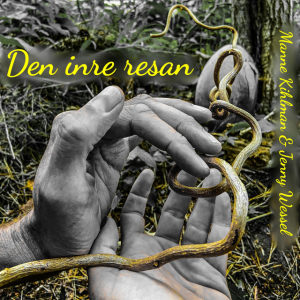
Jenny Wessel, operating under the practice name Livs Levande ("Living Life" in Swedish), is a musician, movement teacher, and holistic practitioner who has spent two decades synthesizing music, meditative singing, dance, and wellness into a coherent offering. Her work pivots on three words: inspiration, joy, and rest—and her guiding mantra, carried for years, is "Går du inte inom dig, går du utan dig" (if you don't go within, you go without yourself), which signals a philosophy centered on inner exploration over external validation. What appeals to her audience is precisely this refusal to separate music from movement, mind from body, performance from healing—she approaches the artist's role as an invitation to wholeness rather than spectacle. Her releases like Den inre resan ("The Inner Journey") and Sårbar & stark ("Vulnerable & Strong") announce an artist interested in the psychological texture of consciousness, not in trending aesthetics. People connect to her work because she has committed to what appears to be a genuinely integrated life: teaching Nia movement, creating music, and running treatments, all stewarded by the same ethos of joy and inner orientation.
Jenny Wessel's primary lineage is Nia, a holistic movement practice that emerged in the late twentieth century and treats the body, mind, emotions, and soul as an integrated whole rather than separate domains. She encountered Nia in 1999—a watershed moment in her own journey—and spent the following seventeen years co-teaching Nia Movement with her long-term collaborator Emma Stålvik, making this the bedrock of her teaching practice. Nia distinguishes itself from conventional fitness or dance by centering wellbeing and joy as outcomes, not body transformation or performance mastery, which aligns precisely with Wessel's three pillars of inspiration, joy, and rest. Her musical work and meditative singing, while not formally rooted in a single established lineage, draw from this same non-hierarchical, integrative ethos—treating the voice and sound as tools for embodied awareness rather than technical display. This positions her within a broader contemporary wellness tradition that bridges Scandinavian minimalism, somatic practice, and contemplative music, all unified by a commitment to healing over performing. The consistency of this philosophy across her teaching, music, and treatments suggests Nia serves not as one modality among many, but as the foundational worldview that informs everything Livs Levande does.
The most recent full albums—Den inre resan (2022) and Sårbar & stark (2022)—represent her most current synthesis of music and voice and serve as logical entry points, offering a cohesive listen that demonstrates her approach to meditative singing and composition. Open Up (2018) provides a longer foundation and shows the arc of her earlier work, useful for understanding how her practice has evolved. Beyond the albums, her website at livslevandejw.se and her YouTube channel are direct sources for understanding the full spectrum of her offerings: music, movement instruction, and the philosophy underpinning Livs Levande. A newcomer might begin by listening to Den inre resan or Sårbar & stark to grasp her sonic and emotional language, then explore the website to understand how music functions within her broader teaching ecosystem. The recent 2024 single Om Asatoma also signals her continued creative output and would give a current snapshot of her work. There is no complex discography to navigate or dense theory to master before approaching—her music and teaching are designed to be immediately accessible to anyone seeking to deepen their practice of inner listening.
Most practitioners who work in wellness and meditative music separate their roles—the musician creates recorded work, the teacher leads classes—but Wessel operates across all domains simultaneously without hierarchy, making movement, music, and meditative singing equally primary to her practice. Her two-decade commitment to Nia (rather than chasing multiple modalities) reveals a depth of practice rare in contemporary wellness spaces, where eclecticism often replaces sustained study. Her album titles—Den inre resan, Sårbar & stark, Brave Space—indicate an artist interested in the psychological and emotional specificity of what she's creating, rather than the generic "healing" or "abundance" framing common to much meditation music. She works in Swedish, embedding her native language and cultural sensibility into her music, which is a quiet act of distinctiveness in an English-dominated global wellness industry. Perhaps most tellingly, her Spotify presence is minimal (108 followers, zero algorithmic popularity), which suggests she is not chasing platform growth or influencer status—she appears to be building a practice first and documenting it second, a posture that attracts people seeking authenticity over accessibility.
Anyone seeking high-energy, rhythm-driven dance music or electronic wellness soundscapes will find her work too sparse and introspective; her aesthetic is restraint, not exuberance, which will feel slow to listeners conditioned by BPM-based fitness culture. Students who want a celebrity teacher or someone with a defined guru persona will be disappointed—her work privileges the student's inner journey over her own prominence or charisma. Those seeking yoga music specifically suited to vinyasa flow or fast-paced movement will need to look elsewhere; Nia and her meditative singing are designed for a different tempo of practice, one that prioritizes presence and proprioceptive awareness over cardiovascular intensity. If someone wants a library of explicitly "healing" or "chakra-specific" music with clear branding and track recommendations, her more abstract approach—where tracks like Om Asatoma and Det finns inga raka rötter announce themselves through Sanskrit and Swedish rather than wellness terminology—may feel opaque or overly intellectual. Similarly, those who prefer compartmentalized teachers (one person for music, another for movement instruction) will find her integrated model confusing rather than coherent. Her modest Spotify presence (108 followers) and zero algorithmic popularity also mean she will not appear in algorithmic playlists for casual listeners seeking ambient background music.
Her website, livslevandejw.se, is the primary hub for information about current offerings, retreats, treatments, and any live appearances or tour announcements; checking it periodically is the most direct way to stay informed. She maintains a YouTube channel where she has posted music and movement content, offering direct access to her work beyond Spotify's algorithm and providing visibility into both her recordings and any filmed teaching or performances. Spotify, despite her modest following of 108, is where her discography is centralized—following her artist page there will notify listeners of new releases (most recently, Om Asatoma in March 2024). Given her Swedish base and the limited evidence of major touring infrastructure or press partnerships, events are likely announced first through her website and social media channels rather than major touring platforms or international event aggregators. The grassroots, direct-practice model evident throughout her work suggests she builds announcements through her own channels first, making her website and YouTube the most reliable early-notification sources. Reaching out to her directly through the website is also an option for those seeking information about retreats, workshops, or one-on-one sessions.
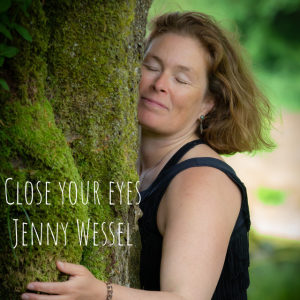
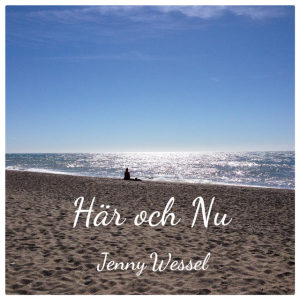
Based on her album titles and release patterns, her sound appears to inhabit the meditative singing and holistic wellness space rather than conventional pop or world music categories—Den inre resan ("The Inner Journey") and Sårbar & stark ("Vulnerable & Strong") signal introspective, emotionally-textured work rather than rhythmic or performance-focused pieces. The 2024 single Om Asatoma uses Sanskrit, suggesting she works with mantric and devotional vocal traditions, though without detailed track information, the instrumentation beyond voice remains unclear from available data. Her albums are notably lean in track count (9-11 tracks across full-length releases), which implies a minimalist approach to composition—each piece appears intentional rather than prolific. The consistent presence of meditative singing as a descriptor suggests her voice is central, likely layered sparsely rather than harmonically complex, placed over subtle instrumental accompaniment that supports contemplative listening rather than commanding attention. The titles themselves—Här och Nu ("Here and Now"), Close Your Eyes, Brave Space—use direct, invitational language that frames her music as an entry point to inner states rather than entertainment, suggesting a sonic aesthetic aligned with yoga, meditation, and somatic practice.
Open Up (2018) is her earliest album in the current discography and represents the foundation of her recorded work, offering nine tracks that introduce her approach to meditative singing and composition. Den inre resan (2022) is her most recent full-length album and represents her most current synthesis—eleven tracks organized around the concept of "the inner journey," which directly expresses her core philosophical commitment and should be treated as her current statement. Sårbar & stark (2022), released the same year as Den inre resan, offers a complementary exploration centered on vulnerability and strength, a duality that runs through much of her teaching philosophy and presents an alternate entry point into her 2022 work. The 2024 single Om Asatoma is her most recent release and signals her continued creative output; it marks a turn toward explicit Sanskrit mantric singing, which may represent an evolution in her practice. Between these anchors, singles like Brave Space, Bring Share Give, and Thank You serve as connecting pieces, though without track-level detail, they are best approached as supplementary rather than essential. A newcomer interested in depth should begin with either Den inre resan or Sårbar & stark and then explore Open Up to trace the arc of her development.
Jenny Wessel's teaching is grounded in Nia, a holistic movement modality that treats the body, mind, emotions, and soul as inseparable dimensions of a single integrated system rather than separate targets for improvement. After encountering Nia in 1999, she spent seventeen years co-teaching with Emma Stålvik, indicating a collaborative, long-term commitment to depth rather than a model of individual celebrity instruction. Nia distinguishes itself by centering joy and wellbeing as both means and ends—the point is never to achieve a particular body shape or technical mastery, but to move with full presence and to discover pleasure in embodied awareness, which reflects Wessel's three pillars of inspiration, joy, and rest. Her role as a "movement teacher" alongside her identities as musician and holistic practitioner suggests her classes likely weave music, voice, and perhaps creative expression into the physical practice, making them multisensory rather than purely movement-focused. What students encounter in a Nia class with Jenny Wessel is likely an invitation to proprioceptive exploration, safe self-discovery, and joy in motion—the opposite of performance-based or competitive fitness frameworks, which she herself abandoned years ago when ten-dance competition began to diminish her joy.
Her guiding mantra, "Går du inte inom dig, går du utan dig" (if you don't go within, you go without yourself), appears across both her music and teaching as the central organizing principle—the insistence that self-discovery and inner exploration are not optional luxuries but the foundation for a meaningful life. The three pillars—inspiration, joy, and rest—recur explicitly in her descriptions of Livs Levande and implicitly in album and track titles like Här och Nu ("Here and Now"), Brave Space, and Sårbar & stark ("Vulnerable & Strong"), all of which invite presence, courage, and authentic feeling. Vulnerability appears as a recurring strength, not a weakness—the album title Sårbar & stark is perhaps the clearest statement of this theme, framing tenderness and resilience as partners rather than opposites. Her decision to make Nia her primary teaching modality for seventeen years suggests a commitment to sustained practice over constant innovation, a theme underscored by the relatively conservative, measured pace of her musical releases (sparse discography, modest platform presence). Throughout her work runs an implicit critique of performance culture and external validation—her refusal to chase Spotify metrics, her focus on the student's inner experience rather than the teacher's prominence, and her use of her native Swedish language all assert that depth and authenticity matter more than reach.


Is this you? Claim this page ›
There's more where this came from.
BrightStar is the global directory of artists, teachers, and healers in the wellness and spiritual movement. Find your next experience — or add yourself.
Discover More Artists
Browse 14,000+ curated profiles across kirtan, yoga, meditation, and beyond.
Explore directory →Find an Event Near You
Kirtan, retreats, sound baths, breathwork, ceremonies — happening this week.
Browse events →Add Your Profile
Are you an artist, teacher, or healer? Get listed — free, AI-assisted, live in minutes.
Get started →