Transcript
[0:00] What the stones and bones show us,
[0:04] if we actually look at all of the
[0:06] evidence, [music]
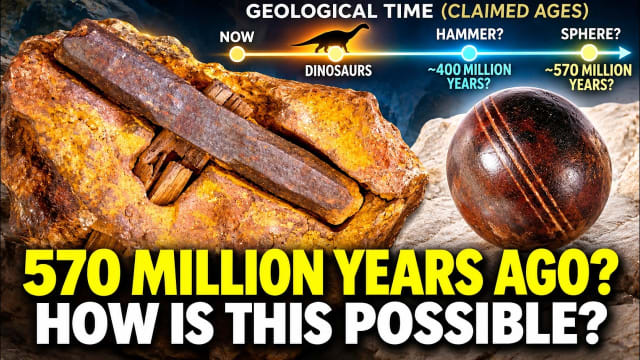
[0:08] is that humans have been here since the
[0:12] very beginning of life on Earth. Then
[0:17] they dismiss all these earlier
[0:20] discoveries that had shown human beings
[0:23] were existing for far longer periods of
[0:25] time going back many millions of years
[0:29] even. Darwin told Wallace, "I think
[0:32] you're killing our child, the theory of
[0:35] evolution, by getting into these
[0:38] paranormal topics." In the middle of the
[0:41] lab, under what [music] he described as
[0:43] perfect conditions of observation,
[0:46] Pierre Curie said large table like this
[0:49] one was floating [music] about 3 ft off
[0:51] the ground, and he was measuring how
[0:53] high it was floating, timing [music] how
[0:55] long it was floating.
[0:57] And after 2 years
[1:00] of such results, [music] you know, the
[1:01] entire group of scientists signed
[1:03] documents saying, "These things are
[1:04] absolutely true."
[1:06] >> Let's go back then to the more modern
[1:09] times, and let's talk about Darwin and
[1:12] his partner,
[1:13] um Alfred Russell Wendel?
[1:15] >> Wallace.
[1:16] >> Wallace. Wallace.
[1:17] >> Alfred Russell Wallace.
[1:20] >> And Wallace
[1:22] and Darwin were not
[1:25] exactly on the same page once all of the
[1:29] uh dust settled.
[1:31] Wallace had a different viewpoint than
[1:33] Darwin.
[1:34] >> Yes, but what's interesting what
[1:36] happened, they had a very interesting
[1:38] relationship.
[1:40] You know, Darwin had
[1:43] gone on this expedition where he sailed
[1:46] around the world to the Galapagos
[1:48] Islands and places like that, and that's
[1:51] where he first got this idea
[1:54] of [snorts] evolution.
[1:56] So, he went back to England and he began
[2:00] writing a book, but it took him about 20
[2:03] years. After 20 years, he still had not
[2:07] published his theory.
[2:10] And he was sitting in England and one
[2:12] day
[2:14] he got a letter from Wallace,
[2:18] another scientist, a younger scientist,
[2:21] in which he found a paper outlining the
[2:26] theory of evolution by natural
[2:29] selection. And Wallace said he was going
[2:32] to present it at a meeting of a
[2:36] scientific society
[2:38] in England and get it published. And
[2:41] Darwin at that time was just shocked.
[2:44] >> [snorts]
[2:44] >> You know, he'd been working on this
[2:46] theory of evolution for 20 years.
[2:50] And the way it works in the scientific
[2:52] world is that the first person who
[2:57] publishes the theory gets their name on
[3:02] it.
[3:03] >> [snorts]
[3:03] >> So, Darwin called all of his scientific
[3:08] friends together and
[3:10] told them what had happened. And they
[3:12] said, "Well, there's only one thing you
[3:14] could really do
[3:16] is you could ask Wallace if
[3:21] along with his paper a paper by you,
[3:26] Darwin, could also be presented at the
[3:28] same meeting
[3:31] of this scientific society. It's called
[3:33] the Linnean Society in England.
[3:36] And that way
[3:38] you could
[3:40] both publish at the same
[3:43] time.
[3:45] And then
[3:46] you would be the joint authors of the
[3:49] theory.
[3:50] And for a long time, the theory was
[3:53] called the Wallace-Darwin
[3:56] theory of evolution.
[4:00] But now it's just called the Darwin
[4:02] theory.
[4:03] >> How did Wallace get axed?
[4:05] >> Well, he
[4:07] he was a scientist,
[4:09] but he was a very open-minded scientist.
[4:14] Now,
[4:15] Darwin was
[4:17] pretty strictly materialist in his
[4:20] outlook. So, he wanted to explain
[4:24] everything in terms of ordinary matter
[4:28] operating according to
[4:32] purely materialistic
[4:34] scientific laws of physics and
[4:37] chemistry.
[4:39] Now, Wallace
[4:42] in his scientific research
[4:45] could see that there is more
[4:49] to this world. There's more to living
[4:52] things than just ordinary matter, the
[4:56] chemical elements.
[4:58] He could see that there were subtle
[5:01] elements involved, that there was some
[5:04] kind of guiding intelligence. This is
[5:06] another
[5:07] thing that
[5:09] separated him from Darwin.
[5:14] >> Well, he wasn't he into psychic type of
[5:16] research
[5:17] >> Yes.
[5:18] >> in the day? So, he was really trying to
[5:19] test it.
[5:20] >> Yes, he was. And
[5:23] he he worked with another English
[5:27] scientist,
[5:29] Sir William Crookes, who was later a
[5:32] president of the Royal Society,
[5:34] England's top most scientific
[5:36] organization.
[5:38] And together, they were doing
[5:41] experiments with mediums.
[5:44] There was a a medium named Daniel
[5:48] Dunglas Home.
[5:51] And this man had psychokinetic
[5:54] abilities,
[5:56] mind over matter abilities. And they did
[6:00] experiments with him in which they
[6:02] verified these psychokinetic
[6:06] abilities.
[6:08] And they published their results. Now,
[6:12] when that happened,
[6:15] Darwin told Wallace,
[6:17] "I think you're killing our child, the
[6:20] theory of evolution, by getting into
[6:24] these paranormal
[6:26] topics." So,
[6:28] uh they had a kind of intellectual
[6:32] divorce.
[6:34] >> Mhm.
[6:34] >> And I think of the two,
[6:38] Wallace was actually the better
[6:42] scientist.
[6:43] >> Mhm. The uh the Puranas talk about the
[6:46] ancient antiquity of our species, but
[6:48] also, as I recall in reading through
[6:50] here, the existence of monkey-like or
[6:54] ape-like beings who existed also into
[6:58] extreme antiquity alongside humans. They
[7:01] existed simultaneously.
[7:03] >> Yes.
[7:05] The Puranas and other historical
[7:08] writings of ancient India speak of
[7:11] creatures called Vanaras.
[7:13] >> Mhm.
[7:13] >> That means forest dwellers.
[7:15] >> Mhm.
[7:16] >> And if you look at the descriptions of
[7:19] them, you'll see they have ape-like
[7:22] bodies, but human-like intelligence.
[7:27] They have the ability to speak. They
[7:31] [snorts] have a simple level of culture.
[7:35] And
[7:36] now this takes us into another area.
[7:39] They also have mystic powers.
[7:41] >> You're looking at Now you're looking at
[7:42] get coming into modern lore with this,
[7:44] even taking it forward, uh creatures
[7:46] such as Bigfoot or Sasquatch that have
[7:49] managed to somehow throughout eons uh
[7:53] remain isolated enough to survive,
[7:55] right? I mean, this is part of it?
[7:57] >> Yes. I I think just as today
[8:01] >> [snorts]
[8:01] >> we are coexisting
[8:04] with apes and monkeys and with various
[8:07] kinds of ape men on this planet,
[8:12] in the past, we also coexisted with
[8:15] them.
[8:16] So, the picture that you get, if you
[8:19] look at all the evidence, is not one of
[8:23] evolution of one form from the other,
[8:26] >> Mhm.
[8:27] >> but one of coexistence
[8:29] of different types of human and ape-like
[8:34] and ape beings.
[8:39] >> But there is a larger agenda to Darwin's
[8:43] theory of evolution. And I was very
[8:46] interested in what you had to say about
[8:48] that, and I've shared that with other
[8:49] people, and I would like to hear that
[8:51] again, if you wouldn't mind.
[8:53] >> Well, these questions,
[8:55] who am I and where did I come from, are
[8:59] very important.
[9:01] We form our goals and our values based
[9:07] on our answers
[9:10] to these fundamental questions. For
[9:12] example, if I think I'm an American man,
[9:15] then that's how I behave, because that's
[9:18] my sense of identity. And from that
[9:20] sense of identity flow my values and my
[9:25] goals and my ambitions.
[9:28] So,
[9:30] for the past century or so,
[9:35] the supporters of the Darwinian theory
[9:38] of evolution, through the monopoly they
[9:41] have in the education systems in most
[9:44] countries of the world, have had the
[9:47] power to dictate to people the answers
[9:53] to those fundamental questions. Who am I
[9:57] and where did I come from? And the
[10:01] answers that they are giving to these
[10:04] fundamental questions are quite
[10:06] materialistic.
[10:08] They're basically saying,
[10:10] "Well, we're just evolved apes. We are
[10:14] machines made of matter in competition
[10:18] with each other for survival."
[10:22] And
[10:23] as far as any other ideas are concerned,
[10:27] they're excluded from the education
[10:30] system. So, these are the dominant ideas
[10:34] that are being
[10:36] promoted
[10:38] all over the world by the supporters of
[10:41] the Darwinian theory of evolution.
[10:44] Now, because the answers they're giving
[10:48] to these fundamental questions, who am I
[10:50] and where did I come from, are so
[10:52] thoroughly materialistic,
[10:55] it's no surprise to me that our whole
[10:58] worldwide human civilization
[11:01] has become influenced in a very
[11:04] materialistic way.
[11:07] Most people believe that to produce and
[11:10] consume more and more material things is
[11:14] the main purpose of human life.
[11:18] And this has some effects on human
[11:20] society.
[11:21] One effect that it has is on the
[11:24] environment.
[11:25] Because of this process of
[11:27] overproduction and overconsumption of
[11:31] material things, we're poisoning the
[11:33] air,
[11:34] poisoning the land, poisoning the water,
[11:37] consuming the Earth's resources in an
[11:40] unsustainable way, driving all kinds of
[11:44] species of plants and animals into
[11:46] extinction.
[11:48] So, that is one effect.
[11:52] Another effect of these ideas
[11:55] is we see
[11:58] conflict on all levels of human society.
[12:01] I mean, if we're told we're machines
[12:05] made of matter in competition with each
[12:07] other for survival, then we divide
[12:10] ourselves into competing groups of
[12:13] nations, classes, religions,
[12:17] whatever.
[12:19] And we compete with each other
[12:22] for the control of material resources in
[12:28] one fashion or another. So
[12:30] >> But then you go to church on Sunday and
[12:32] you're told that that is
[12:34] bad.
[12:35] I mean, look at the conflicting messages
[12:37] that you should be self in the
[12:38] Judeo-Christian way selfless.
[12:41] I mean, it really it's quite a schism.
[12:44] >> Well, it depends. You know, the
[12:49] one thing that I believe
[12:53] comes from this Darwinian idea of
[12:59] competing with each other for survival
[13:02] is the division into religious groups
[13:06] >> Mhm.
[13:07] >> competing with each other for survival.
[13:08] And I know that's not the only cause,
[13:10] >> Mhm.
[13:11] >> but I think this is something that
[13:13] contributes.
[13:14] >> Yes.
[13:17] And it seems that another um effect of
[13:20] believing that we descend in a
[13:22] materialistic view from an ape um and
[13:25] lower life forms before that, is it also
[13:27] keeps us from looking at the dual nature
[13:30] of our being and our true potential. I
[13:33] mean, we have this vast field of
[13:35] interconnected intelligence. If you
[13:37] believe that you're essentially an ape
[13:40] dust to dust and and evolve an evolution
[13:43] from an ape dust to dust, why would you
[13:45] even begin that search for this more
[13:47] refined aspect of being that survives
[13:50] the physical? You wouldn't, right?
[13:53] >> Yes, but
[13:55] yeah, you could have a conception of
[13:59] apes that involved understanding that
[14:02] they also have a non-material conscious
[14:06] self.
[14:06] >> That's true. It goes a step further.
[14:10] >> The process of reincarnation,
[14:13] the soul that's now in the body of an
[14:15] ape could eventually come to that of a
[14:18] human form.
[14:19] >> Mhm.
[14:19] >> So, I think the real problem is not
[14:23] understanding
[14:25] that
[14:26] life is more than a combination of
[14:32] molecules, of material elements. Whether
[14:35] we're talking about plants, animals,
[14:37] apes, ape-men, or human beings.
[14:40] >> Mhm.
[14:41] >> A living thing is more than a
[14:44] combination of chemicals. We're not just
[14:47] machines made of matter.
[14:51] We have a subtle mind element that has
[14:54] some very unusual powers.
[14:57] There is a conscious self
[14:59] that is totally non-material.
[15:03] I look at bodies as
[15:06] vehicles for conscious selves. That's
[15:11] what we really are.
[15:12] >> Yes.
[15:13] >> And
[15:13] >> Yes.
[15:14] >> This is something that I explored in
[15:16] depth in my book Human Devolution.
[15:21] >> Yes.
[15:22] >> Where I propose, well,
[15:26] as conscious beings, we did not evolve
[15:30] up from
[15:32] matter, rather we have devolved or come
[15:36] down from the level of pure
[15:38] consciousness.
[15:40] Matter does not produce consciousness,
[15:44] but consciousness can become associated
[15:48] with matter.
[15:50] And we're now in that condition where
[15:52] our consciousness has become associated
[15:56] with matter.
[15:59] And to me, this indicates
[16:01] that
[16:03] the real purpose of human life is to
[16:07] restore consciousness to its original
[16:10] pure state,
[16:12] which means Yeah, we should try to
[16:15] satisfy
[16:17] our material needs in the most simple,
[16:20] natural, and efficient way possible
[16:24] while putting most of our human energy
[16:27] into developing that resource
[16:30] of consciousness.
[16:32] And I think this is
[16:34] >> I think you're right.
[16:35] >> something we've gotten away from in our
[16:37] current
[16:38] >> That's the only thing that's going to
[16:39] put balance back into all of it because
[16:41] how can you respect other life forms and
[16:43] the Earth itself if you don't have the
[16:45] consciousness to do so and expanded
[16:48] awareness especially if you're into a
[16:49] material paradigm of consumption so that
[16:51] the machine can keep perpetuating
[16:53] itself.
[16:54] >> I think if I understand I'm a being of
[16:58] pure consciousness, all others are
[17:01] beings of pure consciousness, then we
[17:03] develop a real respect for
[17:07] life. We don't divide ourselves
[17:09] into competing
[17:11] >> Right.
[17:12] >> groups and cause so much conflict and
[17:16] destruction.
[17:20] >> And so when we talked about your early
[17:22] past, you
[17:24] were
[17:25] you were of a mind that
[17:28] you wanted to find the evidence. If you
[17:30] were reading these ancient Vedic texts
[17:33] that were talking about this extreme
[17:34] antiquity, your hypothesis is there has
[17:37] to be evidence for it. And so you set
[17:39] out to find it and you did. And so in
[17:41] this um conversation, I'd really like to
[17:44] talk about the time in which some of
[17:46] these discoveries were made. This whole
[17:48] period of the early 20th century, I mean
[17:51] it was an explosion of experimentation
[17:54] and discovery of all kinds that seemed
[17:56] to shut down by mid 20th century. Late
[18:00] 19th, early 20th, early 20th century,
[18:03] all kinds of things were being
[18:04] discovered on a spiritual level and on a
[18:07] material level.
[18:09] >> Yeah, you're you're right about that. A
[18:11] lot of
[18:13] >> [clears throat]
[18:13] >> the archaeological evidence for extreme
[18:16] human antiquity was being publicly
[18:19] reported by scientists in the late 19th
[18:22] century and early 20th century.
[18:25] And also, and when we look at
[18:28] alternative explanations for human
[18:30] origins that involve some kind of
[18:33] spiritual element, we see that a lot of
[18:36] prominent scientists were conducting
[18:39] research into the paranormal and things
[18:41] like that.
[18:43] And
[18:45] I think there were a couple of reasons
[18:47] why that kind of research stopped being
[18:52] publicly reported by prominent
[18:55] scientists.
[18:57] And one reason is that
[19:02] in terms of the archaeological evidence
[19:05] for extreme human antiquity, before that
[19:07] time, they really didn't have their
[19:09] timeline totally fixed.
[19:11] >> Mhm.
[19:12] >> Uh as a result of some discoveries that
[19:14] were made in the late 19th century, they
[19:18] fixed their timeline.
[19:21] So that they would have humans like us
[19:24] appearing less than a couple hundred
[19:27] thousand
[19:28] >> Right.
[19:28] >> years ago.
[19:29] And then, because they had fixed their
[19:31] timeline in that way, then they
[19:34] dismissed all these earlier discoveries
[19:38] that had shown human beings were
[19:41] existing for far longer periods of time,
[19:43] [clears throat] going back
[19:45] many [snorts] millions of years, even.
[19:48] You know, because they were saying,
[19:49] "Well, if humans like us appeared less
[19:53] than 200,000 years ago, then these other
[19:56] discoveries couldn't possibly
[19:59] be true. So, let's forget about them."
[20:03] And they were forgotten.
[20:07] In terms of the alternative explanations
[20:11] of human origins that involve what we
[20:13] might call paranormal elements,
[20:17] there were scientists who were
[20:19] investigating these things, but they
[20:21] also stopped publicly reporting these
[20:25] things in the early 20th century.
[20:29] And
[20:30] I think
[20:32] there are some reasons for this.
[20:36] And one reason
[20:39] was that
[20:41] governments and corporations started
[20:43] putting huge amounts of money into
[20:46] science around the time of World War I.
[20:50] And
[20:51] they wanted results
[20:55] from their investment
[20:58] in science. They wanted very specific
[21:01] things. They wanted weapons,
[21:04] they wanted pharmaceuticals,
[21:06] they wanted consumer products.
[21:10] And
[21:11] scientists decided, well,
[21:15] if
[21:16] we want all this money, billions of
[21:19] dollars that corporations and
[21:22] governments are prepared to give us,
[21:26] we should
[21:28] kind of limit our scientific activity to
[21:31] things that further those
[21:35] >> Economic agendas really, yeah.
[21:36] >> particular goals.
[21:38] And therefore they decided, well, all
[21:41] this paranormal research and things of
[21:44] that that that isn't really contributing
[21:47] to that.
[21:48] So, let's focus
[21:51] on the strictly material things. And in
[21:54] a sense, that was productive because
[21:58] they did get a
[22:00] a lot of influence
[22:03] because of the huge investments that
[22:05] government and corporations made in
[22:08] science that would give weapons, that
[22:12] would give pharmaceuticals,
[22:15] that would give consumer products.
[22:19] But
[22:20] there was a cost to that.
[22:22] And I think we're still suffering the
[22:25] effects of that bargain that was made at
[22:29] that time because what we wind up with
[22:32] is an incomplete picture of reality that
[22:37] leaves out
[22:38] >> Mhm.
[22:38] >> you know, the spiritual element. And I
[22:40] think because
[22:42] >> Right.
[22:42] >> Yeah, because of that, I think we've got
[22:44] an environmental crisis.
[22:47] We've got a financial crisis.
[22:50] And we've got a crisis a political
[22:52] crisis in the world. Yeah, intensifying
[22:55] levels of conflict that just don't seem
[22:59] to go away no matter how hard we try.
[23:04] >> And then when you
[23:06] it is not only that it seems like it was
[23:08] convenient to be able to develop these
[23:10] industries and such, but something more
[23:12] aggressive happened. It seems that
[23:14] anything that wasn't able to be born out
[23:16] in a materialistic realm of science
[23:18] actually was subject to ridicule from
[23:21] that point forward as well. I mean, it
[23:23] wasn't just that we need to focus on
[23:25] this for a while. There was a almost a
[23:27] direct attempt to kill the other types
[23:30] of research and science where it it just
[23:32] sort of disappeared um for decades as a
[23:36] matter of fact till some of the
[23:37] scientists of the more modern era from
[23:39] the 70s forward started really
[23:40] researching into it again at
[23:42] universities even.
[23:44] >> Yeah, and not only did they
[23:47] ridicule people at the time, but they
[23:50] rewrote the whole history of science.
[23:54] >> Mhm.
[23:55] >> You know, for example, you know, if you
[23:57] look in any physics textbook today,
[24:01] you'll see descriptions of the work of
[24:05] Pierre and Marie Curie
[24:08] who were husband and wife.
[24:10] You know, they both got Nobel prizes for
[24:13] their work in discovering radium and
[24:15] doing a lot of the early research in
[24:19] radioactivity.
[24:22] And you'll read about that in the
[24:24] textbooks, but what you won't read about
[24:27] is the years of research they did
[24:31] with psychics, people with paranormal
[24:34] powers.
[24:36] >> I mean, that's real science where you're
[24:37] willing to look into all realms. It's
[24:40] not just exclusive to one or the other.
[24:43] And they did this for quite a long time,
[24:44] didn't they?
[24:45] >> Yes, they
[24:47] did 2 years of research with a medium,
[24:50] an Italian lady named Eusapia Palladino.
[24:54] And this woman had some psychokinetic
[24:56] abilities, mind over matter abilities
[24:59] that they wanted to test.
[25:02] And they thought these ideas were
[25:04] relevant to physics.
[25:08] And
[25:09] they were part of a group of 20
[25:12] prominent European scientists who were
[25:14] conducting these experiments
[25:18] with this medium in Paris early in the
[25:21] 20th century.
[25:26] And they got tremendous results. On one
[25:29] occasion,
[25:30] they were sitting with a medium in the
[25:34] laboratory
[25:35] of the psychology institute in Paris in
[25:39] broad daylight.
[25:41] And the medium was sitting in a chair.
[25:44] Marie Curie was holding her hands. Other
[25:47] scientists were holding her feet, making
[25:49] sure she wasn't moving at all. And in
[25:53] the middle of the lab under what he
[25:55] described as perfect conditions of
[25:57] observation, Pierre Curie said large
[26:01] table like this one was floating about 3
[26:03] ft off the ground. And he was measuring
[26:07] how high it was floating, timing how
[26:09] long it was floating.
[26:11] And after 2 years
[26:14] of such results, you know, the entire
[26:16] group of scientists signed documents
[26:18] saying these things are absolutely true.
[26:21] Pierre Curie wrote to some of his
[26:25] prominent physicist friends and said,
[26:27] "We have to take these things into
[26:30] account
[26:31] if we're going to have a complete
[26:36] picture of reality.
[26:40] But this sort of thing is absent from
[26:45] the current textbooks of physics. You
[26:48] only find You only find uh the work they
[26:51] did with with radium.
[26:53] >> Right.
[26:54] >> And therefore people today get an
[26:58] incomplete picture of what real science
[27:02] actually is. You know, when they hear
[27:04] something like mediums, psychokinetic
[27:06] abilities, they would say
[27:09] "This is outside the bounds of real
[27:12] science."
[27:13] >> were using scientific techniques.
[27:16] >> They were.
[27:18] >> to prove these things out now 100 years
[27:20] ago.
[27:21] >> Yes, they were.
[27:24] And
[27:25] I think that is real science. A science
[27:29] that takes into account
[27:31] everything that's possibly true about
[27:34] the world that we live in.
[27:35] >> And this dates back to Sir Isaac Newton.
[27:37] I mean, most people think of him as sort
[27:39] of the godfather of the materialist view
[27:41] of science. However, that wasn't his
[27:44] sole interest at all, was it?
[27:46] >> No, he actually spent quite a a bit of
[27:49] time researching things like alchemy and
[27:52] other paranormal topics, and he wrote
[27:55] extensively
[27:57] about them.
[27:58] This is rarely mentioned in physics
[28:01] textbooks. There are some historians of
[28:03] science who have looked into this,
[28:05] but in terms of
[28:08] scientific
[28:10] discussion today, they ignore these
[28:14] aspects of his work.
[28:16] >> For how long have they been filtering
[28:18] >> It is. How long have they been filtering
[28:19] that part of his um
[28:21] works out?
[28:22] >> I would say the past Well, of course, he
[28:24] he was living during the 18th century,
[28:28] so
[28:29] it's something that
[28:32] started in earnest, I believe, in the
[28:37] 19th century and early 20th century.
[28:40] >> Again, we keep going back to the same
[28:42] period. Massive amounts of discoveries
[28:44] just prior to that, and then
[28:47] a seeming quashing of the evidence after
[28:50] that, following that.
[28:53] Which is
[28:54] interesting. If you could get to Sir
[28:56] Oliver Lodge
[28:57] >> Sir Oliver Lodge was a prominent British
[29:01] physicist who lived in the early 20th
[29:05] century.
[29:07] And he had a son named Raymond. And his
[29:11] son Raymond died during World War I.
[29:16] Yeah, he was in the British military. He
[29:18] was killed in Europe.
[29:22] So,
[29:23] after that, Lodge
[29:27] tried to establish
[29:30] contact with the spirit of his son. And
[29:35] he made use of a medium.
[29:38] And
[29:39] he went in disguise,
[29:43] and he didn't let the medium know who he
[29:47] was.
[29:49] And
[29:50] through the interactions with this
[29:53] medium, he got communications
[29:57] from a conscious entity
[30:01] that revealed things that would only
[30:04] have been known to his son. Very
[30:07] intimate details about the family
[30:09] history and his personal dealings with
[30:12] his son.
[30:15] So, what I find interesting
[30:18] is that
[30:21] Lodge published a book about this whole
[30:26] case. And in it, he dealt with a lot of
[30:29] the types of skeptical objections that
[30:32] might be made by some of his scientific
[30:37] colleagues.
[30:38] So, I think it's a really good example
[30:43] of a prominent physicist who came to
[30:46] accept that consciousness can survive
[30:52] the death of the physical body. And this
[30:54] is something I'm absolutely convinced of
[30:57] that
[30:58] >> [snorts]
[30:58] >> this body is a vehicle for a conscious
[31:01] self that has a non-material
[31:05] source.
[31:06] Now, this idea is not very popular in
[31:09] the world of science today. The most
[31:11] common idea today in the world of
[31:15] science
[31:16] is that consciousness is produced by the
[31:20] interaction of chemicals within the
[31:23] brain.
[31:23] >> Mhm.
[31:24] >> You know, most cognitive or
[31:26] neuroscientists would say if you
[31:28] organize the molecules in the brain in a
[31:31] sufficiently complex way,
[31:33] they'll generate consciousness, but only
[31:36] temporarily and only in association
[31:40] >> With the firings of the brain, yeah.
[31:42] >> of
[31:43] >> of the brain, which means ultimately
[31:46] uh there is no conscious self that could
[31:49] survive the
[31:51] demise of the physical
[31:54] body.
[31:55] >> And this is interesting because it
[31:57] brings us into the subject of this dual
[32:00] nature of ourselves, which you're saying
[32:03] in your work is absolutely essential to
[32:06] being able to piece together utilizing
[32:09] the non-physical aspect of our
[32:10] intelligence is essential in piecing
[32:12] together our ancient history. You can't
[32:14] do it just looking for bones alone.
[32:16] That's not sufficient.
[32:19] >> Absolutely. Now, what the stones and
[32:22] bones show us
[32:25] if we actually look at all of the
[32:27] evidence
[32:28] >> Right.
[32:29] >> is that humans have been here since the
[32:34] very beginning
[32:36] of life on Earth.
[32:39] Yeah, when people read my book Forbidden
[32:41] Archaeology, they noticed that.
[32:47] >> Yes.
[32:47] >> And now, what that means is we need new
[32:50] explanations
[32:52] for human origins.
[32:55] So, people would ask me that question,
[32:57] okay,
[32:58] what is your explanation of how we came
[33:02] about?
[33:04] And to answer that question, I wrote a
[33:06] book called Human Devolution. And what I
[33:08] proposed there was
[33:10] before we even ask the question,
[33:14] where did human beings come from, we
[33:17] should, first of all, ask the question,
[33:20] what is a human being?
[33:22] Now, as I was just saying, today most
[33:26] scientists would say, we're just
[33:29] machines made of matter, and as far as
[33:32] mind and consciousness are concerned,
[33:35] well, if you organize matter in a very
[33:37] complex way in the brain, the brain will
[33:40] produce mind and consciousness.
[33:44] So, it's a very materialistic conception
[33:47] of who we are.
[33:49] >> Yes.
[33:50] >> But, what I'm proposing is that
[33:54] we're made of three things.
[33:57] Matter, the ordinary chemical elements,
[34:00] that's part of what we are,
[34:03] but beyond that, there is a subtle mind
[34:07] element with some very unusual powers
[34:10] like remote viewing
[34:12] >> Mhm.
[34:13] >> and
[34:14] >> is capable of.
[34:15] >> psychokinesis. Yes, and we we could talk
[34:17] about that.
[34:18] >> Yes. Well, yes.
[34:19] >> And
[34:20] and
[34:22] beyond that subtle mind element, there
[34:24] is a conscious self
[34:28] which
[34:29] is totally non-material.
[34:32] Now, when I'm speaking about mind and
[34:35] consciousness, I don't mean temporary
[34:38] byproducts of brain chemistry. I mean
[34:42] real things with their own independent
[34:46] existence.
[34:47] >> Subtle bodies.
[34:48] >> Right. So, if we're going to explain
[34:52] where we came from, we have to explain,
[34:55] well, where does that consciousness come
[34:58] from? Where does the matter come from?
[35:01] How do they all come together
[35:03] in the human form as we experience it on
[35:08] this Earth? So, what I'm proposing is
[35:11] that originally we're beings of pure
[35:13] consciousness. That's what we are.
[35:17] We originally exist in harmony with all
[35:20] other beings of pure consciousness and
[35:22] the source of all conscious beings.
[35:26] But,
[35:27] if a conscious self leaves that original
[35:32] state,
[35:34] then it becomes associated
[35:38] with matter. It comes down into lower
[35:41] levels of reality.
[35:44] And
[35:45] why is that? Well, it's because that
[35:48] original level of pure consciousness is
[35:50] based on love, unselfish love. If a
[35:54] conscious self becomes exploitative or
[35:58] selfish, it can no longer exist in that
[36:02] harmony. It needs a field of activities
[36:05] where it can act out its desires to
[36:09] control, dominate, and exploit matter
[36:14] and others.
[36:16] >> physical frequencies of realities. Yes.
[36:19] >> Absolutely.
[36:20] And for that purpose, it needs a
[36:22] vehicle.
[36:24] And
[36:25] there are different kinds of vehicles.
[36:27] There are human vehicles, there are
[36:29] plant vehicles, there are animal
[36:31] vehicles.
[36:33] According to the state of consciousness,
[36:38] it is placed in a certain
[36:41] vehicle.
[36:45] And where do those vehicles come from?
[36:47] Well, it comes from higher intelligences
[36:49] in the cosmos.
[36:51] So, I thought it was important for
[36:54] archaeologists to understand
[36:57] that there are different ways for
[37:01] getting knowledge of the past. I mean,
[37:04] one way is to just
[37:07] take a fossil and study it with
[37:09] different radiometric dating methods and
[37:12] chemical techniques and
[37:15] physical measurements.
[37:17] But, I thought it was interesting that a
[37:18] very prominent person, a very prominent
[37:22] scientist had
[37:24] expanded
[37:25] his
[37:27] way of doing things to include a
[37:30] psychic.
[37:31] >> I think it's totally valid.
[37:33] >> [clears throat]
[37:33] >> And there are other archaeologists who
[37:36] have also done that. There was an
[37:38] archaeologist in England early in the
[37:41] 20th century named Frederick Bligh Bond.
[37:46] He was excavating the Glastonbury
[37:50] Cathedral
[37:51] in Glastonbury, England. It had been
[37:54] destroyed, you know, during the reign of
[37:58] King Henry the VIII
[38:00] >> Mhm.
[38:00] >> and
[38:01] in England hundreds of years ago.
[38:04] And
[38:05] and he he employed a psychic who had the
[38:09] ability to communicate with past
[38:12] intelligences by a technique called
[38:14] automatic writing.
[38:16] >> Right.
[38:16] >> In other words, he could establish some
[38:18] kind of link between his consciousness
[38:20] and the consciousness of these departed
[38:22] personalities
[38:24] and then
[38:24] >> Write out
[38:25] what he was seeing, yeah.
[38:26] >> write out what they were seeing.
[38:29] And it revealed the location of an
[38:32] unknown chapel
[38:34] that was part of that
[38:37] cathedral complex.
[38:39] And uh
[38:41] Frederick Bligh Bond used this
[38:43] information to guide his excavations and
[38:46] he confirmed that it existed.
[38:49] >> Yeah.
[38:49] >> And there are
[38:52] >> I mean
[38:52] >> other archaeologists who have also
[38:54] employed these psychic techniques as
[38:56] well.
[38:56] >> And we're waking up as a species by the
[38:58] day. I mean, our our faculties are
[39:01] opening up. Many more people are having
[39:03] these kind of precognizant experiences
[39:05] and many others. So, it makes sense to
[39:07] use that vast consciousness that
[39:09] precedes physicality that you were
[39:11] talking about to piece together who we
[39:14] are. And on that note, we're just about
[39:16] out of time and I want to thank you so
[39:18] much for the immense amount of work
[39:20] you've done to help bring it to our
[39:22] awareness that it's legitimate to start
[39:24] raising these topics and having this
[39:26] discussion now.
[39:27] Really appreciate it. Thank you,
[39:28] Michael.
[39:29] >> Thank you.