BrightStar
BlogMy Tickets
BlogMy Tickets
Saved events
Help & contactSign UpLog in
Events
  • Browse All Events
  • Yoga
  • Meditation
  • Breathwork
  • Qigong
  • Sacred Music
  • World Music
  • Medicine Music
  • Sound Healing
  • Ecstatic Dance
  • Ceremony
  • Plant Medicine
  • Energy Healing
  • Satsang & Wisdom
  • Tantra
  • Retreats
  • All Categories →
Destinations
  • Bali
  • Sedona
  • Los Angeles
  • Costa Rica
  • Tulum
  • Byron Bay
  • San Francisco
  • Austin
  • New York
  • San Diego
  • Denver
  • Seattle
  • Portland
  • Miami
  • London
  • Maui
  • Boulder
  • All Cities →
Platform
  • For organizers
  • Join the Movement
  • Sell Globally
  • For Creators
  • For Teams
  • For Writers
  • For Teachers
  • For Kirtan Artists
  • For Studios
  • For Festivals
  • For Retreat Centers
  • For Nonprofits
  • Brand Ambassador
  • Free Ticketing
  • Pro
  • Amplify
  • The Ecosystem
Features

Ticketing and checkout

  • Ticket categories
  • Assigned seating
  • Custom questions
  • Coupon codes
  • Smart pricing
  • Ticket sharing
  • Waitlist
  • Flexible refunds
  • Digital waivers
  • Tip jar
  • Donations and sliding scale
  • Embed widget
  • Mindful checkout
  • Recurring events
  • Private sessions
  • Online courses
  • Summits
  • Rooms and stays
  • Ticket scanner

Marketing and growth

  • Abandoned cart recovery
  • Visitor recovery
  • Upsells and add-ons
  • Affiliate engine
  • Upsell affiliate network
  • Brand ambassador
  • Meta retargeting
  • Verified buyer network
  • Outbound email marketing
  • Email sequences
  • SMS and WhatsApp
  • Event upsell network
  • Direct mail campaigns
  • SEO engine
  • Syndication
  • Event sharing
  • Custom event pages
  • Artist profiles
  • Link in bio
  • Event blog
  • Blog newsletter

Payments

  • Payments, powered by Stripe
  • Buy now, pay later
  • Apple Wallet
  • Multi currency

Data and operations

  • Team access
  • Message center
  • Reports
  • Analytics reporting
  • Performance reporting
  • Customer data
  • Integrations
  • Switch from another platform

AI

  • Assistant
  • AI FAQ assistant
  • All Features →
Company
  • About
  • FAQ
  • Contact
  • Blog
  • Glossary
  • Guides
  • Inspiration
  • Help Center
  • API Docs
  • Brand Assets
  • Press
  • Terms of Service
  • Privacy Policy

Events

  • Browse All Events
  • Yoga
  • Meditation
  • Breathwork
  • Qigong
  • Sacred Music
  • World Music
  • Medicine Music

Destinations

  • Bali
  • Sedona
  • Los Angeles
  • Costa Rica
  • Tulum
  • Byron Bay
  • San Francisco
  • Austin

Platform

  • For organizers
  • Join the Movement
  • Sell Globally
  • For Creators
  • For Teams
  • For Writers
  • For Teachers
  • For Kirtan Artists

Features

  • Community Network
  • Abandoned Cart Recovery
  • Ticket Categories
  • Recurring Events
  • Assigned Seating
  • Affiliate Engine
  • Waitlist / Notify
  • All Features →

Company

  • About
  • FAQ
  • Contact
  • Blog
  • Glossary
  • Guides
  • Terms of Service
  • Privacy Policy
Read more

Events

  • Sound Healing
  • Ecstatic Dance
  • Ceremony
  • Plant Medicine
  • Energy Healing
  • Satsang & Wisdom
  • Tantra
  • Retreats
  • All Categories →

Destinations

  • New York
  • San Diego
  • Denver
  • Seattle
  • Portland
  • Miami
  • London
  • Maui
  • Boulder
  • All Cities →

Platform

  • For Studios
  • For Festivals
  • For Retreat Centers
  • For Nonprofits
  • Brand Ambassador
  • Free Ticketing
  • Pro
  • Amplify
  • The Ecosystem

Company

  • Inspiration
  • Help Center
  • API Docs
  • Brand Assets
  • Press

Ticketing and checkout

  • Ticket categories
  • Assigned seating
  • Custom questions
  • Coupon codes
  • Smart pricing
  • Ticket sharing
  • Waitlist
  • Flexible refunds
  • Digital waivers
  • Tip jar
  • Donations and sliding scale
  • Embed widget
  • Mindful checkout
  • Recurring events
  • Private sessions
  • Online courses
  • Summits
  • Rooms and stays
  • Ticket scanner

Marketing and growth

  • Abandoned cart recovery
  • Visitor recovery
  • Upsells and add-ons
  • Affiliate engine
  • Upsell affiliate network
  • Brand ambassador
  • Meta retargeting
  • Verified buyer network
  • Outbound email marketing
  • Email sequences
  • SMS and WhatsApp
  • Event upsell network
  • Direct mail campaigns
  • SEO engine
  • Syndication
  • Event sharing
  • Custom event pages
  • Artist profiles
  • Link in bio
  • Event blog
  • Blog newsletter

Payments

  • Payments, powered by Stripe
  • Buy now, pay later
  • Apple Wallet
  • Multi currency

Data and operations

  • Team access
  • Message center
  • Reports
  • Analytics reporting
  • Performance reporting
  • Customer data
  • Integrations
  • Switch from another platform

AI

  • Assistant
  • AI FAQ assistant
Get the app
Download on theApp StoreGet it onGoogle Play
© 2026 BrightStar. All rights reserved. BrightStar Selection · Photo credits · Changelog ·
Inspiration

Sacred Geometry in Sand: Zen Art and Meditative Precision

Yuki Kawae
Yuki Kawae
Feb 2, 2026
6 min read

From Versatile World

Watch · 7
Read · 6 sections

What is Sacred Geometry in Sand Art?

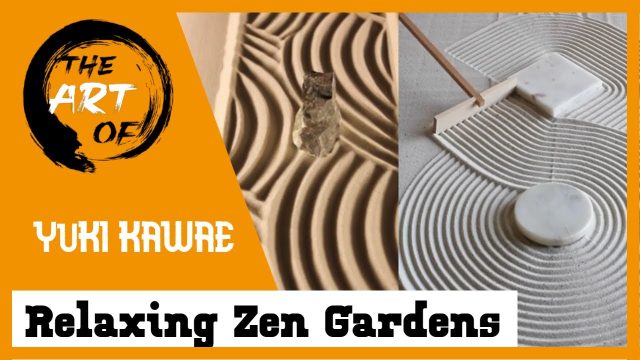
This brief but absorbing piece of sand art demonstrates how sacred geometry—the use of precise, harmonious patterns rooted in natural and spiritual principles—can be created through deliberate, meditative hand movements. A wooden rake becomes the tool through which chaos transforms into order, each stroke flowing with absolute precision until a perfect Zen flower emerges. The work captures the essence of contemplative practice: the marriage of intention, skill, and surrender to the creative process itself.

Sacred geometry has long held significance across cultures and spiritual traditions as a visual language of universal order. In sand art, this principle becomes tangible and temporal—a practice where the artist works with impermanence as the foundational material itself. Yuki Kawae's approach to sand art is not mere decoration; it is a meditative discipline in which every movement carries intention and the outcome reveals patterns that reflect deeper principles of harmony and balance.

The wooden rake, ordinary in appearance, becomes an instrument of precision. In the hands of a skilled practitioner, it is no longer simply a tool but an extension of meditative awareness. The artist moves without hesitation—"without mistakes or doubts"—suggesting a state where thought and action have merged, where the work flows from a place of deep embodied knowledge rather than deliberation.

How Does the Artist Achieve Perfect Precision?

The transformation of sand into perfect geometry requires a specific quality of attention. Yuki Kawae works with "absolute precision that will leave you hypnotized in seconds," a phenomenon that speaks to both the technical mastery involved and the psychological effect of witnessing such focused intention. This precision is not rigid or tense; rather, the strokes flow with "incredible harmony," suggesting that accuracy and fluidity are not opposites but rather complementary aspects of the same meditative state.

The key to this achievement lies in the integration of several elements:

  • Embodied skill: Years of practice allow the artist to move the rake with consistent pressure, angle, and speed, translating intention directly into mark-making without conscious correction.
  • Mental clarity: The absence of doubt or hesitation indicates a state of mind free from second-guessing, where the artist trusts their trained hand and flows with the work.
  • Rhythm and timing: The strokes accumulate in sequence, each one building upon the last, creating a visual rhythm that guides the whole pattern toward completion.
  • Acceptance of the medium: Sand is inherently unstable and impermanent. Working with this material requires surrendering to its nature while simultaneously imposing precise geometric form upon it.

The result—an "impeccable Zen flower"—is not accidental but the inevitable outcome of this integrated practice. In Zen aesthetics, perfection and impermanence coexist; the work is complete and beautiful precisely because it will eventually be swept away or blown by wind.

What Role Does Visual Rhythm Play in Meditative Art?

The act of watching sand art unfold is itself a meditative experience. The viewer is drawn into a rhythm established by the artist's movements and the emerging pattern. Each stroke appears on the canvas, adding information incrementally, creating a sense of anticipation and inevitability. The repetition and regularity of geometric patterns naturally calm the nervous system, which explains why sand art videos are described as "the most relaxing video you'll see today."

This visual effect is not incidental or decorative—it is central to the work's purpose. When we watch a pattern emerge with precision and harmony, our own mental activity settles. The external order mirrors an order within, and witnessing it creates a space of inner calm. This is why sand art appears so frequently in contemplative practices and why it has become a widely consumed form of visual meditation in digital formats.

The "visual satisfaction" mentioned at the outset of the work is not superficial pleasure but a genuine neurological and psychological response to witnessing harmony and order externalized. The eye follows the emerging pattern, the mind tracks the progression, and in that tracking, discursive thought quiets.

How Does Impermanence Relate to Zen Aesthetics in Sand Art?

One of the most profound aspects of sand art is its acceptance of impermanence. Unlike a painting or sculpture created to endure, sand art is inherently temporary. Weather, human touch, or simple time will dissolve the work. This is not a flaw but a feature—it aligns the practice with core Zen principles about the nature of all phenomena.

By creating beauty in a medium destined to disappear, the artist embodies a spiritual understanding: that what matters is not the durability of the object but the quality of presence and intention brought to its creation. The work teaches both creator and observer that perfection and impermanence are not in conflict. The perfect geometry remains perfect even knowing it will fade.

This stance has deep roots in Japanese aesthetics. The concept of mono no aware (the pathos of things) celebrates the poignancy of transient beauty. Sand art in the Zen tradition echoes this sensibility—the work is precious because it is fleeting, complete because it accepts its own dissolution.

What Makes Sand Art a Form of Moving Meditation?

For the artist, sand art is a form of moving meditation or kinetic practice. Each stroke requires full presence; there is no room for distraction or habit. The hands must coordinate with the eyes and mind in real time. There is no time to "redo" or perfect in advance—each mark is made once, decisively. This demands a state of alert relaxation, where the body moves with trained certainty and the mind remains open to the immediate moment.

The viewer, too, enters a meditative state through observation. The repetitive, harmonious visual input reduces the brain's demand for novelty and stimulation. Stress hormones lower, breathing deepens, and the mind enters a more parasympathetic state. The work itself becomes a guide into stillness.

Where to Go From Here

If you are drawn to sand art and Zen aesthetics, consider exploring the following dimensions: seek out more works by Yuki Kawae and other sand artists to deepen your understanding of how different practitioners approach the medium. Practice close observation—watch not just for the final image but for the quality of movement and the rhythm of creation. If you are creatively inclined, consider trying sand art yourself, not necessarily to produce gallery-worthy results but to experience firsthand the meditative discipline it requires. Finally, reflect on how principles of precision, harmony, and acceptance of impermanence apply to your own creative and spiritual practice. The work of creating beauty in temporary materials offers a mirror for understanding how to live with intention despite—and perhaps because of—life's transient nature.

Comments

Loading the conversation…

Transcript

[0:00] Visual satisfaction [music] or

[0:02] pure art. See how this wooden rake

[0:05] transforms a canvas of sand into

[0:06] perfect geometry. In the hands [music]

[0:09] of the artist Yuki Kawai, every movement

[0:11] becomes an absolute precision

[0:14] that will leave you hypnotized in seconds.

[0:16] Without mistakes or doubts, the [music]

[0:18] strokes flow with incredible harmony

[0:20] until they reveal an impeccable Zen flower.

[0:22] [music]

[0:23] This is the most relaxing video you'll see today

[0:25] and you won't be able to stop watching it until the

[0:27] end. [music]

[0:28] Like if you felt that inner peace and

[0:30] follow us for more moments of

[0:32] visual calm. [music]

The Artist in This Story

Yuki Kawae

Yuki Kawae

Yuki Kawae is a visual artist and Zen practitioner whose work bridges traditional Buddhist contemplative practice with contemporary creative expression. Their practice integrates meditation, calligraphy, and visual art within a Zen framework.

View profile
Explore Topics
Sacred geometrySand artZen meditationVisual artMeditative practice
Frequently Asked Questions

Frequently Asked Questions

Sacred geometry refers to precise, harmonious patterns rooted in universal principles of order and balance. In sand art, it becomes tangible through deliberate rake movements that create patterns like geometric flowers, transforming sand into visual expressions of harmony that reflect both external precision and internal contemplative states.

Sand art induces calm through visual rhythm and repetition—the emerging geometric patterns naturally settle the nervous system. The orderly, incremental unfolding of the design gives the mind a focal point, allowing discursive thought to quiet and creating a parasympathetic response in the viewer.

In Zen aesthetics, impermanence is not a flaw but central to the work's spiritual meaning. Creating beauty in a temporary medium teaches that perfection and transience coexist, embodying the Buddhist principle that all phenomena are fleeting—and that what matters is the quality of presence, not the durability of the result.

Sand artists require embodied technical skill (consistent pressure and angle with the rake), mental clarity free from doubt, rhythmic timing, and acceptance of the medium's inherent instability. These combine to create a state where intention flows directly into mark-making without hesitation.

Yes—for the artist, sand art is a moving meditation requiring full presence and coordination of hands, eyes, and mind in real time. Each stroke is made once, decisively, demanding alert relaxation and training. This creates a state where thought and action merge completely.

In sand art, precision and fluidity are not opposites but complementary aspects of the same meditative state. The strokes flow with harmony while maintaining absolute accuracy, reflecting a trained body that moves without tension or correction, guided by deep embodied knowledge.

Sand art embodies key contemplative principles: the marriage of intention and surrender, the acceptance of impermanence, the pursuit of harmony and balance, and the understanding that beauty and meaning reside in the process itself, not merely in a durable final product.

You might also like

View All
Zen Gardens Design: Yuki Kawae's Viral Aesthetic Philosophy
Inspire

Zen Gardens Design: Yuki Kawae's Viral Aesthetic Philosophy

Yuki Kawae explores the design principles behind viral zen gardens, revealing how minimalist aesthetics and intentional space create meditat…

7 min read
Zen Garden Raking: Karesansui Art for Calm and Meditation
Inspire

Zen Garden Raking: Karesansui Art for Calm and Meditation

Explore how Yuki Kawae's karesansui (rock garden) raking practice creates meditative calm through intricate sand patterns and repetitive, in…

8 min read
We Are All Visitors to This Material World: A Gita Reflection
Inspire

We Are All Visitors to This Material World: A Gita Reflection

In a 22-second clip, Radhika Das frames human life as a temporary visit, not a permanent residence. The idea draws on Bhagavad-gītā 8.15 and…

3 min read
Body Identification, Ego, and Aging: Tolle's Deal Explained
Inspire

Body Identification, Ego, and Aging: Tolle's Deal Explained

Eckhart Tolle imagines trading twenty years of life for a great body, then explains why both pride and self-pity are ego, and why time turns…

9 min read
See allYou might also like→

Continue your journey

More wisdom and gatherings from across the BrightStar directory.

More Articles

Browse the full library of teachings, interviews, and guides.

Back to all articles →

Teachers & Artists

Explore the lineages, musicians, and guides of the conscious world.

Explore artists →

Find an Event

Kirtan, retreats, sound baths, breathwork, festivals — happening soon.

Browse events →