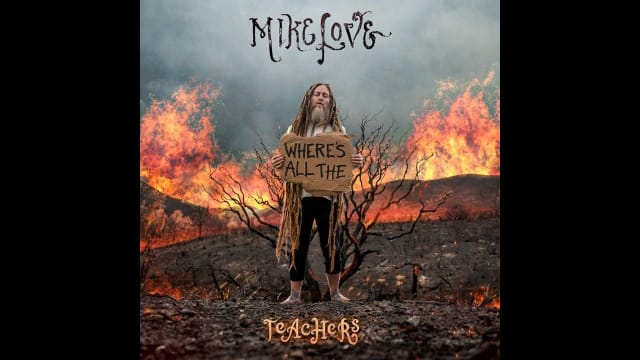
The stage is nearly bare. A single musician stands alone in Zurich, Switzerland—August 8th, 2023, at Dynamo—and begins the first notes of "Permanent Holiday." What unfolds over thirteen minutes is not a polished pop song. It is a manifestation, a sermon wrapped in rhythm, a howl against the machinery of control that shapes modern life. The song, performed entirely solo, moves through themes of financial entrapment, psychological manipulation, and the radical possibility of human freedom—ideas that gather force with each repetition, each choral phrase, until the stage becomes less a concert venue and more a space where someone is thinking aloud in front of witnesses.
The performance begins with an image: "I'm coming out to play / I'm not going to slave away." The opening declares a simple refusal, but what follows reveals the depths of that refusal. Around the 2:15 mark, the song shifts into its core argument. "We're living in a nightmare / everyone's living so scared / they're virtually unaware of the sphere that raises their lines / occupies, consumes their lives / this fear of bankruptcy." The specificity here matters. It is not abstract fear the song diagnoses, but the particular terror of financial ruin—a terror engineered to keep people compliant, working, unable to imagine alternatives.
The diagnosis deepens: "We're living in a prison if we keep buying then they'll keep selling the lies." The song identifies a closed loop—a system where consumption is not choice but compulsion, where the citizen-consumer becomes the engine of their own captivity. Money is named repeatedly as the tool of this captivity: "money money money / it's all this digital currency / it's all this man-made money that keeps us from never being free." The repetition itself becomes a kind of incantation, as if saying the word enough times might break the spell it casts.
Midway through the performance, around 5:30, the song shifts register entirely. The focus moves from diagnosis to declaration. A new section builds on a single, recursive phrase: "I will be the change I see / I will manifest the words I'm speaking / I refuse to be imprisoned." What begins as a solo voice grows into something more powerful—the singer addressing himself, the listener, humanity itself. "I refuse to be manipulated, mind controlled and inundated / I will seek the revelation / make my life a celebration."
This is not motivational speak. It is a legal document written in music. Each "I will" is a refusal of the default trajectory, a vote for a different future. The song does not claim freedom is easy; it claims it is necessary. And crucially, it claims it is possible through conscious choice—through deciding, in front of witnesses, that one will not be sold a lie.
Around the 8:45 mark, the song incorporates the opening section of Pink Floyd's "Another Brick in the Wall." The choice is not random. Pink Floyd's original song, released in 1979, was itself a critique of educational systems designed to produce obedience rather than thought. By bringing that song into "Permanent Holiday," the performance connects the struggle against control across decades—from classroom indoctrination to financial imprisonment to media manipulation. The lyrics are slightly altered: "We don't need no education / we don't need no thought control / the propaganda in the classroom / leave our kids alone."
The invocation of Pink Floyd also signals something important about the genealogy of this song: it belongs to a lineage of protest music that takes seriously the claim that systems are designed to break human will. But unlike some protest music that ends in rage or despair, this performance pivots toward something else—toward reconstruction.
The final section, beginning around 10:15, centers on a single repeated demand: "Take back the knowledge / take back the power / humanity don't let this be our final hour." The song moves from personal refusal ("I will make my own decisions") to collective responsibility ("humanity don't let this be our final hour"). The repetition is relentless, and it is meant to be. It is a chant. It is a prayer. It is a legal claim.
The phrase "take back" is key. It assumes something has been stolen—knowledge, power, agency—and that it can and must be recovered. This is not a claim of innocence; it is not nostalgia for a lost golden age. It is a statement that what we are capable of has been sequestered, hidden, made inaccessible through systems of manipulation and control, and that the act of naming this is the first step toward recovery.
The song ends not with resolution but with a return: "I'm living the permanent holiday." The phrase circles back to its beginning, but the speaker is no longer passive. He is not waiting for permission to live freely. He is already doing it. The performance ends with gratitude—"Thank you Zurich, thank you so much, love you"—which grounds the whole thing, finally, in human connection. The sermon becomes a conversation. The witness is thanked for witnessing.
If "Permanent Holiday" resonates, the next step is not to consume a message but to examine your own life for the structures it describes. Where are you complicit in systems that diminish your freedom? Where have you accepted a narrative about what is possible? What knowledge or power in your life might you take back? The song is not an answer to these questions; it is an invitation to ask them seriously, and then to act.