The room is quiet. You settle into stillness—a chair, a floor, a bench at the park. What matters is not where you are but where your attention goes. Within the next eight minutes, a guided meditation invites you to leave behind the spinning wheel of thought and descend into something simpler: your heart. Not metaphorically, though that too. The actual chamber of your body where breath, feeling, and wisdom converge. The practice teaches that your heart is not an ornament or a figure of speech—it is a sanctuary you can return to whenever the world overwhelms you, a source of clarity sharper than any rational analysis, a home.
The meditation begins with a simple pivot: a shift of attention from the agitated mind into the calm presence of your heart. You're invited to take a few deep breaths and consciously "move all your stress from your mind and emotions and returned to the clarity of your heart." This is not visualization as escape; it is a somatic redirection. The heart, in contemplative practice, is treated as an organ of knowing as reliable as the brain—perhaps more so, because it does not traffic in worry, rumination, or future catastrophe. It lives in the present moment.
The guided voice emphasizes accessibility: "Be done any time throughout your day. It can even be done at work, in a public place, or at your home." Heart-centered practice requires no props, no ideal conditions. A three-minute version works as well as a full session. The body itself is the technology. When you place your hands on your heart—a gesture the meditation gently suggests—you anchor your nervous system through touch and intention. Your exhale becomes an act of surrender, your inhale an act of return.
The meditation employs a central image: a rose in full bloom in the center of your heart. With each breath, the rose opens further. This is not mere poetic ornament. The rose serves as a symbolic language for the nervous system. As you breathe, the image softens resistance and allows your heart-space to expand. You choose the rose's color; agency matters. The unfolding petals mimic your own opening—gradual, petal by petal, not forced.
The imagery then broadens. You bring to mind the people and moments that awaken your love: a child, a friend, a family member, a partner, a pet, or the memory of a sunrise or sunset. "Let the sweetness of that thought fill you up," the voice instructs. You're not conjuring love from nothing. You're recognizing love that already lives inside you. The affirmation follows naturally: "This is love. This love lives inside of me."
The meditation does not ask you to bypass sadness or pretend pain does not exist. Instead, it invites you to acknowledge it from a place of internal safety. If you notice "pain, disappointment, separation, anxiety, or grief," you are told to "acknowledge them" and notice "the energy of your heart awakening and embracing all of your sadness." This is a critical turn. The heart is not presented as a place of relentless positivity but as a witness capable of holding complexity. You are not asked to fix your pain but to let your heart's wisdom meet it with tenderness.
The practice then moves into transmutation—the genteel transformation of energies no longer serving you. "Thoughts of worry, of future outcomes, I transformed right now in the presence of the power of your heart." This is not denial. It is a conscious redirect, a decision to place your attention and trust elsewhere. The affirmation becomes an anchor: "I am safe to keep my heart open, protected in the knowing of my heart."
The meditation places listening at the center of heart-wisdom. "I listen to my heart's quiet whisper that my heart tells me. I listen to its wisdom, tenderness, and passion, and I respond to the calling of my heart." This reframes the heart not as a feeling-machine but as an oracle. It has direction. It has guidance. In a world of endless information and competing voices, the heart's whisper is remarkably quiet and remarkably steady. Learning to hear it—and trust it enough to follow—is the work.
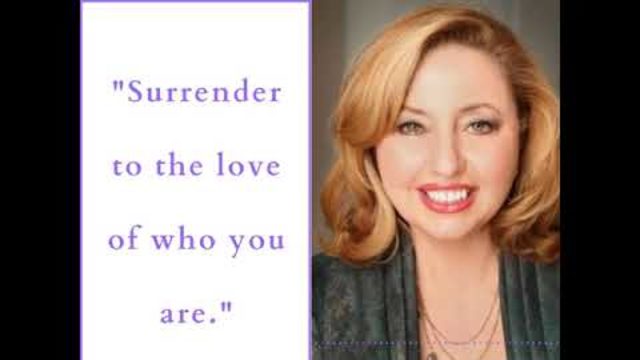
The practice acknowledges that this listening may bring tears. "If there are tears that come, let them come. It's the willingness to surrender to the love of who you are that ultimately will open your heart." Tears are not failure. They are evidence of genuine opening, the body's permission slip that you are finally allowing yourself to feel.
Once centered, the meditation shifts toward a generous outward movement. The love you've accessed and amplified in your own heart becomes "beams of sunlight" extending into your family, your work, your home, every area of your life. This is where the practice becomes activism. You are asked to even "send love to the situations that disturb you" and "see how they change." This is not wishful thinking but a recognition that the energy you carry changes what you encounter. When you radiate love rather than fear or resentment, the world responds differently.
The meditation circles back to its deepest teaching: your heart is a home you can always return to. "You have the choice to come back to the home of your heart when the world pulls you. Your heart is your sanctuary." This is not escapism. It is resilience. No external circumstance can remove your access to your own heart. A job loss, a betrayal, illness, grief—all can wound you, but none can lock the door to your inner refuge unless you choose to let it. The practice is an exercise in agency disguised as meditation.
The closing honors the simplicity of the work. "You know, your heart—it's so simple. It's your very breath." The practice does not require mystical experience or extraordinary insight. It asks only that you notice what is already here: the beating of your heart, the rhythm of your breath, the capacity to love that has never actually left you.
Before you stand, you're invited to write down something that connected you back to yourself during the meditation. This simple act anchors the experience in your day, transforms it from a bubble of calm into a seed that will grow. When you step out into the world, you're reminded: you are protected and surrounded by that love. Let it radiate out. The meditation ends not with a goodbye but with a blessing: "You are going to have an amazing day."
Heart-centered meditation is not a one-time event but a practice you return to. The invitation is to visit your heart-sanctuary often, to become familiar with its qualities, to trust its wisdom over the noise of fear and planning. Many people find it helpful to establish a small ritual: a few minutes each morning before the day accelerates, or in the evening to settle the nervous system before sleep. The meditation can be done in full or abbreviated to three conscious breaths. Some practitioners find that over time, the rose image becomes instant, a shorthand the heart recognizes and opens to immediately. Others discover that returning to the heart throughout the day—even for a single breath—shifts their entire experience of a difficult moment. The heart's wisdom is not mystical but practical: it knows how to love, how to stay present, and how to protect you by keeping you connected to what matters most.