BrightStar
BlogMy Tickets
BlogMy Tickets
Saved events
Help & contactSign UpLog in
Events
  • Browse All Events
  • Yoga
  • Meditation
  • Breathwork
  • Qigong
  • Sacred Music
  • World Music
  • Medicine Music
  • Sound Healing
  • Ecstatic Dance
  • Ceremony
  • Plant Medicine
  • Energy Healing
  • Satsang & Wisdom
  • Tantra
  • Retreats
  • All Categories →
Destinations
  • Bali
  • Sedona
  • Los Angeles
  • Costa Rica
  • Tulum
  • Byron Bay
  • San Francisco
  • Austin
  • New York
  • San Diego
  • Denver
  • Seattle
  • Portland
  • Miami
  • London
  • Maui
  • Boulder
  • All Cities →
Platform
  • For organizers
  • Join the Movement
  • Sell Globally
  • For Creators
  • For Teams
  • For Writers
  • For Teachers
  • For Kirtan Artists
  • For Studios
  • For Festivals
  • For Retreat Centers
  • For Nonprofits
  • Brand Ambassador
  • Free Ticketing
  • Pro
  • Amplify
  • The Ecosystem
Features

Ticketing and checkout

  • Ticket categories
  • Assigned seating
  • Custom questions
  • Coupon codes
  • Smart pricing
  • Ticket sharing
  • Waitlist
  • Flexible refunds
  • Digital waivers
  • Tip jar
  • Donations and sliding scale
  • Embed widget
  • Mindful checkout
  • Recurring events
  • Private sessions
  • Online courses
  • Summits
  • Rooms and stays
  • Ticket scanner

Marketing and growth

  • Abandoned cart recovery
  • Visitor recovery
  • Upsells and add-ons
  • Affiliate engine
  • Upsell affiliate network
  • Brand ambassador
  • Meta retargeting
  • Verified buyer network
  • Outbound email marketing
  • Email sequences
  • SMS and WhatsApp
  • Event upsell network
  • Direct mail campaigns
  • SEO engine
  • Syndication
  • Event sharing
  • Custom event pages
  • Artist profiles
  • Link in bio
  • Event blog
  • Blog newsletter

Payments

  • Payments, powered by Stripe
  • Buy now, pay later
  • Apple Wallet
  • Multi currency

Data and operations

  • Team access
  • Message center
  • Reports
  • Analytics reporting
  • Performance reporting
  • Customer data
  • Integrations
  • Switch from another platform

AI

  • Assistant
  • AI FAQ assistant
  • All Features →
Company
  • About
  • FAQ
  • Contact
  • Blog
  • Glossary
  • Guides
  • Inspiration
  • Help Center
  • API Docs
  • Brand Assets
  • Press
  • Terms of Service
  • Privacy Policy

Events

  • Browse All Events
  • Yoga
  • Meditation
  • Breathwork
  • Qigong
  • Sacred Music
  • World Music
  • Medicine Music

Destinations

  • Bali
  • Sedona
  • Los Angeles
  • Costa Rica
  • Tulum
  • Byron Bay
  • San Francisco
  • Austin

Platform

  • For organizers
  • Join the Movement
  • Sell Globally
  • For Creators
  • For Teams
  • For Writers
  • For Teachers
  • For Kirtan Artists

Features

  • Community Network
  • Abandoned Cart Recovery
  • Ticket Categories
  • Recurring Events
  • Assigned Seating
  • Affiliate Engine
  • Waitlist / Notify
  • All Features →

Company

  • About
  • FAQ
  • Contact
  • Blog
  • Glossary
  • Guides
  • Terms of Service
  • Privacy Policy
Read more

Events

  • Sound Healing
  • Ecstatic Dance
  • Ceremony
  • Plant Medicine
  • Energy Healing
  • Satsang & Wisdom
  • Tantra
  • Retreats
  • All Categories →

Destinations

  • New York
  • San Diego
  • Denver
  • Seattle
  • Portland
  • Miami
  • London
  • Maui
  • Boulder
  • All Cities →

Platform

  • For Studios
  • For Festivals
  • For Retreat Centers
  • For Nonprofits
  • Brand Ambassador
  • Free Ticketing
  • Pro
  • Amplify
  • The Ecosystem

Company

  • Inspiration
  • Help Center
  • API Docs
  • Brand Assets
  • Press

Ticketing and checkout

  • Ticket categories
  • Assigned seating
  • Custom questions
  • Coupon codes
  • Smart pricing
  • Ticket sharing
  • Waitlist
  • Flexible refunds
  • Digital waivers
  • Tip jar
  • Donations and sliding scale
  • Embed widget
  • Mindful checkout
  • Recurring events
  • Private sessions
  • Online courses
  • Summits
  • Rooms and stays
  • Ticket scanner

Marketing and growth

  • Abandoned cart recovery
  • Visitor recovery
  • Upsells and add-ons
  • Affiliate engine
  • Upsell affiliate network
  • Brand ambassador
  • Meta retargeting
  • Verified buyer network
  • Outbound email marketing
  • Email sequences
  • SMS and WhatsApp
  • Event upsell network
  • Direct mail campaigns
  • SEO engine
  • Syndication
  • Event sharing
  • Custom event pages
  • Artist profiles
  • Link in bio
  • Event blog
  • Blog newsletter

Payments

  • Payments, powered by Stripe
  • Buy now, pay later
  • Apple Wallet
  • Multi currency

Data and operations

  • Team access
  • Message center
  • Reports
  • Analytics reporting
  • Performance reporting
  • Customer data
  • Integrations
  • Switch from another platform

AI

  • Assistant
  • AI FAQ assistant
Get the app
Download on theApp StoreGet it onGoogle Play
© 2026 BrightStar. All rights reserved. BrightStar Selection · Photo credits · Changelog ·
Inspiration

Finger Mudra Shifts Breathing Pattern: Soma Breath Explained

Niraj Naik
Niraj Naik
Dec 9, 2025
6 min read

From SOMA Breath

Watch · 3
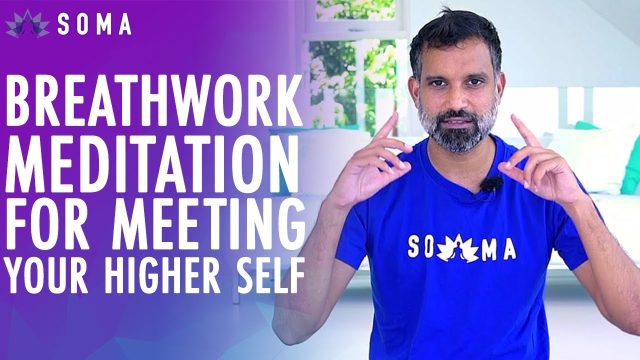
By joining your ring finger and thumb together, you naturally breathe into your chest; by shifting to your thumb and index finger, your breath automatically moves into your abdomen. This reflex demonstrates how precise hand positions, or mudras, trigger involuntary changes in breathing patterns without conscious effort. The technique reveals the mind-body connection built into human physiology—a foundation of the SOMA Breath method.

Read · 6 sections

How Finger Positions Trigger Automatic Breathing Shifts

One of the most striking discoveries in somatic breath work is that your body responds immediately to changes in hand position. According to SOMA Breath founder Niraj Naik, the moment you alter which fingers touch, your respiratory pattern shifts without you having to think about it or force anything. This is not visualization or psychological suggestion—it is a reflexive, physiological response.

When you place your ring finger and thumb together, something happens in your nervous system that directs breath toward your chest. The breath becomes shallower, more rapid, more tied to the upper body. When you then shift that contact point to your thumb and index finger, the entire respiratory pattern changes. Your abdomen begins to fill instead. The diaphragm engages differently. You are now breathing "into" a different region without any conscious instruction to do so.

This demonstrates a core principle: your body contains built-in feedback loops connecting hand position to breathing mechanics. These loops do not require belief or intention. They operate at the level of nervous system reflex.

Why Does Hand Position Affect Breathing at All?

The connection between finger placement and breath patterns lies in acupuncture meridians, nerve endings, and proprioceptive awareness. Traditional Eastern medicine maps specific points on the hands and fingers to various organs and systems. The index finger and thumb are associated with different meridian pathways than the ring finger and thumb. When you create contact between different fingers, you are essentially "activating" different energetic and neurological circuits.

From a Western anatomical perspective, the hands contain thousands of nerve endings with high representation in the sensory cortex. When you create a new tactile connection, that input travels to your brain, which automatically adjusts breathing patterns via the vagus nerve and autonomic nervous system. Your brain does not decide consciously to shift your breath—it responds automatically, as though following a pre-written instruction set encoded in your neurology.

This is why the effect is immediate. There is no lag time. The moment contact changes, breathing changes. This speed reveals that the body possesses knowledge and responsiveness that operates below the threshold of conscious thought.

Chest Breathing vs. Abdominal Breathing: What Changes?

Chest breathing and abdominal breathing are not equivalent. They engage different parts of your nervous system and produce different physiological states.

Chest breathing (often called thoracic breathing) is associated with faster heart rate, higher cortisol levels, and activation of the sympathetic nervous system—the "fight or flight" state. It is shallow, rapid, and often accompanies stress, anxiety, or alertness.

Abdominal breathing (diaphragmatic breathing) is associated with slower heart rate, lower cortisol, and activation of the parasympathetic nervous system—the "rest and digest" state. It is deeper, slower, and grounds you in a calmer physiological condition.

By simply changing your finger position, you are involuntarily shifting between these two nervous system states. This is not metaphorical. Your heart rate changes. Your blood pressure changes. Your stress hormone levels shift. The mudra does the work for you.

What Is a Mudra and How Does It Function?

A mudra is a hand gesture or finger position used in yoga, meditation, and Eastern healing traditions to direct energy and influence consciousness. The word "mudra" means "seal" or "lock" in Sanskrit. Rather than being merely symbolic, mudras are considered to encode specific instructions for the body and mind.

The SOMA Breath approach treats mudras as practical tools—not spiritual accessories. The ring-thumb combination and the index-thumb combination are two distinct mudras, each with its own neurological and energetic signature. When you hold a mudra, you are not doing something mystical; you are activating a reflex that has been documented and mapped for centuries.

Different mudras produce different effects: some calm the nervous system, some energize it, some balance left and right brain hemispheres, others open the chest or ground the lower body. The finger-breath connection Naik demonstrates is one of the most immediate and easy to verify—you can test it right now, without any previous training.

The Practical Value of This Reflex for Breath Work

If you can shift your breathing location and depth simply by changing hand position, you have access to a tool that requires no equipment, no medication, and no years of practice. You can use this in moments of stress: ring finger-thumb for alertness if needed, index-thumb for calm if that serves you.

This becomes especially valuable for people who struggle with conscious breath control. Some people cannot simply "decide" to breathe deeply—their nervous system resists. But if the body will shift breathing patterns automatically in response to hand position, then you bypass the willpower problem entirely. Your hands become the interface through which you reprogram your autonomic nervous system.

The technique also reveals an important principle: small, specific changes in body position can produce disproportionately large shifts in physiology. You do not need to overhaul your entire practice or commit to hours of meditation. The body is designed to respond to precise inputs. A mudra is one such input.

Where to Go From Here

Begin by testing this yourself. Place your ring finger and thumb together and observe your breathing for 30 seconds—notice whether it feels shallow, chest-centered. Then shift to thumb and index finger and observe again—note the shift toward your belly. Pay attention to the speed of the change and the quality of each breath.

Once you have verified this effect in your own body, you can begin exploring how to use it intentionally. If you are learning breath work but find certain patterns difficult to access, try using mudra shifts to prepare your nervous system first. If you are designing a meditation practice, mudras can serve as anchors that help you enter the state you are seeking without force.

For deeper study, explore the full SOMA Breath system, which layers mudras, breath patterns, and visualization into a comprehensive somatic practice. The principle demonstrated here—that the body contains built-in reflexes that can be activated through precise physical cues—applies across the entire system.

]]>
Comments

Loading the conversation…

Transcript

[0:00] It's going to totally blow your mind.

[0:01] You ready? Put your ring and thumb

[0:05] together and check how you're breathing

[0:07] into your chest. Well, now put your

[0:10] thumb and index finger together. See how

[0:12] you're breathing now

[0:14] into your abdomen.

The Artist in This Story

Niraj Naik

Niraj Naik

holistic health and breathwork expert

Niraj Naik, the Renegade Pharmacist, is a UK pharmacist turned breathwork expert. He healed himself from chronic illness and went on to found SOMA Breath, which combines pranayama with rhythmic music.

View profile
Explore Topics
Breath workMudraSoma breathRespirationMind body
Frequently Asked Questions

Frequently Asked Questions

Different finger combinations activate different nerve pathways and meridian channels in your hand. The index-thumb mudra stimulates sensory input that signals your nervous system to engage diaphragmatic (abdominal) breathing, while the ring-thumb mudra triggers chest breathing patterns. This response is automatic and neurological, not psychological.

Yes. The moment you change which fingers touch, your breathing location and pattern shift involuntarily. Ring-thumb naturally produces chest breathing; thumb-index naturally produces abdominal breathing. The reflex is immediate because it operates at the level of your autonomic nervous system.

Chest breathing activates your sympathetic nervous system (stress response), raises heart rate and cortisol, and is typically shallow and rapid. Abdominal breathing activates your parasympathetic nervous system (relaxation response), lowers heart rate, and is deeper and slower. They produce opposite physiological states.

Both. The hand contains thousands of nerve endings with significant brain representation. When you create tactile contact between different fingers, that sensory input travels via the vagus nerve to your autonomic nervous system, which automatically adjusts breathing. This is measurable neurophysiology, even though mudras originate in ancient Eastern traditions.

Use the ring-thumb mudra when you need alertness or energy; use the index-thumb mudra when you need calm and grounding. You can access these states anywhere, anytime, without equipment. It is especially useful for people who struggle with deliberate breath control—the reflex does the work for you.

A mudra is a hand position or gesture that encodes instructions for your nervous system and energy flow. Mudras work because they activate specific nerve endings, meridian pathways, and proprioceptive feedback loops. They are practical tools, not symbols—they produce measurable physiological changes.

You might also like

View All
Guided Breathwork Meditation: Access Gamma Brainwaves for Clarity
Inspire

Guided Breathwork Meditation: Access Gamma Brainwaves for Clarity

A 30-minute soma breath meditation combining rhythmic breathing, toning, and visualization to activate gamma brainwaves, meet your higher se…

8 min read
Gamma Brainwaves and Abundance: SOMA Breath Meditation Technique
Inspire

Gamma Brainwaves and Abundance: SOMA Breath Meditation Technique

SOMA Breath meditation activates gamma brainwaves comparable to psychedelics, unlocking creativity and positive energy through controlled br…

11 min read
The Lotus Principle: Growing Through Life's Mud
Inspire

The Lotus Principle: Growing Through Life's Mud

The lotus flower teaches us that beauty and transcendence grow not despite hardship, but through it. Snatam Kaur explores an ancient spiritu…

4 min read
Zâhid Bizi Ta'n Eyleme: 400 Years of Turkish Devotion Reborn
Inspire

Zâhid Bizi Ta'n Eyleme: 400 Years of Turkish Devotion Reborn

Sami Yusuf performs a 16th-century Turkish spiritual masterpiece with a 50-piece ensemble, honoring four centuries of tradition while forgin…

6 min read
See allYou might also like→

Continue your journey

More wisdom and gatherings from across the BrightStar directory.

More Articles

Browse the full library of teachings, interviews, and guides.

Back to all articles →

Teachers & Artists

Explore the lineages, musicians, and guides of the conscious world.

Explore artists →

Find an Event

Kirtan, retreats, sound baths, breathwork, festivals — happening soon.

Browse events →
