BrightStar
BlogMy Tickets
BlogMy Tickets
Saved events
Help & contactSign UpLog in
Events
  • Browse All Events
  • Yoga
  • Meditation
  • Breathwork
  • Qigong
  • Sacred Music
  • World Music
  • Medicine Music
  • Sound Healing
  • Ecstatic Dance
  • Ceremony
  • Plant Medicine
  • Energy Healing
  • Satsang & Wisdom
  • Tantra
  • Retreats
  • All Categories →
Destinations
  • Bali
  • Sedona
  • Los Angeles
  • Costa Rica
  • Tulum
  • Byron Bay
  • San Francisco
  • Austin
  • New York
  • San Diego
  • Denver
  • Seattle
  • Portland
  • Miami
  • London
  • Maui
  • Boulder
  • All Cities →
Platform
  • For organizers
  • Join the Movement
  • Sell Globally
  • For Creators
  • For Teams
  • For Writers
  • For Teachers
  • For Kirtan Artists
  • For Studios
  • For Festivals
  • For Retreat Centers
  • For Nonprofits
  • Brand Ambassador
  • Free Ticketing
  • Pro
  • Amplify
  • The Ecosystem
Features

Ticketing and checkout

  • Ticket categories
  • Assigned seating
  • Custom questions
  • Coupon codes
  • Smart pricing
  • Ticket sharing
  • Waitlist
  • Flexible refunds
  • Digital waivers
  • Tip jar
  • Donations and sliding scale
  • Embed widget
  • Mindful checkout
  • Recurring events
  • Private sessions
  • Online courses
  • Summits
  • Rooms and stays
  • Ticket scanner

Marketing and growth

  • Abandoned cart recovery
  • Visitor recovery
  • Upsells and add-ons
  • Affiliate engine
  • Upsell affiliate network
  • Brand ambassador
  • Meta retargeting
  • Verified buyer network
  • Outbound email marketing
  • Email sequences
  • SMS and WhatsApp
  • Event upsell network
  • Direct mail campaigns
  • SEO engine
  • Syndication
  • Event sharing
  • Custom event pages
  • Artist profiles
  • Link in bio
  • Event blog
  • Blog newsletter

Payments

  • Payments, powered by Stripe
  • Buy now, pay later
  • Apple Wallet
  • Multi currency

Data and operations

  • Team access
  • Message center
  • Reports
  • Analytics reporting
  • Performance reporting
  • Customer data
  • Integrations
  • Switch from another platform

AI

  • Assistant
  • AI FAQ assistant
  • All Features →
Company
  • About
  • FAQ
  • Contact
  • Blog
  • Glossary
  • Guides
  • Inspiration
  • Help Center
  • API Docs
  • Brand Assets
  • Press
  • Terms of Service
  • Privacy Policy

Events

  • Browse All Events
  • Yoga
  • Meditation
  • Breathwork
  • Qigong
  • Sacred Music
  • World Music
  • Medicine Music

Destinations

  • Bali
  • Sedona
  • Los Angeles
  • Costa Rica
  • Tulum
  • Byron Bay
  • San Francisco
  • Austin

Platform

  • For organizers
  • Join the Movement
  • Sell Globally
  • For Creators
  • For Teams
  • For Writers
  • For Teachers
  • For Kirtan Artists

Features

  • Community Network
  • Abandoned Cart Recovery
  • Ticket Categories
  • Recurring Events
  • Assigned Seating
  • Affiliate Engine
  • Waitlist / Notify
  • All Features →

Company

  • About
  • FAQ
  • Contact
  • Blog
  • Glossary
  • Guides
  • Terms of Service
  • Privacy Policy
Read more

Events

  • Sound Healing
  • Ecstatic Dance
  • Ceremony
  • Plant Medicine
  • Energy Healing
  • Satsang & Wisdom
  • Tantra
  • Retreats
  • All Categories →

Destinations

  • New York
  • San Diego
  • Denver
  • Seattle
  • Portland
  • Miami
  • London
  • Maui
  • Boulder
  • All Cities →

Platform

  • For Studios
  • For Festivals
  • For Retreat Centers
  • For Nonprofits
  • Brand Ambassador
  • Free Ticketing
  • Pro
  • Amplify
  • The Ecosystem

Company

  • Inspiration
  • Help Center
  • API Docs
  • Brand Assets
  • Press

Ticketing and checkout

  • Ticket categories
  • Assigned seating
  • Custom questions
  • Coupon codes
  • Smart pricing
  • Ticket sharing
  • Waitlist
  • Flexible refunds
  • Digital waivers
  • Tip jar
  • Donations and sliding scale
  • Embed widget
  • Mindful checkout
  • Recurring events
  • Private sessions
  • Online courses
  • Summits
  • Rooms and stays
  • Ticket scanner

Marketing and growth

  • Abandoned cart recovery
  • Visitor recovery
  • Upsells and add-ons
  • Affiliate engine
  • Upsell affiliate network
  • Brand ambassador
  • Meta retargeting
  • Verified buyer network
  • Outbound email marketing
  • Email sequences
  • SMS and WhatsApp
  • Event upsell network
  • Direct mail campaigns
  • SEO engine
  • Syndication
  • Event sharing
  • Custom event pages
  • Artist profiles
  • Link in bio
  • Event blog
  • Blog newsletter

Payments

  • Payments, powered by Stripe
  • Buy now, pay later
  • Apple Wallet
  • Multi currency

Data and operations

  • Team access
  • Message center
  • Reports
  • Analytics reporting
  • Performance reporting
  • Customer data
  • Integrations
  • Switch from another platform

AI

  • Assistant
  • AI FAQ assistant
Get the app
Download on theApp StoreGet it onGoogle Play
© 2026 BrightStar. All rights reserved. BrightStar Selection · Photo credits · Changelog ·
Inspiration

Body Identification, Ego, and Aging: Tolle's Deal Explained

Eckhart Tolle
Eckhart Tolle
Nov 3, 2026
9 min read

From Eckhart Tolle

Watch · 7

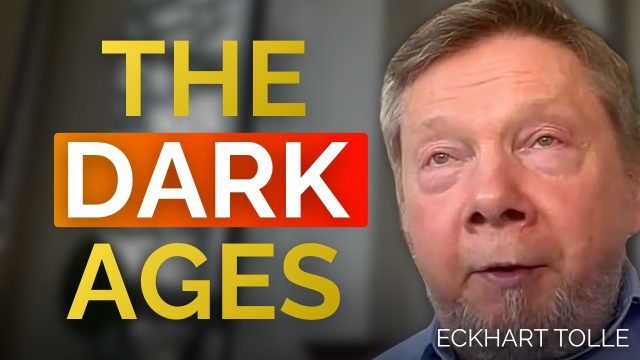
Eckhart Tolle opens with a thought experiment that is part joke, part confession. A god comes down, he says, and offers a young man a fine body to enjoy for three decades, in exchange for twenty years of his life. In the short clip Tolle published on his YouTube channel in November 2026, he says plainly that he would have accepted the deal, and that he would be dead now. From that bargain the talk widens into a larger argument about body identification: why a handsome body and an unhappy one are both forms of ego, why the decline of the body is a predictable crisis rather than a rare accident, and why old age can either harden a person into bitterness or open into what he calls a flowering of consciousness.

Read · 7 sections

What is the deal Eckhart Tolle says he would have taken?

The scene is playful, and Tolle plays it that way. He describes being in his twenties, offered a body like a classical statue, with the catch that the years are subtracted from the far end of his life. He is blunt about what he imagines he would have done with the bargain: enjoy ego satisfaction, chase sensory pleasure, exhaust himself, and die young, just as the god had predicted. The laughter in the room is real, but the joke carries a point. A person who has built a sense of self on the body has already made a deal of a different kind, one in which the spending of a whole life goes toward maintaining an image.

He follows the thought with a memory that makes the same point without a deity. Tolle recalls walking along a waterfront, which he places in Sydney, on a pleasant Sunday morning. People were relaxed and enjoying the day. Then one shirtless man drew everyone's attention, and Tolle found it strange that this was the only person who seemed to feel the heat enough to take his shirt off. The anecdote is a small piece of comedy about display, and it sets up the question of what a person's body is actually being used for.

"Your sense of identity is no longer derived from body."
Eckhart Tolle, in the clip at 0:00 and 0:42 onward

Why does a negative body image count as ego too?

Here Tolle makes the most surprising move in the talk. Most people assume that vanity is the problem, the pride that comes from a good face or a strong frame. Tolle says that is only half the picture. He admits that for many years he had a body identification too, but not a proud one. He felt his body was less attractive than most others, and that feeling made him unhappy for quite a few years.

His conclusion is that identification itself is the trap, whatever its tone. "Any identification enhances your ego, even a negative one," he says in the clip. An ego does not need to be happy to be an ego. He describes miserable egos as strong as happy ones, with one voice saying I am the greatest and another saying I am the most miserable. Both run on narrative. "Why does this always happen to me?" is as much a story as "I am the greatest." The unhappiness is just the ego's version of self-importance, turned inward.

This matters for anyone who has ever felt their body was the reason their life was not working. Tolle's point is not to tell the person they are wrong to feel bad. It is to notice that the feeling is organized around a self-image, and that the self-image is the thing doing the suffering.

Tolle also argues that negative identification may be easier to release, precisely because it hurts. "You're more motivated to let go of that," he says, with a laugh from the room. The person who is miserable about their looks has a reason to look for a way out. The person who is proud of them often has less incentive.

Why is the positive kind of identification harder to escape?

Tolle describes the positive version with the same frankness. A very good-looking man or woman, or someone with exceptional strength, may find the body becomes the first thing they know about themselves. He names the modern machinery that feeds it: every mirror, and every image posted to the world, asking the same question. Look at me, look at me. Thousands of people respond with affection, and that response rewards the identification further.

The stakes, in his telling, are not vanity alone. When the body is the center of identity, psychological qualities and personal achievements slide into secondary positions. A person who has built a life around being admired may never develop the inner resources they would need later. Tolle's question, in effect, is why anyone would look deeper when the surface is giving such constant reinforcement. The positive identification is harder to leave precisely because it feels like the reward for having done something right.

What does a fresh apple on the windowsill teach about time?

This is the image that gives the talk its force. Tolle asks the listener to take a fresh apple, place it on a windowsill, and wait a few weeks. The apple shrinks and wrinkles, and what was plump and bright becomes old. He is clear that this is not a special fate reserved for the unlucky. "It happens to all life forms," he says in the clip, and the human body is no exception.

The difference with people is the time it takes. The process unfolds over decades, which is why a person in their twenties can look at the apple and feel untouched. Tolle says the erosion arrives eventually, and when it does, the person who was identified with their looks realizes they are no longer beautiful. The suffering starts there. Once aging begins to diminish appearance, the person is likely to compare themselves with the young, and that comparison produces inferiority and resentment. "Look at this young person, and you feel diminished," he says. "That's painful."

Tolle is careful to describe a pattern rather than a sentence. Many people who are identified with the body move into a period of increasing unhappiness as they age, unless they break through to a deeper level. Some do. Some cannot.

"The time eventually becomes your enemy when it sets in."
Eckhart Tolle, in the clip at 8:47 and 9:07

Can old age become a flowering of consciousness?

The talk does not end in gloom. Tolle distinguishes between two outcomes of the same biological process. For many people, the patterns of ego become so rigid and deep-seated by old age that they are trapped in them. He says we have all met such people, and he sketches the type with humor: the grandfather who knows everything, has seen everything, has an opinion on everything, and considers everyone else an idiot. That figure is not only comic. It is the end point of a life that never found anything beyond the self-image.

The other possibility is what gives the talk its title-level hope. "Old age is meant to be a flowering of consciousness," Tolle says. "When the body begins to dissolve, something else emerges, and it can be a beautiful thing." The body's decline, in this reading, is not only a loss. It is a clearing. When the identity that rested on looks and vitality weakens, there is room for something that was always present underneath, and that does not depend on the body at all.

He is also honest that this is not automatic. The deeper level has to be reached, and that means doing the inner work before the body forces the issue. Tolle says he would advise going there as early as possible, before time begins to erode a person. But he also notes there is always a chance, even if it comes late.

How do you step out of the movement of time now?

The closing line of the clip gives the practical core. "No matter where you're at in the movement of time, this moment is the best moment to step out of the movement of time and take your attention into the timeless," Tolle says, so that a person learns to stay connected to that timelessness consciously for the rest of life in this form.

The instruction is concrete in one sense. It asks a person to notice where their sense of self is anchored right now. Is it in the reflection, the photo, the comparison, the story of why life is unfair? Or is there a quieter awareness that observes those things without being them? Tolle's whole argument is that the first anchor will fail with time, while the second does not age. Nothing in the clip suggests that this is easy. He calls the step difficult, which fits his broader teaching that the ego resists being seen through.

  • Body identification is ego whether it is proud or miserable.
  • A negative self-image may be easier to release because it causes more pain.
  • Positive identification is harder to leave because it is constantly rewarded.
  • Aging is a predictable process, and it is painful when identity rests on the body.
  • Old age can become a flowering of consciousness if the deeper level is reached.
  • The present moment is always the best time to step out of the movement of time.

Where to go from here

The clip is short, about thirteen minutes, and it works best as an invitation rather than a complete program. If it has landed, try the apple test yourself. Notice which parts of your identity depend on how you look, how strong you are, or how others see you. Then notice whether the unhappiness you feel about any of it is pride, shame, or a story you keep repeating. Tolle's point is that those are not separate problems. They are the same identification in two tones.

Tolle says in the description that he goes further into the subject in a longer session. For readers who want the full argument, that is the place to go next. For everyone else, the question he leaves is simple and old: if the body is going to change, where does your sense of who you are actually live?
Comments

Loading the conversation…

Transcript

[0:00] But we have to give up 20 years of your

[0:02] life. You will be 20 years younger,

[0:05] but I'll give you a great body that you

[0:07] can enjoy for

[0:09] a few decades. For three decades you can

[0:12] enjoy this, I would say it.

[0:14] It's a deal.

[0:15] [laughter]

[0:20] [bell]

[0:28] And then you can contemplate

[0:32] with

[0:40] detachment

[0:42] what time is doing to your body.

[0:48] Okay?

[0:49] Because

[0:51] your

[0:52] sense of identity

[0:55] is no longer derived from

[0:58] body.

[1:00] Who you are,

[1:02] obviously that's

[1:05] that's

[1:06] sometimes a difficult step to take to go

[1:09] deeper beyond. There there are some

[1:11] people who have a

[1:13] particularly

[1:15] and

[1:16] body that is

[1:18] is more beautiful or

[1:20] more well developed than normal bodies.

[1:25] Normal bodies are kind of

[1:28] not sure.

[1:32] And then there are other bodies that are

[1:34] definitely not great. You can't but

[1:36] people to still identify makes them

[1:38] unhappy.

[1:41] For many years

[1:43] I had body identification too, but not

[1:46] in a proud way. It made me unhappy

[1:48] because it was

[1:50] less much less good looking than other

[1:52] most other bodies actually.

[1:57] And so if you have body identification,

[2:00] it can

[2:01] it can create pride

[2:04] and enhance your ego. Well, any

[2:06] identification enhances your ego, even a

[2:09] negative one. So I had body negative

[2:12] body identification made me unhappy for

[2:15] quite a few years.

[2:16] [gasps]

[2:18] [clears throat] Um

[2:19] and that's also ego.

[2:21] The ego the negative pride of ego.

[2:26] Egos are not always happy egos. Many

[2:28] egos are miserable egos

[2:31] squashed as strong as the happy ones to

[2:33] say I am the greatest and then the other

[2:35] ego I am the most miserable

[2:39] just as strong as the other. So ego is

[2:42] not just hey you look at me what's

[2:47] why is all these horrible things always

[2:50] happening to me?

[2:52] I feel so miserable.

[2:54] I'm I'm I'm not I'm it's all still ego.

[2:59] It's the narratives.

[3:01] So anyway I had

[3:04] ego identification but I could

[3:06] see

[3:07] um

[3:09] it perhaps a little bit easier for if

[3:12] you have a negative identification with

[3:14] the body is perhaps easier to let go

[3:18] because you're more motivated to let go

[3:20] of that.

[3:22] [laughter]

[3:24] But if you have a

[3:27] positive body identification

[3:29] um

[3:34] very good looking

[3:36] um

[3:38] whether man or woman or or strength

[3:44] um

[3:48] if you look

[3:50] like Arnold or it is younger years

[3:54] uh

[3:55] how can you not identify with your body

[3:57] if your body looks just

[3:59] like just

[4:01] coming

[4:02] just like some ancient Greek god or

[4:04] something.

[4:11] And so or you're very beautiful and

[4:14] every time you look in the mirror you

[4:16] see how beautiful you are and you

[4:18] continuously these days you continuously

[4:20] post images of yourself into the world.

[4:24] Look at look at me, look at me, look at

[4:26] me.

[4:29] And and you have thousands of people who

[4:31] love you. They send love signs.

[4:35] [laughter]

[4:40] Me, me.

[4:45] And so many people have this their

[4:47] strongest identification is with body

[4:50] and the rest the psychological entities

[4:52] come secondary. That's also ego of

[4:55] course, but

[4:56] psychological entity whatever they are

[4:59] on the on the

[5:00] level of their personality is become

[5:03] secondary or whatever

[5:06] what

[5:07] what they have achieved becomes even

[5:09] secondary.

[5:12] The the body they so prop figure so

[5:15] prominently in their sense of identity

[5:18] that that

[5:19] that goes on for years.

[5:24] When I was in my 20s

[5:27] and if somebody had asked me

[5:32] some god had come down and asked and

[5:34] said to me I offer you a deal

[5:38] I take away

[5:40] I'll give you a great body like Arnold

[5:43] or well not has to be that extreme but

[5:46] just a good looking body.

[5:50] Well some would say Arnold is a bit

[5:52] going over the top a bit that's a bit

[5:55] but

[5:56] just a beautiful I would have that

[6:00] but we have to give up 20 years of your

[6:03] life you are 20 years younger

[6:05] but give you a great body that you can

[6:07] enjoy for

[6:09] a few decades, for three decades you can

[6:12] enjoy this. I would say it

[6:14] It's a deal.

[6:22] And I would be dead now.

[6:24] [laughter]

[6:27] I wouldn't be here.

[6:30] I would have enjoyed perhaps ego

[6:32] satisfaction during those years and

[6:35] sensory satisfaction

[6:37] through

[6:38] countless

[6:41] physical encounters with women.

[6:46] [laughter]

[6:48] And would have exhausted myself and

[6:50] would have

[6:54] And would have died young as [laughter]

[6:58] as predicted by the god who came.

[7:12] We were walking or I was walking in

[7:16] one of waterfront, I believe in Sydney,

[7:20] Australia. It was a lovely

[7:23] day.

[7:25] I it was perhaps a Sunday morning

[7:29] and not excessively hot, just just very

[7:32] pleasant temperature. Everybody was

[7:35] enjoying themselves.

[7:37] And then I saw one man

[7:40] walking without a shirt on, just bare

[7:44] and the

[7:48] he had a fantastic body.

[7:50] And everybody is kind of looking at him.

[7:53] And I thought it strange that

[7:55] the

[7:57] he was the only person who was too felt

[8:00] too hot so he had to take off his shirt.

[8:04] >> [laughter]

[8:12] [laughter]

[8:13] [snorts]

[8:14] >> Strange.

[8:22] [clears throat]

[8:25] And

[8:26] then comes the time

[8:29] the

[8:31] time eventually becomes your enemy when

[8:34] it sets say you have

[8:37] years you identified with your good

[8:39] looks and then

[8:42] after while you realize

[8:44] the same thing is happening to you it

[8:45] just takes decades

[8:47] that's happening if you put a

[8:49] fresh apple on the on your windowsill

[8:52] and wait a few weeks

[8:54] and see what happens to the apple that

[8:56] you leave there.

[8:57] It kind of shrinks and becomes

[9:02] develops

[9:03] [snorts]

[9:05] it goes

[9:07] it before it looked

[9:11] after a few weeks the apple shrinks and

[9:13] it's

[9:15] it's old

[9:17] an old apple.

[9:18] It happens to all life forms

[9:21] and that can become a source of great

[9:24] suffering.

[9:26] There is still time for you when this

[9:28] suffering sets in you realize

[9:32] you're no longer beautiful because old

[9:34] age is eroding your beauty

[9:37] and then when you compare yourself to

[9:39] younger humans

[9:41] you if you feel you begin to feel

[9:44] inferior

[9:45] and to get resentful.

[9:49] Look at this young

[9:54] and

[9:55] you feel diminished

[9:57] and that's painful

[9:59] so many humans who are identified with

[10:01] body they've

[10:02] when they as they get older

[10:05] they move into a period of

[10:07] unhappiness

[10:09] increasing unhappiness unless they can

[10:13] break through that and go to a deeper

[10:15] level.

[10:16] Some can,

[10:18] some cannot.

[10:20] It's

[10:21] I would advise to go to to the deeper

[10:23] level before the

[10:26] time starts to erode you

[10:29] as soon as possible, but

[10:31] there's

[10:32] there's always a chance to to go that.

[10:36] So at the latest

[10:39] shortly before you die, I would hope.

[10:43] But but for many people when they reach

[10:45] old age, the the the patterns are so

[10:48] deep seated that associated with the ego

[10:52] identity, they're so they have become so

[10:55] rigid and so deep seated that they that

[10:59] trapped in them

[11:01] there's [snorts] nothing you can do.

[11:02] We've all met old people like that.

[11:05] Instead, old age is

[11:08] meant to be

[11:09] a flowering of consciousness. When as

[11:13] the body begins to dissolve, something

[11:15] else emerges

[11:17] and it can be a beautiful thing.

[11:21] In many other cases, this does not

[11:24] happen

[11:26] and we've all met old people who are

[11:30] cranky and angry and

[11:41] your grandfather perhaps

[11:45] you're still in all that spiritual

[11:47] nonsense. Are you still doing that?

[11:50] I can it's all rubbish obviously.

[11:53] I know it all. I've seen it all.

[11:59] And I have an opinion about everything.

[12:01] I know everything

[12:03] and it's all it's all

[12:05] all dreadful. They're all

[12:07] idiots, all of them.

[12:13] And then he dies.

[12:21] My God.

[12:31] So no matter where you're at in the

[12:33] movement of time,

[12:37] this moment is the best moment to step

[12:40] out of the movement of time

[12:42] and take [clears throat] your attention

[12:44] into the timeless so that you learn to

[12:49] be connected with that consciously

[12:52] for the rest of your life in this form.

Eckhart Tolle

Eckhart Tolle

Artist

German-born spiritual teacher whose 1997 book The Power of Now became one of the most widely read spiritual works of the 21st century. After a profound transformation at 29 — moving from suicidal depression into deep stillness — he spent years sitting on park benches in a state of "uninterrupted bliss" before beginning to teach. His pointing is invariably toward presence, the dissolution of the egoic mind, and the awakening of consciousness in the now.

View profile
Explore Topics
Body identificationEgoEckhart tolleAgingConsciousness
Frequently Asked Questions

Frequently Asked Questions

Body identification is the habit of taking the physical body as the core of who you are. Tolle says that when this is the strongest identity, psychological qualities and personal achievements become secondary, and the person's sense of self rises and falls with appearance.

Yes. Tolle says he had a negative body identification for many years, and it made him unhappy, but he still considers it ego. He argues that any identification enhances the ego, and that miserable egos are as strong as proud ones.

Tolle suggests leaving a fresh apple on a windowsill for a few weeks and watching it shrink and age. He uses this to show that every body goes through the same process, which just takes decades in human life.

Tolle says old age is meant to be a flowering of consciousness, and that when the body begins to dissolve, something else can emerge. He also notes that many people become rigid and bitter instead, because their patterns of ego are too deep-seated.

Tolle's advice is to go to a deeper level of awareness before time begins to erode you, and if not then, at any point later. He describes this as taking attention into the timeless, and says this moment is always the best time to begin.

In the clip he describes stepping out of time as taking your attention away from the flow of change and into the timeless. He suggests doing this now, no matter where you are in life, so that the connection can be held consciously for the rest of your life.

You might also like

View All
Becoming a Teacher of Presence Without a Formal Role
Inspire

Becoming a Teacher of Presence Without a Formal Role

A live session on teaching presence explores how everyday attention, helping professions, and formal teaching connect, plus a simple daily p…

9 min read
Consciousness in Cycles: Why Regression Awakens Us
Inspire

Consciousness in Cycles: Why Regression Awakens Us

Humanity moves through cycles of growth and regression, not linear progress. In dark times, individual consciousness becomes the stabilizing…

7 min read
Medicine Buddha Practice: Feeling Beneath the Thinking
Inspire

Medicine Buddha Practice: Feeling Beneath the Thinking

Lama Rod Owens opens a Monday-night Medicine Buddha session six years into the practice, teaching how to feel an experience instead of think…

10 min read
We Are All Visitors to This Material World: A Gita Reflection
Inspire

We Are All Visitors to This Material World: A Gita Reflection

In a 22-second clip, Radhika Das frames human life as a temporary visit, not a permanent residence. The idea draws on Bhagavad-gītā 8.15 and…

3 min read
See allYou might also like→

Continue your journey

More wisdom and gatherings from across the BrightStar directory.

More Articles

Browse the full library of teachings, interviews, and guides.

Back to all articles →

Teachers & Artists

Explore the lineages, musicians, and guides of the conscious world.

Explore artists →

Find an Event

Kirtan, retreats, sound baths, breathwork, festivals — happening soon.

Browse events →