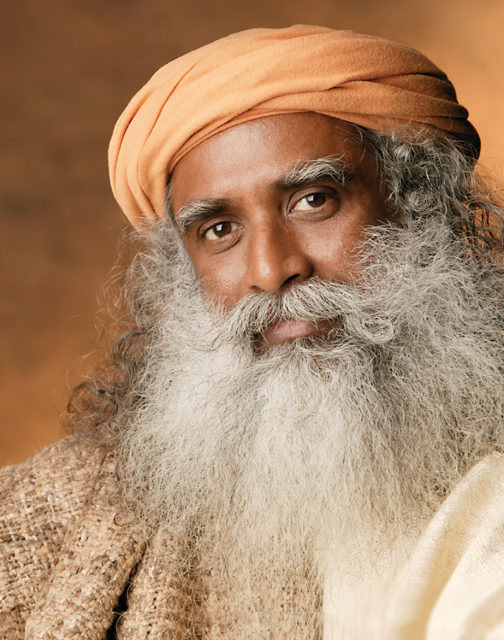
Most of us treat a relationship as something we either have or don't. You are born into a family, you make a friend, you fall in love, and the bond is assumed to be there. In a talk of under three minutes posted to his YouTube channel in November 2026, Sadhguru takes that assumption apart. He begins with a flat declaration, "No relationship is absolute," and then makes a case that birth, friendship and romance may start a relationship but none of them guarantees one. What keeps a bond alive, he argues, is responsibility, management and a steady habit of contributing to the other person's life. The clip is brief and almost offhand, but it turns on one reversal: the question is less what a relationship gives you and more whether you keep making yourself worth having in it. He then closes by pointing toward a different kind of romance, one with the divine, and that turn deserves a closer look than its brevity suggests.
The talk opens with a simple sorting of the ways we come to be in relationship. Some arrive "choicelessly by birth," in the form of parents and siblings. Others are chosen, through friendship or romance. Sadhguru's point is that the way a relationship begins has no bearing on whether it lasts. "Neither birth nor friendship nor romance will ensure a relationship," he says at about the 0:28 mark. Each of those routes is a door, not a guarantee of what waits on the other side.
That is the uncomfortable part, and he doesn't soften it. "Relationship needs responsibility and management," he says at about 0:38. "Otherwise, well, the most wonderful relationships can go bad." The word "management" is worth noticing. It is not a word we usually reach for when we talk about love, and it implies that a bond is something one has to run, tend and adjust rather than something that runs itself. His opening line, that a relationship "has to be conducted on a daily basis," makes the same claim in a different register. A relationship is a continuing activity, not a finished object.
If the first half of the talk is about maintenance, the second is about orientation. Sadhguru locates the foundation of a relationship in the other person's experience rather than your own. "The basis of a relationship is in some way you must be able to serve the other," he says at about 0:51. He follows it with two further tests, each phrased as something the other person must feel: "that you're precious to them," and "that you're an enhancement to their life."
"If you constantly strive to contribute, then the possibility of relationships being steady is more." (Sadhguru, in the video, at about 1:09)
What is striking here is how the standard is set. It is not whether you feel loved, or whether you are getting what you need. It is whether the other person experiences you as adding something to their life. That is a demanding measure because it cannot be satisfied by intention alone; it has to show up in how you actually behave, day after day. Sadhguru is also candid that contribution does not cancel out difficulty. Relationships are "subject to various realities, misunderstandings," as he puts it. Steadiness, in his account, is not the absence of friction. It is the result of a consistent effort to give more than the relationship asks for, so that when friction arrives there is something solid to stand on.
The talk then turns, with some visible humor, to a relationship of a different order. Sadhguru speaks of a "wonderful relationship" with the figure he names as Adiyogi, "unbroken for lifetimes," and the line draws laughter from the audience at about 1:35. The joke is doing real work, though. He is establishing the contrast between human bonds, which need constant management, and a bond he describes as absolute. "When you romance with the divine, then it is absolute," he says at about 1:44.
"Not for advantage, not for what you may get or not get, but absolutely in a romantic relationship with the divine." (Sadhguru, in the video, at about 1:53)
The key phrase is "not for advantage." Much of what makes human relationships fragile, on this reading, is that they are quietly transactional: we stay in them because of what they return to us, and we feel the strain when the returns fall off. A devotion that is not calculated against any return is, in his framing, not subject to that same erosion. Whether one accepts the metaphysics or not, the logic is clear and worth testing against your own experience. Ask which of your attachments would survive if the payoff disappeared.
Sadhguru anticipates a likely objection and addresses it directly. "If your idea of romance is just about physicality, sexuality, ah, you need to change that," he says at about 2:08. This is not a rejection of desire so much as a widening of the word. What he proposes instead is a definition built on intensity and absorption rather than on the object of feeling.
"Romance means you are in an exuberant state of emotion and an exuberant state of life itself because something invigorates you in such a way that nothing else matters at that time. That's romance." (Sadhguru, in the video, at about 2:16)
By this definition, romance is less about a person than about a state. It is the experience of being so fully taken up by something that everything else recedes. The test is not who you are with but how alive you feel and how completely the moment holds you. That is why, in his telling, romance can point beyond any individual partner toward the divine. The same quality of wholehearted absorption that people sometimes describe in love is, for him, the thing that love was pointing at all along.
The clip is short, and it does not give a checklist. Read against the rest of the talk, though, a few practical questions follow from it. These are our reading of his argument, not instructions he issued in the video:
- Treat every relationship, including family and old friendships, as something that needs attention each day rather than something settled by history.
- Ask whether the people close to you feel that you add something to their lives, and whether your actions would support that feeling.
- Notice when you are staying in a bond mainly for what it returns to you, and what that tells you about its steadiness.
- When difficulties arise, which Sadhguru openly expects, meet them from a base of consistent contribution rather than hoping the relationship will hold on its own.
- Examine your own definition of romance. If it begins and ends with physical attraction, his talk suggests it may be too narrow to sustain a lasting bond.
The most direct next step is to watch the video itself, which is under three minutes, and listen for the places where his tone shifts from instruction to joke and back again. The description notes that Sadhguru's longer solo podcast, Sadhguru 360, releases new episodes on each Purnima on his YouTube channel, which is the setting in which fuller treatments of relationships and romance are likely to appear. Beyond that, the most useful exercise is the one the talk implicitly asks for: take one relationship in your life and, for a week, ask each day what you contributed to it, and whether the other person would say you were an enhancement to their life. That question is where his argument stops being a statement about love and starts being a practice.