BrightStar
BlogMy Tickets
BlogMy Tickets
Saved events
Help & contactSign UpLog in
Events
  • Browse All Events
  • Yoga
  • Meditation
  • Breathwork
  • Qigong
  • Sacred Music
  • World Music
  • Medicine Music
  • Sound Healing
  • Ecstatic Dance
  • Ceremony
  • Plant Medicine
  • Energy Healing
  • Satsang & Wisdom
  • Tantra
  • Retreats
  • All Categories →
Destinations
  • Bali
  • Sedona
  • Los Angeles
  • Costa Rica
  • Tulum
  • Byron Bay
  • San Francisco
  • Austin
  • New York
  • San Diego
  • Denver
  • Seattle
  • Portland
  • Miami
  • London
  • Maui
  • Boulder
  • All Cities →
Platform
  • For organizers
  • Join the Movement
  • Sell Globally
  • For Creators
  • For Teams
  • For Writers
  • For Teachers
  • For Kirtan Artists
  • For Studios
  • For Festivals
  • For Retreat Centers
  • For Nonprofits
  • Brand Ambassador
  • Free Ticketing
  • Pro
  • Amplify
  • The Ecosystem
Features

Ticketing and checkout

  • Ticket categories
  • Assigned seating
  • Custom questions
  • Coupon codes
  • Smart pricing
  • Ticket sharing
  • Waitlist
  • Flexible refunds
  • Digital waivers
  • Tip jar
  • Donations and sliding scale
  • Embed widget
  • Mindful checkout
  • Recurring events
  • Private sessions
  • Online courses
  • Summits
  • Rooms and stays
  • Ticket scanner

Marketing and growth

  • Abandoned cart recovery
  • Visitor recovery
  • Upsells and add-ons
  • Affiliate engine
  • Upsell affiliate network
  • Brand ambassador
  • Meta retargeting
  • Verified buyer network
  • Outbound email marketing
  • Email sequences
  • SMS and WhatsApp
  • Event upsell network
  • Direct mail campaigns
  • SEO engine
  • Syndication
  • Event sharing
  • Custom event pages
  • Artist profiles
  • Link in bio
  • Event blog
  • Blog newsletter

Payments

  • Payments, powered by Stripe
  • Buy now, pay later
  • Apple Wallet
  • Multi currency

Data and operations

  • Team access
  • Message center
  • Reports
  • Analytics reporting
  • Performance reporting
  • Customer data
  • Integrations
  • Switch from another platform

AI

  • Assistant
  • AI FAQ assistant
  • All Features →
Company
  • About
  • FAQ
  • Contact
  • Blog
  • Glossary
  • Guides
  • Inspiration
  • Help Center
  • API Docs
  • Brand Assets
  • Press
  • Terms of Service
  • Privacy Policy

Events

  • Browse All Events
  • Yoga
  • Meditation
  • Breathwork
  • Qigong
  • Sacred Music
  • World Music
  • Medicine Music

Destinations

  • Bali
  • Sedona
  • Los Angeles
  • Costa Rica
  • Tulum
  • Byron Bay
  • San Francisco
  • Austin

Platform

  • For organizers
  • Join the Movement
  • Sell Globally
  • For Creators
  • For Teams
  • For Writers
  • For Teachers
  • For Kirtan Artists

Features

  • Community Network
  • Abandoned Cart Recovery
  • Ticket Categories
  • Recurring Events
  • Assigned Seating
  • Affiliate Engine
  • Waitlist / Notify
  • All Features →

Company

  • About
  • FAQ
  • Contact
  • Blog
  • Glossary
  • Guides
  • Terms of Service
  • Privacy Policy
Read more

Events

  • Sound Healing
  • Ecstatic Dance
  • Ceremony
  • Plant Medicine
  • Energy Healing
  • Satsang & Wisdom
  • Tantra
  • Retreats
  • All Categories →

Destinations

  • New York
  • San Diego
  • Denver
  • Seattle
  • Portland
  • Miami
  • London
  • Maui
  • Boulder
  • All Cities →

Platform

  • For Studios
  • For Festivals
  • For Retreat Centers
  • For Nonprofits
  • Brand Ambassador
  • Free Ticketing
  • Pro
  • Amplify
  • The Ecosystem

Company

  • Inspiration
  • Help Center
  • API Docs
  • Brand Assets
  • Press

Ticketing and checkout

  • Ticket categories
  • Assigned seating
  • Custom questions
  • Coupon codes
  • Smart pricing
  • Ticket sharing
  • Waitlist
  • Flexible refunds
  • Digital waivers
  • Tip jar
  • Donations and sliding scale
  • Embed widget
  • Mindful checkout
  • Recurring events
  • Private sessions
  • Online courses
  • Summits
  • Rooms and stays
  • Ticket scanner

Marketing and growth

  • Abandoned cart recovery
  • Visitor recovery
  • Upsells and add-ons
  • Affiliate engine
  • Upsell affiliate network
  • Brand ambassador
  • Meta retargeting
  • Verified buyer network
  • Outbound email marketing
  • Email sequences
  • SMS and WhatsApp
  • Event upsell network
  • Direct mail campaigns
  • SEO engine
  • Syndication
  • Event sharing
  • Custom event pages
  • Artist profiles
  • Link in bio
  • Event blog
  • Blog newsletter

Payments

  • Payments, powered by Stripe
  • Buy now, pay later
  • Apple Wallet
  • Multi currency

Data and operations

  • Team access
  • Message center
  • Reports
  • Analytics reporting
  • Performance reporting
  • Customer data
  • Integrations
  • Switch from another platform

AI

  • Assistant
  • AI FAQ assistant
Get the app
Download on theApp StoreGet it onGoogle Play
© 2026 BrightStar. All rights reserved. BrightStar Selection · Photo credits · Changelog ·
Inspiration

Why Life Keeps Testing You: Building on Rock, Not Sand

Eckhart Tolle
Eckhart Tolle
Oct 6, 2026
8 min read

From Eckhart Tolle

Watch · 8

A room laughs. Someone has just been told, in the gentlest possible terms, that the world was never designed for their comfort. Eckhart Tolle waits for the laughter to settle, then asks the question again, slower this time: you thought it would be here to make you happy? "It's not working, is it?" In this short excerpt from a longer session, Tolle takes one of his favorite parables from the gospels, the story of two men who build houses, and uses it to argue that life is not a failing system but a series of challenges meant to draw out a deeper foundation. The house, he says, is you. The rock is a dimension of being underneath the personal self, and the digging is the spiritual work itself. When the storms come, as they do to everyone, the question is not whether the house will be hit but whether it is anchored. Tolle's answer is that a rooted person still feels loss, still weeps, still grieves, but no longer falls apart in the same way. That distinction, and the careful way he draws it, is what makes this brief talk worth more than its eleven minutes.

Read · 7 sections

What is the parable of the house on sand really saying?

Tolle tells it plainly. One man builds a house without digging a foundation, and when the floods and storms arrive, the house is swept away. Another man digs first, "deep, deep," until he reaches rock, and builds on that. The same storms come, and this house stands. He is candid that his retelling is a paraphrase, and jokes that it is "probably more correct than what you read." His reading is the important part. In the parable, the builder is a stand-in for the seeker, and the act of digging is a metaphor for inner work rather than outward accomplishment.

What Tolle is pointing at is a difference in kind, not degree. A person who has never looked beneath their thoughts, roles, and reactions has built on sand. Their sense of security depends on conditions staying favorable, and conditions never stay favorable. The person who has dug down has found something that does not move when circumstances shift. Tolle calls this "the dimension of being," and he is careful to say that finding it is what "the spiritual life actually consists of."

Why does the world keep challenging us?

The provocation at the center of the talk is blunt: "The world is here to challenge you." Tolle says this is not a grievance but a description of how the world works. He calls it "part of the evolution," and he describes the lived experience with almost comic accuracy. A challenge arrives. It passes. You are okay for a little while. Then, "from behind," another one comes.

That rhythm is the heart of the teaching. Most people, Tolle implies, treat each difficulty as an interruption to an ordinary life that should be happy. The parable reframes the whole pattern. Storms are not the exception to life; they are its weather. The only real variable is what you have built underneath.

What does it mean to be "rooted" in being?

Tolle translates the language of scripture into terms he thinks are closer to the experience. Jesus's "kingdom of heaven," he says in the video, is "dimension." In his paraphrase it becomes "the dimension of spaciousness," an inner space that is vast and does not depend on the content passing through it. He describes it as the thing "underneath the person," and he links it to presence, the state of being fully here rather than lost in the stories the mind keeps replaying.

He then brings in the Buddha, whose teaching on suffering he restates in his own words. Without this rooting, he says, "life is sorrow. Life is suffering, as the Buddha said." He adds that, in the Buddha's formulation, suffering will be found "wherever you go" unless one awakens, and that the Buddha taught both the suffering and "the end of suffering." Tolle's point is that the cure is not a different set of circumstances. It is a different relationship to the ones you already have.

"If you're not rooted, then life is sorrow. Life is suffering, as the Buddha said."

— Eckhart Tolle, in the video (around 3:53)

Does transcending the world mean becoming cold?

This is the most important caveat in the talk, and Tolle returns to it deliberately. Being rooted does not mean you have cut yourself off. "It doesn't mean you cut yourself off. You're not cut off from everything." On the level of the personal self, he says, you are still affected by conditions. You lose something valuable and you say, "that's a pity." A loved one dies and tears come. Looking at the suffering of the world can make you sad. He names the hardest case without softening it: when a parent dies, or a child, "it's even more difficult to cope with," and you weep.

The distinction he is drawing is between feeling and being devastated. Feeling is a natural response to a world in which people we love die. Devastation is what happens when the mind keeps replaying the loss and the person has nothing deeper to stand on. Tolle describes people who relive a bad situation "again and again and again through the mind," for months or years. His claim is that a rooted person will still be emotionally touched by such events, "most likely," but "you're never again" totally devastated.

How can grief hurt without breaking you?

Tolle's image for what lies beneath the grief is simple and striking. "There is sadness on the surface," he says, "and underneath, there remains a realm of peace." That peace is not a lack of feeling. It is a background that feeling happens within. He goes further: if this deeper dimension could speak, "it would say all is well. There is no death." He frames the visible world, including death, as "a dream-like dimension," a place where all these things happen, while the depth itself does not speak and simply is.

It is worth being careful here. Tolle is describing a stance he believes is possible, and he is offering it as a view of how things look from the rock rather than as a consolation that dissolves pain. The talk does not promise that grief will be painless. It suggests that grief can move through you without taking the whole house down.

If you are grieving now, please speak to someone you trust or a professional. This talk is about where to stand, not a substitute for support.

What did the Greek philosopher really mean?

Tolle closes with a story that he says he has quoted before. A stoic philosopher in ancient Greece is told that his son has died. He is supposed to have replied that he "knew he was not immortal." Tolle is openly unsure what was going on inside the man. Had he gone so deep into being that the world "appeared to him as a dream-like scenario," and he had lost interest in it? Or had he cut himself off from his emotions and mistaken that numbness for realization? "We don't know," he says.

He then offers the reply he thinks would have been closer to the truth: "I know he is immortal." The shift is subtle and total. The first answer treats death as the end of a person. The second treats the person as more than the form that died. Tolle's own distinction, from earlier in the talk, makes this legible. The first answer can be given by a cut-off mind. The second can only be given by someone who has built on rock and still feels the loss.

"A better answer would have been, 'I know he is immortal.' And that would have been probably closer to the truth."

— Eckhart Tolle, in the video (around 10:44)

Where to go from here

This eleven-minute excerpt is a compact map, not a complete method. Tolle himself says the full session goes much further. If you want to sit with the parable, start with the questions it raises in ordinary life. Where in your days does your sense of security depend on conditions staying the same? When a challenge passes and you feel okay for a while, what is actually steady underneath? And when sorrow arrives, can you tell the difference between feeling it and getting lost in replaying it?

Tolle is clear that the aim is not to stop caring. It is to care from a place that does not collapse. For readers who are currently grieving, the practical step is the one he repeats in spirit: reach out to someone you trust, or to a professional. The rock is not a place you have to reach alone.

Comments

Loading the conversation…

Transcript

[0:00] That's what life does. What the world

[0:02] does to you. The world is here to

[0:04] challenge you.

[0:07] Oh, you didn't know that?

[0:09] >> [laughter]

[0:11] >> You thought it would be here to make you

[0:13] happy?

[0:16] It's not working, is it? Can't work. The

[0:19] world isn't here to make you happy.

[0:22] >> [bell]

[0:28] >> There's the

[0:29] one of my favorite parables

[0:32] in the gospels that Jesus tells is

[0:36] the parable of a man

[0:38] who is

[0:41] building a house and he he builds a

[0:44] house

[0:47] on

[0:48] without digging a foundation. He builds

[0:51] a house on the sand.

[0:53] And then the house is

[0:55] finished. And then suddenly the the

[0:58] floods come.

[1:00] And the storms come.

[1:03] And the house is swept away in the

[1:06] floods and the storms.

[1:08] And then there's another man

[1:11] who builds a house.

[1:13] First he he digs deep deep. This is what

[1:17] the parable says.

[1:19] He digs deep until he reaches the rock.

[1:23] And when he reaches the rock, he has a

[1:25] deep foundation for the house.

[1:28] Then he builds the house.

[1:31] Then the floods come.

[1:33] And the storms come and the rains come

[1:35] and the house is not swept away. It

[1:38] stands because it has a deep foundation.

[1:42] Ah.

[1:43] Obviously, in this parable, the house is

[1:45] you.

[1:47] And

[1:48] Jesus adds, if you if you practice

[1:52] this is my paraphrasing.

[1:55] Which is probably more correct than what

[1:57] you read.

[1:59] >> [laughter]

[2:01] >> If you

[2:03] If you practice my teaching, which is

[2:06] this this builder teaching, then you

[2:08] will be like this man. If you live this

[2:12] if you live this teaching which is the

[2:14] awake, then you are like this man who

[2:18] builds a house and he who

[2:21] digs this

[2:23] until it reaches the foundation and then

[2:25] builds the house.

[2:28] So that means the foundation obviously

[2:30] is within yourself

[2:33] to find the dimension of being.

[2:36] And then life comes at you

[2:40] and throws all kinds of challenges

[2:44] in many many forms. That's what life

[2:47] does. That's what the world does to you.

[2:49] The world is here to challenge you.

[2:53] Oh, you didn't know that?

[2:57] You thought it would be here to make you

[2:59] happy?

[3:01] It's not working, is it?

[3:03] Can't work. The world isn't here to make

[3:06] you happy.

[3:07] It's here It is actually here to

[3:09] challenge It's part of the evolution.

[3:11] It's here to challenge you. So the

[3:12] challenges come.

[3:15] Here comes one.

[3:19] And then And then you That goes away and

[3:21] then you're okay for a little while.

[3:25] And suddenly from behind

[3:30] Oh my god.

[3:32] And if you are not

[3:34] rooted in the dimension of being, which

[3:36] Jesus called the

[3:38] the the kingdom of heaven

[3:41] which in my paraphrase or translation is

[3:43] the dimension of spaciousness. Kingdom

[3:46] is dimension. Dimension of heaven, vast

[3:50] spaciousness, which is inner space.

[3:53] If you're not rooted, then

[3:56] life is

[3:57] is sorrow. Life is suffering, as the

[4:01] Buddha said. Life Buddha said, "Whatever

[4:04] situation you go into,

[4:07] whatever you do, sooner or later, and

[4:09] usually sooner." I'm paraphrasing the

[4:11] Buddha again, or well, the Buddha this

[4:13] time.

[4:14] Uh,

[4:15] you will find suffering.

[4:17] Wherever you go, you'll find suffering,

[4:19] unless you awaken.

[4:21] "I teach suffering," he said, "and the

[4:23] end of suffering."

[4:25] So,

[4:26] the beautiful parable of Jesus parable

[4:28] about digging a

[4:30] digging [clears throat] deep

[4:33] until he reaches the foundation is a

[4:35] just a beautiful

[4:37] picture a beautiful of

[4:39] uh,

[4:40] what

[4:42] what is needed in the inner dimension.

[4:45] And so, when you are connected with

[4:48] rooted in the presence, the being that

[4:52] is

[4:54] un- one could say underneath the person,

[4:57] then the challenges that life

[5:01] throws at you

[5:03] do not no longer create unhappiness or

[5:05] despair.

[5:07] Uh, you're not uh

[5:09] uh

[5:13] the world loses

[5:15] its ability to make you unhappy.

[5:18] And the conditions of the world,

[5:20] you transcend, so to speak, you

[5:23] transcend.

[5:25] Now, it doesn't mean you cut yourself

[5:26] You're not cut off from everything.

[5:29] That's not it.

[5:31] It means that

[5:34] uh

[5:36] on the on the level of the person,

[5:40] there's still

[5:42] you you are still affected a little bit,

[5:44] of course, by the varying conditions.

[5:48] You experience something not good, you

[5:50] lose something valuable, and you say,

[5:53] "Oh,

[5:55] that's a pity." Or somebody close to you

[5:57] dies, and you feel tears coming.

[6:01] Uh

[6:02] so you experience that sadness at that

[6:06] is there when something So, a loved one

[6:08] dies, or you experience the sadness if

[6:11] you look at the suffering of the world.

[6:13] You may suddenly find

[6:15] your yourself becoming sad.

[6:18] Um or your parents parent dies, or a

[6:21] child dies. It's even you more difficult

[6:24] to cope with a child that you have dies.

[6:27] That's not supposed to happen, and you

[6:28] feel

[6:30] you weep.

[6:32] Uh

[6:36] but underneath it, deep down, there is a

[6:40] s-

[6:41] peace.

[6:43] There is sadness on the surface.

[6:46] And underneath, there remains a

[6:50] realm of

[6:52] peace.

[6:54] So, you are And And important when

[6:56] somebody dies, sometimes

[6:59] people are

[7:01] s- so devastated.

[7:03] It goes on for not for several months,

[7:05] it goes on for years. They relive a bad

[7:09] situation again

[7:11] and again and again through the mind,

[7:16] thinking about it, and so on.

[7:19] But

[7:20] an emotional

[7:22] to be affected emotionally by certain

[7:24] situations is

[7:26] k- will still happen, most likely,

[7:30] but you're never again you're not

[7:33] totally devastated.

[7:36] There the

[7:38] you remain in touch with a dimension of

[7:40] depths,

[7:42] and in that dimension, you know,

[7:46] if that dimension could speak,

[7:49] it would say all is well.

[7:51] There is no death.

[7:54] It all death is a phenomenon that

[7:56] happens in this dimension here. This is

[7:58] a dream-like dimension.

[8:01] And this is where all these things

[8:03] happen.

[8:04] But the dimension doesn't speak. It's

[8:06] just If it could speak, it would

[8:08] probably

[8:09] say that.

[8:12] So, this is the

[8:14] digging to reach the the rock the rock

[8:17] the foundation.

[8:20] This is what it's all about.

[8:27] And so, we are not at the mercy anymore.

[8:30] Yes, you're not There was a

[8:34] I believe I quoted him in a book. Um

[8:38] There was a philosopher in ancient

[8:40] Greece. He was a stoic philosopher.

[8:43] Stoicism is an very interesting

[8:46] spiritual philosophy

[8:48] if understood [snorts] and practiced

[8:51] correctly.

[8:52] There was a philosopher in ancient

[8:54] Greece and then um

[8:57] somebody

[8:59] came to him and told him uh

[9:02] "Your son has died."

[9:04] This is a different reaction from Kim

[9:06] mentioned another story about an

[9:08] other day about an Indian I believe

[9:12] an

[9:13] um a guru who

[9:15] was weeping because his son has died.

[9:17] That's fine. He was weeping, but I'm

[9:19] sure

[9:21] there was still

[9:23] the

[9:24] he was still connected to the

[9:27] the being.

[9:29] But this philosopher, the Greek

[9:30] philosopher, when he was told,

[9:33] "Your son has just died." He's supposed

[9:36] to have said,

[9:39] "I knew he was not immortal."

[9:46] And he is supposed to have been a stoic

[9:48] philosopher.

[9:51] >> [clears throat]

[9:53] >> Now,

[9:55] we don't know what his inner state

[9:57] actually was at the time. Was he

[9:58] completely cut off from his emotions?

[10:01] Was he just

[10:02] uh or had he gone so deep

[10:06] that uh

[10:08] the entire world around him

[10:12] uh appeared to him as a dream-like

[10:16] scenario?

[10:18] That perhaps he'd gone so deep into

[10:20] being

[10:21] that he had lost interest in this

[10:24] dimension completely, who knows? Or was

[10:28] he cut off? Had he cut himself off and

[10:31] mistaken that for

[10:33] spiritual realization? We don't know.

[10:38] Perhaps a better answer would have been,

[10:42] maybe that's what he actually said and

[10:44] got misinterpreted. A better answer

[10:46] would have been,

[10:48] "I know he is immortal."

[10:53] And that would have been probably closer

[10:55] to the truth.

[10:57] >> [clears throat]

Eckhart Tolle

Eckhart Tolle

Artist

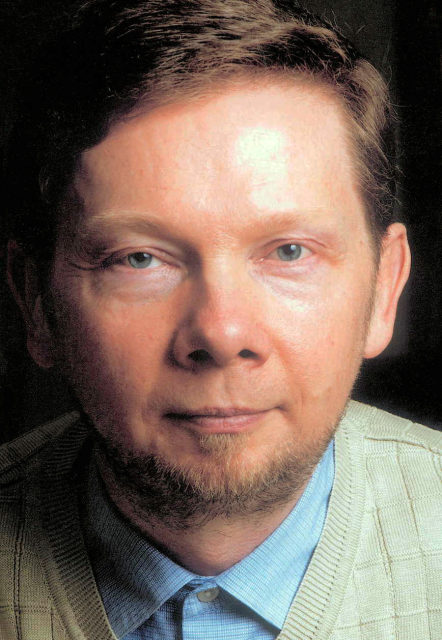
German-born spiritual teacher whose 1997 book The Power of Now became one of the most widely read spiritual works of the 21st century. After a profound transformation at 29 — moving from suicidal depression into deep stillness — he spent years sitting on park benches in a state of "uninterrupted bliss" before beginning to teach. His pointing is invariably toward presence, the dissolution of the egoic mind, and the awakening of consciousness in the now.

View profile
Explore Topics
Spiritual foundationEckhart tollePresenceGrief and lossHouse on rock parable
Frequently Asked Questions

Frequently Asked Questions

Tolle retells the gospel parable of two builders: one builds on sand without digging and is swept away by storms, while the other digs down to rock and his house stands. He reads the house as the self and the rock as a deeper dimension of being underneath the personal self. The digging is his name for the spiritual life.

In the talk he says the world's challenges are part of evolution and not a failure of life to make you happy. Challenges arrive, pass, and are followed by others, so the only real variable is whether you are rooted underneath them. He argues that expecting the world to make you happy is why people suffer.

No. Tolle is explicit that being rooted does not mean cutting yourself off. You still feel loss, tears come when someone dies, and you still experience sadness, but you are no longer totally devastated because a deeper peace remains underneath.

Tolle says the philosopher is supposed to have replied that he knew his son was not immortal. Tolle is unsure whether this reflected deep realization or emotional cut-off, and suggests a better answer would have been, 'I know he is immortal.'

He translates Jesus's 'kingdom of heaven' as 'dimension,' specifically a dimension of spaciousness or inner space. He describes it as the being underneath the person, which you find through presence rather than through thought.

Tolle's talk points toward rooting yourself in presence and inner being rather than in circumstances, so that challenges do not create despair. He notes the storms keep coming, so the work is ongoing. If you are grieving, he explicitly recommends speaking to someone you trust or a professional.

You might also like

View All
Consciousness in Cycles: Why Regression Awakens Us
Inspire

Consciousness in Cycles: Why Regression Awakens Us

Humanity moves through cycles of growth and regression, not linear progress. In dark times, individual consciousness becomes the stabilizing…

7 min read
Suffering and Transcendence: Moving From Surface to Depth
Inspire

Suffering and Transcendence: Moving From Surface to Depth

The Buddha taught both the inevitability of suffering and the path beyond it. Eckhart Tolle explains how connecting to deeper dimensions dis…

6 min read
Medicine Buddha Practice: Feeling Beneath the Thinking
Inspire

Medicine Buddha Practice: Feeling Beneath the Thinking

Lama Rod Owens opens a Monday-night Medicine Buddha session six years into the practice, teaching how to feel an experience instead of think…

10 min read
Kirtan as Sacred Thirst: A Closing Ceremony with Krishna Das
Inspire

Kirtan as Sacred Thirst: A Closing Ceremony with Krishna Das

Krishna Das closes NYC's annual kirtan weekend with a final ceremony of devotional chanting, blending musical innovation with timeless Hindu…

6 min read
See allYou might also like→

Continue your journey

More wisdom and gatherings from across the BrightStar directory.

More Articles

Browse the full library of teachings, interviews, and guides.

Back to all articles →

Teachers & Artists

Explore the lineages, musicians, and guides of the conscious world.

Explore artists →

Find an Event

Kirtan, retreats, sound baths, breathwork, festivals — happening soon.

Browse events →