For decades, the atheism-versus-religion debate occupied a fixed terrain: empiricists on one side, believers on the other, rarely meeting in the middle. But something has shifted. Philosophers, scientists, and intellectuals once firmly committed to naturalism are quietly reconsidering—not necessarily toward traditional faith, but toward questions that atheism leaves conspicuously unanswered. At the center of that reconsideration sits a single mystery: consciousness. What it is, how it arises, why it feels like something to be you—these questions have become the fault line where rigorous secular materialism begins to crack.
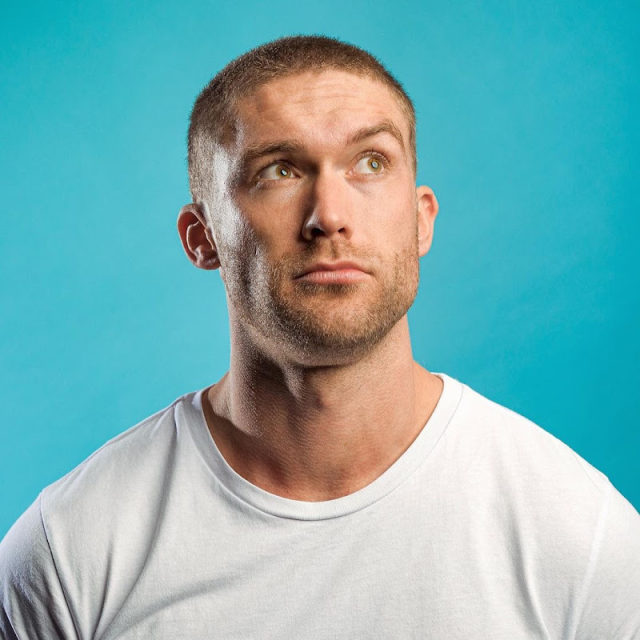
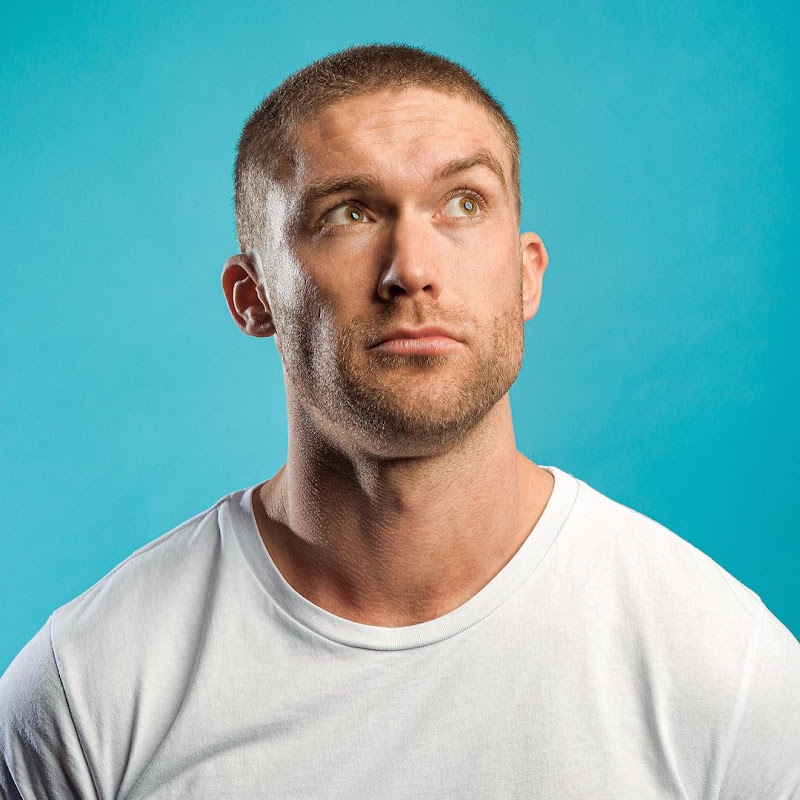
Alex O'Connor, a philosopher and content creator with a substantial following across YouTube and podcasting, has become one of the more visible voices navigating this terrain. Rather than declaring victory for either camp, he examines the actual intellectual landscape: why so many atheists and agnostics are finding themselves drawn back toward spiritual frameworks, not as a retreat into superstition, but as a response to genuine theoretical problems in modern materialism. The story isn't about conversion narratives or crisis of faith. It's about the limits of what we claim to know.
The conventional narrative holds that philosophy moves in one direction—away from religion, toward enlightenment. But the actual movement among contemporary philosophers is messier and more interesting. O'Connor points to a real phenomenon: serious thinkers are returning to questions of meaning, transcendence, and the nature of reality that formal atheism dismissed as settled. This isn't a collective conversion. It's a recognition that the materialist confidence of the late twentieth century overlooked something fundamental.
What changed? In part, the problem is one of intellectual honesty. The harder physicalists and neuroscientists have worked to explain consciousness purely through neural correlates and brain activity, the more apparent it becomes that something is being left out. This gap—between the objective, measurable facts about the brain and the subjective, qualitative experience of consciousness—remains stubbornly unbridged. For many thinkers, this problem isn't a gap in current knowledge that future science will simply fill. It's a structural problem with the framework itself.
O'Connor argues that this shift in thinking is happening in scholarly philosophy too, though it moves slowly and without fanfare. Rather than aggressive evangelism from either side, there's a growing recognition that intellectual integrity requires sitting with hard questions longer before dismissing them as solved. That's the opposite of the popularized "new atheism" of the 2000s, which often treated religious questions as already dead and simply awaiting notice.
The problem of consciousness has acquired a new urgency precisely because it refuses categorization. Philosophers call it "the hard problem"—not because it's complicated, but because it appears to be categorically different from other scientific problems. We can explain how the brain processes information, how neurons fire, how perception works. But we cannot explain, in purely physical terms, why any of that feels like something. Why there is subjective experience at all.
This isn't mysticism; it's a precise philosophical complaint. When a neuroscientist maps the neural correlates of seeing red, they're describing what happens in the brain. But they're not describing the redness itself—the qualitative character of the experience. That gap, which philosophers call the "explanatory gap," has proven remarkably resistant to closure. And for many thinkers, the fact that science keeps bumping against it suggests the problem may lie with the materialist assumption itself, not with science's current limitations.
O'Connor treats this not as proof of God or the soul, but as evidence that our starting assumptions about what exists and what counts as real may be incomplete. If consciousness is fundamental to the structure of reality—if it cannot be fully derived from physical processes—then materialism as a complete account of reality begins to look inadequate. What atheism once offered as settled science now appears as a provisional framework with acknowledged gaps.
The implications ripple outward. If consciousness isn't simply an emergent byproduct of matter, but something more primary to reality, then the entire materialist edifice shifts. That doesn't mean God, in any traditional sense. But it does mean space opens up—space for terms like transcendence, meaning, and the sacred to re-enter serious intellectual discourse without automatic dismissal.
Part of what distinguishes O'Connor's approach is his emphasis on compassion and genuine inquiry rather than point-scoring. The atheism wars of the 2000s were often conducted in the register of contempt—believers were intellectually dishonest, unscientific, holding onto superstition. That rhetorical posture did real work, clearing space for secular authority in public discourse. But it also foreclosed certain conversations and pushed away thinkers who had genuine questions about meaning and metaphysics.
As O'Connor observes, there's a noticeable shift toward kinder, more curious engagement across both secular and religious communities. This isn't moral relativism. It's a recognition that the strongest arguments are often developed in good faith, and that intelligence and spiritual interest aren't mutually exclusive. The aggressive confidence of "New Atheism"—that science was settling the God question once and for all—has given way to a more measured assessment: science is extraordinarily powerful at answering certain questions, and completely silent on others.
This change in tone isn't incidental to the substance. How we argue shapes what we're able to discover. If every question about consciousness or meaning is immediately framed as a battle between rationality and superstition, the actual philosophical work becomes harder. If instead we approach it as a genuine puzzle—one where current frameworks have genuine limitations—new possibilities emerge.
O'Connor's engagement with contemplative practice offers another window into this shift. Meditation, once dismissed by secular materialism as mere relaxation or placebo, is increasingly recognized as a technology for altering and observing consciousness. That observation itself is philosophically significant. If meditation can produce measurable changes in subjective experience, in the quality and texture of consciousness itself, then consciousness is worth attending to as a primary phenomenon, not just as an epiphenomenon of brain processes.
Prayer functions similarly. Rather than treating it as a method of petitioning an external deity, it might be understood as a practice that structures attention and intention—a way of aligning oneself with something larger than the individual ego. Whether that "something larger" is God, the universe, or the deeper architecture of one's own mind becomes a secondary question. What matters is that the practice produces real effects, effects that materialism has historically struggled to account for without reducing them to placebo or psychological self-soothing.
This reframing doesn't require belief in supernatural intervention. It simply takes seriously the possibility that consciousness and intention are more causally potent than materialist models have acknowledged. If your meditation practice changes how you perceive reality, what you're willing to do, how you relate to others—then consciousness isn't just a passive reflection of neural activity. It's an active force in shaping reality.
A further wrinkle emerges when we examine how perception works. Our senses don't passively receive a pre-given world. They actively construct reality through selection, filtering, and interpretation. The wavelengths of light we call "red," the frequencies we hear as "middle C," the texture we feel as "smooth"—these are not intrinsic features of reality delivered to consciousness. They're constructions made by consciousness in its encounter with the physical world. At the foundation of reality lies not a simple material substrate, but something more subtle: the interaction between observer and observed.
This isn't solipsism or idealism. It's an acknowledgment that the structure of consciousness and the structure of reality aren't separable. What we perceive as the world is already shaped by the nature of our perceiving. And what that perceiving is, fundamentally, remains unexplained by material science alone. Here again, the gap opens. And here again, spiritual and philosophical traditions that have always placed consciousness at the center of their account of reality begin to look less like primitive precursors to science and more like colleagues who were looking at the problem from a different angle.
The exodus from atheism among thoughtful people isn't about intellectual defeat or the triumph of faith over reason. It's about the maturation of that reason—the recognition that rigorous thinking leads to genuinely hard problems that materialism doesn't answer. The old atheist certainty was bought at the price of silence. Keep consciousness bracketed, don't ask too hard about the foundations of reality, don't take seriously the reports of contemplative practitioners—and the edifice holds. Remove those silences, ask the hard questions, treat experience as data—and the edifice begins to look less like completed architecture and more like a structure with acknowledged gaps.
O'Connor's contribution is to model what intellectual maturity looks like in this context: the willingness to say "I don't know" rather than to issue confident pronouncements; to hold competing frameworks in mind; to recognize that the most important questions may not be susceptible to the kind of empirical proof that settled the debates of earlier eras. That stance requires both intellectual rigor and genuine humility—the recognition that consciousness, meaning, and transcendence remain profound mysteries worthy of serious sustained attention.
If the problem of consciousness is real, and if materialism has genuine limitations, what comes next? The answer isn't a return to traditional religion wholesale. It's a reopening of the conversation between science, philosophy, and spiritual practice—not as enemies, but as different approaches to genuine human concerns. Alex O'Connor's work models one approach: patient, intellectually rigorous inquiry into the limits of what we know, coupled with genuine respect for contemplative wisdom traditions that have worked with consciousness directly for millennia. That conversation is just beginning.