BrightStar
BlogMy Tickets
BlogMy Tickets
Saved events
Help & contactSign UpLog in
Events
  • Browse All Events
  • Yoga
  • Meditation
  • Breathwork
  • Qigong
  • Sacred Music
  • World Music
  • Medicine Music
  • Sound Healing
  • Ecstatic Dance
  • Ceremony
  • Plant Medicine
  • Energy Healing
  • Satsang & Wisdom
  • Tantra
  • Retreats
  • All Categories →
Destinations
  • Bali
  • Sedona
  • Los Angeles
  • Costa Rica
  • Tulum
  • Byron Bay
  • San Francisco
  • Austin
  • New York
  • San Diego
  • Denver
  • Seattle
  • Portland
  • Miami
  • London
  • Maui
  • Boulder
  • All Cities →
Platform
  • For organizers
  • Join the Movement
  • Sell Globally
  • For Creators
  • For Teams
  • For Writers
  • For Teachers
  • For Kirtan Artists
  • For Studios
  • For Festivals
  • For Retreat Centers
  • For Nonprofits
  • Brand Ambassador
  • Free Ticketing
  • Pro
  • Amplify
  • The Ecosystem
Features

Ticketing and checkout

  • Ticket categories
  • Assigned seating
  • Custom questions
  • Coupon codes
  • Smart pricing
  • Ticket sharing
  • Waitlist
  • Flexible refunds
  • Digital waivers
  • Tip jar
  • Donations and sliding scale
  • Embed widget
  • Mindful checkout
  • Recurring events
  • Private sessions
  • Online courses
  • Summits
  • Rooms and stays
  • Ticket scanner

Marketing and growth

  • Abandoned cart recovery
  • Visitor recovery
  • Upsells and add-ons
  • Affiliate engine
  • Upsell affiliate network
  • Brand ambassador
  • Meta retargeting
  • Verified buyer network
  • Outbound email marketing
  • Email sequences
  • SMS and WhatsApp
  • Event upsell network
  • Direct mail campaigns
  • SEO engine
  • Syndication
  • Event sharing
  • Custom event pages
  • Artist profiles
  • Link in bio
  • Event blog
  • Blog newsletter

Payments

  • Payments, powered by Stripe
  • Buy now, pay later
  • Apple Wallet
  • Multi currency

Data and operations

  • Team access
  • Message center
  • Reports
  • Analytics reporting
  • Performance reporting
  • Customer data
  • Integrations
  • Switch from another platform

AI

  • Assistant
  • AI FAQ assistant
  • All Features →
Company
  • About
  • FAQ
  • Contact
  • Blog
  • Glossary
  • Guides
  • Inspiration
  • Help Center
  • API Docs
  • Brand Assets
  • Press
  • Terms of Service
  • Privacy Policy

Events

  • Browse All Events
  • Yoga
  • Meditation
  • Breathwork
  • Qigong
  • Sacred Music
  • World Music
  • Medicine Music

Destinations

  • Bali
  • Sedona
  • Los Angeles
  • Costa Rica
  • Tulum
  • Byron Bay
  • San Francisco
  • Austin

Platform

  • For organizers
  • Join the Movement
  • Sell Globally
  • For Creators
  • For Teams
  • For Writers
  • For Teachers
  • For Kirtan Artists

Features

  • Community Network
  • Abandoned Cart Recovery
  • Ticket Categories
  • Recurring Events
  • Assigned Seating
  • Affiliate Engine
  • Waitlist / Notify
  • All Features →

Company

  • About
  • FAQ
  • Contact
  • Blog
  • Glossary
  • Guides
  • Terms of Service
  • Privacy Policy
Read more

Events

  • Sound Healing
  • Ecstatic Dance
  • Ceremony
  • Plant Medicine
  • Energy Healing
  • Satsang & Wisdom
  • Tantra
  • Retreats
  • All Categories →

Destinations

  • New York
  • San Diego
  • Denver
  • Seattle
  • Portland
  • Miami
  • London
  • Maui
  • Boulder
  • All Cities →

Platform

  • For Studios
  • For Festivals
  • For Retreat Centers
  • For Nonprofits
  • Brand Ambassador
  • Free Ticketing
  • Pro
  • Amplify
  • The Ecosystem

Company

  • Inspiration
  • Help Center
  • API Docs
  • Brand Assets
  • Press

Ticketing and checkout

  • Ticket categories
  • Assigned seating
  • Custom questions
  • Coupon codes
  • Smart pricing
  • Ticket sharing
  • Waitlist
  • Flexible refunds
  • Digital waivers
  • Tip jar
  • Donations and sliding scale
  • Embed widget
  • Mindful checkout
  • Recurring events
  • Private sessions
  • Online courses
  • Summits
  • Rooms and stays
  • Ticket scanner

Marketing and growth

  • Abandoned cart recovery
  • Visitor recovery
  • Upsells and add-ons
  • Affiliate engine
  • Upsell affiliate network
  • Brand ambassador
  • Meta retargeting
  • Verified buyer network
  • Outbound email marketing
  • Email sequences
  • SMS and WhatsApp
  • Event upsell network
  • Direct mail campaigns
  • SEO engine
  • Syndication
  • Event sharing
  • Custom event pages
  • Artist profiles
  • Link in bio
  • Event blog
  • Blog newsletter

Payments

  • Payments, powered by Stripe
  • Buy now, pay later
  • Apple Wallet
  • Multi currency

Data and operations

  • Team access
  • Message center
  • Reports
  • Analytics reporting
  • Performance reporting
  • Customer data
  • Integrations
  • Switch from another platform

AI

  • Assistant
  • AI FAQ assistant
Get the app
Download on theApp StoreGet it onGoogle Play
© 2026 BrightStar. All rights reserved. BrightStar Selection · Photo credits · Changelog ·
Inspiration

Self-Doubt as Heart's Call: Trusting Yourself Through the Noise

JH
Joe Hudson
Nov 18, 2026
8 min read

From Joe Hudson | Art of Accomplishment

Watch · 8

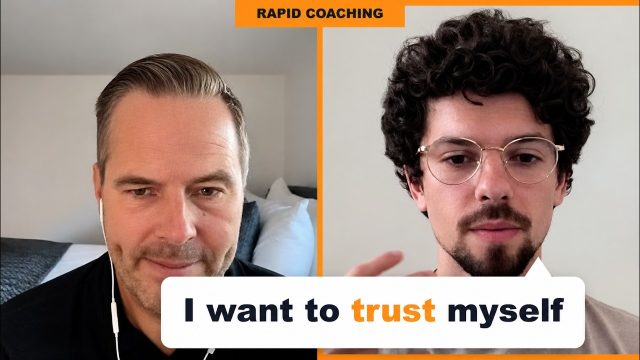
A man sitting across from Joe Hudson carries a question that sounds familiar but cuts deeper than it appears. He's leaving the corporate world. He's trying to chart his own course. And underneath every decision—which thread to follow, what to build, how to spend his time—runs a current of doubt. Not the doubt of a beginner, but the doubt of someone who understands himself well enough to know the doubt shouldn't be there, yet can't shake it. "I still find myself doubting more than I trust myself," he says. The language is precise. It's not that he lacks confidence in his abilities. It's that doubt has become his default gear, humming beneath every choice.

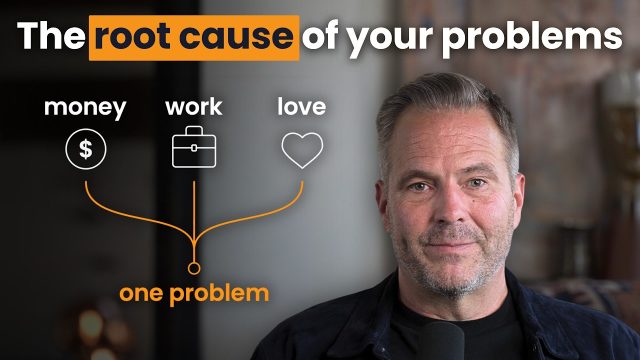
What Joe notices first is that the question isn't really about trust at all. It's about attention. The man describes a ghost following him—this compulsion to get it right, to optimize, to think his way to certainty. And in that description, Joe identifies something ancient: a phrase that appears in spiritual teaching across traditions. "A doubt is a sin of the heart," he says. "Meaning you're neglecting your heart if you're in doubt. You're all up here." He points to his head. The metaphor isn't mystical hand-waving. It's precise. When we doubt, we've migrated entirely into the logical mind, the part of us that runs calculations, compares options, searches for proof.

But there's a mathematical problem with that. Joe references Gödel's incompleteness theorem—the discovery that all forms of logic are either incomplete or based on assumptions that cannot themselves be proven. This is the trap. "That's why you can spend forever here and be in doubt," Joe explains. "Because logic can't have certainty." The mind can generate doubt infinitely. It's not broken. It's doing exactly what it was designed to do. But certainty was never its job. Certainty lives elsewhere.

Read · 5 sections

The Heart as the Seat of Knowing

To test this, Joe takes the man into an experiment. Put your hand on your heart, he instructs. Put all your attention there. Then think about your decision—which thread to follow. The man closes his eyes. Seconds pass. When he opens them, something has shifted. "What thread to pull on. And what just happened?" Joe asks. "Something in business," the man says. "Like a particular thing." Joe presses: "Yeah. So what happened to the doubt?" The man's answer is simple and revealing: "Didn't exist."

This isn't magic. It's not that the doubt disappears because doubt isn't real. It's that the doubt was always dependent on a particular location of attention—the logical mind running in loops. When attention moves to the heart, the terrain changes. The question is no longer "How do I know I'm right?" but "What is my heart drawn to?" These are categorically different operations. One seeks certainty (which the mind can never guarantee). The other seeks alignment (which the heart recognizes immediately).

The man then raises something that stops many people in their tracks: "But now it just feels like another thing to do and remind myself of like come to the heart and remember and it just feels like another task." He's identified a real problem. Making the heart a technique, a checklist item, turns the solution into an extension of the original problem. It becomes another way to optimize, to perform, to get it right. Joe asks directly: "How can you make that not a task? How do you make that like scrolling your phone? Which is a task." The difference is obvious once stated: scrolling your phone is your default. You don't have to remind yourself. The heart can become the same—not through willpower, but through understanding why it matters.

Doubt as an Invitation, Not an Obstacle

Here's where the conversation pivots into something genuinely useful. Joe reframes doubt entirely: "Cuz right now your default state's up here. You don't have to remind yourself or anything. Every time you're in doubt, it's like, hey, pay attention to your heart. It's like this hurts, pay attention to your heart." The man recognizes this immediately: "Yes." Doubt isn't the problem. Doubt is the signal. It's the system alerting you that you've abandoned your heart in favor of endless thinking. Rather than trying to eliminate doubt, you can use it as a compass—a constant, automatic reminder to come home.

The man asks the essential follow-up: How do you make coming to the heart an enjoyment rather than another obligation? Joe offers something that sounds simple but takes the entire conversation deeper: "You don't have to. Just wait." He catches the man trying to think the answer into existence. "Now you're paying attention to your heart, but you're trying to think the answer." Instead, Joe suggests something radical for someone accustomed to solving everything through effort: Put your attention on your heart and let the answer arrive on its own time. No searching. No forcing. Just presence. The man's response captures the texture of this surrender: "It almost feels like a paradox." Joe doesn't argue the point. He simply says: "Go ahead. Yeah, just keep your attention here and keep talking."

What emerges is that the paradox itself doesn't bother the heart. The man notices: "It still feels good." The mind might see the catch-22 and demand resolution. The heart simply sits with it and remains at peace. This is the difference between understanding something intellectually and knowing it in your body. The man has glimpsed it now. He feels it.

Trust After Failure

The conversation then moves into the terrain that actually matters: What does trust look like in a world where you will make mistakes, where things will fall apart, where you can't control the outcome? This is where many discussions of "trusting yourself" break down. They imply that trust means you'll get it right. Joe dismantles this gently but completely.

"What when you are on the other side of it," he says, "what is it that you like imagine that you're at the place where you do trust. Where you just like, oh, mistakes happen, [stuff] happens. I know that this will continue and I will grow and it will evolve. Which, you know, is the way that trust works. Trust doesn't work like I'm going to get it right. Trust works like of course things are going to [blow] up in my face and I trust that I can handle that and I will learn from it and it will help me grow and help the business grow. That's how the trust works."

This is not a small distinction. Most people wait for trust until they've accumulated enough successes to feel safe. Joe is describing a trust that is indifferent to outcomes precisely because it's rooted in something unchanging: your capacity to respond, adapt, and grow. The man begins to see this. When Joe asks what realization made that kind of trust possible, the man answers: "I'm standing no matter what. Or sitting." He's already had the insight. He already knows this, at least somewhere inside.

The Trust That's Already Present

What comes next is perhaps the most important moment in the session. Joe challenges the man's own narrative: "Are you sure?" that you don't trust it yet. Can you say with a straight face that you don't trust it? The man pauses. He can't. He can't honestly claim complete mistrust. And Joe's point lands: "Yeah. Now can you relax into the trust? You are fighting against that trust in a way. It's there. It's like it's it's it's already there. That's the cool thing for you. You already see it."

This reframes the entire problem. The man isn't trying to build trust from scratch. He's not trying to manufacture something that doesn't exist. He's resisting trust that he already possesses. The work, then, isn't to acquire trust. It's to stop fighting it. It's to relax into what's already present.

Joe then asks the question that opens the final door: "What is it in you that needs to die? You what's the thing that's scared to die right now to let go into the trust?" The man sits with this. The fear surfaces. And Joe names what it is: a way of being, an identity built over years around optimization, control, and the constant vigilance of the thinking mind. "It's scary and sad that you've been doing this to yourself for a long time," Joe says. "And it hasn't been necessary." The truth of that lands. The man begins to cry. Not from despair, but from recognition—the relief of seeing that the walls he's built to protect himself are no longer serving him. They were never necessary to begin with.

Where to Go From Here

The practical implication of this coaching is not complex, but it requires consistency. Every time doubt arises—which will be often—use it as a bell. Come back to your heart. Put your attention there. Not as a task, but as the most natural thing. Feel what your heart knows about the decision in front of you. The doubt will return; that's not failure. It's your signal working exactly as it should. Each time you notice and return, you're rewiring your default from the head to the heart. That's not achieved through one insight. It's achieved through ten thousand small return movements, until one day you realize your default has shifted. The ghost of trying to get it right is still there, but it no longer leads. You've learned to listen to what actually knows.
Comments

Loading the conversation…

Transcript

[0:00] What's your question?

[0:04] >> He's kind of similar to the previous

[0:05] person, but how do I trust myself?

[0:11] >> What makes it similar

[0:13] to the previous question?

[0:18] >> [snorts]

[0:18] >> There's something about trying to get it

[0:20] right

[0:21] that I feel is following me around like

[0:23] a ghost.

[0:24] >> Uh-huh.

[0:24] >> As much as I understand it, even even

[0:26] noticing in the moment,

[0:28] yet I still find myself like doubting

[0:30] more than I trust myself.

[0:32] >> Oh. So it's more about like the doubt

[0:34] than it is about the getting it right.

[0:37] >> Yeah.

[0:40] >> Okay, give me the thing you doubt

[0:42] yourself about the most.

[0:46] >> [laughter]

[0:49] >> Um

[0:50] >> Usually a simple question like that

[0:52] isn't such a good one, but I'm so glad

[0:53] it's such a good one because of that

[0:54] reaction. [laughter]

[0:56] Yeah.

[0:57] >> [sighs]

[1:00] >> I don't know.

[1:02] >> Is that you doubting yourself?

[1:04] >> [laughter]

[1:06] >> Yeah, I guess so.

[1:06] >> Okay.

[1:08] So

[1:09] what do you doubt yourself about a lot?

[1:13] >> [snorts]

[1:13] >> Um

[1:21] what to do or how to spend my time or

[1:24] what to

[1:25] what thread to follow.

[1:27] >> Okay.

[1:28] Is that on a business level or on a

[1:30] non-business level or

[1:32] >> Both.

[1:32] >> Both.

[1:33] >> Yeah.

[1:33] >> Are you you're an entrepreneur?

[1:35] >> I'm transitioning out of kind of the

[1:37] corporate track and figuring out my own

[1:39] way.

[1:39] >> Okay.

[1:41] Cool. Um

[1:46] which thread to follow. So I want you to

[1:47] think about which thread to follow.

[1:50] Then I want you to put your hand on your

[1:51] heart

[1:52] and I want you to put

[1:55] complete energy into your heart. So all

[1:57] your attention, excuse me, all your

[1:58] attention into the

[2:00] And I want you to think about

[2:03] what thread to pull on.

[2:07] And what just happened?

[2:10] >> Something in business.

[2:12] >> Like a a particular thing.

[2:13] >> Yeah.

[2:14] >> Yeah.

[2:15] So what happened to the doubt?

[2:18] >> Didn't exist.

[2:19] >> Yeah.

[2:20] So the doubt happens here. They there's

[2:22] a great phrase that says a doubt is a

[2:23] sin of the heart.

[2:26] Meaning you're neglecting your heart if

[2:28] you're in doubt. You're all up here.

[2:32] Do you do you Are you a math kind of

[2:35] person?

[2:36] >> Not really. Not really.

[2:37] >> There's a guy named Gödel. He had like

[2:39] the mathematical incompleteness theorem.

[2:42] And he basically said that like all

[2:43] forms of logic are either incomplete or

[2:47] they're based on assumptions that can't

[2:49] be proven.

[2:50] And that's why you can spend forever

[2:52] here and be in doubt.

[2:55] Because logic can't

[2:57] can't have certainty.

[2:59] >> But now it just feels like another thing

[3:01] to do and remind myself of like come to

[3:03] the heart and remember and it just feels

[3:04] like another task.

[3:06] >> Yeah. How how can you make that

[3:09] not a task?

[3:11] How do you make that like scrolling your

[3:12] phone?

[3:14] [laughter]

[3:15] Which is a task.

[3:17] >> True.

[3:18] Um

[3:20] >> Like how do you how how can that just be

[3:22] your default state?

[3:25] Cuz right now your default state's up

[3:27] here. You don't have to remind yourself

[3:28] or anything.

[3:29] >> Right.

[3:32] I feel like intellectually it's to enjoy

[3:33] it, to

[3:35] enjoy the feeling of being in my heart.

[3:38] >> Yeah.

[3:39] Cuz you got this constant reminder to do

[3:41] it. It's called doubt.

[3:43] >> Right.

[3:44] >> Every time you're in doubt, it's like,

[3:45] hey, pay attention to your heart. It's

[3:47] like

[3:48] this hurts, pay attention to your heart.

[3:51] >> Yes.

[3:53] >> So yeah, how do you not make it a to-do

[3:55] list and make it into an enjoyment?

[4:00] For now, right there, you started to

[4:01] doubt yourself a little

[4:03] >> Yeah.

[4:03] >> Let's try again.

[4:05] How do you

[4:08] with putting a ton of attention into

[4:09] your heart, how do you make coming into

[4:12] your heart an enjoyment, not a task?

[4:20] >> I'm searching for answers.

[4:21] >> You don't have to. Just wait.

[4:30] Now you're paying attention to your

[4:32] heart, but you're you're trying to think

[4:33] the answer.

[4:34] >> Yeah.

[4:34] >> [laughter]

[4:35] >> Yeah.

[4:36] Don't don't do that.

[4:38] Just

[4:39] all you have to do is put your attention

[4:40] here and then the answer will come when

[4:41] it comes.

[4:43] >> So just sit here until it comes?

[4:44] >> Mhm. Yeah.

[4:45] >> Okay.

[4:45] >> Yeah.

[4:47] How do you make it so that coming to

[4:49] your heart is [snorts] the enjoyable

[4:52] thing, not a task?

[4:55] >> It almost feels like a paradox.

[4:58] >> Go ahead. Yeah, just keep your attention

[5:00] here and keep talking.

[5:02] >> Yeah, it feels like

[5:05] a catch-22.

[5:06] >> Yeah.

[5:11] But you're not bothered by the catch-22.

[5:14] >> Right.

[5:15] >> Yeah.

[5:16] >> It still feels good.

[5:17] >> Yeah.

[5:18] >> Mhm.

[5:20] >> Yeah.

[5:21] So what to do about a catch-22, if

[5:23] anything?

[5:26] >> Just notice it?

[5:27] >> Yeah.

[5:29] >> Mhm.

[5:31] Seems too simple.

[5:33] >> [laughter]

[5:34] >> It's too simple.

[5:36] That's the best way to describe it, too

[5:38] simple. [laughter]

[5:40] Yeah.

[5:42] >> I

[5:42] the doubt is saying

[5:45] tomorrow I'm going to wake up and forget

[5:46] all this.

[5:47] >> Yeah.

[5:50] Yeah. And then what's the heart saying?

[5:53] >> It's okay.

[5:56] >> [laughter]

[6:00] >> Yeah. And then what how does the doubt

[6:01] respond?

[6:03] >> Are you sure?

[6:05] >> Yeah. Great. Perfect.

[6:06] >> And what does the heart respond?

[6:08] >> That too is okay.

[6:11] >> Yeah.

[6:16] What do you think happens if that

[6:17] becomes the discourse?

[6:20] Like if you actually see the okayness of

[6:23] the forgetting and the coming back and

[6:25] the doubt and the

[6:27] love like what do you how do you think

[6:30] like how do you think you move through

[6:31] the world?

[6:34] Do you think you become like

[6:35] laxadaisical and you just let [ __ ]

[6:36] happen or what happens?

[6:39] >> I would imagine in more trust.

[6:43] Yeah.

[6:44] >> Yeah.

[6:45] That's the thing you came in saying you

[6:46] were looking for.

[6:48] Yeah.

[6:49] >> [laughter]

[6:49] >> Yeah.

[6:49] >> Yeah.

[6:51] >> Yeah, not questioning everything.

[6:53] >> Yeah.

[6:54] >> Or optimizing it.

[6:56] >> Yeah.

[6:58] >> That's the hardest part is I feel like

[6:59] even understanding all these things at a

[7:01] very like deep level I still find myself

[7:03] optimizing and optimizing and

[7:04] optimizing.

[7:06] >> Yeah.

[7:07] And what does your heart say about

[7:08] optimizing?

[7:09] >> It's

[7:10] it's probably a good thing in some

[7:11] sense. It's probably a gift.

[7:13] >> Yeah.

[7:13] >> Yeah.

[7:15] >> Yeah.

[7:16] So it doesn't say the same thing all the

[7:17] time which is good.

[7:19] >> Right.

[7:19] >> Yeah.

[7:21] Yeah.

[7:22] >> I wonder sometimes do I need to have

[7:24] like external something in the world

[7:26] something that I

[7:27] like in the world that reflects that to

[7:29] me so I can see it versus it kind of

[7:31] being this

[7:33] dialogue that's always happening.

[7:34] >> Oh, reflect the doubt or the reflect the

[7:36] what?

[7:37] >> Reflect the the

[7:39] the trust. Like there's something that

[7:40] trust leads me to let's say taking

[7:42] action that is terrifying and I'm

[7:44] standing on the other side of it.

[7:46] >> Yeah.

[7:46] >> Like I wonder how much of that is

[7:47] necessary of like enough reps where it

[7:50] becomes something that's

[7:52] like I I trust it truly.

[7:55] >> Reps are good but the insight is better.

[7:58] >> Okay.

[7:59] >> What when you

[8:01] are on the other side of it,

[8:03] what is it that you like imagine that

[8:06] you're at the place where you do trust.

[8:08] Where you just like, oh, mistakes

[8:10] happen, [ __ ] happens.

[8:12] I know that this will continue and I

[8:14] will grow and it will

[8:15] evolve.

[8:17] Which,

[8:18] you know, is the way that trust works.

[8:20] Trust doesn't work like I'm going to get

[8:21] it right. Trust works like

[8:24] of course things are going to [ __ ]

[8:25] blow up in my face and I trust that I

[8:26] can handle that and I will learn from it

[8:28] and it will help me grow and help the

[8:29] business grow. That's how the trust

[8:31] works.

[8:32] >> Yeah.

[8:33] >> If you see that, what's the realization

[8:35] that you've had?

[8:39] >> I wasn't following that one. The

[8:40] realization

[8:41] >> If you're at the point where you can

[8:42] say, oh, I do trust. I trust that I'll

[8:45] figure out. It'll we'll make mistakes,

[8:47] but it'll there'll be dumpster fires,

[8:49] but we'll learn from them, we'll grow

[8:50] from them. Like

[8:51] it's okay. It'll be all right.

[8:54] What what's the insight that you had

[8:56] that made that possible?

[9:00] >> That I'm standing no matter what.

[9:05] Or sitting.

[9:06] >> Yeah.

[9:07] [laughter]

[9:08] So you already have had the insight.

[9:10] >> Mm.

[9:12] But I don't trust it yet.

[9:14] >> Are you sure?

[9:17] >> Mm.

[9:19] >> Like can you say with a straight face

[9:21] that you don't trust it?

[9:22] >> No.

[9:26] >> Yeah. Now can you relax into the trust?

[9:30] You are fighting against that trust in a

[9:31] way. [laughter]

[9:35] It's there. It's like it's it's it's

[9:37] already there. That's the cool thing for

[9:40] you.

[9:42] You already see it.

[9:45] >> Yeah.

[9:46] >> What's what is it in you that needs to

[9:48] die?

[9:49] You what's the thing that's scared to

[9:51] die right now to let go into the trust?

[9:54] >> Please tell me.

[9:55] [laughter] I don't know what it is.

[10:00] Um.

[10:02] [snorts]

[10:05] I feel a lot of fear.

[10:09] Um.

[10:09] >> Fear of what?

[10:12] If live that trust, what are you scared?

[10:16] >> It feels like an entire new like way of

[10:20] living of life.

[10:21] >> It is.

[10:23] Right? Your identity.

[10:27] >> Yeah.

[10:34] >> You don't have to

[10:35] It's okay.

[10:36] >> Yeah.

[10:37] >> It's scary and sad that you've been

[10:39] doing this to yourself for a long time.

[10:43] And it hasn't been necessary.

[10:59] >> This feels so tense.

[11:00] >> I see it. Yeah, you're you're fighting

[11:02] it.

[11:03] >> [laughter]

[11:05] >> I don't know what to do about it. I'm

[11:06] fighting it. It's I guess Hold on. Let

[11:08] me come back here.

[11:08] >> Thank you. Look at that. [laughter]

[11:12] Yeah.

[11:16] Do you notice that I trust your fight?

[11:20] >> Yeah.

[11:24] I'm like literally

[11:25] cramping right now as I'm

[11:27] looking at you.

[11:28] >> I

[11:29] >> Your lips are quivering and you're

[11:31] holding back a lot of tears.

[11:46] [snorts]

[11:51] That's trust.

[12:11] >> [snorts]

[12:23] >> I'm sorry they didn't trust you.

[12:33] >> [snorts]

[12:35] >> Thank you.

[12:35] >> Yeah, you didn't deserve that.

[12:48] [snorts]

[13:02] I'm so tired of being so tight all the

[13:03] time.

[13:04] [laughter]

[13:06] I I've been shaking all day for the last

[13:08] like six months.

[13:09] >> You have been?

[13:10] >> Yeah.

[13:10] >> [ __ ] yes.

[13:12] That's [laughter] great.

[13:13] >> There's just thing called TRE or

[13:14] something I found online. It's been

[13:16] incredible for me.

[13:17] >> That's awesome.

[13:19] [sighs]

[13:20] Yeah.

[13:23] That's trust.

[13:26] You going there right now is trust.

[13:29] >> [snorts]

[13:36] >> Still feel that doubt of like now what?

[13:39] >> So?

[13:41] [snorts]

[13:42] And

[13:43] what's the response?

[13:47] >> It's okay.

[13:48] No, it's okay.

[13:52] >> [sighs]

[13:53] >> See if there's actually an answer. Now

[13:55] what?

[14:01] It's in your heart.

[14:03] Now what?

[14:09] >> I just feel the heart. That's it. I

[14:10] don't have

[14:12] >> [snorts]

[14:15] >> I I that be the answer.

[14:18] >> Hm.

[14:21] Hm.

[14:24] >> This is what's what This is the now

[14:26] what. [laughter]

[14:31] [clears throat]

[14:31] [snorts] What a pleasure.

[14:32] >> Thank you so

[14:36] >> [applause]

Joe Hudson

Artist

Watch more from Joe Hudson on YouTube.

Explore Topics
Self doubtTrust selfHeart intelligenceCoachingIdentity transformation
Frequently Asked Questions

Frequently Asked Questions

Doubt signals that your attention has drifted into pure logic, which cannot guarantee certainty. Rather than trying to eliminate doubt, use it as a reminder to place your attention on your heart. When you pause and listen to what your heart knows about a decision, the doubt naturally dissolves because you've shifted from seeking logical proof to sensing alignment. The key is making this return to heart-centered attention your default, not another task.

No. Real self-trust operates on the assumption that things will go wrong, that you'll make mistakes, and that there will be failures. Trust is the confidence that you can handle whatever comes, learn from it, and grow. It's not about never failing; it's about knowing you can respond to failure and emerge stronger. This kind of trust is available to you now—you likely already possess it, even if you're fighting against it.

The logical mind works with assumptions that cannot ultimately be proven (a principle Gödel established mathematically). Because of this, the thinking mind can generate doubt infinitely. It's not broken; it's doing its designed job. But certainty was never the mind's role. Certainty comes from a different place—the heart, which knows through alignment rather than proof.

Start by noticing that every moment of doubt is a signal inviting you back to your heart. Each time you feel doubt, pause and place your attention there. Don't turn this into a checklist or technique; let it become as natural as scrolling your phone. Through repeated small return movements, your nervous system gradually learns that the heart is a safer default than the thinking mind. This isn't about willpower; it's about consistent, gentle redirection.

Understanding something in your head is different from knowing it in your body. The gap you're experiencing is exactly what this practice addresses. Each time you come back to your heart, you're giving your nervous system the felt experience of safety and knowing that isn't dependent on thinking. The intellectual insight creates the possibility; the embodied practice through repeated return makes it real.

This is a common fear, but the evidence suggests the opposite. Trust rooted in knowing you can handle adversity actually makes you more capable and responsive, not less. You're not letting go of responsibility; you're releasing the exhausting illusion that you can think your way to perfect control. That shift often clarifies decision-making and action because you're no longer paralyzed by the need to get it right before you move.

There's no fixed timeline, but the shift often begins immediately when you understand that the trust you're seeking already exists in you—you're just resisting it. The real work is consistent return to heart-attention each time doubt surfaces. Some people report feeling the shift in a single session; others notice it building gradually over weeks or months. The key is that you're not building something new; you're recognizing and relaxing into what's already there.

Doubt will return; that's not failure. It's your system working exactly as it should. Each time you notice doubt and gently return your attention to your heart, you're strengthening the pathway. The goal isn't to eliminate doubt forever; it's to change your relationship to it so that it becomes a helpful signal rather than a source of suffering. Over time, the return becomes faster and more natural, like breathing.

You might also like

View All
Every Problem Points to Where You're Disconnected
Inspire

Every Problem Points to Where You're Disconnected

Joe Hudson argues that disconnection is the root cause of nearly all human struggles—from overeating to financial stress to political polari…

8 min read
The Paradox of Self-Trust: Why Your Heart Knows What Your Mind Fears
Inspire

The Paradox of Self-Trust: Why Your Heart Knows What Your Mind Fears

When trusting yourself feels risky, Joe Hudson reveals why the heart often delivers something wiser—and more grounded—than the mind expects.…

8 min read
Stop Waiting for Permission: Three Questions for Brave Moves
Inspire

Stop Waiting for Permission: Three Questions for Brave Moves

Voice coach Amanda Sellers reflects on a sold-out workshop, Oprah's idea that we block ourselves, and three questions for choosing one coura…

9 min read
The Lotus Principle: Growing Through Life's Mud
Inspire

The Lotus Principle: Growing Through Life's Mud

The lotus flower teaches us that beauty and transcendence grow not despite hardship, but through it. Snatam Kaur explores an ancient spiritu…

4 min read
See allYou might also like→

Continue your journey

More wisdom and gatherings from across the BrightStar directory.

More Articles

Browse the full library of teachings, interviews, and guides.

Back to all articles →

Teachers & Artists

Explore the lineages, musicians, and guides of the conscious world.

Explore artists →

Find an Event

Kirtan, retreats, sound baths, breathwork, festivals — happening soon.

Browse events →