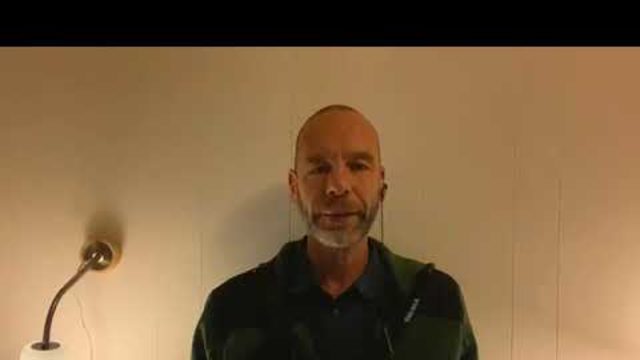
In contemplative and spiritual circles, there's often an unspoken assumption that the work begins the moment we sit down to meditate, chant, or study dharma. But Stephan Pende approaches the question differently: before the practice can take root, the body and nervous system must know they are safe. This isn't a preliminary detail—it's the actual foundation of meaningful spiritual work.
The relationship between felt safety and spiritual growth is both ancient and newly understood through the lens of modern neuroscience. When the nervous system is in a state of threat or dysregulation, the brain is primarily concerned with survival—not transcendence, not insight, not surrender. A person in a hypervigilant or collapsed state cannot genuinely open to practices meant to quiet the mind and expand awareness. The body's wisdom must be honored first.
This principle recognizes that spiritual practice isn't divorced from embodied experience. Many traditions speak of the need for a calm and stable foundation, though the language varies. In yoga philosophy, the concept of sthira-sukha—steadiness and ease—describes this balanced state of the nervous system. In contemplative Christianity, there's the notion of hesychia, a profound stillness that allows prayer to deepen. Buddhist teachings speak of the right conditions for practice to flourish.
A nervous system that feels secure is characterized by what modern somatic therapists call "ventral vagal tone"—a state in which the parasympathetic nervous system is engaged without collapse. The body can sense into sensation without being overwhelmed. The mind can observe thoughts without being swept away. There's a quality of alertness without anxiety, receptivity without defensiveness.
When safety is present, the natural relaxation response can activate. Heart rate stabilizes, breathing deepens, and the body's natural wisdom becomes accessible. From this state, spiritual practices like meditation, chanting, or inquiry have room to work. The nervous system isn't spending its resources on threat detection; it can turn toward the more subtle dimensions of inner experience that spiritual practice is designed to illuminate.
Creating conditions of felt safety is not passive. It requires intentionality and often involves working with the body, breath, and the relational field. Some foundational approaches include:
- Somatic awareness: Developing the ability to sense into the body without judgment, learning to recognize when the nervous system is activated and when it's settled.
- Grounding practices: Techniques that anchor awareness in the present moment and in physical sensation—the earth beneath the feet, the contact of the body with a chair, the rhythm of the breath.
- Relational safety: The presence of a trusted guide, teacher, or community that communicates through words and presence that one is held and witnessed.
- Pacing: Moving at a speed that the nervous system can integrate, rather than forcing practices or insights faster than the body can accommodate.
- Boundaries: Clear, firm containers around practice—knowing when to begin and when to rest, understanding one's own limits, and respecting them.
A skilled guide understands that their presence itself can communicate safety. The tone of voice, the pacing of instruction, the willingness to meet a student where they actually are (rather than where they should be) all matter deeply. Teaching that ignores the nervous system's reality can inadvertently reinforce patterns of dissociation or spiritual bypassing—using elevated concepts to escape from the body's legitimate needs.
This is why a teacher like Stephan Pende, who explicitly addresses safety as a foundation for practice, is offering something essential. The willingness to slow down, to begin with the nervous system's actual condition, and to build from there is not soft or remedial—it's sophisticated spiritual pedagogy.
Paradoxically, true spiritual depth often requires a kind of letting go that can feel unsafe to the ego. Surrender, openness, the dissolution of habitual defenses—these have an element of danger built in. But this spiritual vulnerability can only unfold authentically when the nervous system knows it's held in a larger container of safety. The small self can relax its vigilance only when the deeper self—or the larger field of awareness—is trusted to be present.
When safety is established, apparent paradoxes resolve. We can be both utterly vulnerable and completely protected. We can let go of control while remaining deeply grounded. We can open to experiences that dissolve the separate self while feeling more fully, not less, present to our bodies and to others.
Not everyone begins their spiritual journey from a place of nervous system ease. Many arrive carrying trauma, chronic stress, overwhelming circumstances, or simply the accumulated tension of modern life. This is not a problem to be overcome before practice begins—it's the actual landscape in which practice begins. The first teaching might simply be: notice what's true right now. Notice where you feel safe, however small that space might be. Notice what your body needs.
From this honest starting point, the path can unfold naturally. Safety builds gradually, through practice, through relationship, through the cumulative evidence that it's possible to relax, to trust, to let the deeper layers of consciousness emerge.
If you're drawn to explore safety as a foundation for practice, begin with simple somatic awareness. Spend time noticing your nervous system's actual state—not how you think it should be, but how it actually is. Work with a teacher or guide who understands the body's role in spiritual development. Consider trauma-informed approaches to practice, which honor the nervous system's real needs. And give yourself permission to move slowly, to build from the ground up, knowing that the most solid spiritual development is rooted in genuine felt safety.