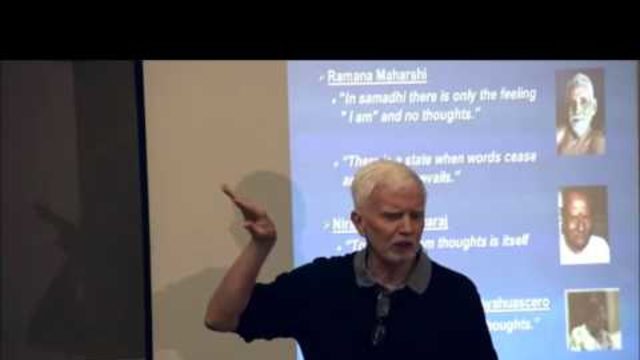
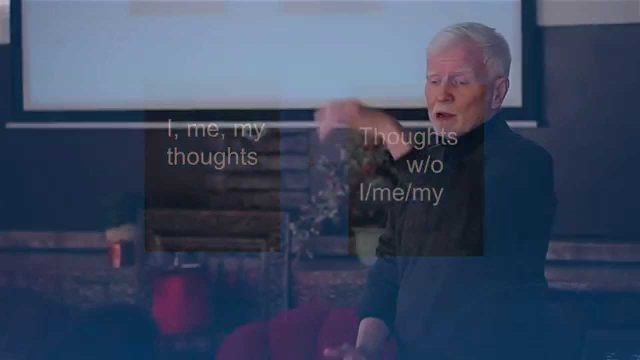
Eight seconds into Gary Weber's video, a voice begins to chant in Sanskrit, and the first thing the viewer is likely to notice is the hands. They move in slow, deliberate shapes, each one tied to a line of verse, and they never stop until the recitation ends about eight minutes later. The video, titled The Essence of Awakening and posted to his channel in September 2018, is a recording of Ramana Maharshi's Upadesa Saram, a text the video description translates as "the essence of the teaching." The piece runs thirty verses, and Weber presents it as a full map of nondual awakening, chanted with mudras and accompanied by a word-by-word transliteration and translation in the video's description.
The description calls the work a series of thirty verses "covering every aspect of nondual awakening." That is a large claim for a text this short, and it explains why Weber treats it as more than a recitation piece. In the opening seconds he frames it as a sequence rather than a poem: the teaching, he says, runs from the very beginning of the path to the very end. Whatever one thinks of the claim, it sets the terms for how the video should be heard. A listener is not being asked to appreciate a melody. They are being asked to follow a route.
Chanting a teaching has a long practical logic. Spoken verse is repeated, memorized, and sung until it stops being a set of ideas and becomes something the body knows. Repetition is the reason the form survives across centuries: a line that is merely read can be forgotten by the next morning, while a line that has been chanted tends to surface on its own in the middle of an ordinary day. Weber's recording works in exactly this mode. The verses are not explained on screen. They are sounded, one after another, so that the text is heard as a whole before it is analyzed as parts.
Weber makes a point of the text's history. In his words:
"He composed this in four different languages, Tamil, Telugu, Malayalam and Sanskrit. I'll chant it in Sanskrit."
— Gary Weber, "The Essence of Awakening" (video, 0:24)
That detail matters for a listener who does not read Sanskrit. The chant the viewer hears is one rendering among several, and the choice of Sanskrit is a choice about sound as much as meaning. Sanskrit is the language most associated with ritual recitation in the Indian traditions, and its rhythm is built into how verses are memorized. For a Western listener without the language, the effect is disorienting in a productive way. The ear cannot grab the meaning, so it slows down and attends to the shape of each phrase, its vowels and its breath. The transliteration and translation provided with the video are there for the reader who wants the words, but the recording itself asks for a different kind of attention first.
Weber's own transcript of the chant, as captured by automatic captioning, is largely unreadable: the Sanskrit comes through as phonetic approximations that drift into near-nonsense. That is worth saying plainly, because a reader who turns to the captions for meaning will be disappointed. The captions are a record of sound, not of teaching. The meaning lives in the translation Weber has published alongside the video, and in the longer body of work he has written on awakening.
The more unusual element of the video is the hand movement. Mudras are gestures used in Indian ritual, yoga and devotional practice, and in this recording they are matched to the flow of the verses. Weber's account of where they came from is the most striking thing he says in the entire eight minutes:
"I'll do with some hand motions called mudras which manifested out of nowhere. I have no idea what they mean. They manifested over some time frame, and you'll see them fit into the movement of the verses."
— Gary Weber, "The Essence of Awakening" (video, 0:35–0:48)
He does not claim authority over them. He describes them as something that emerged over time and found their fit with the verses as the chanting went on. That is a notable stance for a teacher to take. It sets the gestures apart from a system he designed or a tradition he is certifying. The mudras are presented as part of the practice's unfolding rather than as an instruction set the viewer must master. The project's acknowledgments in the description, which thank Rich Doyle for procuring the studio and Kevin Hackett for help working through the mudras, suggest the gestures were refined collaboratively in the making of the recording, even if their origin felt unplanned.
For a practitioner, there is a useful way to hold this. Gesture and voice together engage the body in a way that voice alone does not. When the hands move with the phrase, the verse has a second anchor, and the mind has less room to wander off into commentary. Whether one reads that as a discipline or as a happy accident, the effect on attention is real enough to be worth trying.
The fair answer is to begin without the demand to understand. Watch once simply for the sound and the gesture. Watch a second time with the translation open, reading one verse against the phrase that carries it. Then return to the chant with the words in mind, and notice where the meaning seems to land in the body rather than the head.
This is also where Weber's own writing becomes useful. His book Happiness Beyond Thought: A Practical Guide to Awakening is offered free through a link in the video's description, as are Dancing Beyond Thought, his set of Bhagavad Gita verses and dialogues on awakening, and Evolving Beyond Thought: Updating Your Brain's Software. A viewer who wants to move from the chant to the concepts behind it has a sequence of material laid out, beginning with the practical guide. The video, in other words, is one door into a larger body of work, not a complete teaching by itself.
At eight minutes, The Essence of Awakening is short, and it does not explain itself. Its value is in the act it models: taking a classical text, singing it in the language it was given, and letting the body carry what the mind cannot yet parse. The description's claim that the text covers every aspect of awakening may or may not hold up for each reader, but the recording makes a more modest and more testable proposal. Sit with the verses long enough, and their shape begins to teach.
Start with the video itself, watched twice: once for sound and gesture, once with the translation from the video's description open beside it. Then read Weber's Happiness Beyond Thought for the practical frame around the chant. If the mudras interest you, the description's notes on Kevin Hackett's work with them are a good place to see how the gestures were brought into shape. And if the Sanskrit draws you in, the transliteration and translation are the next step toward the verses themselves. Chant slowly. The essence, as the title promises, is in the repetition.