Transcript
[0:00] the French writer Albert Camus, he has a
[0:03] sentence in one of his works. In the
[0:06] midst of winter, I found in myself an
[0:10] invincible summer.
[0:13] So there's a place within you that is a
[0:15] place of power that does not depend on
[0:18] external circumstances.
[0:20] And if you find that and connect
[0:22] yourself with that,
[0:24] the the changes in external
[0:26] circumstances don't affect you that much
[0:29] anymore. And life will flow with greater
[0:33] ease. It doesn't mean
[0:34] free of challenges. They continue to
[0:36] come.
[0:38] But the challenges of life, which are
[0:40] inevitable, are no longer going to
[0:43] create unhappiness in you.
[0:47] >> Welcome to the Huberman Lab Podcast,
[0:49] where we discuss [music] science and
[0:50] science-based tools for everyday life.
[0:54] [music]
[0:56] I'm Andrew Huberman and I'm a professor
[0:57] of neurobiology and ophthalmology at
[1:00] Stanford School of Medicine. My guest
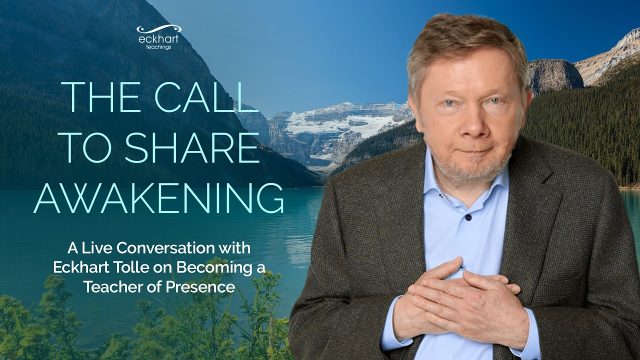
[1:02] today is Eckhart Tolle. Eckhart Tolle is
[1:04] considered by many to be one of the
[1:06] greatest teachers alive on
[1:07] consciousness, defining what it is and
[1:10] how to use that understanding to
[1:11] experience life more fully. Many
[1:13] philosophies and teachers over thousands
[1:15] of years have talked about the
[1:16] importance of being present, of
[1:18] meditation practices, and other
[1:20] practices to quiet the mind. Eckhart
[1:22] Tolle certainly embraces all of those,
[1:24] but his general approach is distinctly
[1:26] different. And today he teaches you
[1:28] practices that will allow you to feel
[1:30] the distinction between applying
[1:32] concepts and labels to your experience
[1:34] of life with pure experience of whatever
[1:36] it is that you happen to be doing or
[1:38] thinking or feeling in a moment.
[1:40] And while that might sound abstract, in
[1:42] order to make things concrete, today I
[1:44] had him provide actionable tools in real
[1:46] time as we did the podcast. So what
[1:48] follows is not just a theoretical
[1:50] discussion about consciousness and how
[1:52] to access different states of
[1:53] consciousness, it's also a tutorial on
[1:56] how to access those states in real time.
[1:58] So thanks to Eckhart, what follows is a
[2:00] truly conversation that walks you
[2:02] through how to access the best possible
[2:03] experience of what it is to be human.
[2:06] Before we begin, I'd like to emphasize
[2:08] that this podcast is separate from my
[2:09] teaching and research roles at Stanford.
[2:11] It is, however, part of my desire and
[2:13] effort to bring zero cost to consumer
[2:15] information about science and science
[2:17] related tools to the general public. In
[2:19] keeping with that theme, today's episode
[2:21] does include sponsors. And now for my
[2:23] discussion with Eckhart Tolle. Eckhart
[2:26] Tolle, welcome.
[2:27] >> Thank you.
[2:29] >> One of the most highly requested guests
[2:31] for this podcast from our audience and
[2:33] I'm a longtime fan of your teaching, so
[2:36] it's a it's a real delight and honor to
[2:37] have you here.
[2:38] >> Thank you.
[2:39] >> It was particularly difficult for me to
[2:41] prepare for this podcast for the
[2:43] following reason.
[2:44] And I'm hoping that
[2:46] your answer might actually provide some
[2:48] useful guidance for everyone listening
[2:50] as well.
[2:51] It occurred to me that in trying to
[2:53] understand the distinctions between
[2:56] thoughts and feelings and brain states,
[2:59] as you often describe them, that
[3:02] just by virtue of showing up to the
[3:04] podcast the way I normally would,
[3:05] sitting down and asking you questions
[3:07] using words to try and understand
[3:09] feeling states and things of that sort,
[3:11] that I'm working with the with blunt
[3:15] or insufficient tools. So I'm wondering,
[3:17] if you're willing, is there anything
[3:20] that we can do in this moment before we
[3:22] actually begin this Q&A type format that
[3:26] would help put me and perhaps the
[3:29] listener
[3:30] into a better state of mind and body
[3:33] in order to digest the information.
[3:36] >> Well, that's a good first question. The
[3:38] other is there anything we can do at
[3:40] this moment?
[3:42] Yes.
[3:43] And that is
[3:45] becoming more acutely aware of this
[3:50] moment.
[3:52] Most people don't realize that they pay
[3:54] very little attention to the present
[3:56] moment because they're always
[3:58] involved in [snorts]
[4:00] mentally projecting themselves to some
[4:03] other moment. Usually it's the future.
[4:05] When you get very old, it's more the
[4:06] past.
[4:08] So to become conscious of the present
[4:10] moment first of all means
[4:13] first step
[4:15] you become conscious of your sense
[4:17] perceptions, which means visual sense
[4:20] perceptions,
[4:21] auditory sense perceptions. There are
[4:24] other senses that might be involved, but
[4:26] the main senses are for most humans
[4:29] visual and auditory.
[4:31] So becoming more conscious means to be
[4:33] consciously wherever you are,
[4:36] look around the room where you are,
[4:39] take it all in,
[4:42] look at things,
[4:44] and
[4:45] at the same time
[4:47] be aware of the sounds that you're
[4:49] hearing. In this case, it's the sound of
[4:51] my voice.
[4:52] There may also be some other sounds.
[4:55] This is
[4:57] present moment awareness. The beginning
[4:59] of present moment awareness is
[5:02] conscious sensory perception.
[5:05] Now, if you really give attention to
[5:08] your sensory input,
[5:11] you will notice the amount of thinking
[5:14] you do gets significantly reduced.
[5:18] In other words, you're able to perceive
[5:20] these things
[5:23] without necessarily mentally labeling it
[5:27] or interpreting it or classifying it.
[5:31] So in other words, a dimension of
[5:33] consciousness
[5:35] begins to appear that is not thought
[5:37] activity, which normally humans identify
[5:40] with consciousness. They're thinking.
[5:43] Descartes said,
[5:45] I think, therefore I am. So he even he
[5:47] equated thinking with being.
[5:50] But
[5:51] that was a mistake. We may talk about
[5:54] that later.
[5:55] So the amount of thinking you do gets
[5:57] reduced as you become conscious of sense
[5:59] perceptions right now. I may stop
[6:01] talking just for a few seconds
[6:04] to give everybody an opportunity to
[6:07] experience sense perceptions. They may
[6:10] not be much
[6:12] that's interesting there, but it doesn't
[6:13] matter.
[6:14] Just look around the room, listen,
[6:17] give it attention.
[6:24] You're becoming aware of the present
[6:25] moment.
[6:27] Not yet the depths of the present
[6:29] moment.
[6:30] The surface of the present moment is
[6:32] whatever appears to your senses in the
[6:35] present moment. That's a good step.
[6:38] Now,
[6:40] the difference between this and normal
[6:42] consciousness is
[6:44] you're thinking much less or maybe not
[6:46] thinking at all when you become
[6:47] conscious of the present moment.
[6:49] And
[6:50] in other words,
[6:51] a kind of stillness, you become aware
[6:54] inside yourself when you are simply
[6:56] perceiving what's around you without
[6:59] labeling it, letting it be.
[7:01] Allow this moment to be as it is,
[7:03] acknowledge this moment,
[7:05] honor this moment because it's all that
[7:07] ever is. There is nothing else ever in
[7:10] your entire life. Nothing has ever
[7:12] happened in the past. It happened in the
[7:14] now. Nothing will ever happen in the
[7:15] future. It will happen in the now. When
[7:18] you remember the past, you remember it
[7:19] now. When you project yourself to the
[7:21] future, you're projecting yourself now.
[7:24] There is only now.
[7:26] And that most people
[7:28] forget that. They live as if something
[7:30] else were more important, the next
[7:32] moment, the past moment, but there is
[7:35] only now. So if we miss that,
[7:38] we miss the whole thing which we call
[7:40] our life.
[7:41] We have some
[7:42] make-believe life, some pseudo life.
[7:45] This is mental conceptualization. We
[7:48] miss the immediacy, the aliveness, the
[7:50] reality of this moment which is all
[7:53] there ever is. So this moment,
[7:56] if you give give it your fullest
[7:57] attention,
[7:59] actually you become a bit still inside.
[8:03] Less thinking, maybe no thinking, but
[8:06] you're not falling you're aware.
[8:09] Thinking becomes replaced by awareness,
[8:14] a different level of consciousness, we
[8:15] could say a different vibrational
[8:17] frequency.
[8:18] And then the next step is, okay,
[8:22] present moment awareness, sense
[8:23] perception, you honor what is.
[8:26] You might see beauty even in simple
[8:28] things and
[8:30] aliveness and the beingness of
[8:32] everything.
[8:34] And then the next step is
[8:37] yes, sense perception. Now become aware
[8:39] of yourself,
[8:42] but not the historical self that you
[8:44] remember, your personality, your person.
[8:48] The self that enables these sense
[8:50] perceptions
[8:52] to happen.
[8:53] In other words,
[8:55] become aware of yourself as the
[8:59] awareness that is perceiving.
[9:02] A sense of
[9:04] being conscious of being present of
[9:06] being.
[9:07] You realize that you are, [snorts]
[9:10] but you do don't need to look to
[9:12] your past to find your identity.
[9:17] There's already a deeper identity in the
[9:19] present moment when you are when you
[9:21] realize that
[9:23] there's more to you than the historical
[9:25] person. So this is the beginning of it.
[9:28] Become aware of yourself
[9:30] as and that is the stillness is the
[9:32] awareness
[9:34] and then the awareness is aware of
[9:37] what's around you. So
[9:39] present moment awareness
[9:41] two
[9:42] levels,
[9:44] being aware of of external things,
[9:46] giving it attention, honoring the
[9:48] present moment.
[9:50] Second level,
[9:52] being aware of the one who is aware,
[9:55] but not the historical person, but the
[9:57] deeper dimension of consciousness that
[9:59] most people miss completely. It's latent
[10:02] in everybody, but they miss it
[10:04] completely and they miss the most
[10:05] important thing in their whole life. So
[10:07] that already encapsulates almost every
[10:10] spiritual teaching that is the the
[10:11] essence of it.
[10:13] >> Thank
[10:13] >> you for that. That was uh
[10:15] very informative and experientially uh
[10:18] very useful. I noticed that
[10:21] as I shifted from thinking about next
[10:23] question uh
[10:25] I could just tune into your voice or my
[10:28] internal state. And you mentioned the
[10:31] the distinction between being and
[10:33] thinking.
[10:34] I'm wondering if we can maybe parse that
[10:36] a little bit further.
[10:38] When I
[10:41] think about thinking where I try and
[10:42] place a label on what thinking is
[10:45] and it often seems to default to
[10:50] words.
[10:51] And for a long time now as a
[10:54] neuroscientist and somebody who's
[10:55] intensely curious about human health and
[10:58] potential
[11:00] also animal health and potential but
[11:02] human health and potential
[11:04] I
[11:05] ask myself
[11:08] maybe this language thing
[11:10] is great
[11:12] in certain circumstances but a big part
[11:14] of the problem that keeps us stuck
[11:18] because
[11:19] the
[11:20] words are wonderful to communicate
[11:24] but they don't capture
[11:26] feeling states.
[11:27] >> Mhm.
[11:28] >> There's no way they can. It's you know
[11:31] it
[11:32] in contrast with numbers if I do three
[11:34] dots on a piece of paper
[11:37] you and I can both agree that the
[11:38] numeral three represents that and the
[11:41] numeral four doesn't.
[11:43] And the numeral two doesn't.
[11:45] Even the 3.1 doesn't, right?
[11:48] But if I say I'm sad
[11:51] and we look at
[11:53] 10,000 different varieties of sad, the
[11:56] word in different languages
[12:00] it's not clear to me that any one of
[12:01] them or combination of them capture the
[12:03] feeling state
[12:04] which means that there's no
[12:06] real symbolic word representation
[12:10] of this thing that you're calling being.
[12:12] And I grapple with this now all the
[12:14] time. And I'm just love your thoughts on
[12:16] it. Unfortunately, we have to resort to
[12:18] words in order to do that.
[12:20] >> You are not the only one who grapples
[12:22] with the what some philosophers call the
[12:24] problem of being or the being is not a
[12:27] problem, but when you see when you start
[12:28] thinking about being, you make it into a
[12:30] problem.
[12:32] The uh example, Sartre wrote a huge
[12:35] book, Being and Nothingness. Martin
[12:38] Heidegger, the existentialist
[12:39] philosopher, wrote a book of Being and
[12:41] Time and huge books. They're thinking
[12:45] about the problem of being, but of
[12:46] course they use using concepts
[12:49] and concepts uh
[12:51] take away from being. So the important
[12:53] thing is uh most humans
[12:57] inhabit
[12:58] a conceptual reality in their head. Now
[13:02] obviously
[13:03] every child
[13:05] as the child approaches an age when it
[13:09] starts asking, what is this? What is
[13:12] that? They want they want to be fed
[13:14] words. They want to be fed names,
[13:17] concepts. There's a demand and this
[13:20] it's a necessary stage. So the first
[13:22] thing that a child may learn is their
[13:24] name.
[13:26] So you are John.
[13:28] And some some children in the first
[13:31] uh when they first are told that you are
[13:32] John, they for a little while they refer
[13:35] to themselves in the third person. This
[13:36] John is hungry. They haven't yet equated
[13:40] their being with the concept John, the
[13:42] word John, but after a little while they
[13:45] merge.
[13:46] And the first step
[13:49] in later becomes a wholly conceptualized
[13:52] reality that most people
[13:54] uh live in.
[13:56] The first step is their name and they
[13:59] identify
[14:01] with their name, which after all is only
[14:03] a sound. It's only a word.
[14:05] But they they equate the the being I am
[14:09] John.
[14:11] My name is John
[14:13] is is less misleading than to say I
[14:16] John.
[14:18] >> I'd like to take a quick break to
[14:19] acknowledge our sponsor, Joovv. Joovv
[14:21] makes medical-grade red light therapy
[14:23] devices.
[14:25] Now, if there's one thing that I've
[14:26] consistently emphasized on this podcast,
[14:28] it's the incredible benefits that light
[14:30] can have on our biology. Red and
[14:32] near-infrared light can have profound
[14:33] effects on improving our cellular
[14:35] health, including mitochondrial
[14:37] function, which in turn can lead to
[14:38] faster muscle recovery, improved skin
[14:41] and wound healing, reduced pain and
[14:42] inflammation, and more. What sets Joovv
[14:44] devices apart and why they're my
[14:46] preferred devices for long-wavelength
[14:48] light application for health is because
[14:50] they incorporate the specific
[14:51] wavelengths of red, infrared, and
[14:53] near-infrared light at the right
[14:55] intensities, and they are one of the
[14:57] only commercially available
[14:58] medical-grade long-wavelength light
[15:00] devices available. When I'm at home, I
[15:02] use the Joovv full-body panel in the
[15:04] morning, and when I'm traveling, I rely
[15:05] on a handheld Joovv Go. If you would
[15:07] like to try Joovv, go to
[15:09] joovv.com/huberman,
[15:11] spelled j-o-o-v-v.com/huberman.
[15:15] Right now, Joovv is running their
[15:16] biggest sale of the year. From now
[15:18] through November 30th, you can save up
[15:20] to $1,200 on select Joovv devices during
[15:23] their Black Friday sale. Just go to
[15:25] joovv.com/huberman.
[15:28] Today's episode is also brought to us by
[15:30] Aurora. Aurora makes what I believe are
[15:32] the best water filters on the market.
[15:34] It's an unfortunate reality, but tap
[15:36] water often contains contaminants that
[15:38] negatively impact our health. In fact, a
[15:41] 2020 study by the Environmental Working
[15:43] Group estimated that more than 200
[15:45] million Americans are exposed to PFAS
[15:47] chemicals, also known as forever
[15:49] chemicals, through drinking of tap
[15:50] water. These forever chemicals are
[15:52] linked to serious health issues such as
[15:54] hormone disruption, gut microbiome
[15:56] disruption, fertility issues, and many
[15:58] other health problems. It's for all
[16:00] these reasons that I'm thrilled to have
[16:02] Aurora as a sponsor of this podcast. As
[16:04] I've discussed before, drinking adequate
[16:06] amounts of water is crucial for overall
[16:08] health. You want your water to be clean
[16:10] and to have the natural minerals that
[16:11] support hydration and overall cellular
[16:13] function. Aurora's filtration technology
[16:15] removes harmful substances, including
[16:17] endocrine disruptors and disinfection
[16:19] byproducts while preserving beneficial
[16:21] minerals like magnesium and calcium. It
[16:23] requires no installation or plumbing.
[16:25] It's built from medical-grade stainless
[16:27] steel and its sleek design fits
[16:29] beautifully on your countertop. In fact,
[16:30] I consider it a welcome addition to my
[16:32] kitchen. It looks great and the water is
[16:34] delicious. If you'd like to try ROURA,
[16:36] you can go to roura.com/huberman
[16:39] and get an exclusive discount. Again,
[16:41] that's ROURA, r o r r a .com/huberman.
[16:45] >> For those that might be thinking that
[16:47] we're
[16:48] micro-dissecting things just to
[16:49] micro-dissect them, think about this.
[16:52] Unlike a a symbol for a number that can
[16:54] be universally accepted, although it
[16:56] shows up differently in different
[16:57] languages from time to time, there's no
[17:00] single
[17:01] label of a person that can
[17:04] encapsulate even 5 minutes
[17:07] of their life experience,
[17:10] let alone their entire life. But this is
[17:12] what I mean, this is what we put on
[17:13] gravestones. So and so, this date to
[17:15] that date,
[17:17] and then they give you a rock.
[17:19] It's wild.
[17:20] >> Yeah, that
[17:21] >> and wildly insufficient.
[17:22] >> Yeah, and the dash in between your date
[17:25] of birth and your date of death, that's
[17:27] your life and the the dash between
[17:30] the on the gravestone.
[17:32] But coming back to the
[17:34] important question about thinking and
[17:36] being, so the first thing that can
[17:38] happens to a child is this process of
[17:42] equating who I am with mental concept
[17:47] begins there at that stage with child
[17:49] with a name. The next thing might be a
[17:53] toy,
[17:54] and this is my toy.
[17:57] They have a mental concept of property
[17:59] of belongs to me. In other words, this
[18:02] child begins to identify with something
[18:05] external and incorporates that
[18:08] by conceptualizing it into its sense of
[18:11] being identity,
[18:13] sense of self. And then humans
[18:15] increasingly as a child gets older, they
[18:18] identify with more and more
[18:20] they conceptualize external things, my
[18:23] car, my they ought to conceptualize
[18:25] their body, my body, the body becomes a
[18:29] mental concept also.
[18:31] Just a little
[18:33] aside, many humans have a problem with
[18:36] their body image. They have
[18:37] conceptualized their body and they're
[18:38] not happy with it. They compare it with
[18:41] other bodies and
[18:43] um
[18:44] I I love dogs and cats. Now you might
[18:47] have noticed that your dog has no
[18:50] conceptual image of itself. It does not
[18:53] have a problem with body image or
[18:55] anything else because the the dog does
[18:58] not live through conceptualization,
[19:01] but the dog is at a earlier stage of
[19:03] development. It's conscious,
[19:06] but conceptualization hasn't happened
[19:08] yet.
[19:09] So humans begin to accumulate more and
[19:12] more conceptual things and from them
[19:14] they derive their sense of self. So as
[19:17] they grow up, they have a whole already
[19:19] a whole history to look back on, things
[19:22] that that have happened to me, things
[19:24] that I possess, things that
[19:27] my how my body is, even things that I
[19:30] can do or things I know can become
[19:32] become part of your identity. I know
[19:34] more than you. I feel increase in my
[19:38] sense of self. So the humans and an an
[19:40] egoic entity develops, which is a
[19:43] conceptualized reality
[19:45] in their minds
[19:47] that they completely identify with. Uh
[19:51] most humans live like that unless begin
[19:53] to awaken out of that. We may come to
[19:55] that.
[19:57] Uh hopefully we will come to that. So
[19:59] most humans inhabit a conceptual reality
[20:02] that they derive their sense of identity
[20:04] from and that is the one could say
[20:07] that's the person, the personality is
[20:09] wholly conditioned
[20:11] by their past. So they accumulate all
[20:14] these concepts and then
[20:17] that becomes a me and this me this
[20:20] identity, this the identity does not go
[20:23] very deep, So they're not not really
[20:25] rooted in anything
[20:27] uh uh
[20:28] anything real. It's a
[20:30] uh it's a kind of mental fiction that
[20:32] has developed and this mental fiction
[20:35] pretends to be me. It lives in me. It is
[20:38] the person or the personality and that
[20:41] can be very problematic because that
[20:43] sense of identity is very rarely at ease
[20:46] for very long. It it lives in a state of
[20:50] uh
[20:51] insufficiency. I'm not quite enough or
[20:54] there's always a feeling I haven't
[20:55] arrived yet. I'm not fully myself yet
[20:58] and then
[20:59] it needs to defend itself continuously
[21:01] against uh
[21:03] people who might question my sense of
[21:05] self. For example, a simple thing like a
[21:08] difference in opinion
[21:10] because and every opinion is a mental
[21:12] concept. If somebody if I'm identified
[21:15] with concept, the conceptual mind, if
[21:18] somebody questions my opinion about
[21:20] something
[21:21] uh misinterprets it as an attack on
[21:23] myself because I derive my identity from
[21:26] the mental concept. So if somebody
[21:29] questions my opinion,
[21:31] I re react emotionally, strongly,
[21:35] negatively because I feel threatened in
[21:39] my fragile sense of identity and then I
[21:42] mistake
[21:44] opinion for identity.
[21:47] And this is how a lots of even violent
[21:49] conflicts happen
[21:51] because people mistake their mental
[21:53] position, their their opinion with who
[21:56] they are.
[21:58] It's so it's living through concepts
[22:00] rather than being yourself, which they
[22:03] don't even most humans don't even know
[22:05] what that means.
[22:07] Instead of being yourself, they have
[22:09] this fiction that one could say the
[22:11] imposter pretending to be me,
[22:14] the ego.
[22:15] And the another thing about the ego,
[22:18] it
[22:19] so we already just talked about a
[22:21] difference in opinion becomes an attack
[22:23] in your identity.
[22:25] Uh
[22:26] another thing about ego is that uh
[22:30] it needs the other. It needs in in order
[22:34] to strengthen and sustain its
[22:37] always always fragile sense of self,
[22:40] it needs to emphasize the alienness of
[22:44] other humans. In other words, it needs
[22:47] some kind of enemy. It loves conflict.
[22:51] One thing the ego cannot tolerate is
[22:53] peace for very long.
[22:56] The ego might say I'm looking for peace,
[22:59] but the way it acts is it generates more
[23:01] conflict. So if I can regard another
[23:05] human being as my enemy, that will
[23:07] strengthen
[23:08] my ultimately fictitious sense of
[23:11] identity because the sense of self
[23:15] that's derived from mental
[23:16] conceptualization
[23:18] is very fragile. It needs
[23:22] opposition. It needs [clears throat]
[23:24] other. So it needs to emphasize, I
[23:27] sometimes put it like that, it needs to
[23:29] emphasize the otherness of others. This
[23:31] not only happens to the individual, it
[23:34] also happens collectively, that
[23:36] countries need their enemies, religions
[23:38] or religious groups or political groups,
[23:42] they define their identity through their
[23:44] the otherness of others, our enemies,
[23:47] that strengthens their fictitious
[23:48] identity and ultimately it strengthens
[23:50] the illusion of who they are. And all
[23:53] that
[23:54] creates an enormous amount of
[23:55] unnecessary unhappiness and conflict in
[23:58] the world. People don't know who they
[24:00] are.
[24:02] They live
[24:03] through a mental fiction.
[24:05] I'm not saying that the the whole
[24:09] your personality,
[24:11] your person, the that is a a historical
[24:14] entity conditioned by the past, I'm not
[24:16] saying it doesn't exist at all. It has
[24:19] its place.
[24:20] It that's the human you.
[24:23] I call that the human you is you as a
[24:26] person that's conditioned by the past,
[24:27] which includes lot of conceptualization.
[24:31] But that
[24:31] for most humans, that's all they know.
[24:34] But there is another level which I call
[24:36] the being level because you're a human
[24:38] being.
[24:39] Most people are only human. They haven't
[24:42] realized the being.
[24:44] So they're trapped on the human level.
[24:46] The human has its place and also needs
[24:48] to be honored.
[24:49] But it becomes
[24:51] a source of suffering
[24:53] if you look only to the human level for
[24:57] your real sense of real identity,
[24:59] yourself. And you'll never find a
[25:02] satisfying self on that level, which I
[25:04] sometimes also describe as a horizontal
[25:07] dimension of reality where most humans
[25:09] use. And then they look for an enhanced
[25:12] version of themselves, wanting to reach
[25:14] a truly satisfying state of being where
[25:16] it cannot be found.
[25:19] I'm not denying that people should
[25:21] pursue goals on the horizontal level.
[25:23] It's good to achieve things. It's good
[25:25] to acquire knowledge, skills,
[25:28] experiences,
[25:30] travel. These are all lovely things that
[25:32] happen on the surface of reality where
[25:35] you you grow as a human being. When
[25:37] you're you're young, then you you
[25:39] accumulate experiences, and all that is
[25:42] a good thing.
[25:44] But
[25:45] it's not enough for a lasting sense of
[25:48] true satisfaction.
[25:50] It's always frustrating. You achieve one
[25:53] thing,
[25:54] and then after a little while, that's
[25:56] not enough, or the even the thing that
[25:58] you achieved makes you unhappy, or or or
[26:01] it no longer fulfills its desire's
[26:03] function of making you really happy. And
[26:05] then you can even look for the next
[26:07] thing, always looking that sense of
[26:09] something missing. Many humans carry
[26:12] that something. Sometimes it's on the
[26:13] surface very much or it's in the
[26:15] background. I am not enough.
[26:18] >> Or life is not enough.
[26:19] >> is not enough.
[26:20] >> Yeah.
[26:20] >> So this is the the human condition
[26:23] that's been going on for thousands of
[26:25] years
[26:26] and increasing because gradually this
[26:29] human minds became more complex, full of
[26:33] continuous conceptualization,
[26:35] which you may remember when we started
[26:37] our session,
[26:39] we looked around the room
[26:41] and I said
[26:43] as much as possible to become aware of
[26:44] the present moment.
[26:46] Let's go don't name name the things that
[26:49] you're perceiving as an exercise.
[26:52] Don't label the thing you're perceiving.
[26:54] Just let it be. For many people that's a
[26:58] very helpful exercise because they
[26:59] realize
[27:01] you don't need to compulsively
[27:05] continuously
[27:07] interpret
[27:08] life around you.
[27:10] There is another level of consciousness
[27:13] in you that is deeper than thinking. So
[27:15] thinking is not who you are. It has its
[27:19] place. It it can be a very powerful tool
[27:22] for creating
[27:24] but it is not a good thing to derive
[27:26] your sense of identity from thinking.
[27:30] >> That makes sense.
[27:30] >> That's a pseudo identity. Your identity
[27:32] comes from a deeper place and you have
[27:34] to find that deeper place that is there.
[27:36] Then
[27:38] you become
[27:41] a human being that is no longer living
[27:43] through a sense of
[27:45] inadequacy continuously and a sense of
[27:48] fear, anxiety the very common with egoic
[27:52] identities always accompanied to if it's
[27:55] not in the
[27:57] in the forefront, it's in the
[27:58] background, a sense of unease and
[28:01] anxiety. Many many humans carry that
[28:04] continuously.
[28:06] So that's the
[28:07] the shift then what is I sometimes call
[28:10] spiritual awakening. For some people the
[28:12] beginning of spiritual awakening is to
[28:14] realize that there's always a voice in
[28:17] the head that never stops talking.
[28:19] And until the moment comes when they
[28:21] realize that
[28:24] they were totally identified with the
[28:26] voice in the head. They were it. They
[28:28] got taken over by every thought plus the
[28:31] emotion that's generated by that
[28:33] thought.
[28:35] They wake up in the middle of the night
[28:37] thinking anxious thoughts about what
[28:39] might happen to me tomorrow or next year
[28:41] and playing out scenarios and talk
[28:44] talking to themselves
[28:46] experiencing the corresponding emotion
[28:49] because the emotional level doesn't know
[28:51] whether it's reality or whether you're
[28:52] just thinking about it it's takes that
[28:55] to be reality then in a state of panic
[28:59] generated by your mind. You're in bed,
[29:01] it's warm, soft mattress, 3:00 in the
[29:05] morning and you're in a state of panic.
[29:08] Why? Because you're completely trapped
[29:10] in
[29:11] conceptualized mind.
[29:13] So it's a terrible state to find
[29:16] yourself in but there there is a way
[29:19] out of that. So as I said for many
[29:21] humans the first realization
[29:23] [clears throat] is there's a voice in my
[29:24] head and always talking to myself.
[29:27] Sometimes it's in the first person or it
[29:30] might be in the second person but you
[29:32] why can't well you should have done this
[29:34] why didn't you do that or commenting
[29:36] about other people commenting about this
[29:39] continuously talking and
[29:41] most of the time you're not even aware
[29:43] of your surroundings
[29:45] hardly aware because you
[29:47] all your consciousness is being absorbed
[29:50] by continuous useless mental noise.
[29:54] >> A lot of people also live with a with a
[29:56] a judgment in their mind that comes from
[29:59] some
[30:01] earlier experience or an idea of
[30:04] somebody or some group or something or
[30:06] what they're thinking and it exercises a
[30:09] very powerful
[30:11] negative force on their on their
[30:13] level of happiness just pure joy.
[30:16] It's it's almost like being possessed at
[30:17] a low level.
[30:18] >> Exactly.
[30:19] >> And it's very very common it seems when
[30:21] you ask people like what what goes on in
[30:23] your head it's a lot of shoulds or you
[30:25] should should not have and obviously we
[30:28] need to follow societal some societal
[30:30] rules are are really useful right?
[30:32] >> Yeah.
[30:33] >> I I have a question and um I'm wondering
[30:36] if analogy will work here. There're two
[30:38] principles from biology that I think
[30:41] may be relevant um in light of what you
[30:44] were saying. So the first is in the
[30:45] immune system, one of the core
[30:47] principles is that one's immune system
[30:50] needs to recognize self versus other.
[30:52] It's kind of like the core feature of
[30:54] immune systems. And it's trained up
[30:56] during development. Oh, these pathogens
[30:59] are from the outside or this splinter is
[31:01] not of me. Therefore, let's create a you
[31:04] know, let's attack it, create some white
[31:06] blood cells around it. This kind of
[31:07] thing, right? So self versus other is a
[31:09] is a fundamental principle of immune
[31:12] system function. And as you were
[31:14] describing the ego and labels versus the
[31:17] state of being,
[31:19] it occurred to me that
[31:21] some of the first events of our
[31:24] awareness are that I'm me
[31:27] and something else is not me. The table
[31:29] is not me. I'm not the table. We're both
[31:31] humans, but even if we were to hold
[31:33] hands as kids, we could be friends, but
[31:36] you're still a different person that we
[31:38] we come to understand that physical
[31:40] separation or the ability to physically
[31:42] separate represents a a true self versus
[31:46] other, much in the same way an immune
[31:47] system has to recognize self versus
[31:49] other.
[31:50] And as you were describing this this
[31:52] business of how we place labels on
[31:54] things, it led to the idea of a second
[31:56] principle that might apply, which is
[31:58] when one teaches biology, I've learned
[32:00] over the years, um nouns are essential.
[32:03] You have to say this is a neuron, a
[32:04] nerve cell, this is a glial cell, uh
[32:06] this is a blood vessel and so on. And
[32:08] you start naming things, taxonomy,
[32:10] right? But the names actually mean
[32:12] nothing.
[32:13] They're just names, right? We need them
[32:14] in order to have a common language about
[32:17] biology in this case. But to understand
[32:20] how say a nervous system works, how a
[32:22] neuron works or a glial cell works or a
[32:25] blood vessel works,
[32:28] you want to discard with as many nouns
[32:30] as possible,
[32:31] just use the minimum required and talk
[32:34] about verbs.
[32:36] And as you're describing this notion of
[32:38] labels versus
[32:39] the being state, thoughts, labels versus
[32:43] the being state.
[32:45] I realize that everything about
[32:47] the exercise we did at the start of this
[32:49] conversation, focus on what we see,
[32:52] focus on what we hear,
[32:54] it's about
[32:55] paying attention to the verbs, the
[32:56] processes, not the labels.
[32:58] >> Mm.
[32:59] >> It's not to say labels aren't important.
[33:00] They're like necessary but not
[33:01] sufficient.
[33:03] >> Yes.
[33:03] >> And so if I were to think about myself,
[33:06] there I go again, you know, but moving
[33:08] through my life, right, in a series of
[33:10] moments
[33:12] and just think about myself as a human
[33:14] as you say a human being, verbing
[33:16] through life as opposed to noun ing
[33:18] through life. Is that sort of a bit in
[33:21] the direction? I realize it's not a
[33:23] complete description. Is that
[33:24] sort of in a bit in the direction of
[33:27] what you're describing?
[33:28] >> Uh yes, very yes. And uh
[33:31] names, as you mentioned, often when you
[33:34] name something, it gives you the
[33:37] illusion or to that you know what it is
[33:40] because you have attached a name of
[33:41] something, you think that's it's
[33:44] reality. It's no more than a concept and
[33:47] very often
[33:48] the name you come up with, the noun
[33:51] obscures the deeper reality behind that
[33:54] it that it it signifies.
[33:57] So for example, coming back to a child
[34:00] growing up and learning language and
[34:02] concepts,
[34:04] you a child looks at a tree
[34:06] and says, Oh, what's that?
[34:09] Uh and your parent says, It's a tree.
[34:13] It's a tree. And says, Oh,
[34:15] tree, tree, okay. And then you get the
[34:18] thing there,
[34:19] the word arises
[34:21] and then the illusion arises
[34:24] that now I really know what that is. I
[34:25] don't have
[34:27] give it much more attention because I
[34:28] know what it is now.
[34:30] You know nothing by calling it tree or
[34:33] even by knowing the name of the tree,
[34:35] you still don't know.
[34:36] And this brings us to important perhaps
[34:39] related to what you were saying but
[34:40] expressing it in a different way. There
[34:42] are two ways of knowing in this world.
[34:46] Two ways of knowing something. One is
[34:49] the conventional way is knowing through
[34:51] concepts.
[34:53] I know what it is. It's a tree.
[34:56] And there is another way of knowing
[34:59] that I sometimes call non-conceptual
[35:02] knowing
[35:04] where an an intelligence is there and
[35:06] that is by the way inseparable from the
[35:09] level of consciousness that we sometimes
[35:11] call awareness or presence.
[35:13] The non-conceptual knowing
[35:16] that is an intrinsic part of
[35:19] of presence or awareness is a very deep
[35:23] knowing
[35:24] that unfortunately in our civilization
[35:27] is almost always completely disregarded.
[35:30] A little example I could give from my
[35:32] life about the two ways of knowing. I
[35:34] could give many examples.
[35:37] Um
[35:38] we were not that long ago in Alaska. We
[35:41] had a nature guide with a group of
[35:42] people, five or six, with a woman guide
[35:46] through a
[35:48] coastal forest in Alaska. She was
[35:50] explaining to us it was a nature
[35:52] reserve.
[35:54] All the wonderful vegetation and trees,
[35:56] she was so knowledgeable.
[35:58] With her we were walking through the
[36:00] forest
[36:01] and she was explaining
[36:04] every fern, every plant, fascinating
[36:07] what it does, how it grows, its history,
[36:10] how it relates to other plants. She was
[36:13] walking and was talking
[36:15] we were looking where was she was
[36:16] pointing, we were looking, explaining.
[36:19] We were learning a lot, learning a lot.
[36:21] I gradually realized, yes, I'm learning
[36:24] a lot,
[36:25] but I'm not actually experiencing the
[36:27] forest.
[36:28] And so what I did is I stayed behind.
[36:32] The group went on and I I walked much
[36:35] more slowly because I wanted to
[36:37] experience the forest. And then she was
[36:40] ahead and I could hardly hear what she
[36:42] was saying anymore and
[36:44] at that moment,
[36:46] the shift happened from experiencing the
[36:49] forest to conceptualization and
[36:51] experiencing the forest directly through
[36:53] awareness. So at that moment I suddenly
[36:56] I became still
[36:58] and then I looked around
[37:02] the vastness of it, the majesty of it,
[37:05] the sacredness of that. I could see,
[37:08] feel that, I could sense that
[37:11] in awe at it all.
[37:14] Before
[37:16] that was cover up
[37:18] by by conceptualization. Now I know the
[37:21] forest
[37:22] at a deeper level.
[37:24] I'm not saying to completely disregard
[37:26] the world of conceptualization. It has
[37:29] its place. We need it for certain
[37:31] purposes. The danger is
[37:34] we lose ourselves in it
[37:37] and then we can no longer
[37:39] experience reality
[37:42] at a deeper level.
[37:43] We can no longer experience
[37:46] ourselves at a deeper level except
[37:49] through through mental concepts.
[37:51] Then I can no longer experience another
[37:53] human being except through imposing
[37:56] judgments and mental concepts on on
[37:59] concepts on him or her. I cannot sense
[38:01] the deeper reality that's there. So we
[38:04] have the two ways of knowing,
[38:06] conceptual knowing which the world is
[38:08] full of
[38:10] and the possibility of non-conceptual
[38:13] knowing
[38:14] which unfortunately
[38:16] is
[38:17] greatly neglected in our civilization.
[38:20] Children are not taught that. From an
[38:22] early age they are taught to
[38:23] conceptualize.
[38:25] The better they are conceptualizing the
[38:27] better they are at school.
[38:29] It covers up the innate ability
[38:32] to experience the world from a deeper
[38:35] level and that's a terrible loss.
[38:38] That's a huge price we had to pay for
[38:41] what the human mind has created, our
[38:43] highly developed civilization and
[38:44] technology and science, wonderful
[38:47] creations. Humans had to pay a huge
[38:49] price for that because it's a loss,
[38:52] the loss
[38:53] of the
[38:54] depth dimensions and loss of being,
[38:56] where you could also even call it the
[38:58] loss of the spiritual dimension.
[39:01] >> I'd like to take a quick break to
[39:02] acknowledge our sponsor, AG1. Earlier
[39:05] this year, AG1 launched their newest
[39:06] formulation, AG1 Pro. AG1 Pro takes the
[39:10] clinically backed AG1 formula, which is
[39:12] a blend of vitamins, minerals,
[39:13] probiotics, and adaptogens and adds in
[39:16] three important new ingredients,
[39:18] creatine monohydrate for muscle strength
[39:19] and performance, calcium HMB for muscle
[39:22] recovery, and zinc carnosine for gut
[39:24] health. These are ingredients that I've
[39:25] been interested in and in some cases
[39:27] taking already for a long time, so it's
[39:29] great to see them added to the existing
[39:31] AG1 formula. If you would like to try
[39:33] AG1 Pro, go to drinkag1.com/huberman
[39:37] to get a special offer. From now through
[39:39] the end of November, you can get 25% off
[39:41] your first subscription to AG1 Pro. Just
[39:44] go to drinkag1.com/huberman.
[39:47] Again, that's drinkag1.com/huberman.
[39:51] >> I'll revise what I um prompted what you
[39:55] just said with, which was I said I I
[39:57] feel like verbing through life is a is a
[39:59] richer experience than nouning through
[40:01] life, labeling things. But you added to
[40:03] that it's not just about the the noun
[40:05] labels, it's also about
[40:07] this notion of putting concepts on
[40:09] things because I can create a concept to
[40:11] to explain a verb
[40:13] and that does diminish the experience of
[40:16] that.
[40:17] I was thinking as you're describing this
[40:19] that um I'm not a big baseball fan, but
[40:22] let's just use baseball as an example.
[40:24] Let's say a baseball fan goes to a game,
[40:26] a live game, and they watch the game and
[40:29] they're paying attention to the other
[40:30] team's fans and the other team and a a
[40:32] hit and a dynamic move that a player
[40:34] makes, a catch, a drop, you know, and
[40:37] the scoreboard is keeping track of all
[40:38] of this, of course. But
[40:41] the scoreboard is not a total
[40:43] representation of the game, right? You
[40:45] If I were to just say, okay, you know,
[40:47] Padres beat the A's, or actually I'm
[40:49] from the Bay Area, should say the A's
[40:50] beat the Padres, you know? Say okay,
[40:52] cool, or oh, that's terrible, depending
[40:53] on who, you know, who your team is.
[40:57] But all the events within the game are
[40:59] what gave it richness, right? Now that
[41:01] prompted an idea that came to me
[41:04] earlier, which is
[41:05] I feel like one of the
[41:07] necessary evils
[41:09] of being human
[41:10] is our need to have labels and concepts
[41:14] to be able to
[41:16] tell about experiences that we had. So
[41:19] for instance,
[41:20] you describe your experience of the
[41:22] forest,
[41:24] but there's no real words that you can
[41:26] use to let me experience what you
[41:28] experienced. There's just none. You
[41:30] could say awe, and I get a better sense,
[41:32] the spiritual connection, I get a better
[41:33] sense, but I can't really know. So
[41:37] if we were to imagine that humans had no
[41:40] ability
[41:42] to communicate with words or concepts
[41:45] their experiences to others,
[41:47] that would obviously create some
[41:48] problems, but it might actually be quite
[41:50] a bit better as long as I could remember
[41:52] things. So for instance, if there's
[41:54] somebody who's um aggressive,
[41:57] I want to be able to experience that
[41:59] enough to get away, right?
[42:02] And remember it and who they were so
[42:05] that I don't put myself in those
[42:06] circumstances with them again.
[42:08] But it's at the point where I say so and
[42:10] so was aggressive,
[42:11] right? That the that the whole thing,
[42:13] which is necessary, that it changes.
[42:15] >> Mhm.
[42:16] >> So you can see why you need this, but
[42:17] the moment that we start needing to tell
[42:19] other people about the experience is
[42:21] where the whole thing falls apart.
[42:23] Because to experience the forest or to
[42:25] experience a a a nerve cell looking at
[42:28] it down a microscope, I could talk for
[42:30] hours about what that's like.
[42:32] But the best way to do it would be to
[42:33] sit you down at the microscope, show you
[42:35] a nerve cell, and see if it lights you
[42:38] up or not. The moment we start labeling
[42:40] things and writing them in textbooks and
[42:42] here we are on a podcast talking about
[42:43] them, there's something in that step
[42:46] that takes away from
[42:48] the
[42:48] the being state that you're describing.
[42:51] So I hope I'm not being overly vague
[42:53] here.
[42:53] >> no, especially
[42:55] when you start talking about the being
[42:57] state,
[42:59] you still have to use concepts when you
[43:01] talk as I explained the forest. I talked
[43:04] about the being state,
[43:06] but I had to use words
[43:08] to talk about it.
[43:10] So the question is whether to the
[43:12] listener, whether the listener was able
[43:16] to
[43:17] use the word
[43:20] not in a conventional sense by mistaking
[43:23] the word for the reality, but in
[43:25] spiritual discourse, to put it like
[43:28] that,
[43:30] the words are used,
[43:32] but they point beyond themselves to a
[43:35] state that cannot really be described.
[43:37] So often one has to use analogies and so
[43:40] on to talk about the being state
[43:43] that are not part of our
[43:45] physical reality where things are nouns
[43:48] and there's a table, there's this,
[43:50] there's that. So when one talks about
[43:52] where the spiritual
[43:55] realities,
[43:57] the words, I often point that out,
[44:00] the words are like signposts.
[44:02] You can look at the signpost, but when
[44:05] you have listened to the word,
[44:07] look let go of the word. For example,
[44:10] when I said
[44:11] I was able to experience the forest,
[44:14] the majesty of the forest,
[44:16] the sacredness, the beauty, the
[44:18] vastness.
[44:19] So I used these terms,
[44:21] vastness,
[44:23] sacredness, beauty, all. If the listener
[44:26] is
[44:27] attentive,
[44:29] he may be able in that moment of
[44:31] listening to these concepts
[44:34] go to the that place to which the
[44:36] concepts point, which is beyond
[44:39] concepts.
[44:40] And this is how spiritual teaching can
[44:42] work
[44:44] because if it doesn't do that, it
[44:46] becomes an ideology.
[44:48] Many religions have become, although
[44:51] originally the religion was meant to
[44:54] point to that which is beyond
[44:56] concept words and concepts.
[44:59] Many religions have become ideologies.
[45:01] You start to believe in the words rather
[45:04] than realizing the words point to
[45:07] something that is beyond the words.
[45:09] I often point that out when I give
[45:11] talks. The talk is
[45:14] happens on two levels. One is
[45:16] I use concepts.
[45:18] But the concepts point to something
[45:20] that's beyond concepts. The Buddhists
[45:22] have an expression, the finger pointing
[45:25] to the moon.
[45:26] So the teaching is the finger
[45:29] that is pointing to something which is
[45:32] beyond the finger. The mistake that
[45:35] people make is they continue to look at
[45:37] the finger.
[45:39] They don't look away from the finger and
[45:41] ah, there's the moon. It pointed me to
[45:43] the moon.
[45:44] >> Mhm. That makes a lot of sense. I mean,
[45:46] wouldn't it be wonderful given that we
[45:49] all agree now that words aren't
[45:51] sufficient, concepts aren't sufficient.
[45:53] Like if this were a science fiction
[45:55] movie, I'd say Eckhart,
[45:58] can I experience what you experienced in
[46:00] that forest? And perhaps you'd say yes.
[46:02] And if it were a dramatic movie, maybe
[46:04] we would
[46:05] we would like touch hands or something
[46:07] and then I would be in your experience
[46:10] of it and feel it.
[46:12] That doesn't exist. You could make a
[46:13] movie, do all sorts of things to try and
[46:15] approximate that, but there's no way to
[46:17] transmit the fullness of that
[46:20] feeling being state. So we are relegated
[46:23] to to words.
[46:24] >> Yes, but it may be possible for the
[46:26] listener
[46:28] to have a glimpse of what the words
[46:30] point to
[46:31] in the moment they are spoken if the
[46:33] words come from the true place.
[46:36] If the words come from accumulated
[46:38] knowledge, that may not happen. But but
[46:41] the words that come from lived
[46:42] experience
[46:44] have a different energetic quality to
[46:46] them and then the the listener may be
[46:49] able to
[46:51] not exactly re-experience what the words
[46:53] point to, but even
[46:55] get a glimpse of it. So when
[46:59] just to go back to that examples, one
[47:01] could give many. When I talked about the
[47:03] forest,
[47:04] in the moment of me talking about it,
[47:06] perhaps it may have been possible for
[47:08] the listener in that moment to say, oh,
[47:12] to get a little bit of that experience,
[47:15] sacredness, beauty, stillness, the
[47:16] forest. And perhaps next time the person
[47:19] goes into a forest
[47:21] can remember these the words that were
[47:23] spoken and and in that moment say, oh,
[47:25] let let me see if I can experience this
[47:28] forest directly without concepts.
[47:31] >> My good friend Rick Rubin's a music
[47:32] producer and he often talks about
[47:34] um the incredible
[47:37] um essential need for great art,
[47:41] in this case music, to come from a true
[47:44] place for the person. So like if they're
[47:46] really in love, they can write love
[47:48] songs very well often. If they're in
[47:50] grief, songs about grief come more
[47:52] easily. But that people
[47:55] can inherently feel whether or not
[47:57] something is real, whether or not it's
[47:59] coming as you said from this authentic
[48:00] place, like your experience of of the
[48:02] forest in in that moment. And I feel
[48:05] like as humans, we not only crave
[48:08] that experience of authenticity from
[48:10] somebody else,
[48:11] um we actually
[48:14] commit a lot of resources to it.
[48:16] Like so much so that it's almost fair to
[48:18] say that like people are portals. So why
[48:21] are certain actors so revered? You know,
[48:23] I happen to love like the the work of
[48:25] Gary Oldman for instance. I get so many
[48:27] amazing movies and it it's because I
[48:29] forget that he's acting and I see I'm
[48:31] not thinking about the last movie he was
[48:32] in. He seems to really be able to embody
[48:34] the character and the experience of
[48:37] of that person. And so they're like a
[48:39] portal to a whole set of things.
[48:41] When we had Twyla Tharp, who's this
[48:42] great choreographer, world-class
[48:44] choreographer on the podcast, I said, I
[48:46] don't know much about ballet at all, but
[48:48] I know the name Baryshnikov. Why do I
[48:49] know that name? And she said two
[48:51] reasons, at least two reasons. One, uh
[48:54] he was incredibly handsome,
[48:56] uh which and
[48:58] he was able to feel something
[49:01] that allowed him to dance in a way that
[49:02] allowed people observing him dance to I
[49:05] think the word she used were to access
[49:07] the sublime.
[49:10] That's different than him being just the
[49:11] best dancer and happening to be very
[49:14] handsome, right? So he's like a portal
[49:17] to an experience and we don't have to
[49:20] dance in order to access that
[49:21] experience. And a different dancer would
[49:24] not be as an effective portal because
[49:26] presumably they're not as authentically
[49:28] communicating what they experience with
[49:31] with or maybe their experience is is not
[49:33] as uh sublime.
[49:35] >> Yes. Well anybody who has achieved
[49:38] mastery in any field
[49:41] must have access while they are
[49:43] exercising their craft, whatever it
[49:46] would be dance or whatever it may be,
[49:48] they must have access to to that depth
[49:51] dimension that we're talking about
[49:52] because that the real power comes from
[49:55] there. Many people can feel it, they
[49:57] respond to it as you mentioned
[50:00] watching a dance or something. If it
[50:02] comes from that deep level,
[50:04] it can affect others. They can they can
[50:06] feel that there's something special
[50:08] there that comes from a deep level.
[50:11] Even in sports,
[50:12] I don't watch sports very rarely.
[50:15] I was watching us a little bit of
[50:17] Wimbledon. Why do people enjoy for hours
[50:21] to watch people just hitting ball back
[50:24] and forth?
[50:25] Well they may have some
[50:28] favorite player that they support, but
[50:31] there must be more than that.
[50:34] The player who has achieved mastery
[50:37] in the act while they play,
[50:41] they are in touch with that which
[50:43] produces the flow, the flow state maybe
[50:47] sometimes called. So they are in touch
[50:49] with a deeper level. In fact, they are
[50:51] not thinking. They cannot be thinking
[50:53] while they play.
[50:55] They have transcended thinking while
[50:58] they exercise their
[51:00] sport, their craft, whatever it may be.
[51:03] And then, the viewer can sense that
[51:05] there is a power power that works
[51:07] through them that is more than the
[51:10] merely human conventional power. And
[51:13] this is perhaps
[51:14] the where the enjoyment comes in when
[51:16] you watch a
[51:17] game of tennis or some other sport, you
[51:20] can enjoy it because you feel these
[51:21] people are empowered
[51:23] step by something that comes from a
[51:25] deeper level. But in every case,
[51:29] while they are exercising their craft,
[51:32] they are not thinking. They have
[51:34] transcended thought.
[51:36] And they are aware. The awareness takes
[51:38] over. The presence takes over and it
[51:41] does it. That, by the way, also happens
[51:44] when I give talks. Some
[51:46] I could talk as you might have noticed,
[51:47] I could go on and on. I can talk for two
[51:49] hours. Something else takes over.
[51:52] And it does it. Even Jesus said that.
[51:55] Jesus Jesus said,
[51:56] I can of my own self do nothing.
[52:00] [snorts] The the Father in me does the
[52:02] works.
[52:04] So he knew there was a power in him
[52:06] that could use him as a conduit for that
[52:09] power. And so that is also
[52:13] why some people get addicted to
[52:14] dangerous activities like mount climbing
[52:18] up a rock wall or any dangerous activity
[52:22] because a dangerous activity
[52:25] forces you into the present moment. If
[52:28] you start daydreaming and thinking,
[52:30] you're probably going to die. You need
[52:32] to be absolutely present
[52:34] in every every moment. And if you're
[52:36] absolutely present every moment,
[52:39] you're not thinking. You're acutely
[52:41] aware, but you're not thinking. And if
[52:44] you're not thinking,
[52:45] you you feel that power. So some people
[52:49] actually get addicted
[52:51] to dangerous activity because that's the
[52:53] only time when they truly feel intensely
[52:56] alive
[52:57] because the thinking mind is temporarily
[52:59] eliminated without losing consciousness.
[53:03] The awareness remains
[53:05] and then they feel one way of putting it
[53:07] they become free of themselves, of the
[53:10] self, of the personality. It subsides
[53:13] and that that power operates through
[53:15] them and then they feel intensely alive.
[53:20] And and that's that's why they become
[53:22] addicted to it. When they as soon as
[53:25] they go back they go back to their
[53:26] normal life
[53:28] all the influx of thought comes back
[53:32] [snorts] the entire sense of identity
[53:34] that's based on thought activity comes
[53:36] back.
[53:38] So there are certain things that enable
[53:40] people to access that and so another as
[53:43] coming back to the dance you mentioned I
[53:45] think there was a book by was it Malcolm
[53:47] Gladwell who wrote a book about said in
[53:50] order to achieve mastery he figured out
[53:53] the number the number of hours that
[53:55] people need to practice
[53:57] before they can achieve mastery. It's
[53:59] like 10,000 hours or something.
[54:02] Yeah. So that would mean he gave an
[54:04] example of the Beatles before they
[54:06] became empowered and these incredible
[54:09] songs came through them they spent a
[54:12] long time producing music that was not
[54:14] yet
[54:15] the power had not yet come but they were
[54:17] playing in they were they were playing
[54:19] in beer cellars in Hamburg and in
[54:21] Liverpool and then at some point
[54:25] the vehicle was ready
[54:27] as I put it. The I don't think Michael
[54:30] Gladwell says that but at some point the
[54:32] vehicle was ready to be a conduit for
[54:35] that power to flow through. But there's
[54:38] no guarantee that everybody who
[54:41] practices for 10,000 hours is going to
[54:44] have access to that power. What
[54:46] determines that I don't know but some
[54:48] people do have access. And sometimes the
[54:52] all the great music not not to mention
[54:54] even classical music
[54:56] but also popular music, the classics
[54:59] from the Beatles, all the wonderful
[55:02] classics of the the '70s and '80s and
[55:06] and even musicians like Enya
[55:08] and even ABBA who is not particularly,
[55:11] the stones are not particularly
[55:12] spiritual. With any other there's a
[55:13] spiritual dimension, but they have a
[55:16] they have a certain
[55:17] originality and quality to them.
[55:20] And usually the
[55:22] creative period in this case of
[55:24] musicians and so on lasts all only for a
[55:27] certain number of years and the power
[55:29] flows through and then it subsides and
[55:31] they can no longer be a conduit for
[55:33] that.
[55:34] >> Whenever I
[55:35] you know ask you know how long were the
[55:38] Beatles like really in their full
[55:40] magical fury? I mean we still enjoy
[55:43] their music, right? Of course. But it
[55:46] turns out it was relatively short. I
[55:47] asked Rick this and I think he said
[55:48] something like seven years. Beatles fans
[55:50] may adjust that. The Clash was like you
[55:53] know I think it was like five years
[55:54] total. Three years where they were
[55:56] really like it was coming through them.
[55:59] You would just see that the energy
[56:00] around it
[56:02] and the way the person is bringing their
[56:04] craft, but also the way it's coming
[56:06] through them. And it's as if the way I
[56:08] think about it is it's as if they've
[56:09] been handed a torch
[56:10] >> Yes.
[56:10] >> that has a limited amount of fuel, which
[56:12] doesn't mean they're going to only last
[56:14] that long, but there's a there's a
[56:16] there's a an energy that comes through
[56:17] people at certain phases of their career
[56:20] >> Yeah.
[56:20] >> or craft. And sometimes it comes back.
[56:23] You know Joe Strummer from The Clash had
[56:25] it. The Clash disappeared
[56:28] and then there were many years and then
[56:29] the work he did at the end of his
[56:30] career. Or Johnny Cash beginning and end
[56:32] of last 10 years of his career was
[56:34] remarkable, but these huge troughs in
[56:36] the middle.
[56:37] >> Yes.
[56:38] >> And very very few people
[56:41] even the virtuosos, like I don't know
[56:43] about Yoko Ono, but I'm I'm guessing
[56:45] that he's had his peaks and valleys of
[56:47] where the energy is really coming
[56:48] through him in terms of new work.
[56:51] And so I completely agree that when we
[56:53] have mastery and then as humans when we
[56:56] have mastery and and it eventually moves
[56:58] to virtuosity, there it's coming from
[57:01] someplace else.
[57:02] >> Yes.
[57:02] >> Humans become portals for other humans.
[57:05] >> Yes. And many have actually reported
[57:07] some musicians when they were composing,
[57:10] it was almost like taking down
[57:11] dictation. It was already ready-made. It
[57:13] came in ready-made. Perhaps could also
[57:16] be applied to writers. When I was young,
[57:20] I would often go into bookstores and at
[57:22] the time the
[57:24] the fiction section was divided into
[57:26] two. One was called fiction and the
[57:28] other one was called literature.
[57:30] And so the literature was considered to
[57:32] be a
[57:34] a special quality.
[57:36] Some many of those were classics, but a
[57:39] few
[57:40] contemporary ones too. So who decided
[57:42] that I don't know, but there was a there
[57:44] is a general consensus that even
[57:47] as far as fiction is concerned, there
[57:49] are some works that have that special
[57:51] quality that when the writer wrote this
[57:54] down, he or she was
[57:55] empowered by this. And this power
[57:59] still shines through when you read the
[58:01] book. You can still feel even though
[58:03] they're just words on the printed page,
[58:06] that power
[58:07] reappears in you to some extent when you
[58:11] read. And then everybody agrees after a
[58:13] while that is a classic. And a hundred
[58:16] years later, two hundred, three hundred
[58:18] years later, people still read it and
[58:21] respond to it. So even there the power
[58:24] can flow into words too or
[58:27] or the words sometimes take you away
[58:29] from it. I felt that power when I was
[58:31] writing Power of Now and
[58:33] New Earth. It was coming through. There
[58:37] were very strong energy stream. And the
[58:41] power still comes through when I give
[58:43] talks
[58:44] for two hours then or do a retreat, the
[58:48] power comes through. It doesn't flow
[58:50] into the writing and
[58:52] anymore. Whether it'll happen again, I
[58:54] don't know, but it flows into the
[58:56] speaking and into generally not the
[59:00] speaking is not just the words, it's
[59:01] also the power behind the words that
[59:03] comes through when the words are being
[59:05] spoken.
[59:07] So coming back for a moment to
[59:09] literature, everybody agrees can most
[59:12] humans agree, yes, this is a great work,
[59:15] but no one can exactly define what the
[59:17] quality is that makes it great. It's you
[59:20] have to go and read it and then you
[59:23] respond to it from within. And again,
[59:26] the writers must have perfected their
[59:29] craft before the
[59:32] it often happens that you try to start
[59:34] writing and the first manuscript is
[59:37] nonsense and the writer has to also read
[59:39] many books, has to write and write and
[59:42] write
[59:43] and then at some point maybe the power
[59:46] flows through and the person can be
[59:48] used.
[59:50] There's a concept called channeling,
[59:52] which is a different thing, but it's a
[59:54] little bit related to that. It's not
[59:55] quite it's not that some entity dictates
[59:58] it, but the power flows through. There
[1:00:01] is an intelligence at work that is uses
[1:00:04] the mind,
[1:00:06] but itself is deeper,
[1:00:09] a a greater intelligence than the mind,
[1:00:11] but it uses the mind as an instrument if
[1:00:13] the mind is ready for it. It has to be
[1:00:16] made ready, then it can become an
[1:00:18] instrument for that power to flow
[1:00:20] through. But it can also flow through
[1:00:24] stillness if one is
[1:00:26] sensitive enough. I sometimes have
[1:00:29] meditation groups and we we become
[1:00:32] totally still. There's a power that even
[1:00:35] is in the stillness that arises.
[1:00:37] Now, this is by the way perhaps a good
[1:00:39] thing to mention. Not every human is
[1:00:41] destined to produce some great
[1:00:45] work of whatever it may be or some great
[1:00:47] performance or whatever it may be. Most
[1:00:49] humans are not going that way, but you
[1:00:52] don't need to depend on that. Every
[1:00:54] human can actually access that power
[1:00:58] become aware of it
[1:01:01] if they develop the ability
[1:01:04] to be still
[1:01:06] internally,
[1:01:07] if they develop the ability to go into
[1:01:10] what I call stillness
[1:01:13] where
[1:01:14] the mind
[1:01:16] ceases to operate
[1:01:18] and you're just
[1:01:20] aware.
[1:01:22] Every human has that stillness
[1:01:24] underneath the mental noise.
[1:01:27] is this realm of
[1:01:29] presence. could call it
[1:01:32] awareness, consciousness
[1:01:34] that's not conditioned by the past.
[1:01:37] Every spiritual practice ultimately
[1:01:40] is designed to get you beyond the
[1:01:44] noisy mind
[1:01:47] to that dimension.
[1:01:49] But stillness is just a word
[1:01:51] because stillness seems to point to
[1:01:54] just it's a kind of almost a negative
[1:01:56] concept because stillness points to the
[1:01:58] absence of something which is the
[1:02:00] absence of noise. In fact, the English
[1:02:03] language has two words,
[1:02:05] silence
[1:02:06] and stillness.
[1:02:08] Silence, I would say usually refers to
[1:02:10] the absence of external noise.
[1:02:14] Stillness would refer to the absence of
[1:02:16] the inner noise of thinking.
[1:02:19] Now if you want to try a little
[1:02:21] exercise,
[1:02:22] >> Mhm.
[1:02:23] >> this works particularly well when you
[1:02:25] are in
[1:02:27] [clears throat] quiet surroundings, in a
[1:02:28] room that's quiet, maybe in the in the
[1:02:31] middle of the night, or you might be out
[1:02:33] in nature and it's
[1:02:35] very very quiet. So
[1:02:37] let's say we're in a this room here now.
[1:02:40] It's a quiet room. Pay attention to the
[1:02:43] silence in this room. Just become aware
[1:02:46] that this room is silent.
[1:02:49] Give it some attention.
[1:03:01] One could almost say
[1:03:03] listen to the silence, although there's
[1:03:06] nothing to listen to. Listen as if you
[1:03:08] were listening to the silence.
[1:03:20] Another way of putting it, you're you're
[1:03:22] acknowledging
[1:03:24] the silence that surrounds you.
[1:03:28] Now,
[1:03:37] now notice when you acknowledge and
[1:03:39] listen to the silence, what happens
[1:03:41] inside you? You become still.
[1:03:45] If you are not still,
[1:03:47] it means you're not thinking. If you are
[1:03:49] not still, you cannot listen to the
[1:03:50] silence. You can't even be aware of it.
[1:03:53] So it's a lovely exercise. If you are in
[1:03:56] quiet surroundings, start by
[1:03:59] acknowledging the silence as if you were
[1:04:01] listening to it. Then you'll notice
[1:04:04] you're not thinking, but you are aware.
[1:04:07] There's just an awareness.
[1:04:10] So awareness has been thinking has been
[1:04:12] replaced
[1:04:14] by awareness.
[1:04:16] And the power comes out of that
[1:04:18] awareness. That's the origin, the source
[1:04:20] of that power. The power is born out of
[1:04:23] the awareness that thinking subsides and
[1:04:26] awareness is there.
[1:04:28] So
[1:04:30] external silence
[1:04:33] in a stillness. But stillness is more
[1:04:36] than just the absence of mental noise.
[1:04:40] If you are if you don't run away from
[1:04:42] it, some people get a little bit scared
[1:04:45] of of even of silence. Some people are
[1:04:47] scared. They don't want to be in a
[1:04:48] silent room. Let's let's let's listen to
[1:04:50] something.
[1:04:51] >> I have a theory about that.
[1:04:52] >> Yeah?
[1:04:53] >> The lab next door to me when I was a
[1:04:55] graduate student worked on auditory
[1:04:57] stuff. And the guy who ran that lab told
[1:04:59] me that there these sound chambers that
[1:05:01] he happened to have in his lab that if
[1:05:04] you go into them, they completely
[1:05:06] they're so um soundproof that the only
[1:05:10] thing you hear when you go in there is
[1:05:12] your own heartbeat and noise within your
[1:05:14] own ears because our ears are making
[1:05:16] noise all the time, but we cancel it
[1:05:17] out. We cancel out our own voice and
[1:05:19] etc.
[1:05:20] So I was like, put me in it. Let's do
[1:05:22] this.
[1:05:23] So he said, okay, but you're not going
[1:05:24] to want to be in there for a very long.
[1:05:26] His wasn't the most advanced one, but
[1:05:28] nonetheless, put me in there, shut the
[1:05:30] door.
[1:05:31] You have to be in there alone and you
[1:05:33] hear
[1:05:34] [clears throat]
[1:05:36] At first, it's really off-putting.
[1:05:38] But then it's kind of cool too because
[1:05:41] if you kind of exhale a bit or if you
[1:05:43] breathe a little bit more deeply, you
[1:05:45] you can register your heart rate changes
[1:05:47] almost immediately. We know that people
[1:05:49] fall into one of two categories
[1:05:50] generally. People who have very, very
[1:05:52] keen sense of interoception. They can
[1:05:54] measure their own heartbeat very
[1:05:55] accurately without
[1:05:57] having to take their pulse. Other people
[1:05:58] are like not very body aware at all.
[1:06:01] They don't have much interoception. I
[1:06:03] think most people probably maybe there's
[1:06:04] a distribution here. But in any case, I
[1:06:06] think it's scary for people
[1:06:09] to experience the lack of
[1:06:11] noise from the outside because then we
[1:06:14] become very aware of the
[1:06:16] quote unquote noise on the inside. And
[1:06:18] if you've never experienced it before,
[1:06:20] it is kind of frightening at first. But
[1:06:22] then it becomes a point of curiosity.
[1:06:24] It's like, oh, this is cool. Like your
[1:06:25] body's doing this all the time. What a
[1:06:27] what a magical thing that is.
[1:06:29] >> Well, in the in normal surroundings,
[1:06:31] there there's usually a little bit of
[1:06:34] noise
[1:06:35] predominantly silence, but they miss a
[1:06:36] little bit of noise.
[1:06:39] So that's probably better than the
[1:06:40] unnatural surrounding of
[1:06:42] cutting yourself off totally.
[1:06:44] >> Oh yeah, I don't recommend this
[1:06:45] experience I just described. It's not
[1:06:47] comfortable and it and it has to be
[1:06:49] engineered. And these are you can't
[1:06:51] It would be rare to accidentally
[1:06:52] experience this.
[1:06:54] >> yes. By the way, you mentioned this body
[1:06:57] awareness. We may come [clears throat]
[1:06:58] back to that if we remember.
[1:07:01] So the the stillness
[1:07:03] and again, it's just a word because the
[1:07:06] word is not it.
[1:07:07] It's the word is another pointer.
[1:07:11] The
[1:07:11] the word stillness points to to
[1:07:14] particular
[1:07:15] state of consciousness
[1:07:17] that is free of
[1:07:19] thinking, but it is more than
[1:07:22] just the absence of mental noise.
[1:07:26] There is also
[1:07:29] something that cannot be
[1:07:31] very hard to describe
[1:07:33] in concepts. There's a silent power
[1:07:37] within you. In that stillness, there's
[1:07:39] also the power of being itself because
[1:07:42] in that stillness you realize something
[1:07:44] and this is non-conceptual knowledge
[1:07:46] that knowing that we talked about, not
[1:07:48] the external world,
[1:07:50] but directly towards yourself. There's a
[1:07:52] non-conceptual way of knowing yourself
[1:07:56] because most humans only know themselves
[1:07:58] through mental concepts.
[1:08:00] >> Labels.
[1:08:00] >> Labels. But the ancient Greeks, the
[1:08:03] famous dictum of the ancient Greek
[1:08:05] philosopher was
[1:08:07] know thyself.
[1:08:09] And I believe that pointed to the
[1:08:11] deepest level of yourself, not the
[1:08:13] conceptual level.
[1:08:15] So in in that stillness
[1:08:19] there is a silent
[1:08:21] presence of power.
[1:08:23] At first very very subtle.
[1:08:26] We have to stay with it for a little
[1:08:28] then it deepens. That silent power power
[1:08:31] is your very being.
[1:08:34] In some ancient spiritual traditions in
[1:08:37] it's called the I am, the beingness, I
[1:08:40] am, all you because in that state when
[1:08:42] the mind subsides but you are fully
[1:08:45] fully present
[1:08:47] [sighs]
[1:08:47] you don't know anything more conceptual.
[1:08:50] Another point I sometimes use is without
[1:08:53] reference to your history as a person,
[1:08:56] without reference to past,
[1:08:59] without reference to so-called future
[1:09:01] which never comes,
[1:09:03] without reference who am I
[1:09:06] if I do not refer
[1:09:08] at all to my history
[1:09:10] in my being, who am I?
[1:09:14] And the answer is not conceptual.
[1:09:17] The answer is
[1:09:18] the the deep knowing
[1:09:21] of yourself
[1:09:24] as an underlying
[1:09:26] presence, a beingness.
[1:09:30] >> I'd like to take a quick break and
[1:09:31] acknowledge our sponsor, Function.
[1:09:34] Function provides over 160 advanced lab
[1:09:36] tests to give you a clear snapshot of
[1:09:38] your bodily health.
[1:09:40] This snapshot gives you insights into
[1:09:41] your heart health, your hormone health,
[1:09:43] autoimmune function, nutrient levels,
[1:09:45] and much more. They've also recently
[1:09:47] added access to advanced MRI and CT
[1:09:50] scans. Function not only provides
[1:09:52] testing of over 160 biomarkers key to
[1:09:54] your physical and mental health, it also
[1:09:56] analyzes these results and provides
[1:09:58] recommendations for improving your
[1:10:00] health from top doctors. For example, in
[1:10:02] a recent test with Function, I learned
[1:10:04] that some of my blood lipids were
[1:10:06] slightly out of range. As a result, I
[1:10:08] decided to start supplementing with
[1:10:10] Nattokinase, which can naturally help
[1:10:12] reduce LDL cholesterol, and it did. In a
[1:10:15] follow-up test, I could confirm that
[1:10:16] this strategy worked. My blood lipids
[1:10:18] are now back exactly where I want them.
[1:10:20] Comprehensive lab testing of the sort
[1:10:22] that Function offers is just so
[1:10:24] important for health. I mean, how else
[1:10:25] are you going to know what's going on
[1:10:26] under the hood? And while I've been
[1:10:28] doing blood work for years, it used to
[1:10:30] be time-consuming, complicated, and
[1:10:32] expensive. In fact, I used to spend
[1:10:33] thousands of dollars per year trying to
[1:10:36] get this kind of data, and the data,
[1:10:37] frankly, were not all that good. But now
[1:10:40] with Function, it's extremely easy and
[1:10:42] affordable. A Function membership is
[1:10:44] only a dollar a day, $365 a year. And if
[1:10:47] you think about the information it
[1:10:48] provides and the health challenges it
[1:10:50] helps you avoid and the proactive things
[1:10:52] that it can do for you to enhance your
[1:10:53] health, I truly look at it as a savings.
[1:10:56] To learn more, visit
[1:10:57] functionhealth.com/huberman
[1:11:00] and use the code huberman for a $50
[1:11:02] credit towards your membership. Again,
[1:11:04] that's functionhealth.com/huberman.
[1:11:08] >> In an effort to
[1:11:09] hopefully prompt some of the listeners
[1:11:11] to explore this, I had an experience not
[1:11:14] long ago that
[1:11:16] I'm wondering if it is this, but I think
[1:11:18] it might be. In meditation,
[1:11:20] I
[1:11:21] without trying to do this, I started to
[1:11:24] experience
[1:11:27] not the room, not things outside the
[1:11:29] room, not the surface of my body,
[1:11:32] but at first maybe the surface of my
[1:11:34] body, but then I started to experience
[1:11:36] myself as like a series of Russian
[1:11:38] dolls.
[1:11:39] So the that I was bringing my awareness
[1:11:41] inward, inward, inward, inward, inward.
[1:11:43] And then at the point where it got to my
[1:11:44] heartbeat,
[1:11:45] then eventually that evaporated.
[1:11:47] And I was just at this place where and
[1:11:49] the only way I can describe it was like
[1:11:51] a awareness being reduced to like a a
[1:11:52] tube and there was nothing else there.
[1:11:55] And the thought that leapt into my mind
[1:11:57] immediately
[1:12:00] was
[1:12:01] this is really cool because no matter
[1:12:03] what happens outside of me and even no
[1:12:05] matter what happens to me, to my
[1:12:06] physical body,
[1:12:08] like there's a place that I can go
[1:12:10] where nothing it wasn't like guarded,
[1:12:13] but it's like not that's like the I
[1:12:15] can't go any further down and that's
[1:12:17] always there.
[1:12:19] And somehow just the the understanding
[1:12:20] that it's always there had you know
[1:12:23] sent me forward even though this was a
[1:12:25] couple of years ago, feeling less
[1:12:27] vulnerable to what happens around me or
[1:12:29] even within me, right?
[1:12:31] >> Yes.
[1:12:31] >> I didn't prompt this. I didn't like go
[1:12:33] for this, but it just it was almost like
[1:12:35] layers coming off layers and then you
[1:12:36] get down to the some and there's not a
[1:12:37] whole lot there. It's just kind of it
[1:12:39] looked like like a tube.
[1:12:41] And then that was it. It was very
[1:12:43] peaceful
[1:12:45] is the best way I can describe it.
[1:12:46] >> The French writer Albert Camus, who got
[1:12:49] the Nobel Prize for Literature,
[1:12:51] he has a sentence in one of his works,
[1:12:55] In the midst of winter, I found in
[1:12:57] myself an invincible summer.
[1:13:02] So there's a place within you
[1:13:04] that
[1:13:06] is the place of power that does not
[1:13:09] depend on external circumstances.
[1:13:12] And if you find that and connect
[1:13:14] yourself with that,
[1:13:16] the the changes in external
[1:13:18] circumstances
[1:13:20] don't affect you that much anymore. If
[1:13:23] something bad happens, yes, it's not
[1:13:26] nice, but you both get absolutely
[1:13:28] devastated if you lose something or
[1:13:32] or if something good happens, you
[1:13:33] welcome it.
[1:13:35] But you won't get ecstatic because you
[1:13:37] know nothing lasts for that long. It's
[1:13:41] the famous Buddha's teaching of
[1:13:43] impermanence. Everything is impermanent.
[1:13:45] So if you
[1:13:46] attach yourself something impermanent
[1:13:49] and derive your happiness from it and
[1:13:51] then it disappears and then who you are,
[1:13:53] then you're unhappy again.
[1:13:55] There is a place within. You have to go
[1:13:57] within, become still
[1:13:59] and you find that place that he
[1:14:01] described as an invincible summer and
[1:14:04] that Jesus described as the kingdom of
[1:14:06] heaven that is within you.
[1:14:09] They asked him
[1:14:11] when does the kingdom of heaven come?
[1:14:13] Because they completely misunderstood
[1:14:14] what he was talking about. And he said,
[1:14:17] more or less I'm quoting,
[1:14:19] the kingdom of heaven does not with does
[1:14:22] not come with signs to be perceived. You
[1:14:24] cannot say,
[1:14:26] look, it's over here
[1:14:28] or look, it's over there.
[1:14:30] For for truly I tell you the kingdom of
[1:14:33] heaven is within you.
[1:14:35] It's not in the externals. And so that's
[1:14:38] the place of pure whatever you want to
[1:14:41] call it.
[1:14:42] It's very simple.
[1:14:44] It's the being of you. I would even
[1:14:46] equate that with the consciousness
[1:14:49] itself. And you
[1:14:52] the pure consciousness before it
[1:14:55] incarnates into thought forms and
[1:14:57] physical forms.
[1:14:59] That is. And if you find that within
[1:15:02] yourself that makes your life
[1:15:04] much easier
[1:15:06] and if you don't lose connectedness with
[1:15:08] that,
[1:15:09] then life will flow with greater ease.
[1:15:13] It doesn't mean free of challenges. They
[1:15:15] continue to come.
[1:15:18] But the challenges of life, which are
[1:15:20] inevitable, are no longer going to
[1:15:23] create unhappiness in you.
[1:15:26] You recognize them what it is and you
[1:15:29] come to an acceptance of the present
[1:15:31] moment
[1:15:32] which is all there ever is.
[1:15:34] By the way,
[1:15:35] by learning to align yourself with the
[1:15:39] whatever arises in the present moment,
[1:15:42] so the to don't treat the present moment
[1:15:44] as if to it were an enemy, many people
[1:15:46] do, don't like it, don't want to get
[1:15:49] away from it, I want to get away from
[1:15:50] it, align yourself with the present
[1:15:52] moment,
[1:15:54] accept because it already is, you can
[1:15:56] take action then to change it, but in
[1:15:59] the moment this acceptance
[1:16:02] can give you access, can be come a
[1:16:04] portal to that inner that inner state.
[1:16:07] If you're living continuous resistance
[1:16:10] to what's going on around you,
[1:16:12] you you don't like what you're doing,
[1:16:14] but you're doing it anyway, or you're
[1:16:16] doing something, but you want to get to
[1:16:17] the end of it already, which is called
[1:16:19] stress, protecting [snorts] yourself to
[1:16:21] some end, but you're not there, I'm
[1:16:23] here. All these things cut you off from
[1:16:26] the power that is within you, uh
[1:16:30] true power.
[1:16:31] Egoic power is a kind of pseudo power.
[1:16:34] So
[1:16:35] having access to that
[1:16:38] is perhaps the most important thing, or
[1:16:39] not perhaps it is the most important
[1:16:41] thing in a person's life,
[1:16:43] is to find access to that dimension.
[1:16:46] Some people might call it spiritual
[1:16:48] awakening, uh
[1:16:50] you could give it any name you like, but
[1:16:54] um and all the great
[1:16:56] ancient teachings pointed to that. There
[1:16:59] is a power. That power
[1:17:02] is not confined to within because that
[1:17:04] power pervades
[1:17:06] the universe. It is the ancient Chinese
[1:17:09] called it the Tao.
[1:17:11] The ancient Greeks called it the Logos.
[1:17:14] The Logos is divine reason, they
[1:17:17] sometimes translated. Divine reason
[1:17:20] pervades the universe, and then it
[1:17:23] you can sense it. In India, it's the
[1:17:26] external divinity is Brahman.
[1:17:28] The internal divinity is that you can is
[1:17:30] Atman. Atman is
[1:17:33] the divinity within.
[1:17:34] I mean now using kind of
[1:17:36] almost religious terms.
[1:17:39] That's one way of looking at it. Some
[1:17:40] people like that and some may not like
[1:17:43] it to talk about in religious terms.
[1:17:45] >> What about in the West? What is the
[1:17:47] concept I think of the Force in Star
[1:17:49] Wars, the Empire Strikes Back and Return
[1:17:51] of the Jedi?
[1:17:52] >> Yeah. Many people responded to the term
[1:17:54] the Force. May the Force be with you.
[1:17:57] The Force because
[1:18:00] I'm always very reluctant to use the
[1:18:02] word God
[1:18:03] because God it's a noun.
[1:18:07] The moment you utter this noun, it's an
[1:18:09] encapsulated concept, God. And it it's
[1:18:13] almost impossible not to think when you
[1:18:15] say God, not to think of some entity.
[1:18:19] Usually it's implied that it's a male
[1:18:21] entity because the the moment you say
[1:18:23] God, the pronoun
[1:18:25] that you will use to refer to God
[1:18:27] automatically for most people is he.
[1:18:31] So [gasps]
[1:18:32] the moment you say God
[1:18:34] you feel it it's some entity that the
[1:18:36] complete misperception becomes an entity
[1:18:38] you think so where's God?
[1:18:41] Traditionally people looked up
[1:18:43] God, all the ancient painting Christian
[1:18:46] paintings from medieval times, all the
[1:18:47] saints, many saints pointed upwards,
[1:18:50] God.
[1:18:52] And then the first Russian astronaut
[1:18:54] flew into space
[1:18:55] and came back because
[1:18:57] Russia was
[1:18:58] Soviet Union was an atheist state. And
[1:19:01] [snorts] so the astronaut confirmed the
[1:19:03] atheistic belief said I didn't see any
[1:19:05] God up there.
[1:19:07] >> I I have a
[1:19:09] a question about exactly where we're at.
[1:19:12] Awareness versus thinking
[1:19:16] and spirituality
[1:19:19] and to some extent
[1:19:21] using religious terms, but I think
[1:19:23] everyone's on board the idea that what
[1:19:26] we're talking about now are feeling
[1:19:27] states, experiential states of being.
[1:19:31] We could draw a line down the middle of
[1:19:32] this table and to the right of the line
[1:19:35] we could place all these things like the
[1:19:38] need to make a living, language, uh,
[1:19:40] goals, social constructs, culture, art,
[1:19:45] uh, like the industry of art or arts,
[1:19:48] science, etc. And then to the left we
[1:19:50] could say, okay, uh, for each one of
[1:19:52] those things there's people being,
[1:19:54] right, as opposed to the culture and the
[1:19:57] rules around that culture that we've
[1:19:58] created. For all the the industries of
[1:20:01] arts, there's also this authenticity
[1:20:03] channeling of energy thing, right?
[1:20:04] There's a there's a being feeling pure
[1:20:07] state version of it and then there's the
[1:20:09] human construct, right? We've made stuff
[1:20:12] up, how science works, but then there's
[1:20:13] laws of nature, laws of chemistry, laws
[1:20:16] of physics, which we're trying to parse
[1:20:17] using this thing that we call science.
[1:20:20] So we could do this we could do this all
[1:20:22] day. We could say religion and then we
[1:20:23] could say
[1:20:25] spirituality. Some people might argue
[1:20:26] with that, but some people would would
[1:20:27] agree with it. How is it that
[1:20:30] anyone and everyone can approach this
[1:20:32] practice of finding stillness,
[1:20:35] experiencing
[1:20:37] being as opposed to labels and concepts,
[1:20:40] and
[1:20:42] in doing so not
[1:20:44] feel so separate from the rest of the
[1:20:47] world?
[1:20:48] Because in my lifetime, even growing up
[1:20:51] in California, there's been this kind of
[1:20:52] notion that still exists everywhere,
[1:20:55] which is the moment that you get into
[1:20:56] the sort of pure essence of things and
[1:20:58] experiential version of them,
[1:21:00] that
[1:21:01] you can see how crazy it is overall on
[1:21:05] the right side of the table, as it were.
[1:21:07] Like this is crazy. It's all made up,
[1:21:10] right? Rick Rubin always says most
[1:21:11] everything's made up except for God, the
[1:21:14] laws of science, you know, physics,
[1:21:16] nature, chemistry, and professional
[1:21:18] wrestling, which everyone agrees is made
[1:21:19] up. Those are his words, not mine. And
[1:21:21] his point being that like we can all say
[1:21:22] like that's crazy and all the good stuff
[1:21:25] is over here.
[1:21:27] But if I were to go through life, I
[1:21:29] think a lot of people tell themselves
[1:21:31] that if they were to only go through
[1:21:32] life from this experiential standpoint
[1:21:35] over here on the left side of the table,
[1:21:37] that people would
[1:21:40] respond strange to them strangely. It
[1:21:42] would be foreign to them. And you can
[1:21:43] say, well, those people are the
[1:21:45] are the messed up ones. But we all have
[1:21:48] a desire for connectedness, right? And
[1:21:50] we all want to be in touch with reality.
[1:21:53] I do believe that.
[1:21:55] And part of reality are these social
[1:21:57] constructs of culture, militaries, of
[1:22:01] economics. We can't just live on the
[1:22:03] left side of the table. So how do we
[1:22:05] reconcile that? And some people care
[1:22:07] less about it. They're they're not
[1:22:09] worried about looking or sounding weird.
[1:22:10] I'm not calling you weird or maybe I'm
[1:22:12] calling myself weird. But none of
[1:22:14] [snorts] us want to be alone alone,
[1:22:17] nor do we want to be out of touch with
[1:22:19] our species. I think it's an a natural
[1:22:21] and healthy thing.
[1:22:23] But knowing that this stuff is made up
[1:22:26] and some of it is
[1:22:27] divorcing us from our
[1:22:29] best version of our life.
[1:22:31] How do we do it? Do we arc back and
[1:22:33] forth?
[1:22:34] Do we visit and go back? Do we try and
[1:22:36] change culture as it were? Like you must
[1:22:38] think about this from time to time
[1:22:39] because you
[1:22:41] you know, your this exploration, I'm
[1:22:44] told, started for you at age 29. I'm
[1:22:46] guessing you're not 29 now.
[1:22:48] Um unless then you definitely we should
[1:22:49] do a different podcast about that if you
[1:22:51] are. But your life has largely been
[1:22:53] spent
[1:22:55] accessing the left side of the table and
[1:22:58] reporting
[1:22:59] features of it and trying to help people
[1:23:02] experience it
[1:23:03] >> Mhm.
[1:23:04] >> so they can go live somewhere on this
[1:23:06] table.
[1:23:07] >> Yeah.
[1:23:08] >> Forgive that the analogy is incomplete,
[1:23:10] but that's the best I could do.
[1:23:11] >> Yeah. Well, the art of living is not to
[1:23:14] see yourself as a separate, more more
[1:23:16] evolved human than the rest rest of the
[1:23:19] world, but to bring that state of
[1:23:23] consciousness
[1:23:25] into the world. And that means in daily
[1:23:27] life, use daily life as spiritual
[1:23:31] practice. Don't separate yourself from
[1:23:35] the affairs of the world, but without
[1:23:37] getting drawn into the madness of the
[1:23:40] world. That's the challenge because
[1:23:42] you're surrounded by a lot of
[1:23:44] I call that madness, unconsciousness.
[1:23:47] Unconsciousness in a spiritual context,
[1:23:50] unconsciousness means
[1:23:52] being completely identified with the
[1:23:55] conditioned mind, the egoic state of
[1:23:57] consciousness is unconscious is
[1:23:59] completely identified with that, having
[1:24:02] no access to the deeper dimension of
[1:24:05] yourself. So as you awaken, you become
[1:24:08] more conscious, which simply means
[1:24:11] awareness arises. Awareness is I would
[1:24:15] call it a a higher frequency of
[1:24:17] consciousness than thinking.
[1:24:19] Awareness is is a higher intelligence
[1:24:21] that can operate in you that comes from
[1:24:23] the the the deeper level, the source.
[1:24:26] And then you have to bring awareness
[1:24:27] into daily life when you meet with
[1:24:29] people, when you interact, have
[1:24:31] relationships with people,
[1:24:33] business, commercial. Every person you
[1:24:35] meet is a challenge because many people
[1:24:38] have big egos. They behave in certain
[1:24:41] ways that are determined by their
[1:24:43] conditioning. So every person is a
[1:24:46] challenge and life is full of
[1:24:48] challenges, of course,
[1:24:51] but many challenges come in the form of
[1:24:53] other people.
[1:24:54] >> Agreed.
[1:24:55] >> Jean-Paul Sartre, the French
[1:24:57] philosopher,
[1:24:59] famously said, hell is other people.
[1:25:03] [laughter]
[1:25:04] So instead of withdrawing or thinking of
[1:25:07] yourself as as a more highly evolved
[1:25:09] being which is ego coming back through
[1:25:11] the back door, because if you think of
[1:25:13] yourself as a more highly evolved than
[1:25:16] being than others,
[1:25:18] you develop another mental concept
[1:25:21] without knowing it. So the ego can come
[1:25:24] in through the back door. All that it
[1:25:26] is,
[1:25:28] you need to embody or represent
[1:25:31] the the sanity that is potentially there
[1:25:34] in every human being.
[1:25:36] Except they may not have access yet to
[1:25:38] that the sanity within them. So in daily
[1:25:41] life as you interact, the practice is
[1:25:44] not to react to people's not to feed
[1:25:47] people's ego.
[1:25:49] Just to
[1:25:50] be as present as you can when you take
[1:25:52] an action. Just starting with little
[1:25:55] things,
[1:25:56] habitual things that you do in daily
[1:25:58] life, perform the action consciously
[1:26:00] rather than just as a means to an end.
[1:26:03] Wash your hands consciously as a
[1:26:05] spiritual practice. Feel the temperature
[1:26:08] of the water, feel the scent of the
[1:26:10] soap, feel the the touch of the skin.
[1:26:14] >> Okay, if I may, I'm going to stop
[1:26:15] intentionally stop you right there
[1:26:16] because I have a question about just
[1:26:17] this point.
[1:26:18] >> Yeah.
[1:26:18] >> Which is I think for many people
[1:26:21] what you're describing
[1:26:23] of paying attention to the water um as
[1:26:26] opposed to thinking about
[1:26:28] why we're washing our hands, you know,
[1:26:29] to go back and do the next thing, eat
[1:26:31] the meal or interact with the world
[1:26:33] again.
[1:26:34] Many people, I'm sure, will think
[1:26:36] if I do that, I'm not actually like
[1:26:39] living life with the rest of the world.
[1:26:41] It's kind of
[1:26:43] quote unquote weird. But it occurs to me
[1:26:45] as as you say it, you're not losing
[1:26:47] anything by doing that. And in fact,
[1:26:50] there is perhaps the idea that then you
[1:26:52] return to the rest of life
[1:26:55] that day
[1:26:56] with some energy spared for the next
[1:26:59] moment.
[1:27:00] >> Yes.
[1:27:00] >> When you're washing your hands and
[1:27:01] you're thinking about the next thing,
[1:27:03] while that's so reflexive for most of
[1:27:05] us,
[1:27:06] um there may be a real energy cost to
[1:27:10] it.
[1:27:10] And the reason I feel confident in in
[1:27:13] that statement is because
[1:27:16] I used to study the careers of great
[1:27:18] scientists. And what you find is that
[1:27:21] there's a lot of ambition often.
[1:27:24] But there are these
[1:27:25] rare cases of people that are just
[1:27:27] purely with the work. You see this in
[1:27:29] the arts too and in every endeavor. I
[1:27:32] mean, Einstein's a pretty good example.
[1:27:33] While human with an ego and so on, was a
[1:27:36] portal for
[1:27:38] incredible understanding and and
[1:27:39] discovery. And and there have been
[1:27:41] others too. And he was known for taking
[1:27:44] long pauses during walks
[1:27:47] and
[1:27:48] maybe having something like what people
[1:27:50] thought an absent seizure or something,
[1:27:51] maybe yes, maybe no.
[1:27:53] It made him a little weird from the
[1:27:54] outside,
[1:27:56] but it allowed him tremendous access.
[1:27:59] It's not the only thing, but and then
[1:28:00] you hear this. And so I think we would
[1:28:02] all love
[1:28:03] to experience life
[1:28:06] with that level of richness,
[1:28:08] but I think most people have a fear that
[1:28:11] in doing so they're going to be divorced
[1:28:13] from
[1:28:15] the ability to link to other people,
[1:28:17] that they'll they'll somehow
[1:28:19] get
[1:28:20] sent down some portal and never come
[1:28:22] back.
[1:28:22] >> Yeah.
[1:28:23] >> And nobody wants to be that person.
[1:28:25] >> No.
[1:28:25] >> I have a lot of schizophrenic people in
[1:28:28] my neighborhood, people who are heavily
[1:28:29] drug addicted, this just being Los
[1:28:31] Angeles.
[1:28:32] And they're in their own altered
[1:28:34] consciousness that
[1:28:37] they are human beings, they deserve
[1:28:38] compassion, absolutely, but no one would
[1:28:41] want
[1:28:42] would see that from the outside and
[1:28:44] wish to be them
[1:28:45] >> Mhm.
[1:28:46] >> because of that extreme state that
[1:28:48] they're in removes them from their
[1:28:50] ability to care for their body, care for
[1:28:51] other people, and so on.
[1:28:53] So how should we conceptualize this?
[1:28:56] >> [snorts]
[1:28:56] >> Well, as there may be, as you said, a
[1:28:58] fear that arises that when you live more
[1:29:01] consciously you lose touch with other
[1:29:03] human beings,
[1:29:04] but I believe that only happens if you
[1:29:07] develop a concept of yourself as a more
[1:29:09] conscious human being. Instead of being
[1:29:12] more conscious,
[1:29:13] you develop an identity around it with
[1:29:16] the mental content, then you cut
[1:29:17] yourself off from other human beings. If
[1:29:20] you refuse
[1:29:23] to create another identity conceptual
[1:29:26] identity for yourself living in out of
[1:29:28] living consciously, the just continue
[1:29:31] living consciously, then the opposite is
[1:29:33] actually true because what creates the
[1:29:36] division between human, the sense of
[1:29:38] separateness is the egoic
[1:29:41] state of consciousness because you
[1:29:43] conceptualize the other human being
[1:29:45] through judgment, continuous labeling
[1:29:47] and judgment and wanting them, wanting
[1:29:51] to be superior rather than inferior,
[1:29:53] comparing yourself continuously. The
[1:29:56] egoic state of consciousness,
[1:29:58] that sense of separateness is always
[1:30:00] there
[1:30:01] even among friends.
[1:30:03] So
[1:30:04] when you when you live more consciously
[1:30:07] without
[1:30:09] compulsively
[1:30:10] imposing
[1:30:13] continuously labels and judgments on
[1:30:15] other people,
[1:30:17] then the sense of separateness actually
[1:30:19] goes away and you
[1:30:20] more deeply connected with the other.
[1:30:23] If you can sense, now this might sound a
[1:30:25] little mystical, but perhaps in the
[1:30:27] context of what we've been talking
[1:30:29] about, some people may know what I mean.
[1:30:32] When you meet another human being, first
[1:30:34] you see their body, external appearance.
[1:30:37] Then you hear their words, what they are
[1:30:40] saying, or facial expressions. So that
[1:30:43] gives you some idea of their the
[1:30:46] personality, the person, the character
[1:30:49] and so on. That is the conditioned human
[1:30:52] being that you then see.
[1:30:55] And most people react to that.
[1:30:59] And quite often the condition being is
[1:31:01] obnoxious, not always. Maybe they're
[1:31:03] trying to be nice,
[1:31:05] but just say the wrong thing and they
[1:31:07] become obnoxious. They
[1:31:09] If you don't impose conceptualizations,
[1:31:11] you may be able to sense when you listen
[1:31:14] to them or you look at them
[1:31:17] that there's the being that is behind
[1:31:19] their personality, their beingness,
[1:31:21] their their true humanity, their
[1:31:23] beingness behind the conditioned entity
[1:31:25] that is the person.
[1:31:27] I sometimes I've as part of our
[1:31:30] foundation, I have occasionally gone to
[1:31:32] a prisons and talked to prisoners. I can
[1:31:35] interact with them and can sense,
[1:31:37] wow, there's underneath
[1:31:40] that
[1:31:41] thing that has committed something,
[1:31:43] there there is a a being.
[1:31:46] So they are not you don't equate
[1:31:50] their unconscious action with who who
[1:31:52] they
[1:31:53] essentially are. You may have heard the
[1:31:56] term,
[1:31:57] well, Jesus talked about it and others,
[1:31:59] letting go of judgment.
[1:32:01] That sometimes misunderstood because
[1:32:04] you might see a person or have a
[1:32:07] superficial relationship with the person
[1:32:09] and you realize that this person
[1:32:12] has already lied to you twice.
[1:32:15] Then the temptation is for you to many
[1:32:18] people do that. The moment you refer to
[1:32:21] this person to somebody else say, he's a
[1:32:23] liar.
[1:32:25] He lied maybe once or twice. Maybe he
[1:32:28] lies habitually. But so you then you
[1:32:30] form a concept of judgment of the
[1:32:32] person. He is a liar. The next time you
[1:32:34] meet that person,
[1:32:36] you don't see
[1:32:38] the complexity of that human being
[1:32:39] anymore. You only see the screen of your
[1:32:42] concept which is a liar.
[1:32:45] And then they you speak and act
[1:32:47] accordingly.
[1:32:48] I'm not saying to not to see the fact
[1:32:51] that this
[1:32:52] person may habitually lies to you
[1:32:55] recognize that fact.
[1:32:57] But you don't make it into their
[1:32:59] identity that then you impose on them.
[1:33:01] >> It's like the need for the brain to
[1:33:03] assign symbols to experiences is is
[1:33:06] really powerful. Earlier we talked about
[1:33:08] how if I put two Well, I use the example
[1:33:11] of three, but if I put two pens out on
[1:33:13] the table,
[1:33:14] it doesn't matter where we go in the
[1:33:15] world
[1:33:17] once somebody understands the bare
[1:33:19] minimum of arithmetic, we understand
[1:33:21] that two is more than one, right? And
[1:33:23] that there's a symbolic representation,
[1:33:25] the number two, right? We all agree on
[1:33:28] that. And so it seems like the brain
[1:33:30] needs this in order to move through life
[1:33:32] with some level of efficiency, right? If
[1:33:33] we were to micro dissect every person,
[1:33:36] every interaction, it would be crippling
[1:33:38] to our ability to
[1:33:41] >> Yeah. Yeah.
[1:33:42] >> help help each other. That's sort of
[1:33:43] obvious. But the point that is really
[1:33:46] coming clear for me
[1:33:49] in this discussion is that
[1:33:52] when one access is stillness and
[1:33:55] awareness,
[1:33:57] it puts you a place that's neither
[1:34:01] on the right side of the table nor on
[1:34:02] the left side of the table. You're sort
[1:34:04] of in a position like a perch above
[1:34:06] both. Is that right?
[1:34:08] >> Yes.
[1:34:08] >> So you you can be in touch with yourself
[1:34:11] and and the experiences of the moment
[1:34:14] as well as the the cultural piece. This
[1:34:16] person if they're like for in in jail
[1:34:18] for instance they've been
[1:34:20] found guilty of a crime and I'm assuming
[1:34:22] it would be normal for one's judgment to
[1:34:24] leap to oh my goodness this person
[1:34:26] stole from somebody, murdered somebody.
[1:34:28] Oh my goodness. But then also be able to
[1:34:30] experience their
[1:34:32] their humanity. But it's an
[1:34:34] uncomfortable to be here you know moving
[1:34:37] along this arc.
[1:34:38] >> Yeah.
[1:34:38] >> It's uncomfortable.
[1:34:39] >> Yeah. But it's like we live in a world
[1:34:41] of opposites, good and bad,
[1:34:44] yin and yang, male female, opposites
[1:34:49] and
[1:34:50] it's very easy to get drawn into one or
[1:34:53] the other and identify with one or the
[1:34:55] other.
[1:34:56] But the answer is the
[1:34:58] instead of being a horizontal line
[1:35:01] representing the opposites make it a
[1:35:04] triangle.
[1:35:05] At the apex of the triangle there is
[1:35:07] awareness.
[1:35:09] And from there you can move one way or
[1:35:12] that way without losing your
[1:35:14] in one or the other.
[1:35:16] So you need to be aware because
[1:35:18] otherwise you can lose yourself
[1:35:20] very quickly
[1:35:22] in you can lose yourself in all kinds of
[1:35:24] things. You can even you can lose
[1:35:25] yourself in yin or yang with the male or
[1:35:27] female principle. Sometimes societies go
[1:35:30] too far to the yang, the male principle,
[1:35:33] patriarchal etc.
[1:35:35] And now the pendulum to some extent has
[1:35:37] gone back
[1:35:39] quite a bit to the other.
[1:35:41] Awareness is needed for the
[1:35:44] into one or the other
[1:35:46] extreme. As the ancient Greeks said
[1:35:49] nothing in excess then you can also find
[1:35:52] the balance between being and doing so
[1:35:54] you don't lose yourself in continuous
[1:35:57] activity. You're able to access the
[1:35:59] being
[1:36:01] I think the triangle is a good
[1:36:02] representation. The the apex of the
[1:36:05] triangle represents awareness. If you
[1:36:07] stay aware,
[1:36:08] the danger that you get taken over by
[1:36:11] the of an ideology isn't there anymore.
[1:36:13] That's the danger because many people
[1:36:16] get taken over by
[1:36:18] thought patterns called of a collective
[1:36:20] nature and like ideologies
[1:36:23] and then
[1:36:24] completely trapped in ideologies that
[1:36:26] reduce reality to something
[1:36:29] ridiculously
[1:36:32] distorted. If you lose yourself in a
[1:36:34] religious ideology, whatever it may be,
[1:36:37] or to lose yourself in some kind of
[1:36:39] worldview that is a mind pattern in you
[1:36:42] through which you then interpret
[1:36:44] reality. Some people they believe they
[1:36:46] know who is responsible for the all the
[1:36:48] evils of the world. They have a Oh, it's
[1:36:50] a group of people. They are all doing
[1:36:52] it. There's one group of people and they
[1:36:54] are doing it. And then that take hold in
[1:36:58] your mind and then you look at reality
[1:37:00] through the screen of that belief. Of
[1:37:03] course, it's complete distortion of
[1:37:05] reality and but there's always a danger
[1:37:08] that some thought or bundle of thoughts
[1:37:11] hijacks you if you're not aware enough.
[1:37:14] So
[1:37:15] um most people
[1:37:19] are at the mercy of thoughtful thought
[1:37:22] forms. They could easily get taken over
[1:37:25] by one. Everybody has an opinion,
[1:37:28] political opinion. I have political
[1:37:30] opinions.
[1:37:31] I don't need to talk about them, but
[1:37:34] if you get if you derive your identity
[1:37:37] from
[1:37:39] one extreme or the other extreme of the
[1:37:41] spectrum,
[1:37:42] then you get taken over by collective
[1:37:46] thought patterns. So the the danger is
[1:37:49] always there and the danger the only
[1:37:51] immunities you have against being
[1:37:53] possessed by thought ultimately
[1:37:56] is awareness because in awareness you
[1:37:59] you know you can move from one to the
[1:38:02] other and you stay stay more less in the
[1:38:04] middle. You don't
[1:38:06] lose yourself in in mental abstractions
[1:38:10] in ideologies.
[1:38:12] You see you see what I mean?
[1:38:13] >> Absolutely. Um this apex of the triangle
[1:38:16] I think is a is a beautiful and
[1:38:18] important image for people to keep in
[1:38:20] mind. How great would it be to exist
[1:38:22] there more often than not.
[1:38:24] >> Yeah, yeah.
[1:38:26] >> I'd like to take a quick break and
[1:38:27] acknowledge our sponsor Matina. Matina
[1:38:29] makes my absolute favorite zero sugar
[1:38:31] cold brew yerba mate. In fact, I helped
[1:38:34] create the newest flavors. Listeners of
[1:38:36] this podcast know that yerba mate is my
[1:38:38] preferred caffeine source and has been
[1:38:40] for a long time. That's because yerba
[1:38:42] provides a smooth energy lift without
[1:38:44] giving you the jitters and it has many
[1:38:45] other potential benefits such as helping
[1:38:47] to regulate blood sugar, improving
[1:38:49] digestion, mild appetite suppression,
[1:38:51] and more. And I can tell you that having
[1:38:53] tried all the different brands of yerba
[1:38:55] hot and cold, Matina is my absolute
[1:38:57] favorite. So much so that I became a
[1:38:59] partial owner in the company. And the
[1:39:01] flavors we developed together, I have to
[1:39:03] say are fantastic. Raspberry Yuzu is
[1:39:05] probably my favorite, but I also like
[1:39:07] the mint flavor and I love the peach
[1:39:09] flavor. So I really can't pick just one.
[1:39:11] I love them all. In fact, I drink at
[1:39:13] least three cans of them every day and
[1:39:15] you'll often see them on the table
[1:39:16] during my podcast recordings. If you
[1:39:18] want to try Matina, you can go to
[1:39:20] drinkmatina.com. You can also find
[1:39:22] Matina at both Whole Foods and Sprouts
[1:39:24] Market nationwide. And Matina is now
[1:39:27] being sold at all Earth Bar locations
[1:39:29] nationwide. Earth Bar has also come up
[1:39:31] with a new Matina smoothie called The
[1:39:33] Protocol that you can try for a limited
[1:39:35] time. I've tried it and it's absolutely
[1:39:37] delicious. It has of course Matina, it
[1:39:40] has fruits and vegetables. It's
[1:39:41] sweetened only with pineapple. It has
[1:39:43] collagen and whey protein. It's
[1:39:44] absolutely delicious. It's also
[1:39:46] beautiful. The colors are beautiful. So
[1:39:48] be sure to check out Matina nationwide
[1:39:50] at Whole Foods, Sprouts, and now Earth
[1:39:52] Bar as well.
[1:39:53] >> So
[1:39:54] in my understanding of
[1:39:57] science, scientists or art and artists,
[1:40:00] there's something that one observes a
[1:40:01] lot
[1:40:03] um which is that
[1:40:04] at some
[1:40:06] point
[1:40:07] a deep, genuine curiosity
[1:40:09] and drive turns into great work,
[1:40:12] important work
[1:40:14] in make is curing diseases, building
[1:40:17] technologies, visual arts, music,
[1:40:19] incredible speakers and thinkers and and
[1:40:22] so on.
[1:40:23] And then
[1:40:24] very often
[1:40:25] the the culture that rewards that
[1:40:29] somehow
[1:40:31] destroys the the the pureness of the
[1:40:34] whatever allowed them to access that.
[1:40:35] Maybe it's the awareness, like being in
[1:40:37] the pure awareness, the energy comes
[1:40:38] through them, they're able to access
[1:40:40] this, make these discoveries, and then
[1:40:42] gets out there. And almost always,
[1:40:45] okay, almost is a keyword there, almost
[1:40:47] always,
[1:40:49] whatever they do next
[1:40:51] is either
[1:40:53] kind of meh
[1:40:54] or is entirely disappointing or destroys
[1:40:57] the whole picture of who they were
[1:40:59] previously. And it it's almost like the
[1:41:02] the the rewards of culture, the money,
[1:41:04] the egoic expansion, it takes over. And
[1:41:08] again, I'm returning to things that Rick
[1:41:10] Rubin has said many times
[1:41:13] many places, which is that
[1:41:15] it's especially hard when people have
[1:41:16] become successful to do great work again
[1:41:19] because they're they're thinking about
[1:41:22] selling tickets to concerts, they're
[1:41:23] thinking about the next album going
[1:41:25] platinum, they're thinking about the
[1:41:27] next book or whatever
[1:41:29] satisfying people, and they leave that
[1:41:32] awareness place and they're living at
[1:41:33] one corner, the wrong corner of the
[1:41:35] triangle,
[1:41:36] >> Yes.
[1:41:36] >> certainly not at the apex.
[1:41:37] >> [clears throat]
[1:41:38] >> Yes.
[1:41:39] >> And so the reason I raise this is that I
[1:41:41] think that many people mistakenly think
[1:41:44] that
[1:41:45] in in stillness in this awareness that
[1:41:47] we become divorced from our ability to
[1:41:50] do well in life.
[1:41:52] And like you said, not everyone's fated
[1:41:54] to become a creative or a scientist or
[1:41:56] whatever, but we all have to
[1:41:58] embrace the art of living, which is
[1:42:00] trying to get to that apex as often as
[1:42:02] possible. So my question is
[1:42:06] given how
[1:42:08] non-reflexive it for most people to get
[1:42:11] to that apex and be there, but given the
[1:42:13] importance of it, is there a way to
[1:42:15] access it? And we've you've gone through
[1:42:17] some experiential examples of this
[1:42:19] today. But is there a way to access it
[1:42:22] that incorporates a little bit of fun?
[1:42:25] Because I think that for many people,
[1:42:27] and sometimes myself, there's like this
[1:42:28] notion, okay, now we're going to get
[1:42:30] aware. And there's like this heaviness
[1:42:32] that sets in, even though that's the
[1:42:33] opposite of what we're trying to
[1:42:34] achieve, right? And maybe we need to get
[1:42:37] aware of sorrow or get aware of
[1:42:39] suffering, and we can and should talk
[1:42:41] about that.
[1:42:42] But is there a way to incorporate
[1:42:44] fun into it too? Does it have to be
[1:42:48] so serious? I'm not calling you serious,
[1:42:51] but I think in people's minds they're
[1:42:52] like, oh boy, here we go, like
[1:42:54] we all have to like
[1:42:56] get real serious right now.
[1:42:57] >> Yeah, yeah.
[1:42:58] >> Can we have fun to get there?
[1:43:00] >> Yeah, but what you mentioned just before
[1:43:03] then the somebody
[1:43:05] scientist or whatever performs great
[1:43:08] work, and then they lose it because
[1:43:11] they become successful.
[1:43:12] >> Something related to the success.
[1:43:14] >> Yes. And that's usually because the ego
[1:43:19] comes in and claims credit.
[1:43:22] The moment the ego claims credit, the
[1:43:24] power that was able to to
[1:43:26] flow through them
[1:43:29] is the access is then cut off.
[1:43:32] The ego
[1:43:35] prevents you from having access to that
[1:43:37] power. And that often happens to
[1:43:39] successful people, as you mentioned.
[1:43:42] They do do something great and then get
[1:43:44] recognition
[1:43:45] from others, which
[1:43:47] feeds the ego that perhaps was in
[1:43:49] abeyance while they were performing
[1:43:51] their really
[1:43:53] creative work.
[1:43:54] But then the recognition they get from
[1:43:56] others is a
[1:43:59] great temptation for the ego to reassert
[1:44:01] itself, me.
[1:44:03] I am that. I did that.
[1:44:05] I get bombarded by also
[1:44:08] protections of specialness
[1:44:10] because then
[1:44:12] I refuse to carry around with me a
[1:44:16] mental image of myself as a spiritual
[1:44:19] teacher.
[1:44:20] I only spiritual teacher when I'm
[1:44:23] to talking to a group. It's a function
[1:44:26] not an identity. So when I walk off the
[1:44:29] stage, I don't walk off the stage as the
[1:44:31] the spiritual teacher is walking off.
[1:44:33] I'm just just a
[1:44:35] a space of consciousness, a conscious
[1:44:37] being, nothing. There's just
[1:44:39] consciousness, nothing much there, just
[1:44:41] consciousness. Otherwise the ego will
[1:44:43] come back in. It happened so many times.
[1:44:46] Now the
[1:44:49] fun you mentioned
[1:44:51] the
[1:44:52] well there's a when people practice the
[1:44:55] moment you say I'm now going to practice
[1:44:58] spirituality, it becomes something that
[1:45:01] you that you do. Meditation, for
[1:45:04] example, there's a seriousness that
[1:45:07] often comes with it and the great
[1:45:09] hindrance to really being able to
[1:45:11] meditate is the perhaps unspoken belief
[1:45:14] that it's a task
[1:45:17] that that you need to get somewhere with
[1:45:19] your meditation, that you're doing a
[1:45:21] meditation. Let's do a meditation now.
[1:45:24] That implies
[1:45:26] you need to doing implies there's a you
[1:45:28] need to get somewhere to some desired
[1:45:30] state. And so the seriousness comes in
[1:45:33] and say let's do a meditation. But you
[1:45:36] can't do a meditation because
[1:45:37] meditation, the very purpose of
[1:45:39] meditation
[1:45:40] is the realization of being
[1:45:43] now. If you introduce future, it becomes
[1:45:46] serious.
[1:45:47] Let's trying to get there because you
[1:45:49] try to get to some imagined desired
[1:45:53] state, enlightenment, awakening, some
[1:45:55] great enhanced version of yourself that
[1:45:58] everybody
[1:45:59] recognizes and loves me.
[1:46:02] And so you want to
[1:46:03] >> goal directed.
[1:46:04] >> Yeah, goal directed.
[1:46:04] >> opposite side of goal directed is
[1:46:06] meaningless. And I think people are just
[1:46:08] as uncomfortable with meaninglessness as
[1:46:10] they are with being goal directed.
[1:46:12] >> So
[1:46:13] >> the meaning usually is associated with
[1:46:15] trying to get somewhere, with future,
[1:46:17] with time. There's another meaning if in
[1:46:21] spirituality, what is the purpose? The
[1:46:23] purpose is to be present. That is the
[1:46:27] the meaning is to be present
[1:46:29] in the in this moment,
[1:46:32] to give attention to this moment both
[1:46:34] externally and internally. So instead of
[1:46:38] trying to get somewhere, it's
[1:46:41] real and there
[1:46:42] that you are there already.
[1:46:44] On the level of being,
[1:46:47] there's nothing that you need to add to
[1:46:49] who or what you are. On that level
[1:46:52] you're already complete. As a human
[1:46:53] there's always more you can do, explore,
[1:46:57] learn new skills, new experiences. But
[1:47:01] on the level of being,
[1:47:03] you're already complete
[1:47:06] as because there's a timeless dimension
[1:47:08] to you in that on that level.
[1:47:10] [sighs and gasps]
[1:47:11] Uh
[1:47:11] >> I think people are I if I may, I think
[1:47:13] people are very on most people are very
[1:47:16] on board
[1:47:18] the uh
[1:47:20] the illusion that we've been sold
[1:47:23] that if we fill our life with a series
[1:47:25] of accomplishments, and I'm not just
[1:47:26] talking about work, for some people and
[1:47:29] by the way these are I I love my work
[1:47:31] and I love family like I think you know,
[1:47:33] but if they create a healthy, happy,
[1:47:36] thriving family, work they love,
[1:47:38] resources to buffer their stress and and
[1:47:41] maybe pad their life with some
[1:47:43] additional comforts, some beautiful
[1:47:45] sunsets etc. then then somehow their
[1:47:48] being will have expanded.
[1:47:50] >> Yes.
[1:47:50] >> That's pretty heavily sold. It's I think
[1:47:53] most people are pretty aware that the
[1:47:54] the watch or the car or the down
[1:47:56] comforter is not necessarily going to
[1:47:58] deliver that. I think people become more
[1:48:00] aware of that, but there's this idea
[1:48:02] that we're that we're I think is
[1:48:04] embedded at least into
[1:48:06] North American culture certainly, that
[1:48:10] unless we're striving
[1:48:11] in some or all of those dimensions,
[1:48:14] we're going backward.
[1:48:15] >> Mm,
[1:48:16] >> yes.
[1:48:16] >> We're not just ourselves being, we're
[1:48:19] literally slipping backward while the
[1:48:21] rest of the culture moves forward.
[1:48:23] >> Yeah. So it's important to
[1:48:25] bring the being and the doing together
[1:48:28] is to continue to be active in this
[1:48:31] world
[1:48:33] to
[1:48:34] as you said you humans attempt to
[1:48:37] get everything right, their professional
[1:48:39] situation, their relationship situation,
[1:48:42] their health situation, financial
[1:48:45] situation, where they live. It's normal
[1:48:49] for a human being to uh
[1:48:52] strive for bringing as much
[1:48:55] success into your
[1:48:57] horizontal dimension, the horizontal
[1:48:59] dimension of your life as you can,
[1:49:01] good job,
[1:49:03] good finances.
[1:49:05] One thing though to bear in mind is that
[1:49:07] the no matter
[1:49:10] how hard you try to arrange all the
[1:49:13] aspects of it of your life
[1:49:16] continuously life will challenge you and
[1:49:18] they'll always attack one or other areas
[1:49:22] of your life. It will attack your
[1:49:24] relationship area. Something may go
[1:49:26] wrong there.
[1:49:27] If you get challenged on the work
[1:49:29] situation you get challenged you can
[1:49:31] challenge health wise. You get
[1:49:33] challenged uh there there's
[1:49:36] rarely a time
[1:49:38] when your life is not challenged
[1:49:41] one of those areas.
[1:49:42] >> So we should accept that as our
[1:49:44] curriculum?
[1:49:45] >> Yes, that is inevitable. If the illusion
[1:49:48] [clears throat] would be to think a
[1:49:50] desired state is possible, a desired
[1:49:53] state
[1:49:54] the where where all these elements
[1:49:56] function perfectly and then you derive
[1:50:00] your happiness from having arranged your
[1:50:02] life in such a way that all these
[1:50:05] elements of your
[1:50:06] life are experienced as satisfying
[1:50:10] and that if that ever happens that time
[1:50:13] will be very short-lived before
[1:50:15] something happens. So people believe
[1:50:18] that something has gone wrong. They do
[1:50:21] their best and then life comes with one
[1:50:24] big challenge. Challenge is a positive
[1:50:27] word, but usually means something bad
[1:50:29] happens.
[1:50:30] >> Why do you think that is? I completely
[1:50:32] agree. I mean, I can make up stories
[1:50:34] that are largely true about well, we're
[1:50:36] an adaptive organism through goal
[1:50:38] seeking and reward states, prior
[1:50:41] states dictate whether or not the
[1:50:42] current state feels better, worse or
[1:50:44] meh. We could paint a neurobiological
[1:50:47] picture that would be accurate. But the
[1:50:49] fact of what you just said is a fact.
[1:50:52] I think I've been alive long enough to
[1:50:53] to know that that at at any one moment
[1:50:56] something is going to be
[1:50:58] experiencing a kind of a pressure point,
[1:51:01] subtle or severe, and we experience that
[1:51:04] as challenge. Do you think that's a
[1:51:07] a consequence of humans being the way we
[1:51:10] are or do you think that it's
[1:51:13] if I may, God in the universe, that's
[1:51:15] the way it speaks to us to keep us
[1:51:17] hopefully
[1:51:19] aspiring to be at the apex?
[1:51:21] >> Yes, the second is what second?
[1:51:24] >> So it's our curriculum.
[1:51:25] >> The world is not here to make you happy.
[1:51:27] That's a misconception because if you
[1:51:29] think the world is here to make you
[1:51:31] happy,
[1:51:32] including all the things of the world,
[1:51:34] including other people,
[1:51:36] situations,
[1:51:38] achievements,
[1:51:40] the things of this world,
[1:51:42] the world is not here to make you happy.
[1:51:43] Many people unconsciously believe
[1:51:46] that something is
[1:51:48] has gone drastically wrong
[1:51:50] when challenges arise. This shouldn't be
[1:51:53] happening.
[1:51:54] They don't realize the world is not
[1:51:56] here. It is not capable
[1:51:58] of making you happy and it's not here to
[1:52:00] make you happy. What is it here for?
[1:52:03] It's here to make you more conscious as
[1:52:06] a more
[1:52:07] and it does that by presenting you with
[1:52:09] challenges. Without a challenge,
[1:52:11] consciousness does not develop. The fact
[1:52:14] that you every life form is challenged
[1:52:19] the moment it is born, whether it's
[1:52:21] plant life, animal life, human,
[1:52:23] challenge in all all areas of your life,
[1:52:26] it works on a even on a physical plane.
[1:52:29] Unless you challenge your body, it's not
[1:52:32] going to get stronger.
[1:52:34] If you want a stronger body,
[1:52:36] you you need to make life difficult for
[1:52:37] your body.
[1:52:39] If you don't make life difficult for
[1:52:40] your body,
[1:52:41] it's not going to get stronger. It gets
[1:52:43] stronger by making your life difficult
[1:52:45] for your body. Suddenly a need arises.
[1:52:49] The body has a need for more energy and
[1:52:52] then more energy there's an influx of
[1:52:54] more energy and that just on the
[1:52:56] physical level. Yes, it it's unpleasant
[1:52:59] at first to weight lift or something.
[1:53:02] The body doesn't want to do it or go
[1:53:04] jogging. At first it's very hard. At
[1:53:07] some point
[1:53:09] when you feel an influx of energy it
[1:53:11] becomes enjoyable.
[1:53:13] But but first it's a difficulty for the
[1:53:16] body, but that happens on all levels.
[1:53:19] When you're faced with life challenges,
[1:53:21] in many cases the only way you can
[1:53:23] overcome the challenge is by
[1:53:26] reacting or responding to the
[1:53:29] challenge more consciously and or to
[1:53:31] transcend the challenge by rising in
[1:53:33] consciousness instead of acting out of
[1:53:36] your old reactivity. So everything
[1:53:39] you're continuously being challenged and
[1:53:42] this that is the purpose of the world.
[1:53:45] People try to cover up the fact that
[1:53:48] life is problematic for everybody
[1:53:50] by presenting pseudo images of
[1:53:52] themselves on social media and so on
[1:53:55] where everybody seems to be happy.
[1:53:57] These are just lies and projects of look
[1:54:00] at me. And then young people see that
[1:54:03] and see
[1:54:04] I'm the only one who has problems.
[1:54:06] >> I will say I totally agree except there
[1:54:08] is a
[1:54:10] culture on social media also of people
[1:54:12] overcoming challenge and sharing that in
[1:54:15] very inspirational ways. There's a guy
[1:54:17] who has brain cancer and despite
[1:54:19] people's attacks on him that he doesn't
[1:54:21] actually have it. I believe he does and
[1:54:23] there's evidence to the fact and the
[1:54:25] running he's doing, the fundraising. So,
[1:54:27] I just want to
[1:54:28] [clears throat] in fairness to the
[1:54:29] people who are inspiring other people
[1:54:31] through their exactly what you're
[1:54:32] describing. I think that's a wonderful
[1:54:35] feature of social media.
[1:54:36] >> Oh yeah, that's I'm sure that also
[1:54:37] happens. But also there's a pseudo part
[1:54:41] of that performative element, people who
[1:54:43] exaggerate the emotional reactions
[1:54:46] >> Absolutely.
[1:54:47] >> And before and before they start weeping
[1:54:48] they turn on the camera and then that
[1:54:51] also
[1:54:52] >> Absolutely and I feel very grateful that
[1:54:54] I grew up in an era where
[1:54:55] that opportunity didn't exist because
[1:54:58] that appears gets the people of our
[1:55:00] generation, if I may,
[1:55:02] as very inauthentic whereas I think
[1:55:04] there's an entire generation of people
[1:55:05] that grew up thinking that if they have
[1:55:07] an experience good or bad
[1:55:09] it doesn't it didn't really happen
[1:55:11] unless it's shared, which gets to the
[1:55:13] whole essence of what we're talking
[1:55:14] about today.
[1:55:15] >> yes. Well, first
[1:55:19] recapitulate Recapitulate.
[1:55:22] It's a relief to know
[1:55:24] that the world is not here to make you
[1:55:26] happy because then you have don't place
[1:55:29] unreasonable expectations
[1:55:32] not only on other people
[1:55:35] but also on situations and achievements
[1:55:38] and possessions.
[1:55:40] Because if you place unreasonable
[1:55:41] expectations you
[1:55:43] break yourself unhappy. It's not the
[1:55:45] thing that makes you unhappy. The
[1:55:47] unreasonable expectation that you have
[1:55:49] placed on these things, achievements,
[1:55:52] circumstances, people, possessions,
[1:55:55] whatever it may be, places, then if you
[1:55:58] do not no longer place unreasonable
[1:56:01] expectations
[1:56:03] then the way you experience these
[1:56:06] circumstances,
[1:56:08] achievements, possessions, etc.
[1:56:11] is actually more pleasant
[1:56:12] [clears throat] because you don't demand
[1:56:14] to make me happy. You can just say, oh
[1:56:16] it's nice. I'm enjoying it.
[1:56:19] But don't say fulfill me, give
[1:56:21] [clears throat] me lasting happiness
[1:56:23] because the thing is going to disappear
[1:56:25] again.
[1:56:25] >> Oh I
[1:56:26] >> I love that and such important words. I
[1:56:28] wish I'd heard them when I was younger.
[1:56:30] I'll try not to give too many examples,
[1:56:32] but just for color, there's this notion
[1:56:33] of gurus, right? And um it's not amusing
[1:56:37] necessarily. It actually can be quite
[1:56:39] bad, right? But
[1:56:42] we rarely stop and think about what
[1:56:43] creates the guru, right? The guru
[1:56:45] doesn't create the guru. The the the
[1:56:47] people that follow that guru or cult
[1:56:50] leader are the people that create them.
[1:56:51] Years ago, I won't name names here, but
[1:56:53] there was a guy in science. He's
[1:56:54] actually
[1:56:55] still sort of around, brilliant
[1:56:57] scientist doing very very difficult
[1:56:59] experiments that no one else was willing
[1:57:01] to do.
[1:57:02] And um seemed to exist in a plane kind
[1:57:04] of above everybody else. And there's
[1:57:06] never been a problem with his data,
[1:57:08] okay, to be clear. All his discoveries
[1:57:10] stood stand the test of time. And he's a
[1:57:13] very powerful speaker and it's just very
[1:57:15] admired. He's also a physical specimen,
[1:57:17] triathlete and all this stuff. He would
[1:57:20] give to some people are going to know,
[1:57:21] but he would he would give talks in his
[1:57:23] shorts and a tank top and he wasn't
[1:57:24] really like large, but he was like
[1:57:27] really a force.
[1:57:28] And then some years later it was
[1:57:30] discovered that his ego was doing things
[1:57:33] to undermine competitors in a way that
[1:57:35] completely collapsed his
[1:57:37] the appreciation for him. Mind you, his
[1:57:40] data still stand.
[1:57:41] And
[1:57:42] I remember people sitting around talking
[1:57:44] about him and him and him. And then
[1:57:46] someone at the table
[1:57:48] said, wait a second,
[1:57:50] we created that guy.
[1:57:52] We held him up. He didn't do that. He
[1:57:54] participated in it, but
[1:57:56] we created that guy. And everyone just
[1:57:58] kind of went silent, like what are you
[1:58:00] talking about? But it's exactly it's
[1:58:02] exactly this. Like we want people just
[1:58:05] as much as we want objects or bank
[1:58:07] accounts or the picture on the wall of
[1:58:10] the family to fulfill us in a way that
[1:58:14] is a lie. Right now, things can
[1:58:19] bring us some level of joy. Certainly
[1:58:21] family, right? Um certainly
[1:58:23] relationships. But it's so wild that we
[1:58:25] have this attachment to the idea that
[1:58:27] like we that things, people are going to
[1:58:30] like bring that to us. There's really
[1:58:32] and yet relationships are important.
[1:58:35] >> Yeah.
[1:58:35] >> But we take it too far.
[1:58:37] >> Yes.
[1:58:37] >> So I'm smiling now just because I can
[1:58:38] think of a thousand examples. This one
[1:58:40] instance is one where I would just go,
[1:58:42] you're right. Like we created that guy.
[1:58:44] >> Yeah.
[1:58:45] >> We all thought he was such a badass and
[1:58:47] he was.
[1:58:48] >> Uh-huh.
[1:58:48] >> And yet [clears throat] now he is very
[1:58:50] much disliked.
[1:58:52] But he was just participating in his
[1:58:54] half of the relationship.
[1:58:56] >> That's right.
[1:58:56] >> It all could have been avoided.
[1:58:58] >> Yes.
[1:58:59] And sometimes the opposite then becomes
[1:59:01] true for
[1:59:03] they create this image for somebody.
[1:59:05] They project an image and then sometimes
[1:59:09] they fall from grace. They do something
[1:59:11] wrong and then everybody hates that
[1:59:14] person. Suddenly
[1:59:16] he becomes the enemy
[1:59:18] everybody's enemy. And so
[1:59:21] both are
[1:59:23] delusions of the of the ego.
[1:59:25] >> I mean humans are are imperfect by
[1:59:27] design.
[1:59:28] >> Yes.
[1:59:28] >> I I think people forget that.
[1:59:30] >> That's right. Yes.
[1:59:31] >> All humans. I mean how come we can't
[1:59:33] have that just like tattooed on our
[1:59:34] forehead, right? Like you know
[1:59:37] all so flawed, all so flawed.
[1:59:39] >> Yeah, that's very important. Also not to
[1:59:41] expect
[1:59:43] perfection from yourself.
[1:59:45] Sometimes people engaged in spiritual
[1:59:47] practice think
[1:59:49] well when they achieve that desired end,
[1:59:52] which never comes in the because it's
[1:59:54] not in the future, when they are who
[1:59:56] they want to be, which is this imagined
[2:00:00] enlightened being,
[2:00:02] then they will be a perfect human being.
[2:00:05] That is impossible. As a human, you can
[2:00:08] never be perfect. There's always
[2:00:10] imperfections. You can be
[2:00:12] relatively sane at
[2:00:15] when you [laughter] when you when you
[2:00:17] become a fairly conscious human being,
[2:00:19] you you no longer manifest the insanity
[2:00:23] that creates suffering on the planet,
[2:00:25] suffering for yourself and suffering for
[2:00:27] others. That doesn't happen anymore, but
[2:00:30] it doesn't mean that you are a perfect
[2:00:32] human being. You still have things that
[2:00:34] you're no good at. There are certain
[2:00:36] characteristics that may not have
[2:00:38] changed. There are many things I'm not
[2:00:40] good at. So
[2:00:42] that's just to be accepted
[2:00:45] to drop the expectation that spiritual
[2:00:49] awakening would imply that
[2:00:52] I I become a perfect human being. That
[2:00:55] doesn't exist. And then people project
[2:00:57] this image of perfection on spiritual
[2:00:59] teachers.
[2:01:00] And as long as you don't get close to
[2:01:03] the spiritual teacher, then you might be
[2:01:05] able to sustain that. But most
[2:01:07] spiritual teachers at some point fall
[2:01:10] from the
[2:01:12] To me it hasn't happened maybe because I
[2:01:15] reject all projections of specialness.
[2:01:19] I'm an ordinary human being. I do my own
[2:01:21] grocery shopping.
[2:01:23] I don't live in an ashram.
[2:01:26] It's very hard to resist the temptation
[2:01:28] when you live in an ashram
[2:01:30] surrounded by humans who think you are
[2:01:32] the greatest
[2:01:33] being that ever lived.
[2:01:36] And then that's a huge challenge for the
[2:01:39] the ego.
[2:01:40] So
[2:01:41] >> I should say that uh
[2:01:42] I'll give myself permission to interrupt
[2:01:44] without apology to say that that's one
[2:01:47] of the things that I
[2:01:49] firmly believe has
[2:01:50] drawn people to you over and over is
[2:01:53] that you you discard this notion of
[2:01:55] specialness and yet you're able to
[2:01:57] take to the microphone or get on a stage
[2:02:00] and allow the
[2:02:03] energy to come through you
[2:02:05] and
[2:02:06] understand that as you walk off stage
[2:02:08] there's a
[2:02:09] there's a separation from that. I think
[2:02:12] that's a rare and and wonderful quality
[2:02:15] that are is not just words. I think I I
[2:02:18] truly feel that you're not just saying
[2:02:21] that, right? Because as evidenced by
[2:02:23] you've had a very long and still going
[2:02:25] career doing this, teaching people about
[2:02:29] >> humaning ing
[2:02:31] to to verb it. And that doesn't happen
[2:02:34] without a real, you know, a real beam of
[2:02:38] of energy coming through in the moments
[2:02:41] that are appropriate for it and you
[2:02:43] setting that aside and getting into uh
[2:02:46] grocery shopping or whatever it is. I
[2:02:49] and I know I speak for millions and
[2:02:50] millions of people are very grateful for
[2:02:52] that. It's an exquisitely rare um
[2:02:55] quality
[2:02:56] that some people have tried to fake,
[2:02:58] >> Yeah.
[2:02:59] >> but it never works.
[2:03:00] >> That's right.
[2:03:00] >> Sooner or later they get outed, you
[2:03:02] know, probably to their
[2:03:05] bone growth eventually.
[2:03:06] >> Yes. Yes.
[2:03:07] >> That ego is a son of a isn't it?
[2:03:09] >> it's always uh waiting to reappear
[2:03:13] in some new disguise.
[2:03:16] >> Will you wear no mask, Eckhart Tolle? I
[2:03:19] want to thank you uh
[2:03:21] genuinely for coming here today and for
[2:03:23] sharing uh your knowledge, your indeed
[2:03:26] wisdom, and your humility, and for
[2:03:29] really providing tools and practices uh
[2:03:32] from the beginning of the conversation
[2:03:34] and all the way through of how people
[2:03:35] can start to access or attempt to spend
[2:03:39] some time at the apex of the triangle as
[2:03:42] you described it with the full
[2:03:43] understanding that
[2:03:45] we all slide to one side or the other in
[2:03:47] that effort from time to time and that
[2:03:49] we can
[2:03:50] work our way back up there um with some
[2:03:53] attention and intent and uh
[2:03:56] perhaps even a a bit of playfulness and
[2:03:58] fun as well.
[2:03:59] >> Yes.
[2:04:00] >> So basically I'm thanking you for doing
[2:04:01] what you do um and for
[2:04:04] yourself continually trying to be at
[2:04:06] that apex and also just for being you.
[2:04:10] Thank you ever so much. It's been a real
[2:04:12] real pleasure.
[2:04:13] >> Thank you very much. Thank you.
[2:04:15] >> Thank you for joining me for today's
[2:04:16] discussion with Eckhart Tolle. To learn
[2:04:19] more about his work and to find links to
[2:04:20] the various books and other things
[2:04:21] discussed during the course of the
[2:04:23] podcast, please see the show note
[2:04:25] caption. If you're learning from and or
[2:04:27] enjoying this podcast, please subscribe
[2:04:28] to our YouTube channel. That's a
[2:04:30] terrific zero cost way to support us. In
[2:04:32] addition, please follow the podcast by
[2:04:34] clicking the follow button on both
[2:04:36] Spotify and Apple And on both Spotify
[2:04:38] and Apple, you can leave us up to a
[2:04:39] five-star review. And you can now leave
[2:04:41] us comments at both Spotify and Apple.
[2:04:44] Please also check out the sponsors
[2:04:45] mentioned at the beginning and
[2:04:46] throughout today's episode. That's the
[2:04:48] best way to support this podcast. If you
[2:04:51] have questions for me or comments about
[2:04:52] the podcast or guests or topics that you
[2:04:54] like me to consider for the Huberman Lab
[2:04:56] podcast, please put those in the
[2:04:57] comments section on YouTube. I do read
[2:04:59] all the comments. And if you're not
[2:05:01] already following me on social media, I
[2:05:03] am Huberman Lab on all social media
[2:05:05] platforms. So that's Instagram, X,
[2:05:07] Threads, Facebook, and LinkedIn. And on
[2:05:10] all those platforms, I discuss science
[2:05:12] and science-related tools, some of which
[2:05:13] overlaps with the content of the
[2:05:15] Huberman Lab podcast, but much of which
[2:05:17] is distinct from the information on the
[2:05:18] Huberman Lab podcast. Again, it's
[2:05:20] Huberman Lab on all social media
[2:05:22] platforms. And if you haven't already
[2:05:24] subscribed to our Neural Network
[2:05:25] newsletter, the Neural Network
[2:05:26] newsletter is a zero-cost monthly
[2:05:28] newsletter that includes podcast
[2:05:30] summaries as well as what we call
[2:05:31] protocols in the form of one to
[2:05:33] three-page PDFs that cover everything
[2:05:35] from how to optimize your sleep, how to
[2:05:37] optimize dopamine, deliberate cold
[2:05:39] exposure. We have a foundational fitness
[2:05:41] protocol that covers cardiovascular
[2:05:43] training and resistance training. All of
[2:05:45] that is available completely zero-cost.
[2:05:47] You simply go to hubermanlab.com, go to
[2:05:49] the menu tab in the top right corner,
[2:05:50] scroll down to newsletter, and enter
[2:05:52] your email. And I should emphasize that
[2:05:54] we do not share your email with anybody.
[2:05:56] Thank you once again for joining me for
[2:05:58] today's discussion with Andrew Huberman.
[2:06:00] And last but certainly not least,
[2:06:02] [music] thank you for your interest in
[2:06:04] science.
[2:06:08] >> [music]