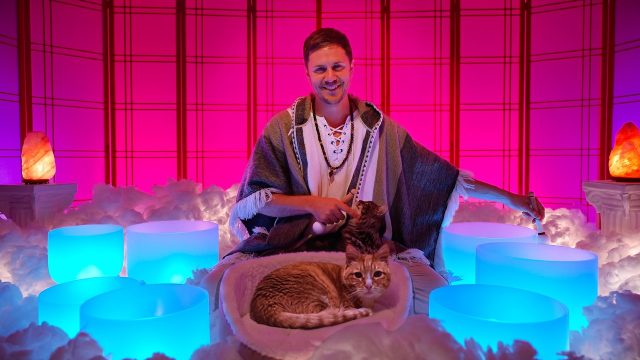
In the modern search for peace and restoration, an ancient practice has found new resonance: the use of crystal singing bowls as instruments of healing. These instruments produce frequencies calibrated to activate the body's energy centers, clear energetic blockages, and guide listeners into profound states of inner alignment. Sound bath sessions—immersive listening experiences built around sustained tones and harmonic frequencies—have become a cornerstone of contemporary wellness routines for those seeking to reconnect with themselves and elevate their spiritual practice.
Crystal singing bowls are precision instruments crafted from pure quartz or other crystalline materials. When struck or played with a mallet, they produce sustained, pure tones that resonate at specific frequencies. Each note corresponds to different energy centers, known in traditional Hindu and Buddhist practice as chakras. The bowls are typically tuned to frequencies believed to align with these centers: root, sacral, solar plexus, heart, throat, third eye, and crown.
The mechanism of sound bath healing rests on the principle that the human body responds to vibration. Sound travels through water—and the human body is roughly 60% water—meaning these frequencies penetrate deeply into tissues and cells. Practitioners and sound healers describe the experience as one where the body's natural relaxation response is activated, moving the nervous system from a state of sympathetic activation (fight-or-flight) into parasympathetic dominance (rest-and-digest). This shift, in turn, allows the body's inherent healing processes to strengthen and accelerate.
Sound healing operates on the understanding that everything vibrates at its own frequency, including human organs and energy systems. Each chakra is associated with a particular frequency: the root chakra with lower frequencies around 396 Hz, the sacral with 417 Hz, and progressively higher frequencies as one moves up the energy ladder. When a singing bowl is played, it emits a frequency range that can target these specific centers.
Beyond the chakras themselves, sound bath sessions are designed to induce a meditative state through what's known as entrainment—the tendency of the brain to synchronize its wave patterns with external rhythmic stimuli. As you listen to the sustained, evolving tones of a crystal bowl, your brainwave frequency naturally aligns with the frequency of the sound. This can shift brain activity from beta waves (associated with waking consciousness and stress) into alpha and theta waves (associated with relaxation, light meditation, and deep introspection).
A sound bath differs from simply listening to music. It is an immersive, often extended session designed to allow the listener to settle into a receptive state. Many practitioners recommend choosing a comfortable listening volume, finding a quiet space, and allowing yourself to be guided by the music for the full duration of the session. Black-screen versions—where the listener experiences only sound without visual distraction—have become popular, as they remove the temptation to attend to imagery and allow full focus on the acoustic experience.
The practice acknowledges that modern life creates chronic stress, which suppresses immune function and can contribute to physical and emotional dis-ease. By activating a relaxed state, sound baths create an environment in which the body can self-regulate, tensions can release, and a sense of spiritual alignment can emerge. Many describe the experience as one of release—letting go of what no longer serves them and reconnecting with a sense of inner peace and higher purpose.
Central to the theory behind crystal singing bowl healing is the concept of chakras—energy vortices located at specific points along the spine. When these centers become blocked due to stress, unprocessed emotion, or energetic stagnation, practitioners believe that physical and emotional symptoms follow. A sound bath session aims to target these blockages directly, using frequencies calibrated to each center to restore flow and alignment.
The root chakra, located at the base of the spine, governs grounding and security. The sacral chakra, below the navel, relates to creativity and emotional flow. The solar plexus chakra handles personal power and will. The heart chakra is the center of love and connection. The throat chakra governs communication. The third eye chakra relates to intuition and inner sight. The crown chakra is the connection point to higher consciousness and spiritual purpose. A comprehensive sound bath session may work through all seven centers, progressively activating and aligning them.
In the language of sound healing, blockages are energetic stagnations—places where energy has become stuck, often due to trauma, limiting beliefs, or unexpressed emotion. A blockage in the throat chakra, for example, might correspond to unexpressed truth or communication difficulties. A heart chakra blockage might manifest as difficulty giving or receiving love. The goal of a sound bath is not to diagnose or treat medical conditions, but to create a state of relaxation and mindfulness in which the body's natural healing processes are enhanced.
The release of blockages is often described as subtle and gradual. Some listeners report feeling emotional shifts, sudden clarity, or a sense of lightness after a session. Others describe physical sensations—tingling, warmth, or a sense of movement through the body. These experiences are understood within sound healing frameworks as signs that stagnant energy is moving and clearing. The resonance of the bowls acts as a gentle catalyst, inviting the system to release what has been held and return to a state of flow.
For those new to sound baths, the practice is accessible and requires no special equipment or training beyond finding a recording or attending a live session. Many practitioners recommend establishing a regular routine—whether weekly, bi-weekly, or as often as feels nourishing. Consistency allows the nervous system to become familiar with the relaxation response and may deepen the experience over time.
The settings that support sound bath practice are those that minimize external distraction. A quiet room, comfortable seating or lying position, and a listening volume that feels immersive without being jarring all contribute to creating the conditions for deep inner work. Some practitioners combine sound baths with other contemplative practices—lighting candles, holding crystals, or setting an intention before the session begins—to amplify the experience and create a more complete ritual.
It is important to note that sound healing operates at the intersection of ancient practice and contemporary wellness culture. The scientific research on sound and frequency healing is growing but remains limited compared to conventional medical approaches. What is well-established is that music and sound can reduce stress, lower blood pressure, decrease heart rate, and promote relaxation—benefits that themselves support overall health and wellbeing. The specific claims about chakra activation and frequency-to-energy-center correspondence come from traditional spiritual frameworks rather than mainstream medical science.
Sound bath practitioners emphasize that these sessions are designed to support mental and physical wellbeing through relaxation and mindfulness, not to replace medical care. The theory is that by creating states of deep calm and reflection, the body's natural healing capabilities are strengthened. This perspective aligns with the growing field of mind-body medicine, which recognizes that psychological states profoundly influence physical health and that practices promoting relaxation, presence, and spiritual connection can be valuable complements to conventional treatment.
If you are drawn to explore sound bath practice, begin with curiosity rather than expectation. Listen to a full session in a quiet, comfortable setting and notice what arises—not just what you think should happen, but what actually occurs in your body and mind. Sound bath practice is subtle and cumulative; the effects often deepen with regular engagement. Consider exploring different bowl types, frequencies, or session lengths to discover what resonates most deeply with you. If the practice supports your wellbeing and spiritual journey, let it become a consistent part of your routine. If you are dealing with physical or mental health concerns, integrate sound baths as a complementary practice alongside appropriate professional care, never as a replacement for it.