BrightStar
BlogMy Tickets
BlogMy Tickets
Saved events
Help & contactSign UpLog in
Events
  • Browse All Events
  • For Seekers
  • Yoga
  • Meditation
  • Breathwork
  • Qigong
  • Sacred Music
  • World Music
  • Medicine Music
  • Sound Healing
  • Ecstatic Dance
  • Ceremony
  • Plant Medicine
  • Energy Healing
  • Satsang & Wisdom
  • Tantra
  • Retreats
  • All Categories →
Destinations
  • Bali
  • Sedona
  • Los Angeles
  • Costa Rica
  • Tulum
  • Byron Bay
  • San Francisco
  • Austin
  • New York
  • San Diego
  • Seattle
  • Portland
  • Miami
  • London
  • Maui
  • Boulder
  • Oakland
  • All Cities →
Platform
  • List Your Event Free
  • Autopilot
  • Join the Movement
  • Sell Globally
  • For Creators
  • For Teams
  • For Writers
  • For Teachers
  • For Kirtan Artists
  • For Studios
  • For Festivals
  • For Retreat Centers
  • For Nonprofits
  • Brand Ambassador
  • Free Ticketing
  • Elevate
  • Amplify
  • The Ecosystem
Features

Ticketing and checkout

  • Ticket categories
  • Assigned seating
  • Custom questions
  • Coupon codes
  • Smart pricing
  • Ticket sharing
  • Waitlist
  • Flexible refunds
  • Digital waivers
  • Tip jar
  • Donations and sliding scale
  • Embed widget
  • Mindful checkout
  • Recurring events
  • Private sessions
  • Online courses
  • Summits
  • Rooms and stays
  • Ticket scanner

Marketing and growth

  • Abandoned cart recovery
  • Visitor recovery
  • Upsells and add-ons
  • Affiliate engine
  • Upsell affiliate network
  • Brand ambassador
  • Meta retargeting
  • Verified buyer network
  • Outbound email marketing
  • Email sequences
  • SMS and WhatsApp
  • Event upsell network
  • Direct mail campaigns
  • SEO engine
  • Syndication
  • Event sharing
  • Custom event pages
  • Artist profiles
  • Link in bio
  • Event blog
  • Blog newsletter

Payments

  • Payments, powered by Stripe
  • Buy now, pay later
  • Apple Wallet
  • Multi currency

Data and operations

  • Team access
  • Message center
  • Reports
  • Analytics reporting
  • Performance reporting
  • Customer data
  • Integrations
  • Switch from another platform

AI

  • Assistant
  • AI FAQ assistant
  • All Features →
Company
  • About
  • FAQ
  • Contact
  • Blog
  • Glossary
  • Guides
  • Inspiration
  • Help Center
  • API Docs
  • Brand Assets
  • Press
  • Terms of Service
  • Privacy Policy

Events

  • Browse All Events
  • For Seekers
  • Yoga
  • Meditation
  • Breathwork
  • Qigong
  • Sacred Music
  • World Music

Destinations

  • Bali
  • Sedona
  • Los Angeles
  • Costa Rica
  • Tulum
  • Byron Bay
  • San Francisco
  • Austin

Platform

  • List Your Event Free
  • Autopilot
  • Join the Movement
  • Sell Globally
  • For Creators
  • For Teams
  • For Writers
  • For Teachers

Features

  • Community Network
  • Abandoned Cart Recovery
  • Ticket Categories
  • Recurring Events
  • Assigned Seating
  • Affiliate Engine
  • Waitlist / Notify
  • All Features →

Company

  • About
  • FAQ
  • Contact
  • Blog
  • Glossary
  • Guides
  • Terms of Service
  • Privacy Policy
Read more

Events

  • Medicine Music
  • Sound Healing
  • Ecstatic Dance
  • Ceremony
  • Plant Medicine
  • Energy Healing
  • Satsang & Wisdom
  • Tantra
  • Retreats
  • All Categories →

Destinations

  • New York
  • San Diego
  • Seattle
  • Portland
  • Miami
  • London
  • Maui
  • Boulder
  • Oakland
  • All Cities →

Platform

  • For Kirtan Artists
  • For Studios
  • For Festivals
  • For Retreat Centers
  • For Nonprofits
  • Brand Ambassador
  • Free Ticketing
  • Elevate
  • Amplify
  • The Ecosystem

Company

  • Inspiration
  • Help Center
  • API Docs
  • Brand Assets
  • Press

Ticketing and checkout

  • Ticket categories
  • Assigned seating
  • Custom questions
  • Coupon codes
  • Smart pricing
  • Ticket sharing
  • Waitlist
  • Flexible refunds
  • Digital waivers
  • Tip jar
  • Donations and sliding scale
  • Embed widget
  • Mindful checkout
  • Recurring events
  • Private sessions
  • Online courses
  • Summits
  • Rooms and stays
  • Ticket scanner

Marketing and growth

  • Abandoned cart recovery
  • Visitor recovery
  • Upsells and add-ons
  • Affiliate engine
  • Upsell affiliate network
  • Brand ambassador
  • Meta retargeting
  • Verified buyer network
  • Outbound email marketing
  • Email sequences
  • SMS and WhatsApp
  • Event upsell network
  • Direct mail campaigns
  • SEO engine
  • Syndication
  • Event sharing
  • Custom event pages
  • Artist profiles
  • Link in bio
  • Event blog
  • Blog newsletter

Payments

  • Payments, powered by Stripe
  • Buy now, pay later
  • Apple Wallet
  • Multi currency

Data and operations

  • Team access
  • Message center
  • Reports
  • Analytics reporting
  • Performance reporting
  • Customer data
  • Integrations
  • Switch from another platform

AI

  • Assistant
  • AI FAQ assistant
Get the app
Download on theApp StoreGet it onGoogle Play
© 2026 BrightStar. All rights reserved. Photo credits · Changelog ·
Inspiration

Warm-Heartedness: Why Intelligence Needs a Kind Heart

Dalai Lama
Dalai Lama
Oct 23, 2026
6 min read

From Dalai Lama

Watch · 6

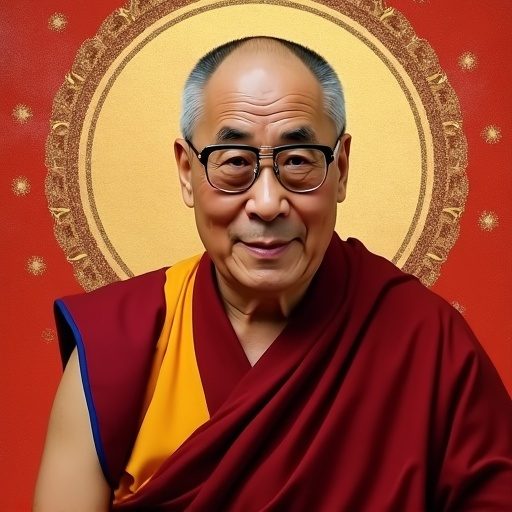
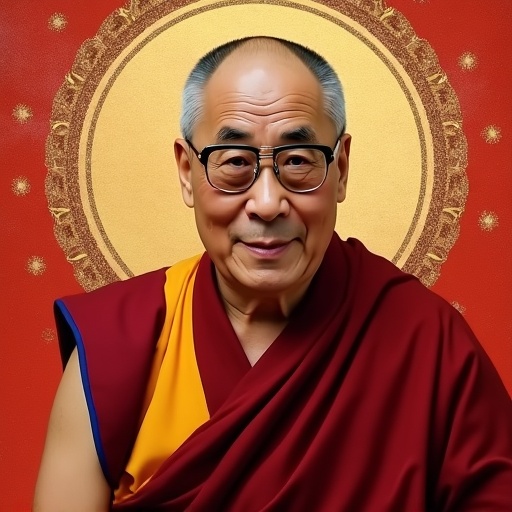
In a clip of barely a minute and forty seconds, the Dalai Lama makes a claim that sounds like simple folk wisdom until you sit with its implications: warm-heartedness, which he treats as the root of altruism, determines how the whole of experience appears to us, and human intelligence, for all its power, becomes dangerous when it is cut off from that warmth. The recording was made on November 11, 2019, and it is spare, unadorned, and built on a short chain of contrasts: a self-centered mind against an open one, analysis against suspicion, wisdom against narrow-mindedness. Read slowly, those contrasts add up to a practical theory of perception, of why we act as we do, and of what happens when a sharp mind serves a closed heart.

Read · 6 sections

What does it mean that a warm heart changes how everything looks?

The clip opens with the central claim. With a warm heart, he says, the entire phenomenon of life appears more positive (0:00). He sets this against the opposite condition. "Too much self-centered mind," he says, and then he gives the inner voice in its own words: "me me me me me" (0:12). When that voice dominates, the same world appears negative and fearful (0:17).

The grammar of that passage matters. He does not say that a self-centered person has a single bad reaction to a single bad event. He says the whole field of experience takes on a different color. A mind organized around itself reads everything it meets as a question of how it will be affected, and a question framed that way almost always returns a threatening answer. The repetition of "me" is a portrait of a loop: every event gets routed back through the self, and the self is the one thing that cannot feel secure in a world that does not bend to it.

This is a claim you can test rather than simply accept. In a tense moment, notice where your attention has gone. If it has collapsed onto your own status, your own comfort, your own grievance, the whole scene may be tilting toward fear for that reason alone. The Dalai Lama's point is that the remedy is not to see less but to widen the frame, and that widening begins with the heart.

Why is altruism more than a religious duty?

At 0:27 he says altruism is important not only according to religious tradition. He then moves the argument outward in a deliberate ladder: first a healthy viewpoint, then a happy society, then a happy world and a happy humanity (0:35 to 0:43). At the top of that ladder he names the key factor directly: "warm-heartedness is the key factor" (0:45).

What is striking is the shift in justification. He does not ask listeners to be altruistic because a text says so. He argues that altruism is healthy, that it produces a healthier way of seeing, and that its effects compound from the individual outward to whole societies. That is a claim about consequences, and it invites a listener to check those consequences in their own life. Does kindness make your viewpoint clearer, or more brittle? Does generosity make your relationships steadier? The clip leaves those questions open and trusts the listener to answer them.

What is the job of human intelligence in this picture?

This is the part of the talk most likely to surprise a listener who expects a warning against thinking. At 0:48 he calls the human brain "wonderful" and says it "should cooperate with warm-heartedness." At 0:57 he says human intelligence is very helpful for one particular task: to analyze the self-centered attitude (0:57 to 1:02).

In other words, intelligence is not the enemy of the heart. It is the instrument that can examine the self-centered habit and expose it. He asks the practical question directly: what is the benefit? His answer is that self-centeredness is short-sighted and narrow-minded (1:05 to 1:12). Intelligence, turned on the self, finds that the self's strategy has a poor return. Then he sets the alternative beside it: altruism, which he describes as the really wise course (1:14 to 1:17).

The argument, then, is not that we should think less but that we should aim thinking at the right object. Analysis pointed at the self tends to produce defensiveness. Analysis pointed at the consequences of selfishness produces a clear case for warmth. The intelligence is the same; the direction changes the outcome.

When does a brilliant mind become dangerous?

The clip's final turn is its most serious. "Sometimes without warm-heartedness," he says, and then he names the hazard: "full suspicion, anger" (1:26 to 1:29). When intelligence operates inside that condition, he says, the wonderful human brain and wonderful human intelligence "sometimes become more dangerous" (1:33 to 1:38).

The warning is precise. He does not say that intelligence is dangerous on its own. He says it becomes dangerous in combination with suspicion and anger. A mind that is capable but suspicious is good at building justifications, at finding the evidence it expects to find, and at making a grievance sound reasonable. Intelligence supplies the skill; suspicion and anger supply the direction. The talk asks the listener to notice that a sophisticated argument can be the most effective vehicle for a closed heart.

This is why the clip frames warm-heartedness not as a sentimental extra but as a condition that intelligence needs to remain safe. Clever people do harm when their cleverness is working for fear.

How can you put these ideas to work?

The clip offers no exercises, and it would be a mistake to invent a method and attribute it to him. But its logic suggests a few practical checks that a reader can run on their own experience. Begin with perception: when a situation looks uniformly threatening, ask whether your attention has returned to yourself. Next, examine the benefit: when you feel the pull of self-centered reasoning, ask honestly what it gains you over time, which is the question he asks at 1:05. Finally, watch for the suspicion-and-anger pattern. If your analysis keeps arriving at the same bitter conclusion about other people, the problem may be the warmth that is missing from the reasoning, not the reasoning itself.

These are readings of his argument, not quotations of it. They are offered as a way of taking a two-minute teaching seriously enough to test it against real days.

Where to go from here

Watch the clip again with the three contrasts in mind: a warm heart against a self-centered one, intelligence that analyzes against intelligence that is fused with suspicion, and altruism as a healthy viewpoint against self-centeredness as a short-sighted one. Then take one ordinary interaction this week and ask which of the two frames you were using. The Dalai Lama's claim is simple to state and hard to live, and the test of it is the moment you feel the whole world tilt toward fear.
Comments

Loading the conversation…

Transcript

[0:00] So, warm-heartedness here. Uh

[0:04] And then

[0:06] entire phenomena appears you more

[0:10] positive.

[0:12] Too much self-centered mind. Just think

[0:15] me me me me me.

[0:17] Then entire phenomena

[0:20] appears something uh negative and fear.

[0:25] So, therefore,

[0:26] the

[0:27] altruism is not only something important

[0:31] according to religious sort of

[0:33] tradition.

[0:34] But

[0:35] healthy viewpoint

[0:37] and happy society

[0:39] and finally

[0:41] happy world

[0:43] happy humanity

[0:45] warm-heartedness is the key factor.

[0:48] And this human

[0:50] wonderful brain

[0:52] should cooperate with warm-heartedness.

[0:57] Human intelligence very helpful

[1:00] to analyze

[1:02] the

[1:03] self-centered attitude. What's the

[1:05] benefit?

[1:08] Self-centered this short-sighted

[1:12] narrow-minded.

[1:14] Think other

[1:15] altruism

[1:17] that really wise. So, human intelligence

[1:22] must combine with warm-heartedness.

[1:26] Sometimes without warm-heartedness and

[1:29] full suspicion anger, then intelligence

[1:33] wonderful human brain wonderful human

[1:36] intelligence they sometimes become more

[1:38] dangerous.

Explore Topics
Warm heartednessAltruismSelf centerednessDalai lama teachingsHuman intelligence
Frequently Asked Questions

Frequently Asked Questions

In this short recording, the Dalai Lama describes warm-heartedness as the key factor for a happy individual, society, and world. He contrasts it with a self-centered mind, which he says makes the whole of experience appear negative and fearful.

He says intelligence becomes dangerous when it operates without warm-heartedness, especially alongside full suspicion and anger. The skill of the mind is not the problem; the emotional direction it serves is.

No. He says altruism is important not only according to religious tradition, but also as a healthy viewpoint that leads to a happy society, world, and humanity.

According to the clip, a self-centered mind filters everything through the question of how it is affected, so the entire phenomenon appears negative and fearful. A warm heart, by contrast, makes the same world appear more positive.

One reading of his talk is to notice when your attention collapses onto yourself, ask what self-centered reasoning actually gains over time, and watch for patterns of suspicion and anger. These are interpretations of his argument, not exercises he prescribes in the clip.

The video was originally recorded on November 11, 2019, according to its description. It runs under two minutes and is a short excerpt rather than a full teaching.

You might also like

View All
What Real Happiness Actually Means Beyond Pleasure
Inspire

What Real Happiness Actually Means Beyond Pleasure

The Dalai Lama reframes happiness as deep satisfaction rather than pleasure, arguing that meaning emerges through struggle and that hope sus…

5 min read
Life Without Regret: Death as a Natural Transition
Inspire

Life Without Regret: Death as a Natural Transition

The Dalai Lama reframes death not as darkness but as a simple change of clothes—the natural outcome of a life lived meaningfully.…

3 min read
Spaciousness of Loving Awareness: A Guide to Sensory Awakening
Inspire

Spaciousness of Loving Awareness: A Guide to Sensory Awakening

Discover how awakening through the senses unlocks a boundless space of awareness and loving presence within you.…

5 min read
Inner Child Healing and the Return to Self-Love
Inspire

Inner Child Healing and the Return to Self-Love

A meditation guide walks you through reconnecting with your inner child to dissolve fragmentation and find your way home to wholeness and se…

7 min read
See allYou might also like→

Continue your journey

More wisdom and gatherings from across the BrightStar directory.

More Articles

Browse the full library of teachings, interviews, and guides.

Back to all articles →

Teachers & Artists

Explore the lineages, musicians, and guides of the conscious world.

Explore artists →

Find an Event

Kirtan, retreats, sound baths, breathwork, festivals — happening soon.

Browse events →
Dalai Lama

Dalai Lama

Artist

Spiritual leader of Tibetan Buddhism and Nobel Peace Prize laureate (1989). Born Lhamo Thondup in 1935, recognized at age two as the reincarnation of the 13th Dalai Lama, he fled into exile in 1959 after the Chinese occupation of Tibet. From his seat in Dharamshala, India, he has worked tirelessly for nonviolence, interfaith dialogue, and the cause of the Tibetan people, becoming one of the most beloved spiritual teachers of our time. His books — including The Art of Happiness, Ethics for the New Millennium, and The Book of Joy — have brought Tibetan Buddhist wisdom to a global audience.

View profile