BrightStar
BlogMy Tickets
BlogMy Tickets
Saved events
Help & contactSign UpLog in
Events
  • Browse All Events
  • For Seekers
  • Yoga
  • Meditation
  • Breathwork
  • Qigong
  • Sacred Music
  • World Music
  • Medicine Music
  • Sound Healing
  • Ecstatic Dance
  • Ceremony
  • Plant Medicine
  • Energy Healing
  • Satsang & Wisdom
  • Tantra
  • Retreats
  • All Categories →
Destinations
  • Bali
  • Sedona
  • Los Angeles
  • Costa Rica
  • Tulum
  • Byron Bay
  • San Francisco
  • Austin
  • New York
  • San Diego
  • Seattle
  • Portland
  • Miami
  • London
  • Maui
  • Boulder
  • Oakland
  • All Cities →
Platform
  • For organizers
  • Join the Movement
  • Sell Globally
  • For Creators
  • For Teams
  • For Writers
  • For Teachers
  • For Kirtan Artists
  • For Studios
  • For Festivals
  • For Retreat Centers
  • For Nonprofits
  • Brand Ambassador
  • Free Ticketing
  • Elevate
  • Amplify
  • The Ecosystem
Features

Ticketing and checkout

  • Ticket categories
  • Assigned seating
  • Custom questions
  • Coupon codes
  • Smart pricing
  • Ticket sharing
  • Waitlist
  • Flexible refunds
  • Digital waivers
  • Tip jar
  • Donations and sliding scale
  • Embed widget
  • Mindful checkout
  • Recurring events
  • Private sessions
  • Online courses
  • Summits
  • Rooms and stays
  • Ticket scanner

Marketing and growth

  • Abandoned cart recovery
  • Visitor recovery
  • Upsells and add-ons
  • Affiliate engine
  • Upsell affiliate network
  • Brand ambassador
  • Meta retargeting
  • Verified buyer network
  • Outbound email marketing
  • Email sequences
  • SMS and WhatsApp
  • Event upsell network
  • Direct mail campaigns
  • SEO engine
  • Syndication
  • Event sharing
  • Custom event pages
  • Artist profiles
  • Link in bio
  • Event blog
  • Blog newsletter

Payments

  • Payments, powered by Stripe
  • Buy now, pay later
  • Apple Wallet
  • Multi currency

Data and operations

  • Team access
  • Message center
  • Reports
  • Analytics reporting
  • Performance reporting
  • Customer data
  • Integrations
  • Switch from another platform

AI

  • Assistant
  • AI FAQ assistant
  • All Features →
Company
  • About
  • FAQ
  • Contact
  • Blog
  • Glossary
  • Guides
  • Inspiration
  • Help Center
  • API Docs
  • Brand Assets
  • Press
  • Terms of Service
  • Privacy Policy

Events

  • Browse All Events
  • For Seekers
  • Yoga
  • Meditation
  • Breathwork
  • Qigong
  • Sacred Music
  • World Music

Destinations

  • Bali
  • Sedona
  • Los Angeles
  • Costa Rica
  • Tulum
  • Byron Bay
  • San Francisco
  • Austin

Platform

  • For organizers
  • Join the Movement
  • Sell Globally
  • For Creators
  • For Teams
  • For Writers
  • For Teachers
  • For Kirtan Artists

Features

  • Community Network
  • Abandoned Cart Recovery
  • Ticket Categories
  • Recurring Events
  • Assigned Seating
  • Affiliate Engine
  • Waitlist / Notify
  • All Features →

Company

  • About
  • FAQ
  • Contact
  • Blog
  • Glossary
  • Guides
  • Terms of Service
  • Privacy Policy
Read more

Events

  • Medicine Music
  • Sound Healing
  • Ecstatic Dance
  • Ceremony
  • Plant Medicine
  • Energy Healing
  • Satsang & Wisdom
  • Tantra
  • Retreats
  • All Categories →

Destinations

  • New York
  • San Diego
  • Seattle
  • Portland
  • Miami
  • London
  • Maui
  • Boulder
  • Oakland
  • All Cities →

Platform

  • For Studios
  • For Festivals
  • For Retreat Centers
  • For Nonprofits
  • Brand Ambassador
  • Free Ticketing
  • Elevate
  • Amplify
  • The Ecosystem

Company

  • Inspiration
  • Help Center
  • API Docs
  • Brand Assets
  • Press

Ticketing and checkout

  • Ticket categories
  • Assigned seating
  • Custom questions
  • Coupon codes
  • Smart pricing
  • Ticket sharing
  • Waitlist
  • Flexible refunds
  • Digital waivers
  • Tip jar
  • Donations and sliding scale
  • Embed widget
  • Mindful checkout
  • Recurring events
  • Private sessions
  • Online courses
  • Summits
  • Rooms and stays
  • Ticket scanner

Marketing and growth

  • Abandoned cart recovery
  • Visitor recovery
  • Upsells and add-ons
  • Affiliate engine
  • Upsell affiliate network
  • Brand ambassador
  • Meta retargeting
  • Verified buyer network
  • Outbound email marketing
  • Email sequences
  • SMS and WhatsApp
  • Event upsell network
  • Direct mail campaigns
  • SEO engine
  • Syndication
  • Event sharing
  • Custom event pages
  • Artist profiles
  • Link in bio
  • Event blog
  • Blog newsletter

Payments

  • Payments, powered by Stripe
  • Buy now, pay later
  • Apple Wallet
  • Multi currency

Data and operations

  • Team access
  • Message center
  • Reports
  • Analytics reporting
  • Performance reporting
  • Customer data
  • Integrations
  • Switch from another platform

AI

  • Assistant
  • AI FAQ assistant
Get the app
Download on theApp StoreGet it onGoogle Play
© 2026 BrightStar. All rights reserved. The BrightStar Guide · Photo credits · Changelog ·
Inspiration

Tara Mantra: Compassion and Devotion in Group Practice

Sharon Salzberg
Sharon Salzberg
Oct 2, 2013
7 min read

From Sharon Salzberg

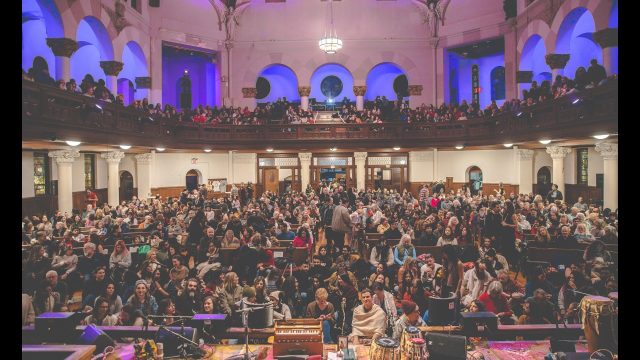
At the 2013 Hay House publication launch for Love Your Enemies (by Robert Thurman and Sharon Salzberg), Grammy-nominated kirtan artist Krishna Das led a closing group Tara mantra. This moment brings together three threads of Buddhist-inspired contemplative practice: the protective and compassionate energy of Tara, the power of collective chanting, and the practical application of loving-kindness doctrine to one's adversaries. The event itself positions mantra not as esoteric practice but as a natural closing gesture to a teaching on transforming enmity into understanding.

Read · 6 sections

What is the Tara mantra and why does it matter in Buddhist practice?

The Tara mantra draws on one of Mahayana Buddhism's most widely revered figures—Tara, a female Buddha or Bodhisattva associated with swift compassion and liberation from fear. In Tibetan Buddhist traditions, which heavily influenced the contemporary Western dharma scene that figures like Sharon Salzberg, Robert Thurman, and Krishna Das inhabit, Tara appears in multiple forms, with Green Tara and White Tara being most prominent. She is not simply a deity to be worshiped but rather an archetype of active compassion—the quality that responds quickly and directly to suffering.

Chanting a Tara mantra is not purely devotional. It functions as a method for aligning one's mind and heart with the qualities Tara embodies. When practitioners repeat a Tara mantra—often in Sanskrit, though transliterated phonetically for Western students—they are training their nervous system and cognitive patterns toward protection, clarity, and compassionate action. The repetitive nature of mantra creates a rhythmic anchor that can quiet discursive thinking and open practitioners to subtler dimensions of awareness.

In the context of a book launch for Love Your Enemies, this choice is particularly apt. Salzberg and Thurman's work directly addresses how to cultivate compassion toward those who harm us—a teaching that requires substantial psychological and spiritual work. Tara's swift, protective compassion offers a symbolic and practical resource for this very transformation.

How does group mantra differ from individual practice?

Krishna Das, known for bringing kirtan and devotional chanting into mainstream Western consciousness, is experienced in facilitating group mantra practice. When a group chants together, several things happen simultaneously. Neurologically, synchronized chanting creates coherence across participants' brainwaves and can induce states of calm activation. Psychologically, group practice dissolves the isolation of individual effort—practitioners feel held by a collective intention. Spiritually, many traditions teach that group practice generates field effects, where the combined focus of multiple minds amplifies the benefit.

At a book launch event, this collective dimension is particularly significant. The gathering itself—people who have come to learn about loving one's enemies—creates a container. The closing mantra is not an afterthought but a embodied seal on the intellectual and emotional work that precedes it. Rather than leaving the event with only conceptual understanding, participants take with them a felt experience of moving toward compassion together.

Krishna Das's role as facilitator is crucial. His Grammy nomination reflects decades of practice and a genuine mastery of how to invite Western audiences into chanting without dogmatism or alienation. He functions as a translator of sorts—not changing the mantra's meaning but making it accessible and inviting.

What is the relationship between mantra practice and the teachings on loving enemies?

Sharon Salzberg's Loving-Kindness: The Revolutionary Art of Happiness (1995) introduced many Western practitioners to the Buddhist meditation practice of metta or loving-kindness. This practice systematically expands circles of compassion: from oneself to loved ones to neutral people to difficult people to all beings. The difficulty, of course, lies in the third and fourth circles—extending compassion to those who have harmed us or who we have harmed.

Robert Thurman, a Columbia University professor and Tibetan Buddhist translator, has spent decades articulating how Buddhist philosophy addresses ethical complexity. His work emphasizes that compassion toward enemies is not sentimental or naive but grounded in clear understanding of interconnection and the nature of suffering. When he and Salzberg collaborated on Love Your Enemies, they were offering both philosophical argument and practical method.

A Tara mantra, chanted collectively at the close of such a teaching, serves as a bridge between insight and embodiment. The mantra works with the nervous system and subtle body in ways that intellectual understanding alone cannot reach. It prepares the practitioner's being—mind, heart, and body—to actually implement the teachings about enemies. The protective and swift quality of Tara is particularly suited to this: protection not from enemies but for the vulnerable place within us where compassion must be risked.

Why perform the closing mantra at a public book launch?

The structure of this event—intellectual content followed by embodied practice—reflects a shift in how dharma has been transmitted in the West. Rather than separating philosophy from practice, or teaching from experience, contemporary teachers increasingly recognize that lasting transformation requires both. A public book launch at a venue like ABC Home & Carpet (a luxury home goods retailer that hosted cultural events) signals that these teachings are not confined to meditation centers or ashrams but belong in the wider world.

By closing with a group mantra, the organizers acknowledged something important: that you cannot think your way into love for your enemies. You must practice it, feel it, move with it. The mantra becomes a vehicle for that practice, and the group becomes a laboratory where compassion can be tested and developed in real time.

Krishna Das's presence—a Western musician deeply trained in Hindu and yogic traditions—also signals inclusivity. He has made devotional chanting a bridge accessible to people with no background in Buddhism, yoga, or any religious tradition. His Grammy nominations reflect that this is serious artistry and spiritual work, not entertainment or appropriation.

How can practitioners work with Tara mantra in their own practice?

For someone new to mantra practice, beginning with a Tara mantra often feels accessible. Unlike some practices that require formal initiation or extensive preparation, Tara practice is generally offered openly. A basic approach involves choosing a Tara mantra—"Om Tare Tuttare Ture Soha" is perhaps the most common—and sitting in a quiet place for 10-20 minutes, repeating it silently or aloud.

The repetition need not be mechanical. Practitioners often coordinate the mantra with breath: one cycle per exhale, or one syllable per breath cycle, depending on the length of the mantra. Attention naturally softens; the discursive mind quiets. Some practitioners visualize Tara—often as a luminous green or white figure—while chanting. Others focus simply on the vibration of the sounds.

For those specifically interested in loving-kindness toward enemies, a practice might combine Tara mantra with Salzberg's metta approach. One could chant the mantra while directing compassionate intention toward a specific person or group with whom one is in conflict. The mantra provides the energetic or emotional support needed to sustain that intention without collapsing into denial or spiritual bypassing.

Group practice, as offered at the book launch, can also be found at yoga studios, meditation centers, and kirtan gatherings throughout most Western cities. Participating in group mantra practice offers benefits—communal support, the power of coherence, exposure to a skilled facilitator—that solitary practice cannot fully provide.

Where to go from here

This closing mantra at Salzberg and Thurman's book launch represents a full circle: teachings on loving enemies are followed by a practice—group chanting of a compassionate mantra—that prepares the heart and body to embody what has been taught. For anyone drawn to this work, several avenues of exploration suggest themselves. Reading Love Your Enemies provides the philosophical and psychological framework. Exploring Sharon Salzberg's work on loving-kindness meditation offers step-by-step instruction in metta practice. Learning about Tara through Tibetan Buddhist teachers or through Krishna Das's recordings introduces the mantra tradition itself. And seeking out live kirtan or group mantra practice offers direct experience of the transformative potential of collective chanting. The video itself—this glimpse of Krishna Das leading a group in Tara mantra—serves as an invitation and a reminder that compassion toward enemies is not an abstract ideal but a practice that can be felt in the body, shared in community, and deepened over time.

Comments

Loading the conversation…

Artists in This Story

Sharon Salzberg

Sharon Salzberg

Meditation Teacher

Sharon Salzberg is a central figure in the field of meditation, a world-renowned teacher, and New York Times bestselling author. She is the co-founder of the Insight Meditation Society in Barre, Massachusetts and has been practicing and studying meditation for over 50 years.

View profile
Krishna Das

Krishna Das

Spiritual Teaching

American kirtan artist and devotional singer who bridges Eastern spirituality and Western music through soulful chanting rooted in bhakti yoga and the teachings of Neem Karoli Baba.

View profile
Explore Topics
Tara mantraCompassion practiceLoving kindnessKirtanGroup chanting
Frequently Asked Questions

Frequently Asked Questions

The Tara mantra aligns the practitioner's mind and heart with qualities of swift compassion, protection, and liberation. Practitioners typically repeat the mantra (commonly "Om Tare Tuttare Ture Soha") silently or aloud for 10-20 minutes, often coordinating it with breath, to quiet discursive thinking and strengthen compassionate intention.

Krishna Das, a Grammy-nominated kirtan artist, has brought devotional chanting into mainstream Western consciousness without dogmatism or alienation. His mastery of facilitating group practice and his blend of Hindu and Western musical traditions make practices like Tara mantra accessible to people without background in Eastern religions.

Intellectual understanding of compassion toward enemies must be embodied and practiced to be transformative. The Tara mantra, performed collectively, bridges insight and experience, preparing the nervous system and heart to actually implement teachings about extending compassion to those who have harmed us.

Tara mantra can be practiced alone or in groups, both with benefits. Individual practice allows consistent daily work, while group practice creates collective coherence, communal support, and field effects that amplify the benefit—as demonstrated at the book launch.

Both practices expand circles of compassion, but use different methods. Loving-kindness meditation systematically extends compassion from self to loved ones to difficult people, while Tara mantra works through sound vibration and devotional alignment. They can be combined: chanting Tara while directing loving-kindness intention toward someone with whom you are in conflict.

You might also like

View All
Engaged Compassion: Opening Hearts Without Hardening in Crisis
Inspire

Engaged Compassion: Opening Hearts Without Hardening in Crisis

In a world of constant connectivity and widespread suffering, how do we maintain open hearts without becoming hardened or overwhelmed? Sharo…

9 min read
Bridge Inner Practice to Meaningful World Action
Inspire

Bridge Inner Practice to Meaningful World Action

Sharon Salzberg's Real Change program teaches how to connect meditation and lovingkindness practice with effective action for the world.…

6 min read
Kirtan Deepens: NYC Urban Retreat Explores Chant Practice
Inspire

Kirtan Deepens: NYC Urban Retreat Explores Chant Practice

An immersive weekend of live-streamed kirtan and dharma teaching from Krishna Das, the Kirtan Wallah Foundation, and guest artists—freely of…

6 min read
Heart of the Path: A Week in Costa Rican Kirtan Retreat
Inspire

Heart of the Path: A Week in Costa Rican Kirtan Retreat

Krishna Das and Nina Rao lead an immersive week-long retreat in Costa Rica combining kirtan, mantra practice, yoga, and open dialogue for sp…

5 min read
See allYou might also like→

Continue your journey

More wisdom and gatherings from across the BrightStar directory.

More Articles

Browse the full library of teachings, interviews, and guides.

Back to all articles →

Teachers & Artists

Explore the lineages, musicians, and guides of the conscious world.

Explore artists →

Find an Event

Kirtan, retreats, sound baths, breathwork, festivals — happening soon.

Browse events →