BrightStar
BlogMy Tickets
BlogMy Tickets
Saved events
Help & contactSign UpLog in
Events
  • Browse All Events
  • Yoga
  • Meditation
  • Breathwork
  • Qigong
  • Sacred Music
  • World Music
  • Medicine Music
  • Sound Healing
  • Ecstatic Dance
  • Ceremony
  • Plant Medicine
  • Energy Healing
  • Satsang & Wisdom
  • Tantra
  • Retreats
  • All Categories →
Destinations
  • Bali
  • Sedona
  • Los Angeles
  • Costa Rica
  • Tulum
  • Byron Bay
  • San Francisco
  • Austin
  • New York
  • San Diego
  • Denver
  • Seattle
  • Portland
  • Miami
  • London
  • Maui
  • Boulder
  • All Cities →
Platform
  • For organizers
  • Join the Movement
  • Sell Globally
  • For Creators
  • For Teams
  • For Writers
  • For Teachers
  • For Kirtan Artists
  • For Studios
  • For Festivals
  • For Retreat Centers
  • For Nonprofits
  • Brand Ambassador
  • Free Ticketing
  • Pro
  • Amplify
  • The Ecosystem
Features

Ticketing and checkout

  • Ticket categories
  • Assigned seating
  • Custom questions
  • Coupon codes
  • Smart pricing
  • Ticket sharing
  • Waitlist
  • Flexible refunds
  • Digital waivers
  • Tip jar
  • Donations and sliding scale
  • Embed widget
  • Mindful checkout
  • Recurring events
  • Private sessions
  • Online courses
  • Summits
  • Rooms and stays
  • Ticket scanner

Marketing and growth

  • Abandoned cart recovery
  • Visitor recovery
  • Upsells and add-ons
  • Affiliate engine
  • Upsell affiliate network
  • Brand ambassador
  • Meta retargeting
  • Verified buyer network
  • Outbound email marketing
  • Email sequences
  • SMS and WhatsApp
  • Event upsell network
  • Direct mail campaigns
  • SEO engine
  • Syndication
  • Event sharing
  • Custom event pages
  • Artist profiles
  • Link in bio
  • Event blog
  • Blog newsletter

Payments

  • Payments, powered by Stripe
  • Buy now, pay later
  • Apple Wallet
  • Multi currency

Data and operations

  • Team access
  • Message center
  • Reports
  • Analytics reporting
  • Performance reporting
  • Customer data
  • Integrations
  • Switch from another platform

AI

  • Assistant
  • AI FAQ assistant
  • All Features →
Company
  • About
  • FAQ
  • Contact
  • Blog
  • Glossary
  • Guides
  • Inspiration
  • Help Center
  • API Docs
  • Brand Assets
  • Press
  • Terms of Service
  • Privacy Policy

Events

  • Browse All Events
  • Yoga
  • Meditation
  • Breathwork
  • Qigong
  • Sacred Music
  • World Music
  • Medicine Music

Destinations

  • Bali
  • Sedona
  • Los Angeles
  • Costa Rica
  • Tulum
  • Byron Bay
  • San Francisco
  • Austin

Platform

  • For organizers
  • Join the Movement
  • Sell Globally
  • For Creators
  • For Teams
  • For Writers
  • For Teachers
  • For Kirtan Artists

Features

  • Community Network
  • Abandoned Cart Recovery
  • Ticket Categories
  • Recurring Events
  • Assigned Seating
  • Affiliate Engine
  • Waitlist / Notify
  • All Features →

Company

  • About
  • FAQ
  • Contact
  • Blog
  • Glossary
  • Guides
  • Terms of Service
  • Privacy Policy
Read more

Events

  • Sound Healing
  • Ecstatic Dance
  • Ceremony
  • Plant Medicine
  • Energy Healing
  • Satsang & Wisdom
  • Tantra
  • Retreats
  • All Categories →

Destinations

  • New York
  • San Diego
  • Denver
  • Seattle
  • Portland
  • Miami
  • London
  • Maui
  • Boulder
  • All Cities →

Platform

  • For Studios
  • For Festivals
  • For Retreat Centers
  • For Nonprofits
  • Brand Ambassador
  • Free Ticketing
  • Pro
  • Amplify
  • The Ecosystem

Company

  • Inspiration
  • Help Center
  • API Docs
  • Brand Assets
  • Press

Ticketing and checkout

  • Ticket categories
  • Assigned seating
  • Custom questions
  • Coupon codes
  • Smart pricing
  • Ticket sharing
  • Waitlist
  • Flexible refunds
  • Digital waivers
  • Tip jar
  • Donations and sliding scale
  • Embed widget
  • Mindful checkout
  • Recurring events
  • Private sessions
  • Online courses
  • Summits
  • Rooms and stays
  • Ticket scanner

Marketing and growth

  • Abandoned cart recovery
  • Visitor recovery
  • Upsells and add-ons
  • Affiliate engine
  • Upsell affiliate network
  • Brand ambassador
  • Meta retargeting
  • Verified buyer network
  • Outbound email marketing
  • Email sequences
  • SMS and WhatsApp
  • Event upsell network
  • Direct mail campaigns
  • SEO engine
  • Syndication
  • Event sharing
  • Custom event pages
  • Artist profiles
  • Link in bio
  • Event blog
  • Blog newsletter

Payments

  • Payments, powered by Stripe
  • Buy now, pay later
  • Apple Wallet
  • Multi currency

Data and operations

  • Team access
  • Message center
  • Reports
  • Analytics reporting
  • Performance reporting
  • Customer data
  • Integrations
  • Switch from another platform

AI

  • Assistant
  • AI FAQ assistant
Get the app
Download on theApp StoreGet it onGoogle Play
© 2026 BrightStar. All rights reserved. BrightStar Selection · Photo credits · Changelog ·
Inspiration

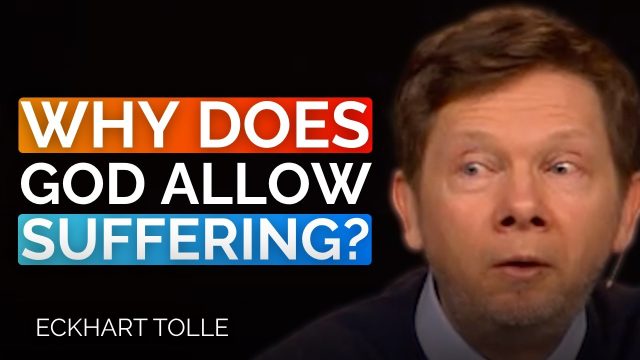
Stop Resisting Consciousness: Why We Choose Suffering

Eckhart Tolle
Eckhart Tolle
Sep 10, 2025
7 min read

From Eckhart Tolle

Eckhart Tolle examines the paradoxical human tendency to resist consciousness and personal growth—what he calls a "perverse pleasure" in choosing suffering over evolution. Rather than moving toward greater awareness and freedom, many people unconsciously prefer the familiar pain of their conditioning, habitual patterns, and ego-driven narratives. Understanding this resistance is the first step toward dissolving it and stepping into a more awakened, present way of being.

Read · 8 sections

What Does It Mean to Resist Consciousness?

Consciousness, in Tolle's framework, is not a mystical abstraction but a practical shift in awareness—the capacity to observe your thoughts, emotions, and reactions without being completely identified with them. Resisting consciousness means actively choosing not to see clearly, not to question your habitual patterns, and not to expand beyond the prison of your conditioned mind.

When you resist consciousness, you are essentially saying no to freedom. Instead, you remain locked in a cycle where the same thoughts generate the same emotions, which trigger the same behaviors, which produce the same suffering. This is not an accident or a sign of weakness; it is, Tolle suggests, a choice made at an unconscious level—often because that resistance feels safer or more familiar than the unknown territory of awakeness.

Why Do We Take Perverse Pleasure in Suffering?

The central insight Tolle explores is that human beings often derive a strange, counterintuitive satisfaction from their own pain and limitation. This "perverse pleasure" operates below conscious awareness. Several mechanisms are at work:

  • The ego's need for identity: Your suffering and your problems feel like "you." They give your mind a narrative, a story it can tell repeatedly. Without them, the ego fears it will disappear or become irrelevant. Strangely, a painful identity feels safer than no identity at all.
  • Familiarity over freedom: Even when suffering is obvious and exhausting, it is known. The mind prefers the devil it knows to an uncertain future. Waking up requires stepping into the unknown, which triggers fear at the deepest levels of the unconscious.
  • Secondary gain: Suffering often comes with subtle payoffs—attention from others, justification for inaction, avoidance of responsibility, or an excuse to remain small. The pleasure is "perverse" because you are unconsciously profiting from your own pain.
  • The addictive quality of emotion: Even negative emotions create a burst of energy and intensity that the nervous system can become dependent on. Drama, worry, and resentment are emotionally stimulating. In contrast, peace and presence can initially feel boring or empty to a mind addicted to turbulence.

How Does Conditioning Lock Us Into Resistance?

From earliest childhood, you absorb patterns from your family, culture, and environment. You learn which emotions are acceptable, which thoughts to focus on, what kind of person you are supposed to be. Over time, these patterns calcify into what Tolle calls the "pain body"—a reservoir of accumulated emotional suffering that becomes part of your identity.

Once established, this conditioning runs on autopilot. You do not consciously decide to resist growth; instead, you simply follow the neural pathways that have been worn deepest. The mind replicates yesterday's drama because that is what it knows. And because you have no awareness of the pattern itself—no conscious distance from it—you experience your resistance as inevitable, as simply "how life is" rather than as a choice.

What Is the Role of the Ego in Resisting Consciousness?

The ego—the constructed sense of separate self—depends entirely on maintaining your pain. Without your story of being victimized, injured, not good enough, or special in your suffering, the ego loses its primary organizing principle. For the ego to survive, it must keep you identified with your thoughts, emotionally reactive, and locked in time (replaying past hurts or fearing future loss).

When you begin to awaken to consciousness, you start to see through the ego's narratives. You notice that your thoughts are not fact, that your emotional reactions have a pattern, that you are not your story. This transparency is exactly what the ego fears most. Rather than allow this dissolution, the ego will sometimes intensify its grip—it will manufacture more drama, more justification for suffering, more reasons why you cannot change. It fights for its survival.

Why Is Presence So Threatening to the Unconscious Mind?

Presence—the quality of being fully here now, rather than lost in thought about past or future—dissolves suffering because suffering exists only in time. Worry and regret require memory and projection. Resentment requires a story you keep telling. Anxiety requires imagined futures. But in the actual present moment, in pure awareness of what is, these mental constructs evaporate.

This is why the unconscious mind resists presence so violently. Presence is a threat to the entire edifice of ego and identity. The untrained mind will go to extraordinary lengths to escape the present moment—through distraction, rumination, fantasy, substance use, compulsive thinking, or endless planning. Anything but here. Anything but now. Because in the now, there is nowhere to hide and nothing to defend.

How Does Resistance Show Up in Daily Life?

Resistance to consciousness is not rare or exotic—it is everywhere. You see it in the moment you recognize a pattern in your behavior but choose not to examine it. You see it in the way you replay conversations in your mind, justifying your position rather than opening to the other person's perspective. You see it in how you defend your suffering, insisting that your circumstances are uniquely difficult and therefore you have a right to remain angry or afraid.

It appears in procrastination, in addiction, in staying in situations that no longer serve you, in relationships where you collude with someone's unconsciousness because it is easier than triggering change. It appears in how you make yourself right and others wrong, how you collect evidence for your story about who you are and what the world is like. Every one of these patterns is a form of resistance to the clarity and freedom that consciousness offers.

What Happens When You Stop Resisting?

The moment you withdraw your unconscious agreement to remain asleep, things begin to shift. This does not necessarily mean dramatic transformation overnight. Instead, it begins as a subtle shift in awareness—a slight distance between you and your thoughts, a moment of noticing that you are observing your emotion rather than being completely consumed by it.

As this gap widens, the habitual patterns lose their automaticity. You realize that the voice in your head is not you. You see that your emotional reactions have a predictable structure. You begin to recognize the moment just before you act out an old pattern, and in that recognition, you have the freedom to choose something different. This freedom does not come from willpower or self-discipline; it comes from seeing clearly what is actually happening.

The "perverse pleasure" in suffering begins to lose its charge. You notice how exhausting it is to maintain a story, to stay identified with pain, to keep yourself separate from the wholeness of the present moment. What once felt necessary—the drama, the justification, the constant inner commentary—gradually reveals itself as optional.

Where to Go From Here

If you recognize yourself in this discussion, the first step is not to try harder or to force yourself to change. Effort and force are themselves forms of resistance. Instead, begin to cultivate a simple, nonjudgmental awareness of how you are resisting consciousness right now. Notice when you are replaying a grievance, lost in worry, or defending a story about yourself. Do not judge yourself for it; simply observe.

The clarity itself is transformative. As you see your patterns with increasing honesty, the energy they have held begins to dissolve naturally. You do not need to overcome your conditioning through willpower; you need to see it clearly enough that you no longer unconsciously believe in it. That seeing is consciousness itself.

Comments

Loading the conversation…

The Artist in This Story

Eckhart Tolle

Eckhart Tolle

Spiritual Teacher

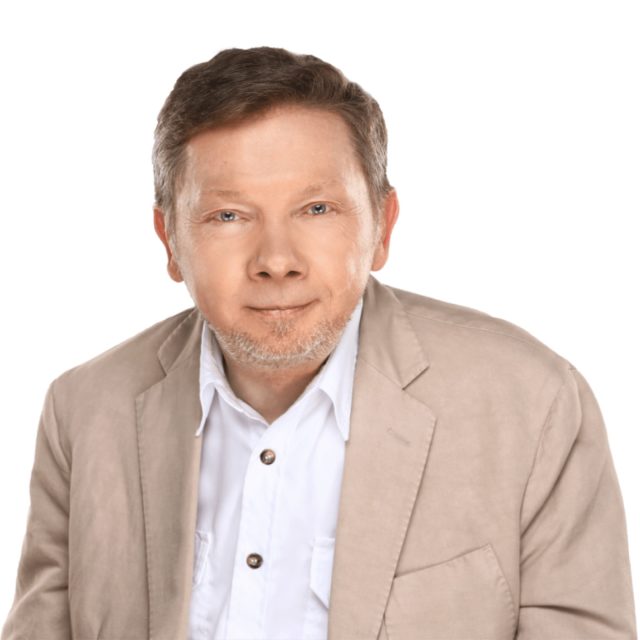
Eckhart Tolle is a spiritual teacher and author whose bestsellers The Power of Now and A New Earth have introduced millions to living in the present moment, and who sees awakened Presence as the essential next step in human evolution.

View profile
Explore Topics
ConsciousnessEgoSufferingPresent momentResistance
Frequently Asked Questions

Frequently Asked Questions

According to Tolle, people unconsciously choose suffering because it provides identity, familiarity, and secondary gain—attention, justification for inaction, or an excuse to remain small. The pain becomes part of how you know yourself, and the ego fears that letting go of suffering means losing your sense of self.

Resisting consciousness means choosing not to see your habitual patterns clearly, not to question your conditioned thoughts, and not to expand beyond the prison of your conditioned mind. It is an unconscious decision to remain identified with your thoughts and emotions rather than developing awareness of them.

The ego depends on your pain for its survival because suffering provides the ego with a narrative, identity, and justification for existing. Without your story of being hurt or victimized, the ego loses its primary organizing principle, so it intensifies drama to keep you identified with suffering.

Presence dissolves suffering because suffering exists only in time—in thoughts about the past or future. The present moment offers nowhere to hide from the truth, which threatens the ego's entire structure. The unconscious mind will resist presence through distraction, rumination, and compulsive thinking.

The first step is to cultivate nonjudgmental awareness of how you are resisting consciousness in the moment—noticing when you replay grievances, worry, or defend stories about yourself. This seeing itself is consciousness and gradually dissolves the patterns without requiring willpower or force.

No—effort and force are themselves forms of resistance. Instead, clarity and honest observation of your patterns naturally dissolve their energy. You do not need to overcome conditioning through willpower; you need to see it clearly enough that you no longer unconsciously believe in it.

The perverse pleasure is the strange, counterintuitive satisfaction you derive from your own suffering—the emotional intensity, the drama, the familiarity of pain, and the secondary gains like attention or justification for inaction. It operates below conscious awareness but strongly motivates you to maintain suffering.

You might also like

View All
God Beyond the Sky: Rethinking Divine Nature
Inspire

God Beyond the Sky: Rethinking Divine Nature

God is not an external judge deciding human suffering. Suffering itself becomes the mechanism through which consciousness awakens to itself.…

6 min read
God, Suffering, and the One Life Across Traditions
Inspire

God, Suffering, and the One Life Across Traditions

Eckhart Tolle explores how Islam, Buddhism, and Greek philosophy all point to the same ultimate reality—and why the problem of suffering dis…

7 min read
Kirtan as Sacred Thirst: A Closing Ceremony with Krishna Das
Inspire

Kirtan as Sacred Thirst: A Closing Ceremony with Krishna Das

Krishna Das closes NYC's annual kirtan weekend with a final ceremony of devotional chanting, blending musical innovation with timeless Hindu…

6 min read
Direct Recognition of Pure Being Beyond Mind
Inspire

Direct Recognition of Pure Being Beyond Mind

A guide to recognizing the unchanging witness beneath thought. This satsang shows how to find the stability that observes all mental activit…

9 min read
See allYou might also like→

Continue your journey

More wisdom and gatherings from across the BrightStar directory.

More Articles

Browse the full library of teachings, interviews, and guides.

Back to all articles →

Teachers & Artists

Explore the lineages, musicians, and guides of the conscious world.

Explore artists →

Find an Event

Kirtan, retreats, sound baths, breathwork, festivals — happening soon.

Browse events →