BrightStar
BlogMy Tickets
BlogMy Tickets
Saved events
Help & contactSign UpLog in
Events
  • Browse All Events
  • Yoga
  • Meditation
  • Breathwork
  • Qigong
  • Sacred Music
  • World Music
  • Medicine Music
  • Sound Healing
  • Ecstatic Dance
  • Ceremony
  • Plant Medicine
  • Energy Healing
  • Satsang & Wisdom
  • Tantra
  • Retreats
  • All Categories →
Destinations
  • Bali
  • Sedona
  • Los Angeles
  • Costa Rica
  • Tulum
  • Byron Bay
  • San Francisco
  • Austin
  • New York
  • San Diego
  • Denver
  • Seattle
  • Portland
  • Miami
  • London
  • Maui
  • Boulder
  • All Cities →
Platform
  • For organizers
  • Join the Movement
  • Sell Globally
  • For Creators
  • For Teams
  • For Writers
  • For Teachers
  • For Kirtan Artists
  • For Studios
  • For Festivals
  • For Retreat Centers
  • For Nonprofits
  • Brand Ambassador
  • Free Ticketing
  • Pro
  • Amplify
  • The Ecosystem
Features

Ticketing and checkout

  • Ticket categories
  • Assigned seating
  • Custom questions
  • Coupon codes
  • Smart pricing
  • Ticket sharing
  • Waitlist
  • Flexible refunds
  • Digital waivers
  • Tip jar
  • Donations and sliding scale
  • Embed widget
  • Mindful checkout
  • Recurring events
  • Private sessions
  • Online courses
  • Summits
  • Rooms and stays
  • Ticket scanner

Marketing and growth

  • Abandoned cart recovery
  • Visitor recovery
  • Upsells and add-ons
  • Affiliate engine
  • Upsell affiliate network
  • Brand ambassador
  • Meta retargeting
  • Verified buyer network
  • Outbound email marketing
  • Email sequences
  • SMS and WhatsApp
  • Event upsell network
  • Direct mail campaigns
  • SEO engine
  • Syndication
  • Event sharing
  • Custom event pages
  • Artist profiles
  • Link in bio
  • Event blog
  • Blog newsletter

Payments

  • Payments, powered by Stripe
  • Buy now, pay later
  • Apple Wallet
  • Multi currency

Data and operations

  • Team access
  • Message center
  • Reports
  • Analytics reporting
  • Performance reporting
  • Customer data
  • Integrations
  • Switch from another platform

AI

  • Assistant
  • AI FAQ assistant
  • All Features →
Company
  • About
  • FAQ
  • Contact
  • Blog
  • Glossary
  • Guides
  • Inspiration
  • Help Center
  • API Docs
  • Brand Assets
  • Press
  • Terms of Service
  • Privacy Policy

Events

  • Browse All Events
  • Yoga
  • Meditation
  • Breathwork
  • Qigong
  • Sacred Music
  • World Music
  • Medicine Music

Destinations

  • Bali
  • Sedona
  • Los Angeles
  • Costa Rica
  • Tulum
  • Byron Bay
  • San Francisco
  • Austin

Platform

  • For organizers
  • Join the Movement
  • Sell Globally
  • For Creators
  • For Teams
  • For Writers
  • For Teachers
  • For Kirtan Artists

Features

  • Community Network
  • Abandoned Cart Recovery
  • Ticket Categories
  • Recurring Events
  • Assigned Seating
  • Affiliate Engine
  • Waitlist / Notify
  • All Features →

Company

  • About
  • FAQ
  • Contact
  • Blog
  • Glossary
  • Guides
  • Terms of Service
  • Privacy Policy
Read more

Events

  • Sound Healing
  • Ecstatic Dance
  • Ceremony
  • Plant Medicine
  • Energy Healing
  • Satsang & Wisdom
  • Tantra
  • Retreats
  • All Categories →

Destinations

  • New York
  • San Diego
  • Denver
  • Seattle
  • Portland
  • Miami
  • London
  • Maui
  • Boulder
  • All Cities →

Platform

  • For Studios
  • For Festivals
  • For Retreat Centers
  • For Nonprofits
  • Brand Ambassador
  • Free Ticketing
  • Pro
  • Amplify
  • The Ecosystem

Company

  • Inspiration
  • Help Center
  • API Docs
  • Brand Assets
  • Press

Ticketing and checkout

  • Ticket categories
  • Assigned seating
  • Custom questions
  • Coupon codes
  • Smart pricing
  • Ticket sharing
  • Waitlist
  • Flexible refunds
  • Digital waivers
  • Tip jar
  • Donations and sliding scale
  • Embed widget
  • Mindful checkout
  • Recurring events
  • Private sessions
  • Online courses
  • Summits
  • Rooms and stays
  • Ticket scanner

Marketing and growth

  • Abandoned cart recovery
  • Visitor recovery
  • Upsells and add-ons
  • Affiliate engine
  • Upsell affiliate network
  • Brand ambassador
  • Meta retargeting
  • Verified buyer network
  • Outbound email marketing
  • Email sequences
  • SMS and WhatsApp
  • Event upsell network
  • Direct mail campaigns
  • SEO engine
  • Syndication
  • Event sharing
  • Custom event pages
  • Artist profiles
  • Link in bio
  • Event blog
  • Blog newsletter

Payments

  • Payments, powered by Stripe
  • Buy now, pay later
  • Apple Wallet
  • Multi currency

Data and operations

  • Team access
  • Message center
  • Reports
  • Analytics reporting
  • Performance reporting
  • Customer data
  • Integrations
  • Switch from another platform

AI

  • Assistant
  • AI FAQ assistant
Get the app
Download on theApp StoreGet it onGoogle Play
© 2026 BrightStar. All rights reserved. BrightStar Selection · Photo credits · Changelog ·
Inspiration

Opposition: Understanding Duality and Resistance in Consciousness

Deepak Chopra
Deepak Chopra
Sep 26, 2014
7 min read

From Deepak Chopra

Opposition is not merely a conflict between opposing forces but a fundamental feature of consciousness and existence. In this teaching, Deepak Chopra examines how duality shapes human experience, the role resistance plays in suffering, and how understanding opposition leads to integration rather than rejection. The talk invites listeners to move beyond the impulse to eliminate or overcome what we oppose, instead recognizing opposition as a mirror for self-awareness and a gateway to wholeness.

Read · 7 sections

What Is Opposition in the Context of Consciousness?

Opposition forms the basis of how consciousness experiences itself. Without contrast—light and dark, pleasure and pain, self and other—there would be no discernible reality, no sensation, no awareness. Deepak Chopra teaches that opposition is not a flaw in the universe but its structural principle. Every object, thought, and emotion exists in relationship to its opposite, and this polarity allows consciousness to know itself through differentiation.

When we speak of opposition, we typically think of conflict: the struggle between desire and aversion, will and circumstance, ego and truth. Yet Chopra's teaching reframes opposition as a dynamic interplay rather than a battle. The opposing forces—thesis and antithesis—are not enemies seeking destruction but complementary aspects of a larger whole seeking integration. This reframing has profound implications for how we approach our inner struggles and external conflicts.

Why Does the Mind Resist Opposition?

The human mind has a natural tendency to favor one pole while rejecting its opposite. We want happiness without sadness, success without failure, love without loss. This preference, rooted in our survival instincts, creates what Chopra calls "opposition" in the psychological sense—an internal stance of resistance against what we deem unacceptable or unwanted.

This resistance is the true source of suffering. When we oppose our experience—fighting against pain, denying fear, rejecting anger—we create a secondary layer of distress. The pain itself becomes compounded by our judgment that it shouldn't be there. This is where the insight becomes therapeutic: suffering arises not from opposition in the cosmic sense but from our resistance to opposition. We suffer when we oppose what is actually occurring.

The ego's survival strategy is built on this binary thinking: safe and unsafe, right and wrong, worthy and unworthy. Yet this either-or mindset locks us into endless internal conflict. Chopra teaches that liberation begins when we recognize that the mind's resistance to opposition is itself the obstacle to peace.

How Does Opposition Reveal the Self?

Opposition serves as a mirror. When we encounter something we oppose—a quality in another person, a circumstance we despise, an emotion we reject—we are seeing a reflected aspect of our own consciousness. The Sanskrit concept of projection appears here: we cannot oppose something unless it first registers in our awareness, and awareness only registers what already exists in consciousness in some form.

This means that every opposition in our life points back to an internal conflict we have not yet integrated. If we are intensely opposed to someone's arrogance, we may be encountering our own unacknowledged capacity for arrogance. If we oppose weakness, we are rejecting our own vulnerability. This is not moral blame—it is recognition. The opposition reveals what we have dissociated or repressed.

By becoming conscious of this dynamic, we reclaim the energy bound up in resistance. Instead of exiling parts of ourselves, we create the conditions for wholeness. Opposition, then, becomes a teaching tool, a map of where consciousness is fragmenting and where integration is needed.

Can Opposition Transform Into Integration?

Chopra's core insight is that opposition does not need to be overcome through force; it needs to be understood. When we stop fighting what opposes us—externally or internally—something shifts. The tension itself becomes workable. Instead of imagining that we must defeat one pole to access the other, we can hold both simultaneously in awareness.

This is the essence of non-dual philosophy: the idea that apparent opposites are expressions of a singular reality. Night and day are one rotation of the Earth. Yin and yang together form a whole. Masculine and feminine energies exist within every person. When the mind can hold this paradox—that opposition is real and, simultaneously, that opposites are one—a new freedom emerges.

Integration does not mean that opposites merge into blandness or indifference. Rather, it means we develop the capacity to navigate between poles without being enslaved to either one. A person who has integrated fear does not become fearless (a suppression) but rather fearless, meaning they can feel fear without it controlling them. They can respond to genuine danger while not conjuring threat in safe situations.

What Is the Spiritual Significance of Opposition?

From a contemplative perspective, opposition is inseparable from incarnation and embodiment. To have a body is to exist in time, space, and duality. Every spiritual path recognizes this: the goal is not to escape opposition but to transcend identification with it. The Bhagavad Gita speaks of the yogi who remains "unshaken" while all opposites—victory and defeat, heat and cold, praise and blame—play out around them. This equanimity is not indifference but a refined awareness that includes opposition without being claimed by it.

Chopra's teaching aligns with this: spiritual maturity is measured not by the absence of opposition in life but by the presence of non-resistance to opposition. The Buddha taught the Middle Way, not as a compromise between extremes but as a path that moves through and beyond duality. The Christian mystic finds God in suffering as much as in joy. The Sufi uses the ego's own opposition as friction for transformation.

Opposition, then, becomes a doorway. It signals the places where consciousness is still contracting, still believing in separation, still resisting reality. And where there is contraction, there is possibility for expansion.

How Can We Practice Non-Resistance to Opposition?

The practice begins with awareness. Instead of automatically resisting what appears opposed to us, we pause and observe: What am I opposing right now? What quality, person, or circumstance is triggering me? Then, rather than fighting it, we ask: What does this opposition show me about myself?

This inquiry is not about achieving a particular answer but about shifting the stance from combat to curiosity. Even in that shift, the nervous system settles. The belief that we must fight to survive, win, or be right can begin to soften.

As we practice this over time, something remarkable happens. We develop what Chopra calls "witness consciousness"—the capacity to observe the play of opposites without being pulled into the game. We can feel sadness without believing we are sad. We can encounter someone's anger without absorbing it as a threat. This is not dissociation but discrimination—the ability to participate in life while not being colonized by its dramas.

Where to go from here

To deepen this work, begin noticing where you resist in your daily life. What situations, emotions, or people trigger an impulse to push away or overcome? Journal about these oppositions without trying to fix them. Notice whether resistance itself creates additional suffering. Explore practices that develop equanimity—meditation, conscious breathing, or contemplative inquiry—that train the mind to hold paradox. Read philosophical texts on non-duality (Advaita Vedanta, the Tao Te Ching, the Upanishads) to understand opposition as a gateway rather than a trap. Finally, consider working with a therapist, spiritual director, or teacher who can help you identify the parts of yourself you have been projecting onto your oppositions, reclaiming your wholeness in the process.

Comments

Loading the conversation…

The Artist in This Story

Deepak Chopra

Deepak Chopra

Spiritual Teacher

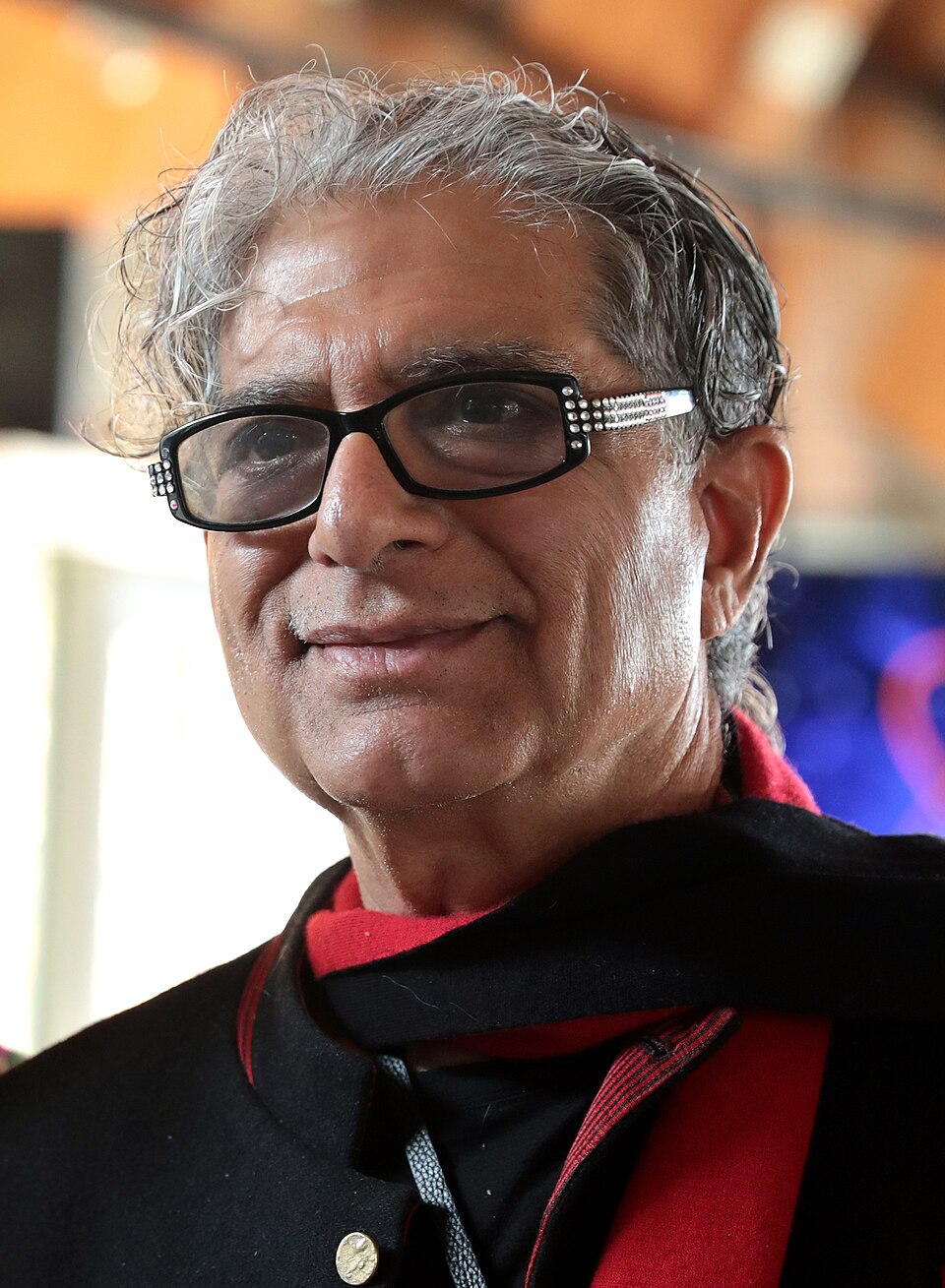
Deepak Chopra, MD, is a physician and author who blends ancient spiritual wisdom with modern science to advance holistic well-being and the boundless potential of human consciousness.

View profile
Explore Topics
OppositionDualityConsciousnessResistanceNon duality
Frequently Asked Questions

Frequently Asked Questions

Opposition refers to the fundamental duality in consciousness—the existence of contrasting poles like light and dark, pleasure and pain. Rather than a flaw, Chopra teaches that opposition is how consciousness knows itself. The real problem is not opposition itself but our resistance to it, which creates suffering.

Resistance adds a secondary layer of pain to primary experience. If you feel sadness, the sadness is one thing; but if you resist the sadness—believing it shouldn't be there—that resistance compounds the suffering. Liberation comes from accepting what is actually present rather than fighting it.

When you strongly oppose a quality in another person, you are likely encountering a disowned or repressed aspect of yourself. Opposition acts as a mirror, showing where your own consciousness is fragmented. Recognition of this projection is the first step toward integration.

Yes. Integration does not mean the opposites merge into sameness but that you develop the capacity to hold both poles in awareness simultaneously without being enslaved to either. This creates freedom and equanimity—you can feel fear without fear controlling you.

Equanimity is a refined awareness that includes opposition without being identified with it; indifference is a numbing avoidance of feeling. Equanimity allows you to engage fully with life while remaining unshaken by its ups and downs.

Start by observing where you resist—in emotions, people, or situations—without trying to fix it. Ask what the opposition reveals about you. Practices like meditation and contemplative inquiry develop witness consciousness, the capacity to observe the play of opposites without being pulled into the drama.

You might also like

View All
Acceptance: The Foundation of Inner Peace and Healing
Inspire

Acceptance: The Foundation of Inner Peace and Healing

Deepak Chopra explores acceptance as a core principle of spiritual practice and emotional well-being. Learn why embracing what is transforms…

6 min read
Chakra Seed Mantras: Lam, Vam, Ram, Yan, Ham, Sham, Om
Inspire

Chakra Seed Mantras: Lam, Vam, Ram, Yan, Ham, Sham, Om

Learn the seven chakra seed mantras and how to use them for balancing body, mind, and soul through guided vocal practice with Deepak Chopra.…

8 min read
Medicine Buddha Practice: Feeling Beneath the Thinking
Inspire

Medicine Buddha Practice: Feeling Beneath the Thinking

Lama Rod Owens opens a Monday-night Medicine Buddha session six years into the practice, teaching how to feel an experience instead of think…

10 min read
We Are All Visitors to This Material World: A Gita Reflection
Inspire

We Are All Visitors to This Material World: A Gita Reflection

In a 22-second clip, Radhika Das frames human life as a temporary visit, not a permanent residence. The idea draws on Bhagavad-gītā 8.15 and…

3 min read
See allYou might also like→

Continue your journey

More wisdom and gatherings from across the BrightStar directory.

More Articles

Browse the full library of teachings, interviews, and guides.

Back to all articles →

Teachers & Artists

Explore the lineages, musicians, and guides of the conscious world.

Explore artists →

Find an Event

Kirtan, retreats, sound baths, breathwork, festivals — happening soon.

Browse events →