BrightStar
BlogMy Tickets
BlogMy Tickets
Saved events
Help & contactSign UpLog in
Events
  • Browse All Events
  • Yoga
  • Meditation
  • Breathwork
  • Qigong
  • Sacred Music
  • World Music
  • Medicine Music
  • Sound Healing
  • Ecstatic Dance
  • Ceremony
  • Plant Medicine
  • Energy Healing
  • Satsang & Wisdom
  • Tantra
  • Retreats
  • All Categories →
Destinations
  • Bali
  • Sedona
  • Los Angeles
  • Costa Rica
  • Tulum
  • Byron Bay
  • San Francisco
  • Austin
  • New York
  • San Diego
  • Denver
  • Seattle
  • Portland
  • Miami
  • London
  • Maui
  • Boulder
  • All Cities →
Platform
  • For organizers
  • Join the Movement
  • Sell Globally
  • For Creators
  • For Teams
  • For Writers
  • For Teachers
  • For Kirtan Artists
  • For Studios
  • For Festivals
  • For Retreat Centers
  • For Nonprofits
  • Brand Ambassador
  • Free Ticketing
  • Pro
  • Amplify
  • The Ecosystem
Features

Ticketing and checkout

  • Ticket categories
  • Assigned seating
  • Custom questions
  • Coupon codes
  • Smart pricing
  • Ticket sharing
  • Waitlist
  • Flexible refunds
  • Digital waivers
  • Tip jar
  • Donations and sliding scale
  • Embed widget
  • Mindful checkout
  • Recurring events
  • Private sessions
  • Online courses
  • Summits
  • Rooms and stays
  • Ticket scanner

Marketing and growth

  • Abandoned cart recovery
  • Visitor recovery
  • Upsells and add-ons
  • Affiliate engine
  • Upsell affiliate network
  • Brand ambassador
  • Meta retargeting
  • Verified buyer network
  • Outbound email marketing
  • Email sequences
  • SMS and WhatsApp
  • Event upsell network
  • Direct mail campaigns
  • SEO engine
  • Syndication
  • Event sharing
  • Custom event pages
  • Artist profiles
  • Link in bio
  • Event blog
  • Blog newsletter

Payments

  • Payments, powered by Stripe
  • Buy now, pay later
  • Apple Wallet
  • Multi currency

Data and operations

  • Team access
  • Message center
  • Reports
  • Analytics reporting
  • Performance reporting
  • Customer data
  • Integrations
  • Switch from another platform

AI

  • Assistant
  • AI FAQ assistant
  • All Features →
Company
  • About
  • FAQ
  • Contact
  • Blog
  • Glossary
  • Guides
  • Inspiration
  • Help Center
  • API Docs
  • Brand Assets
  • Press
  • Terms of Service
  • Privacy Policy

Events

  • Browse All Events
  • Yoga
  • Meditation
  • Breathwork
  • Qigong
  • Sacred Music
  • World Music
  • Medicine Music

Destinations

  • Bali
  • Sedona
  • Los Angeles
  • Costa Rica
  • Tulum
  • Byron Bay
  • San Francisco
  • Austin

Platform

  • For organizers
  • Join the Movement
  • Sell Globally
  • For Creators
  • For Teams
  • For Writers
  • For Teachers
  • For Kirtan Artists

Features

  • Community Network
  • Abandoned Cart Recovery
  • Ticket Categories
  • Recurring Events
  • Assigned Seating
  • Affiliate Engine
  • Waitlist / Notify
  • All Features →

Company

  • About
  • FAQ
  • Contact
  • Blog
  • Glossary
  • Guides
  • Terms of Service
  • Privacy Policy
Read more

Events

  • Sound Healing
  • Ecstatic Dance
  • Ceremony
  • Plant Medicine
  • Energy Healing
  • Satsang & Wisdom
  • Tantra
  • Retreats
  • All Categories →

Destinations

  • New York
  • San Diego
  • Denver
  • Seattle
  • Portland
  • Miami
  • London
  • Maui
  • Boulder
  • All Cities →

Platform

  • For Studios
  • For Festivals
  • For Retreat Centers
  • For Nonprofits
  • Brand Ambassador
  • Free Ticketing
  • Pro
  • Amplify
  • The Ecosystem

Company

  • Inspiration
  • Help Center
  • API Docs
  • Brand Assets
  • Press

Ticketing and checkout

  • Ticket categories
  • Assigned seating
  • Custom questions
  • Coupon codes
  • Smart pricing
  • Ticket sharing
  • Waitlist
  • Flexible refunds
  • Digital waivers
  • Tip jar
  • Donations and sliding scale
  • Embed widget
  • Mindful checkout
  • Recurring events
  • Private sessions
  • Online courses
  • Summits
  • Rooms and stays
  • Ticket scanner

Marketing and growth

  • Abandoned cart recovery
  • Visitor recovery
  • Upsells and add-ons
  • Affiliate engine
  • Upsell affiliate network
  • Brand ambassador
  • Meta retargeting
  • Verified buyer network
  • Outbound email marketing
  • Email sequences
  • SMS and WhatsApp
  • Event upsell network
  • Direct mail campaigns
  • SEO engine
  • Syndication
  • Event sharing
  • Custom event pages
  • Artist profiles
  • Link in bio
  • Event blog
  • Blog newsletter

Payments

  • Payments, powered by Stripe
  • Buy now, pay later
  • Apple Wallet
  • Multi currency

Data and operations

  • Team access
  • Message center
  • Reports
  • Analytics reporting
  • Performance reporting
  • Customer data
  • Integrations
  • Switch from another platform

AI

  • Assistant
  • AI FAQ assistant
Get the app
Download on theApp StoreGet it onGoogle Play
© 2026 BrightStar. All rights reserved. BrightStar Selection · Photo credits · Changelog ·
Inspiration

Love as Equilibrium: Gratitude, Generosity, and Humanity

don Miguel Ruiz
don Miguel Ruiz
Dec 21, 2016
7 min read

From don Miguel Ruiz

Watch · 4

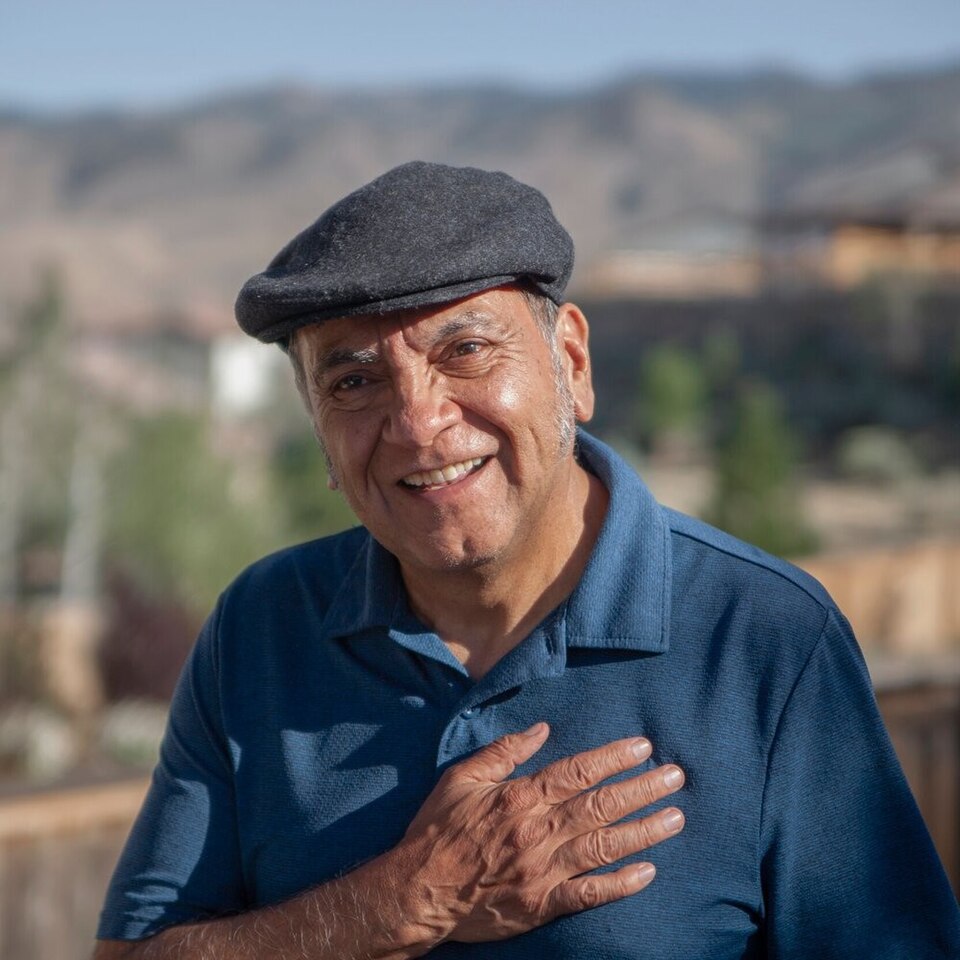
Don Miguel Ruiz teaches that love functions as a perfect equilibrium between gratitude and generosity, and that this time of year—the holiday season—naturally awakens our capacity to extend love to all humans regardless of belief or religious tradition. Love is not a sentimental abstraction but a practical force for human evolution, requiring both the act of giving and the openness to receive.

Read · 6 sections

What Does It Mean to Live in Love?

Don Miguel Ruiz begins by anchoring his teaching in the present moment: December, the season of festivals and celebration, when the external world naturally supports an internal opening. "This is a very special time because it's a time when we feel all the love coming out of ourselves to everyone who lives around us" (0:13–0:19). This is not mere sentiment. Ruiz frames the holiday season as a window into a more authentic way of being—a time when the walls we construct around ourselves naturally soften, and the love that already exists within us becomes accessible and expressible.

To "live in love" in Ruiz's teaching is to recognize love as both an internal resource and a relational practice. It is not limited to family or intimate circles. Rather, he calls us to "share that love with the people who we love" and simultaneously "share that love with entire humanity" (0:22–0:28). This dual movement—personal and universal—reveals that love, for Ruiz, is not a feeling confined to certain relationships but a fundamental human capacity that can be extended consciously to all beings.

Why Is Love the Only Hope for Human Evolution?

Ruiz makes a direct claim: "That love is the only hope that we have as humans to evolve and make life easier and easier and easier" (0:28–0:35). This statement carries weight precisely because it excludes other candidates—ideology, technology, rational thought, or moral codes. None of these, in Ruiz's view, possess the transformative power of love.

The reason becomes clearer when we examine what love actually does. Love is not passive sentiment; it is a force that operates through the body of human relationship. When we extend love to others, we alter the field of interaction. We make it easier for others to be themselves. We create the conditions for others to lower their defenses and access their own capacity for love. Over time, this cascades. A person treated with love is more likely to treat others with love. A community suffused with love creates different conditions for human behavior than a community suffused with suspicion, judgment, or fear.

Ruiz is suggesting that humanity's problems—its violence, injustice, suffering—are not fundamentally problems of knowledge or resources, but of a disconnection from love. The solution, therefore, is not more information or better systems, but a return to the practice of loving, which every human already knows how to do, even if they have forgotten.

What Is the Balance Between Gratitude and Generosity?

The core teaching emerges at 0:43–0:52: "Remember that love is the equilibrium between gratitude and generosity." This is the precise formula Ruiz offers. Love is not one or the other; it is both in balance.

Gratitude is the recognition and appreciation of what has been given to you. It is the receiving posture. It acknowledges that you exist within a web of gift—from your parents, your teachers, your culture, nature itself, or the divine, depending on your worldview. Gratitude is the inner state of recognizing and honoring what you have been given.

Generosity is the giving posture. It is the willingness to give of yourself—your time, attention, resources, love—without requiring return. Generosity flows outward.

The equilibrium means that love requires both. A person who only receives becomes entitled and empty; they do not know themselves as a giver. A person who only gives becomes depleted and resentful; they do not know how to receive. Love, as Ruiz defines it, is the dynamic balance between these two postures. It is knowing how to receive with grace and how to give with joy. It is the recognition that receiving and giving are not opposites but partners in a single dance.

This is also why the holiday season is mentioned. The season of giving naturally heightens generosity; the season of gratitude for what we have naturally heightens appreciation. The season creates the conditions for this equilibrium to become visible and accessible.

How Does This Apply Beyond Religious or Belief Boundaries?

Ruiz makes an explicit point: "It's not important what they believe. It's not important what the religion they follow. We all are humans. We all are living in love" (0:62–0:74). This is a radical statement in the context of sectarian division that has marked human history and continues to mark it.

Ruiz is not arguing that all beliefs are equally true or that religion itself is unimportant. Rather, he is locating love at a level prior to belief. Love is the common ground. A Christian, a Muslim, a Buddhist, an atheist, a Hindu, an indigenous person—all of them have the capacity to feel love, to give, to receive, to extend compassion. These capacities do not depend on correct doctrine or proper ritual. They depend on the basic fact of being human.

This teaching becomes especially potent during a season that is, for many, explicitly religious (Christmas). By grounding his message in what is common—love, humanity, the capacity to give and receive—rather than what divides, Ruiz offers a path for unity that does not require people to abandon their own traditions. Instead, he invites them to access the love that their own traditions, at their best, are attempting to cultivate.

What Does It Mean to "Give Yourself the Greatest Gift"?

The final instruction is subtle but crucial: "Give yourself the greatest gift and receive also" (0:77–0:83). This is not a call to self-indulgence. Rather, it is a call to self-compassion and self-awareness.

To give yourself the greatest gift is to extend to yourself the same love and generosity you would extend to someone you deeply cherish. It is to treat your own life, your own body, your own consciousness as worthy of care. This is not selfish; in fact, it is necessary for genuine generosity. A person who does not love themselves cannot authentically love others; they can only perform love from a place of deficit, hoping to fill the void through giving to others.

The instruction to "receive also" reinforces the equilibrium teaching. It is a reminder that love requires you to be open to receiving—not just giving. This is where many well-meaning people fail. They give continuously but cannot receive, creating an imbalance that eventually becomes painful. Ruiz is calling for wholeness: love yourself well enough to give and receive with equal grace.

Where to Go From Here

Ruiz's brief talk offers a framework for practice rather than abstract philosophy. The invitation is concrete: This season—or any season—notice where you can extend love more consciously. Notice where you can receive more openly. Notice where you can practice generosity without depletion and gratitude without passivity. Notice where your own beliefs and boundaries might be preventing you from recognizing the shared humanity and shared capacity for love in those around you. And notice, finally, whether you are extending to yourself the care and compassion that love requires.

The talk is ultimately a call to return to what is already present in you, to activate what the season naturally activates, and to understand that this activation—this living in love—is not a luxury but the hope for human evolution itself.

Comments

Loading the conversation…

Transcript

[0:02] we are in the middle of

[0:05] December with the F festivities are

[0:09] already here with all of us a very

[0:11] special

[0:13] time because it's a time when we feel

[0:16] all the love coming out of ourselves to

[0:19] everyone who live around us let's share

[0:22] that love with the people who we love

[0:26] let's share that love with entire

[0:28] Humanity because that love is the only

[0:31] hope that we have as humans to evolve

[0:35] and make life easier and easier and

[0:38] easier is it time that we give and we

[0:43] receive remember that love is the

[0:48] equilibrium between gratitude and

[0:52] generosity for this holy

[0:56] days let's share that love let's open

[1:00] our arms and

[1:02] embrace everyone it's not important what

[1:06] they believe it's not important what the

[1:08] religion they follow we all are

[1:12] humans we all

[1:14] are living in

[1:17] love give

[1:20] yourself the greatest

[1:23] gift and receive

[1:26] also Merry Christmas to all of here

The Artist in This Story

don Miguel Ruiz

don Miguel Ruiz

Spiritual Author

Internationally bestselling spiritual teacher and author of The Four Agreements, whose Toltec Wisdom books have sold over 16.5 million copies in 52 languages.

View profile
Explore Topics
Love practiceGratitude generosityConsciousnessHuman connectionSpiritual teaching
Frequently Asked Questions

Frequently Asked Questions

Gratitude is the receiving posture—recognizing and honoring what has been given to you. Generosity is the giving posture—extending yourself without expectation of return. Love requires both in balance; a person who only receives becomes entitled, and a person who only gives becomes depleted. True love is the dynamic dance between these two.

Love exists at a level prior to belief. All humans share the capacity to feel, give, receive, and extend compassion, regardless of religion or ideology. By focusing on our common humanity rather than our doctrinal differences, we access love that transcends sectarian division and honors the shared ground we all stand on.

Love is not passive sentiment but a relational force that alters how we treat one another. When one person extends love, it creates conditions for others to lower their defenses and reciprocate. Over time, this cascades through communities, changing the field of human interaction from fear and judgment to trust and compassion.

To give yourself the greatest gift is to extend to yourself the same love, care, and generosity you would give to someone you deeply cherish. This is not selfish; it is necessary for authentic love with others. A person who does not love themselves cannot genuinely love others from wholeness—only from deficit.

The holiday season naturally awakens our capacity to give (through generosity) and appreciate what we have (through gratitude). These external conditions and cultural rhythms create a window where the walls around the heart naturally soften, making it easier to access and express the love that already exists within us.

Notice whether you habitually give without receiving or receive without giving. Both create imbalance. Practice receiving as actively as you give—accept help, express appreciation, allow others the joy of giving to you. This balance is not 50/50 in every moment but a dynamic equilibrium maintained through conscious awareness and practice.

You might also like

View All
Final Judgment: The End of Self-Judgment and Path to Peace
Inspire

Final Judgment: The End of Self-Judgment and Path to Peace

The last judgment isn't God condemning you—it's the final moment you judge yourself. Beyond that lies unconditional respect and the peace of…

7 min read
Clean Consciousness Stops Negative Thoughts: Reclaim Your Birthright
Inspire

Clean Consciousness Stops Negative Thoughts: Reclaim Your Birthright

A clean consciousness lets you observe and reject negative thoughts instead of believing them. Ruiz explores why taking responsibility for y…

6 min read
Medicine Buddha Practice: Feeling Beneath the Thinking
Inspire

Medicine Buddha Practice: Feeling Beneath the Thinking

Lama Rod Owens opens a Monday-night Medicine Buddha session six years into the practice, teaching how to feel an experience instead of think…

10 min read
We Are All Visitors to This Material World: A Gita Reflection
Inspire

We Are All Visitors to This Material World: A Gita Reflection

In a 22-second clip, Radhika Das frames human life as a temporary visit, not a permanent residence. The idea draws on Bhagavad-gītā 8.15 and…

3 min read
See allYou might also like→

Continue your journey

More wisdom and gatherings from across the BrightStar directory.

More Articles

Browse the full library of teachings, interviews, and guides.

Back to all articles →

Teachers & Artists

Explore the lineages, musicians, and guides of the conscious world.

Explore artists →

Find an Event

Kirtan, retreats, sound baths, breathwork, festivals — happening soon.

Browse events →

