BrightStar
BlogMy Tickets
BlogMy Tickets
Saved events
Help & contactSign UpLog in
Events
  • Browse All Events
  • Yoga
  • Meditation
  • Breathwork
  • Qigong
  • Sacred Music
  • World Music
  • Medicine Music
  • Sound Healing
  • Ecstatic Dance
  • Ceremony
  • Plant Medicine
  • Energy Healing
  • Satsang & Wisdom
  • Tantra
  • Retreats
  • All Categories →
Destinations
  • Bali
  • Sedona
  • Los Angeles
  • Costa Rica
  • Tulum
  • Byron Bay
  • San Francisco
  • Austin
  • New York
  • San Diego
  • Denver
  • Seattle
  • Portland
  • Miami
  • London
  • Maui
  • Boulder
  • All Cities →
Platform
  • For organizers
  • Join the Movement
  • Sell Globally
  • For Creators
  • For Teams
  • For Writers
  • For Teachers
  • For Kirtan Artists
  • For Studios
  • For Festivals
  • For Retreat Centers
  • For Nonprofits
  • Brand Ambassador
  • Free Ticketing
  • Pro
  • Amplify
  • The Ecosystem
Features

Ticketing and checkout

  • Ticket categories
  • Assigned seating
  • Custom questions
  • Coupon codes
  • Smart pricing
  • Ticket sharing
  • Waitlist
  • Flexible refunds
  • Digital waivers
  • Tip jar
  • Donations and sliding scale
  • Embed widget
  • Mindful checkout
  • Recurring events
  • Private sessions
  • Online courses
  • Summits
  • Rooms and stays
  • Ticket scanner

Marketing and growth

  • Abandoned cart recovery
  • Visitor recovery
  • Upsells and add-ons
  • Affiliate engine
  • Upsell affiliate network
  • Brand ambassador
  • Meta retargeting
  • Verified buyer network
  • Outbound email marketing
  • Email sequences
  • SMS and WhatsApp
  • Event upsell network
  • Direct mail campaigns
  • SEO engine
  • Syndication
  • Event sharing
  • Custom event pages
  • Artist profiles
  • Link in bio
  • Event blog
  • Blog newsletter

Payments

  • Payments, powered by Stripe
  • Buy now, pay later
  • Apple Wallet
  • Multi currency

Data and operations

  • Team access
  • Message center
  • Reports
  • Analytics reporting
  • Performance reporting
  • Customer data
  • Integrations
  • Switch from another platform

AI

  • Assistant
  • AI FAQ assistant
  • All Features →
Company
  • About
  • FAQ
  • Contact
  • Blog
  • Glossary
  • Guides
  • Inspiration
  • Help Center
  • API Docs
  • Brand Assets
  • Press
  • Terms of Service
  • Privacy Policy

Events

  • Browse All Events
  • Yoga
  • Meditation
  • Breathwork
  • Qigong
  • Sacred Music
  • World Music
  • Medicine Music

Destinations

  • Bali
  • Sedona
  • Los Angeles
  • Costa Rica
  • Tulum
  • Byron Bay
  • San Francisco
  • Austin

Platform

  • For organizers
  • Join the Movement
  • Sell Globally
  • For Creators
  • For Teams
  • For Writers
  • For Teachers
  • For Kirtan Artists

Features

  • Community Network
  • Abandoned Cart Recovery
  • Ticket Categories
  • Recurring Events
  • Assigned Seating
  • Affiliate Engine
  • Waitlist / Notify
  • All Features →

Company

  • About
  • FAQ
  • Contact
  • Blog
  • Glossary
  • Guides
  • Terms of Service
  • Privacy Policy
Read more

Events

  • Sound Healing
  • Ecstatic Dance
  • Ceremony
  • Plant Medicine
  • Energy Healing
  • Satsang & Wisdom
  • Tantra
  • Retreats
  • All Categories →

Destinations

  • New York
  • San Diego
  • Denver
  • Seattle
  • Portland
  • Miami
  • London
  • Maui
  • Boulder
  • All Cities →

Platform

  • For Studios
  • For Festivals
  • For Retreat Centers
  • For Nonprofits
  • Brand Ambassador
  • Free Ticketing
  • Pro
  • Amplify
  • The Ecosystem

Company

  • Inspiration
  • Help Center
  • API Docs
  • Brand Assets
  • Press

Ticketing and checkout

  • Ticket categories
  • Assigned seating
  • Custom questions
  • Coupon codes
  • Smart pricing
  • Ticket sharing
  • Waitlist
  • Flexible refunds
  • Digital waivers
  • Tip jar
  • Donations and sliding scale
  • Embed widget
  • Mindful checkout
  • Recurring events
  • Private sessions
  • Online courses
  • Summits
  • Rooms and stays
  • Ticket scanner

Marketing and growth

  • Abandoned cart recovery
  • Visitor recovery
  • Upsells and add-ons
  • Affiliate engine
  • Upsell affiliate network
  • Brand ambassador
  • Meta retargeting
  • Verified buyer network
  • Outbound email marketing
  • Email sequences
  • SMS and WhatsApp
  • Event upsell network
  • Direct mail campaigns
  • SEO engine
  • Syndication
  • Event sharing
  • Custom event pages
  • Artist profiles
  • Link in bio
  • Event blog
  • Blog newsletter

Payments

  • Payments, powered by Stripe
  • Buy now, pay later
  • Apple Wallet
  • Multi currency

Data and operations

  • Team access
  • Message center
  • Reports
  • Analytics reporting
  • Performance reporting
  • Customer data
  • Integrations
  • Switch from another platform

AI

  • Assistant
  • AI FAQ assistant
Get the app
Download on theApp StoreGet it onGoogle Play
© 2026 BrightStar. All rights reserved. BrightStar Selection · Photo credits · Changelog ·
Inspiration

Living Fully When Mortality Becomes Real: Why Uncertainty Is Universal

Sam Harris
Sam Harris
Aug 31, 2026
7 min read

From Sam Harris

Watch · 5

A 37-year-old man, married with a young daughter, writes to ask one of the hardest questions a person can ask. He has been diagnosed with brain cancer. The doctors give him a decade—ten years with standard treatment. His wife is 35, healthy, secure. They already have a one-year-old. Now they're asking: Is it ethical to bring another child into a life shadowed by this timeline? The question carries the weight of genuine moral reasoning. He invokes Peter Singer, the philosopher, and asks Sam Harris directly: knowing your own history of paternal absence, what would you do?

It's the kind of correspondence that stops you. Not because the premise is rare—terminal diagnoses arrive every day—but because this man has the clarity to articulate the full architecture of his dilemma. He's not looking for consolation. He wants ethical guidance rooted in reason, in philosophy, in the hard work of thinking clearly when the stakes are personal and irreversible.

Read · 5 sections

The Illusion of Normal Time Horizons

Harris's response opens with a philosophical move that seems almost simple until you sit with it. He cites Singer's answer first: losing a father in childhood is sad, yes, but it doesn't make life itself not worth living. The base case is that grief and absence are part of the human condition, and they don't invalidate the value of existence.

But then Harris shifts the ground entirely. The real insight isn't about this specific diagnosis at all. It's about the radical fact that none of us know how long we have. "No one knows what totally normal healthy people don't know what their life expectancy is, right?" Harris says. Everyone, he argues, is living under a condition of real uncertainty. That 37-year-old with ten years in his medical file is not in a fundamentally different existential category from a 40-year-old who appears perfectly healthy but has no guarantee of seeing 45.

The categorical difference exists only in knowledge and explicitness. A diagnosis gives you numbers. But the absence of a diagnosis doesn't give you security—it just gives you the comforting lie that you have unlimited time. In reality, every person is living under what Harris calls "radical uncertainty." We're all making decisions about whether to marry, have children, start projects, invest in relationships without actually knowing how much time we'll get to live inside those commitments.

Why a 10-Year Horizon Changes Everything and Nothing

Harris makes a careful distinction that's easy to miss. A ten-year prognosis is not the same as a three-month prognosis. There are diagnoses that are categorically different from the baseline human condition—those create a genuinely altered situation. But a decade is enough time for what matters: it's enough to see a child grow, to build a life, to make the decisions most people make.

The implication is both practical and philosophical. If you're going to use uncertainty as your reason not to have children, not to commit, not to build—then you have to apply that logic consistently. And if applied consistently, it would paralyze everyone. The only coherent response is to acknowledge that we all live under uncertainty, and we all decide that in most cases we have enough time to make what look like normal decisions.

What changes with a diagnosis is not the underlying reality of uncertainty. What changes is *awareness*. You suddenly can't pretend you have forever. And that awareness, Harris suggests, is a gift.

The Gift of the Wake-Up Call

Here's where the response takes its most interesting turn. Harris doesn't tell the man to resign himself to loss or to abandon his plans. Instead, he points to a paradox that appears often in the literature on mortality: the diagnosis could actually make his remaining time more vivid, more alive, more consciously lived than the decades of most people who have no such wake-up call.

"He could have the most vivid 10 years of anyone he knows," Harris says, "given given this wake-up call." There's no false cheerfulness in this. It's not spiritual bypassing or denial. It's recognition that consciousness responds to urgency, that meaning tends to clarify when time becomes real, that the presence of an ending can paradoxically make you more present to the time you have.

This isn't a new idea—it echoes through Stoic philosophy, through existential thought, through contemplative traditions. But it lands differently when someone asks it under these exact circumstances. The man is not theorizing about mortality. He's living it. And the suggestion is that his children—whether one or two—might inherit a father who actually *knew* what time meant, who lived with intention rather than the default drift that consumes most of a normal life.

What This Reveals About How We All Should Live

The deeper intelligence of Harris's response is that it doesn't treat this case as exceptional. It treats it as a magnified version of the universal condition. The 37-year-old with brain cancer is not in a different moral universe from anyone else. He's just more honest about what everyone faces.

This has implications for how anyone should approach the big decisions: whether to have children, whether to marry, whether to commit to a long project or a difficult relationship. The standard reasoning—"I need more certainty before I decide"—is actually an impossible standard. Certainty never arrives. You never know enough. There is never a moment when the future is guaranteed.

What you have is this: a span of time (known or unknown), a set of relationships and possibilities, and the option to engage fully or to hold back waiting for guarantees that will never come. Most people never articulate this choice explicitly because the uncertainty is so familiar it becomes invisible. But it's always there.

The man asking the question has the advantage of knowing it explicitly. He can't hide behind the fiction that time is open-ended. He has to decide whether a decade is enough to be a father to another child, to know that child, to give that child the gift of existence even though he knows the relationship will be cut short. The question isn't really about him—it's about whether a child's life is made worse by having a terminal father rather than a father who dies of a heart attack at 70, or a car accident at 50, or simply abandons the family.

Peter Singer's answer—and Harris's implicit agreement—is that it isn't. Grief and loss are real and they hurt. But they don't negate the value of having lived, having been loved, having had a father who was present and conscious and aware of the preciousness of the time.

Where to go from here

This conversation suggests a reorientation worth considering whether or not you have a terminal diagnosis. If everyone is living under radical uncertainty, and if most people still make the decision to commit, to love, to build—then what are you waiting for? What guarantee are you holding out for that will never come?

The gift of a diagnosis is that it makes this question impossible to avoid. But the answer applies to all of us: we have enough time to make meaning. We have enough time to decide that a commitment is worth its cost. We have enough time to give someone the gift of our presence and our love, even knowing it will end.

Comments

Loading the conversation…

Transcript

[0:00] Hey Sam, hope you're well. Firstly,

[0:01] thanks for all you do. You have been a

[0:04] much appreciated source of rationalism

[0:06] from the start. Secondly,

[0:08] uh [ __ ] again.

[0:10] >> [clears throat]

[0:11] >> Secondly, I have brain cancer with a

[0:12] life expectancy

[0:16] a life expectancy of 10 years with

[0:18] standard treatment. I am 37 years old.

[0:25] I'm going to get through this.

[0:27] I'm 37 years old. My wife is 35 years

[0:29] old. We're both otherwise fit, healthy,

[0:31] and secure. Currently having a healthy

[0:32] 1-year-old

[0:34] who was born

[0:37] prior to my cancer diagnosis.

[0:40] From your point of view,

[0:42] knowing

[0:44] knowing you were raised by your mother

[0:46] with an absent father, ethically, is it

[0:48] okay

[0:49] to have a second child with my wife

[0:52] in this circumstance?

[0:53] I would love to hear

[0:55] your answer

[0:57] to determine a way my wife and I can

[0:58] view the situation we are in.

[1:01] Um Peter Singer's email response was,

[1:03] yes, losing a father during childhood is

[1:05] sad, but it's not as bad as to make life

[1:08] not worth living.

[1:09] Many thanks. Sorry. Anyway, sorry, that

[1:12] was

[1:13] really hard.

[1:13] >> Wow.

[1:14] Um

[1:18] Yeah, I mean I think

[1:21] I would follow Peter there.

[1:24] Um

[1:25] I don't I don't know the particulars of

[1:27] the diagnosis, but I mean just taking it

[1:29] as given that if there's a if there's a

[1:31] 10-year life expectancy, right? Like

[1:33] that you know, that's a um

[1:38] I mean, no one knows

[1:41] what

[1:42] totally normal healthy people

[1:44] don't know what their life expectancy

[1:46] is, right? So, they everyone is living

[1:48] under a condition of

[1:50] of real uncertainty there. Um

[1:54] and a 10-year time horizon is it's not

[1:56] the same as saying I've I've got 3

[1:57] months to live. There are a few

[1:59] diagnoses that are categorically

[2:01] different from the situation everyone is

[2:04] in. We all are in this condition of

[2:07] radical uncertainty and we're we're

[2:09] deciding

[2:10] that um

[2:12] in in most cases we have enough time

[2:16] to um

[2:17] to make normal decisions and uh you know

[2:19] and you know under conditions so you

[2:21] with a positive attitude under

[2:23] conditions of uncertainty and that's

[2:25] as totally valid in this case, too.

[2:27] Obviously, I wish him uh

[2:29] the best of luck, but he could be uh

[2:33] he you know he he could have the

[2:35] the most vivid 10 years of uh anyone he

[2:38] knows uh given given this wake-up call.

Sam Harris

Sam Harris

Artist

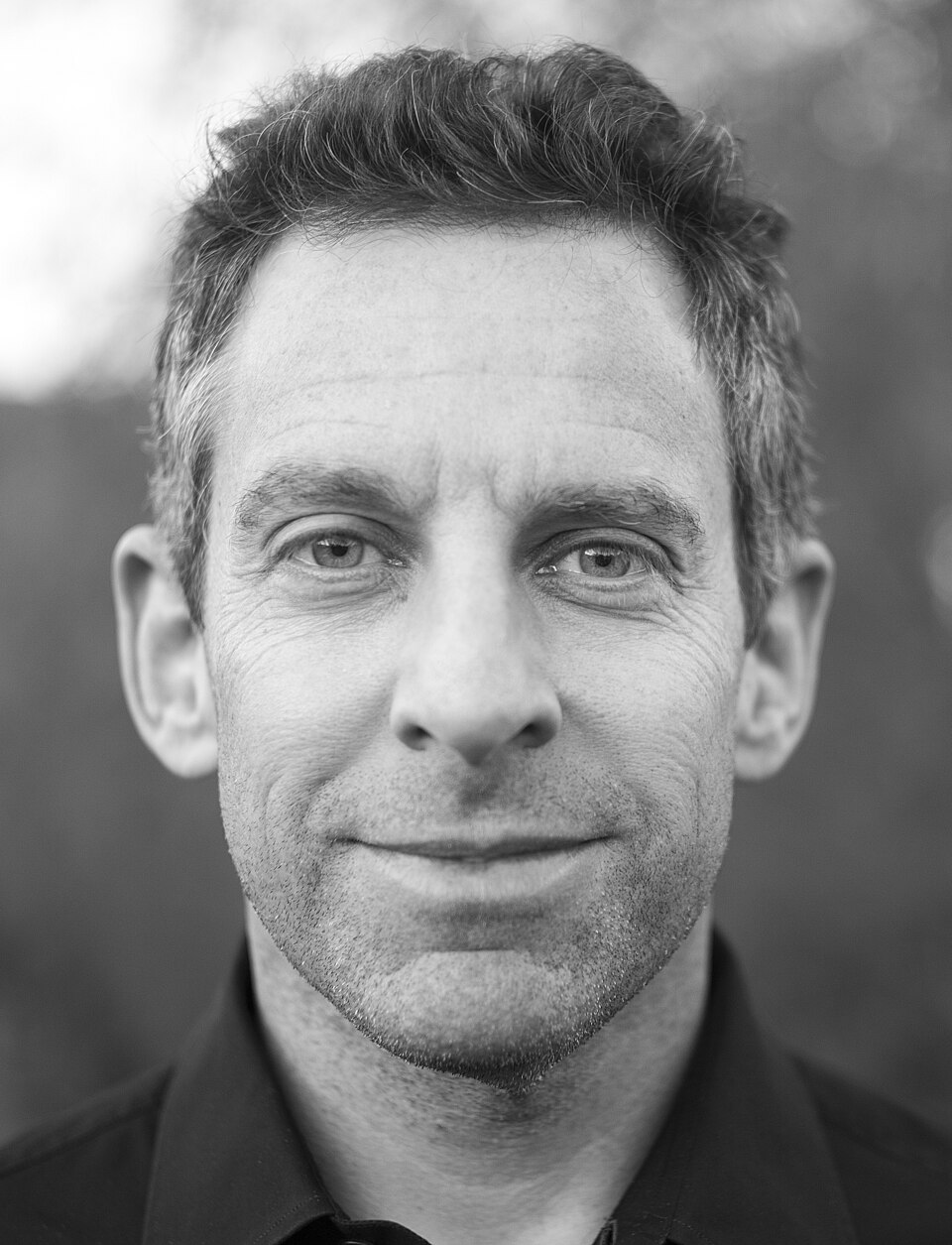
American neuroscientist, philosopher, and meditation teacher, one of the most influential voices on contemplative practice for the secular, scientifically-minded reader of the early twenty-first century. Born in 1967 in Los Angeles, he holds a PhD in cognitive neuroscience from UCLA and has trained in Theravada Vipassana, Tibetan Dzogchen, and Advaita Vedanta with teachers including Tulku Urgyen Rinpoche and Poonja-ji. His 2014 book Waking Up: A Guide to Spirituality Without Religion and the meditation app of the same name have introduced contemplative practice — particularly the recognition of selflessness — to a generation of readers who would never enter a Buddhist monastery or a yoga studio. His earlier books, including The End of Faith and Free Will, established him as a public intellectual on consciousness, ethics, and the contemplative dimensions of human experience.

View profile
Explore Topics
MortalityTime consciousnessPhilosophy of lifeParentingUncertainty
Frequently Asked Questions

Frequently Asked Questions

Harris argues it's not fundamentally different from having children when healthy—no one knows their actual lifespan. What matters is whether you have enough time to be present and meaningful as a parent, which a ten-year horizon allows. Peter Singer's philosophy here is that losing a parent is sad, but it doesn't make life itself not worth living.

Harris suggests that awareness of a shorter timeline can actually make the time you have more vivid and consciously lived than the default drift most people experience. The key is making intentional decisions about relationships and commitments rather than waiting for certainty that will never arrive.

Yes, according to Harris. Healthy people have no guarantee of their lifespan either—they just have the comforting illusion of unlimited time. The only difference a diagnosis makes is that it forces explicit awareness of what's always true: everyone lives under radical uncertainty.

Harris distinguishes between diagnoses that are categorically different from normal life (like three months) and those that allow for normal life decisions (like ten years). A decade is enough time to build relationships, raise children, and create meaning—making it more similar to regular life than fundamentally alien to it.

A diagnosis serves as a wake-up call that forces presence and intentionality. Rather than drifting through years on autopilot, awareness of mortality can make the time you have more vivid, conscious, and full of meaning than most people experience in a normal lifespan.

You might also like

View All
Why Tech Promised Community and Delivered Chatbot Friends
Inspire

Why Tech Promised Community and Delivered Chatbot Friends

Sherry Turkle, in conversation with Sam Harris, traces how early computer optimism gave way to attention markets, eroded empathy, and AI com…

9 min read
The Half-Life of Anger: Meditation Beyond the Myth
Inspire

The Half-Life of Anger: Meditation Beyond the Myth

Not enlightenment—but the measurable freedom to feel anger in five seconds instead of five days. Sam Harris explains the attainable goal of …

8 min read
Time Doesn't Exist in Nature—But It Rules Your Life
Inspire

Time Doesn't Exist in Nature—But It Rules Your Life

Why our obsession with seconds, minutes, and hours distances us from reality. A meditation on escaping the tyranny of artificial time system…

6 min read
Ganga Is a Mother to Us All: A Story From Sri Siddhi Ma
Inspire

Ganga Is a Mother to Us All: A Story From Sri Siddhi Ma

A holy dip at Har Ki Pauri turns into a revelation in Sri Siddhi Ma. Nina Rao reads Jaya Prasada's Ganga passage beside the river.…

9 min read
See allYou might also like→

Continue your journey

More wisdom and gatherings from across the BrightStar directory.

More Articles

Browse the full library of teachings, interviews, and guides.

Back to all articles →

Teachers & Artists

Explore the lineages, musicians, and guides of the conscious world.

Explore artists →

Find an Event

Kirtan, retreats, sound baths, breathwork, festivals — happening soon.

Browse events →