BrightStar
BlogMy Tickets
BlogMy Tickets
Saved events
Help & contactSign UpLog in
Events
  • Browse All Events
  • Yoga
  • Meditation
  • Breathwork
  • Qigong
  • Sacred Music
  • World Music
  • Medicine Music
  • Sound Healing
  • Ecstatic Dance
  • Ceremony
  • Plant Medicine
  • Energy Healing
  • Satsang & Wisdom
  • Tantra
  • Retreats
  • All Categories →
Destinations
  • Bali
  • Sedona
  • Los Angeles
  • Costa Rica
  • Tulum
  • Byron Bay
  • San Francisco
  • Austin
  • New York
  • San Diego
  • Denver
  • Seattle
  • Portland
  • Miami
  • London
  • Maui
  • Boulder
  • All Cities →
Platform
  • For organizers
  • Join the Movement
  • Sell Globally
  • For Creators
  • For Teams
  • For Writers
  • For Teachers
  • For Kirtan Artists
  • For Studios
  • For Festivals
  • For Retreat Centers
  • For Nonprofits
  • Brand Ambassador
  • Free Ticketing
  • Pro
  • Amplify
  • The Ecosystem
Features

Ticketing and checkout

  • Ticket categories
  • Assigned seating
  • Custom questions
  • Coupon codes
  • Smart pricing
  • Ticket sharing
  • Waitlist
  • Flexible refunds
  • Digital waivers
  • Tip jar
  • Donations and sliding scale
  • Embed widget
  • Mindful checkout
  • Recurring events
  • Private sessions
  • Online courses
  • Summits
  • Rooms and stays
  • Ticket scanner

Marketing and growth

  • Abandoned cart recovery
  • Visitor recovery
  • Upsells and add-ons
  • Affiliate engine
  • Upsell affiliate network
  • Brand ambassador
  • Meta retargeting
  • Verified buyer network
  • Outbound email marketing
  • Email sequences
  • SMS and WhatsApp
  • Event upsell network
  • Direct mail campaigns
  • SEO engine
  • Syndication
  • Event sharing
  • Custom event pages
  • Artist profiles
  • Link in bio
  • Event blog
  • Blog newsletter

Payments

  • Payments, powered by Stripe
  • Buy now, pay later
  • Apple Wallet
  • Multi currency

Data and operations

  • Team access
  • Message center
  • Reports
  • Analytics reporting
  • Performance reporting
  • Customer data
  • Integrations
  • Switch from another platform

AI

  • Assistant
  • AI FAQ assistant
  • All Features →
Company
  • About
  • FAQ
  • Contact
  • Blog
  • Glossary
  • Guides
  • Inspiration
  • Help Center
  • API Docs
  • Brand Assets
  • Press
  • Terms of Service
  • Privacy Policy

Events

  • Browse All Events
  • Yoga
  • Meditation
  • Breathwork
  • Qigong
  • Sacred Music
  • World Music
  • Medicine Music

Destinations

  • Bali
  • Sedona
  • Los Angeles
  • Costa Rica
  • Tulum
  • Byron Bay
  • San Francisco
  • Austin

Platform

  • For organizers
  • Join the Movement
  • Sell Globally
  • For Creators
  • For Teams
  • For Writers
  • For Teachers
  • For Kirtan Artists

Features

  • Community Network
  • Abandoned Cart Recovery
  • Ticket Categories
  • Recurring Events
  • Assigned Seating
  • Affiliate Engine
  • Waitlist / Notify
  • All Features →

Company

  • About
  • FAQ
  • Contact
  • Blog
  • Glossary
  • Guides
  • Terms of Service
  • Privacy Policy
Read more

Events

  • Sound Healing
  • Ecstatic Dance
  • Ceremony
  • Plant Medicine
  • Energy Healing
  • Satsang & Wisdom
  • Tantra
  • Retreats
  • All Categories →

Destinations

  • New York
  • San Diego
  • Denver
  • Seattle
  • Portland
  • Miami
  • London
  • Maui
  • Boulder
  • All Cities →

Platform

  • For Studios
  • For Festivals
  • For Retreat Centers
  • For Nonprofits
  • Brand Ambassador
  • Free Ticketing
  • Pro
  • Amplify
  • The Ecosystem

Company

  • Inspiration
  • Help Center
  • API Docs
  • Brand Assets
  • Press

Ticketing and checkout

  • Ticket categories
  • Assigned seating
  • Custom questions
  • Coupon codes
  • Smart pricing
  • Ticket sharing
  • Waitlist
  • Flexible refunds
  • Digital waivers
  • Tip jar
  • Donations and sliding scale
  • Embed widget
  • Mindful checkout
  • Recurring events
  • Private sessions
  • Online courses
  • Summits
  • Rooms and stays
  • Ticket scanner

Marketing and growth

  • Abandoned cart recovery
  • Visitor recovery
  • Upsells and add-ons
  • Affiliate engine
  • Upsell affiliate network
  • Brand ambassador
  • Meta retargeting
  • Verified buyer network
  • Outbound email marketing
  • Email sequences
  • SMS and WhatsApp
  • Event upsell network
  • Direct mail campaigns
  • SEO engine
  • Syndication
  • Event sharing
  • Custom event pages
  • Artist profiles
  • Link in bio
  • Event blog
  • Blog newsletter

Payments

  • Payments, powered by Stripe
  • Buy now, pay later
  • Apple Wallet
  • Multi currency

Data and operations

  • Team access
  • Message center
  • Reports
  • Analytics reporting
  • Performance reporting
  • Customer data
  • Integrations
  • Switch from another platform

AI

  • Assistant
  • AI FAQ assistant
Get the app
Download on theApp StoreGet it onGoogle Play
© 2026 BrightStar. All rights reserved. BrightStar Selection · Photo credits · Changelog ·
Inspiration

Listen to Nature: How Trees Communicate With Us

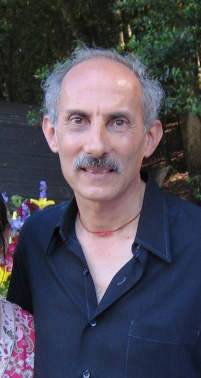
Jack Kornfield
Jack Kornfield
Jan 3, 2025
7 min read

From Be Here Now Network

Jack Kornfield teaches that trees and the earth possess a language that becomes audible when we cultivate quietness and stillness. Rather than a mystical or abstract concept, this "speaking for the trees" emerges through ordinary meditative attention—the same cultivation of presence that underpins Buddhist practice. By reducing the noise of habitual thought, practitioners discover that natural communication doesn't require special gifts or elaborate rituals; it simply requires tuning in to what is already present.

Read · 7 sections

What Does It Mean to Speak for the Trees?

Kornfield's framing of "speaking for the trees" is not about channeling messages or adopting an unfamiliar spiritual vocabulary. Rather, it describes a reciprocal listening—becoming still enough to receive what trees and the earth already communicate. The central insight is straightforward: "It's amazing, when you get quiet... the trees talk to you, the earth speaks to you... it doesn't take that much!" This suggests that the barrier to nature's communication is not inaccessibility but the constant chatter of the human mind.

In the context of contemplative practice, "speaking for" carries a secondary meaning—to represent or give voice to something that cannot speak in human language. When we become quiet and attentive, we are not inventing messages but becoming a clearer channel for understanding the needs and wisdom of the living world. This is consistent with ecological mindfulness: noticing what the trees reveal about seasons, resilience, interdependence, and generational time.

How Does Quietness Open the Door to Nature's Language?

Kornfield's teaching draws on foundational Buddhist practice: mindfulness and concentration develop through the systematic quieting of mental noise. The mind, left to its default patterns, generates continuous commentary, judgment, planning, and memory. This internal broadcasting prevents the subtle signals of the natural world from registering. When a practitioner sits quietly or walks in a forest with genuine attention, the volume of this internal chatter decreases.

The trees, earth, and natural systems are constantly communicating through visible channels: growth patterns, seasonal timing, the structure of a root system, the architecture of leaves catching light. But these communications remain invisible to someone whose attention is dominated by personal preoccupation. A quiet mind becomes available to perceive what is actually present rather than what the thinking mind has assumed should be there.

This is not a regression to magical thinking. Rather, it is a recognition that language is broader than words. A forest speaks through the density of its canopy, the health of its soil, the presence or absence of birdsong, the feel of the air. Quietness makes us receptive to these signals in the way that concentration makes a musician sensitive to nuance in sound.

Why Is This Practice Relevant for Modern Life?

In contemporary culture, most people spend minimal time in sustained contact with living systems without distraction. We pass through nature with phones in hand, with schedules to maintain, with mental energy already allocated to work, relationships, and digital demands. The cumulative effect is a kind of sensory anesthesia toward the natural world—it becomes backdrop rather than teacher.

Kornfield's teaching invites a simple recalibration: take genuine quiet time in nature. This is not a grand retreat or specialized practice but a direct experiment. Sit by a tree. Walk slowly in a forest. Notice what emerges when the mental static diminishes. The invitation is experiential, not doctrinal. The earth and trees do not require belief; they simply require presence.

This practice also addresses a psychological hunger in contemporary life. The constant stimulation of digital environments and social connectivity creates a chronic state of mental fragmentation. The nervous system remains in a state of low-grade alert. Nature's language—the slow growth of trees, the patience of stone, the cycle of seasons—offers a counter-frequency. To listen to it requires settling the nervous system and the mind, which is itself therapeutic.

What Changes When We Actually Listen?

When practitioners cultivate this quiet attention, several shifts often occur:

  • Perceptual clarity: Details become visible—the specific architecture of a branch, the subtle color variations in bark, the microhabitat supporting insects and moss. These observations open curiosity about the integrity and complexity of natural systems.
  • Temporal awareness: The human mind operates at a frenetic pace; nature operates at many different timescales. A tree teaches patience and geological time. A flower teaches sudden emergence and impermanence. This stretched temporal perspective shifts how we relate to our own urgencies.
  • Reciprocity: Quiet listening often generates a felt sense that we are not separate from nature but participants in it. We breathe air produced by trees; we depend on soil and water; our bodies are temporary arrangements of elements borrowed from the earth. This recognition can shift behavior—people tend to protect what they understand themselves to be part of.
  • Humility: The natural world does not exist to serve human purposes or conform to human timelines. It has its own authority and integrity. Recognizing this can diminish the sense of entitlement or separation that drives much exploitative behavior.

How Does This Connect to Buddhist Teaching?

Kornfield's emphasis on quietness draws directly from Buddhist meditation practice, where the cultivation of stillness and clear seeing are central. The Buddhist understanding of interdependence—that all phenomena arise in relation to everything else—resonates with ecological insight: the tree cannot exist without soil, water, air, and the insects that pollinate it; in turn, it provides oxygen, shelter, and food to other beings.

The practice of mindfulness, foundational to Buddhism, is essentially about seeing clearly what is actually present rather than what the thinking mind has overlaid. When applied to nature, this means perceiving the tree as it is—a living being engaged in its own metabolic and relational existence—rather than as a resource category or aesthetic backdrop.

There is also an ethical dimension. In Buddhism, the development of compassion arises naturally from clear seeing of interdependence. When we truly understand that we are not separate from nature, the impulse to harm it diminishes. Speaking for the trees, then, is both a perceptual practice and an ethical one: it cultivates both clearer seeing and a more responsible relationship with the living world.

Is This Practice Accessible to Beginners?

Kornfield's teaching is deliberately un-mystified. He emphasizes that "it doesn't take that much"—no special training, no exotic techniques, no years of retreat. The practice is available to anyone willing to be quiet. Even a few minutes of genuine attention in nature can open the door. A walk in a park with the phone silenced and the mind allowed to settle. A moment of sitting at the base of a tree without agenda. The initial signals from nature are often subtle, but they are present.

The challenge is not difficulty but consistency—the habit of constant mental activity is deeply ingrained. The modern environment actively works against quietness, with notifications, advertising, and entertainment engineered to capture attention. So the practice is simple but counter-cultural. It requires a deliberate choice to step aside from this attention economy, even temporarily.

Where to Go From Here

Begin with a simple experiment. Spend at least 15 to 30 minutes in a natural setting—a park, forest, garden, or even a street with trees—with minimal distractions. Leave the phone behind or in your pocket. Allow your mind to settle rather than trying to think about something specific. Notice what you see, hear, feel, and sense. Don't demand that the trees "speak" in any particular way; simply be available to perception.

If you have experience with meditation, apply those skills: allow thoughts to arise and pass without clinging to them; bring attention back to direct sensory experience when the mind wanders. If you are new to meditation, the task is the same: sit quietly and notice what is present.

Over time, this practice builds a felt sense of relationship with the natural world. The trees become less abstract and more present as living beings with their own integrity and wisdom. The earth's language—which includes nutrient cycles, growth patterns, seasonal rhythms, and the intricate cooperation of countless species—becomes more legible. And the insight that Kornfield offers becomes direct: the connection was always there; it simply required the quietness to perceive it.

Comments

Loading the conversation…

The Artist in This Story

Jack Kornfield

Jack Kornfield

Meditation Teacher

Jack Kornfield, Ph.D.

View profile
Explore Topics
Nature communicationTreesMindfulnessQuiet mindBuddhist practice
Frequently Asked Questions

Frequently Asked Questions

Trees communicate through visible, sensory channels—growth patterns, seasonal changes, the structure of branches and roots, colors, and the microhabitats they support. These signals become perceptible when the human mind quiets its constant chatter and becomes genuinely attentive. The communication isn't mystical; it's about perceiving what is already present.

No. Jack Kornfield emphasizes that "it doesn't take that much." The practice requires only the willingness to be quiet and present in a natural setting for even a short period. If you have meditation experience, apply it; if not, simply sit or walk slowly with minimal distractions and allow your attention to settle.

Speaking for the trees combines personal spiritual experience with representation—becoming a clearer channel for understanding what the living world needs and communicates. It's less about transcendent feeling and more about quiet listening that leads to clearer perception and a sense of responsibility toward nature.

The default human mind generates constant commentary, judgment, and mental noise that drowns out subtle perceptions. When this chatter quiets through meditation or simple presence, you become receptive to what is actually present—the textures, patterns, sounds, and behaviors of the natural world that were always there but unnoticed.

Yes. Kornfield's teaching draws on Buddhist cultivation of mindfulness and awareness of interdependence. The Buddhist insight that all things arise in relation to everything else parallels ecological understanding, and the practice of clear seeing—perceiving things as they actually are—is foundational to both.

Consistency matters more than duration. Even 15-30 minutes regularly in a natural setting with genuine attention is more valuable than longer, infrequent visits. The practice builds a habit of receptivity and deepens your perception over time.

Yes. You don't need a remote forest. Parks, tree-lined streets, and gardens work. Anywhere there are living systems and an opportunity to quiet your mind can become a place of practice. The key is the quality of your attention, not the scale of the natural environment.

You might also like

View All
Creating Inner Peace During Conflict and War
Inspire

Creating Inner Peace During Conflict and War

Learn how to maintain an open heart and inner peace even amid external war and suffering. A Buddhist teacher's guidance on compassion and re…

7 min read
Buddhist Psychology: Awareness as the Foundation of Mind
Inspire

Buddhist Psychology: Awareness as the Foundation of Mind

Buddhist psychology teaches that awareness is ever-present and foundational to our experience. By quieting the mind and opening the heart, w…

8 min read
Medicine Buddha Practice: Healing Through Darkness and Grace
Inspire

Medicine Buddha Practice: Healing Through Darkness and Grace

Lama Rod Owens guides practitioners into seasonal darkness work and the felt sense of awakened beings through Medicine Buddha practice roote…

7 min read
Love Beyond Habit: Breaking Free From Patterns of Separation
Inspire

Love Beyond Habit: Breaking Free From Patterns of Separation

When judgment, fear, and wanting filter how we see others, we lose touch with their humanity. Through mindful presence and loving-kindness, …

7 min read
See allYou might also like→

Continue your journey

More wisdom and gatherings from across the BrightStar directory.

More Articles

Browse the full library of teachings, interviews, and guides.

Back to all articles →

Teachers & Artists

Explore the lineages, musicians, and guides of the conscious world.

Explore artists →

Find an Event

Kirtan, retreats, sound baths, breathwork, festivals — happening soon.

Browse events →