BrightStar
BlogMy Tickets
BlogMy Tickets
Saved events
Help & contactSign UpLog in
Events
  • Browse All Events
  • For Seekers
  • Yoga
  • Meditation
  • Breathwork
  • Qigong
  • Sacred Music
  • World Music
  • Medicine Music
  • Sound Healing
  • Ecstatic Dance
  • Ceremony
  • Plant Medicine
  • Energy Healing
  • Satsang & Wisdom
  • Tantra
  • Retreats
  • All Categories →
Destinations
  • Bali
  • Sedona
  • Los Angeles
  • Costa Rica
  • Tulum
  • Byron Bay
  • San Francisco
  • Austin
  • New York
  • San Diego
  • Seattle
  • Portland
  • Miami
  • London
  • Maui
  • Boulder
  • Oakland
  • All Cities →
Platform
  • List Your Event Free
  • Autopilot
  • Join the Movement
  • Sell Globally
  • For Creators
  • For Teams
  • For Writers
  • For Teachers
  • For Kirtan Artists
  • For Studios
  • For Festivals
  • For Retreat Centers
  • For Nonprofits
  • Brand Ambassador
  • Free Ticketing
  • Elevate
  • Amplify
  • The Ecosystem
Features

Ticketing and checkout

  • Ticket categories
  • Assigned seating
  • Custom questions
  • Coupon codes
  • Smart pricing
  • Ticket sharing
  • Waitlist
  • Flexible refunds
  • Digital waivers
  • Tip jar
  • Donations and sliding scale
  • Embed widget
  • Mindful checkout
  • Recurring events
  • Private sessions
  • Online courses
  • Summits
  • Rooms and stays
  • Ticket scanner

Marketing and growth

  • Abandoned cart recovery
  • Visitor recovery
  • Upsells and add-ons
  • Affiliate engine
  • Upsell affiliate network
  • Brand ambassador
  • Meta retargeting
  • Verified buyer network
  • Outbound email marketing
  • Email sequences
  • SMS and WhatsApp
  • Event upsell network
  • Direct mail campaigns
  • SEO engine
  • Syndication
  • Event sharing
  • Custom event pages
  • Artist profiles
  • Link in bio
  • Event blog
  • Blog newsletter

Payments

  • Payments, powered by Stripe
  • Buy now, pay later
  • Apple Wallet
  • Multi currency

Data and operations

  • Team access
  • Message center
  • Reports
  • Analytics reporting
  • Performance reporting
  • Customer data
  • Integrations
  • Switch from another platform

AI

  • Assistant
  • AI FAQ assistant
  • All Features →
Company
  • About
  • FAQ
  • Contact
  • Blog
  • Glossary
  • Guides
  • Inspiration
  • Help Center
  • API Docs
  • Brand Assets
  • Press
  • Terms of Service
  • Privacy Policy

Events

  • Browse All Events
  • For Seekers
  • Yoga
  • Meditation
  • Breathwork
  • Qigong
  • Sacred Music
  • World Music

Destinations

  • Bali
  • Sedona
  • Los Angeles
  • Costa Rica
  • Tulum
  • Byron Bay
  • San Francisco
  • Austin

Platform

  • List Your Event Free
  • Autopilot
  • Join the Movement
  • Sell Globally
  • For Creators
  • For Teams
  • For Writers
  • For Teachers

Features

  • Community Network
  • Abandoned Cart Recovery
  • Ticket Categories
  • Recurring Events
  • Assigned Seating
  • Affiliate Engine
  • Waitlist / Notify
  • All Features →

Company

  • About
  • FAQ
  • Contact
  • Blog
  • Glossary
  • Guides
  • Terms of Service
  • Privacy Policy
Read more

Events

  • Medicine Music
  • Sound Healing
  • Ecstatic Dance
  • Ceremony
  • Plant Medicine
  • Energy Healing
  • Satsang & Wisdom
  • Tantra
  • Retreats
  • All Categories →

Destinations

  • New York
  • San Diego
  • Seattle
  • Portland
  • Miami
  • London
  • Maui
  • Boulder
  • Oakland
  • All Cities →

Platform

  • For Kirtan Artists
  • For Studios
  • For Festivals
  • For Retreat Centers
  • For Nonprofits
  • Brand Ambassador
  • Free Ticketing
  • Elevate
  • Amplify
  • The Ecosystem

Company

  • Inspiration
  • Help Center
  • API Docs
  • Brand Assets
  • Press

Ticketing and checkout

  • Ticket categories
  • Assigned seating
  • Custom questions
  • Coupon codes
  • Smart pricing
  • Ticket sharing
  • Waitlist
  • Flexible refunds
  • Digital waivers
  • Tip jar
  • Donations and sliding scale
  • Embed widget
  • Mindful checkout
  • Recurring events
  • Private sessions
  • Online courses
  • Summits
  • Rooms and stays
  • Ticket scanner

Marketing and growth

  • Abandoned cart recovery
  • Visitor recovery
  • Upsells and add-ons
  • Affiliate engine
  • Upsell affiliate network
  • Brand ambassador
  • Meta retargeting
  • Verified buyer network
  • Outbound email marketing
  • Email sequences
  • SMS and WhatsApp
  • Event upsell network
  • Direct mail campaigns
  • SEO engine
  • Syndication
  • Event sharing
  • Custom event pages
  • Artist profiles
  • Link in bio
  • Event blog
  • Blog newsletter

Payments

  • Payments, powered by Stripe
  • Buy now, pay later
  • Apple Wallet
  • Multi currency

Data and operations

  • Team access
  • Message center
  • Reports
  • Analytics reporting
  • Performance reporting
  • Customer data
  • Integrations
  • Switch from another platform

AI

  • Assistant
  • AI FAQ assistant
Get the app
Download on theApp StoreGet it onGoogle Play
© 2026 BrightStar. All rights reserved. Photo credits · Changelog ·
Inspiration

Letting Go in Practice: Freedom Through Release

Jack Kornfield
Jack Kornfield
Aug 20, 2025
7 min read

From Be Here Now Network

Letting go is not about renouncing life or becoming detached from people and joy. Rather, it is a deliberate practice of releasing our grip on outcomes, our need to control what happens next, and our compulsive identification with thoughts and emotions. Jack Kornfield teaches that freedom emerges naturally when we stop clinging to experiences and allow them to move through us. This is the heart of Buddhist wisdom: suffering arises not from feeling desire, but from the tension we create by grasping and refusing to accept change. By learning to let go repeatedly—moment by moment—we discover a lightness and resilience that allows us to love more fully and act with greater clarity.

Read · 6 sections

What Does "Letting Go" Actually Mean in Practice?

The phrase "let go, let go, let go" appears simple on its surface, but in Buddhist teaching it points to something radical and nuanced. Letting go does not mean becoming passive, indifferent, or detached from the people and things we care about. Rather, it describes the act of releasing our tight grip on how we think things should be, and instead allowing reality to be as it is. This is an active, conscious practice—a moment-to-moment willingness to surrender our agenda.

In the context of Jack Kornfield's Heart Wisdom teaching, letting go operates on several levels. First, there is the letting go of resistance to what is already happening. When we experience pain, loss, or unwanted change, our natural reflex is to tighten against it, to push it away or deny it. This tightening itself becomes a second layer of suffering. By consciously releasing that resistance, we open a space where we can feel what is there without drowning in reactivity.

Second, there is the letting go of our need to control outcomes. Much of our mental and emotional energy goes into planning, strategizing, and trying to guarantee that life unfolds according to our preferences. While intention and right action are important, the obsessive effort to predetermine the future creates constant anxiety. Letting go means acting with full commitment while simultaneously accepting that we do not ultimately control what happens next.

How Does Attachment Create Suffering?

Buddhist psychology distinguishes between desire and attachment. Desire itself—the natural wish for happiness, connection, and wellbeing—is not inherently problematic. A parent's desire to care for their child, or a person's aspiration to develop wisdom and compassion, are expressions of healthy intention. What creates suffering is the clinging to specific outcomes or the demand that reality conform to our expectations.

When we are attached, we have taken a stance of "this must happen" or "this must not happen." We have contracted around a particular version of how things should be. This creates a rigid brittleness. When life inevitably deviates from our script—and it always does—we experience disappointment, frustration, or grief. More fundamentally, the clinging itself is exhausting. It requires constant vigilance and effort to maintain.

By contrast, when we practice letting go, we maintain our values and intentions while holding them lightly. We work toward meaningful goals, but we do not demand that the universe conform to our timeline. We love people deeply while accepting that they are separate beings with their own paths. We feel emotions fully—joy, sorrow, anger—but we do not grab onto them and declare "this must stay forever" or "this should never have happened." This lightness allows us to move through life with greater agility and grace.

Why Is Letting Go a Repeated Practice?

The Kornfield teaching suggests letting go is not a one-time achievement but a continuous practice: "let go, let go, let go." This repetition reflects how the human mind naturally re-contracts. We may have a moment of genuine release, a sudden freedom from worry or control. But within hours or days, we find ourselves tight again, caught in planning or resistance or self-judgment. This is not failure—it is the nature of the untrained mind.

By understanding letting go as a practice repeated thousands of times, we shift our relationship to struggle itself. Instead of seeing tightness and clinging as signs we are doing something wrong, we recognize them as invitations to practice again. Each moment of noticing "I am gripping" and consciously softening is a success. The path is not about achieving a permanent state of detachment but about becoming increasingly familiar with the rhythm of tightening and releasing.

Over time, through this repeated practice, the mind becomes more spacious. The contractions still occur, but they become less dense, less sticky. We recover our equilibrium faster. We develop what might be called intelligent letting go—the ability to assess what genuinely requires our focused effort and what we can safely release.

What Happens When We Stop Trying to Control Everything?

One of the deepest benefits of letting go is the restoration of agency and clarity. This may seem paradoxical—how can we be more effective by releasing control? Yet it is a consistent finding in both contemplative practice and modern psychology. When we stop expending energy on controlling outcomes we cannot actually control, that energy becomes available for presence, creativity, and responsive action.

A person caught in anxiety about the future is not fully present to what is actually in front of them. Their attention is scattered across imagined scenarios. But when they practice letting go of the need to guarantee the future, they can focus completely on the task at hand, on the person they are with, on the decision they need to make right now. This presence itself leads to better decisions and more skillful action.

Additionally, letting go creates psychological freedom. Much of the mental suffering we experience—rumination, regret, anticipatory anxiety—is fuel by our refusal to accept what has already happened or our insistence that things should be different than they are. By consciously accepting reality as it is, we remove the friction. The mind settles. Peace becomes possible not as an escape from life but as our natural state when we stop fighting it.

How Does Letting Go Deepen Our Relationships?

Paradoxically, letting go strengthens our capacity to love. When we hold people tightly—when we need them to validate us, prove our worth, or follow our vision for their lives—we create resentment and distance. We are using the relationship to meet our own unmet needs rather than genuinely meeting the other person.

When we practice letting go in relationship, we release our agenda for how someone should be or what they should do with their life. We can then appreciate them as they are. We can be genuinely interested in their experience rather than focused on whether they are meeting our expectations. This creates a kind of safety and freedom that allows both people to relax and connect more authentically.

Letting go in relationship also means accepting that we cannot control how others respond to us. We can communicate clearly and act with integrity, but we cannot guarantee that another person will understand us, agree with us, or stay in our lives. This acceptance, far from being cold or distant, is actually what allows us to love more genuinely—not as a transaction but as a gift.

Where to Go From Here

The practice of letting go invites a daily experiment. Begin by noticing moments when you are gripping—when your jaw is tight, your breath is shallow, or your mind is caught in planning or resistance. These are not failures; they are invitations. In those moments, consciously relax your shoulders, exhale fully, and whisper to yourself "let go." You might let go of your opinion about how someone else should behave. You might let go of the outcome of a conversation you are about to have. You might let go of the story that you are not good enough.

The teaching of "let go, let go, let go" is both a practice and a permission. Permission to stop fighting what is. Permission to trust that you can act skillfully without guaranteeing results. Permission to love without clinging. As you return to this practice again and again, you may discover what Jack Kornfield and generations of Buddhist teachers have found: that freedom is not somewhere else, in some distant future when you have finally achieved control. Freedom is here, available right now, in the simple act of releasing your grip on how things must be.

Comments

Loading the conversation…

The Artist in This Story

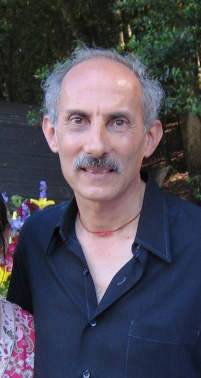
Jack Kornfield

Jack Kornfield

Meditation Teacher

Jack Kornfield, Ph.D.

View profile
Explore Topics
Letting goAttachmentBuddhist practiceFreedomMindfulness
Frequently Asked Questions

Frequently Asked Questions

No. Letting go means releasing your tight grip on outcomes while maintaining genuine care and commitment. You can love someone deeply, work toward important goals, and take meaningful action—all while accepting that you don't ultimately control how things unfold. The letting go applies to your need to control results, not to your values and intentions.

Start by noticing moments when you are gripping—tension in your body, anxiety about the future, or resistance to what's happening. In those moments, consciously relax, take a full breath, and practice releasing your agenda or expectation. You might let go of needing to be right in a conversation, or of controlling how someone else behaves. The practice is repeated thousands of times, each moment an opportunity.

This is completely normal and not a sign of failure. The untrained mind naturally re-contracts out of habit and self-protection. By understanding letting go as an ongoing practice rather than a permanent achievement, you can meet each moment of tightness with compassion and simply practice releasing again. Over time, this becomes more natural.

Letting go doesn't mean passive acceptance of harmful circumstances. It means releasing your resistance to what has already happened while taking clear, skillful action to protect yourself or create change. You can let go of your story that something 'shouldn't have happened' while simultaneously leaving an unhealthy relationship or speaking up against wrongdoing.

Yes. When you release your need to control how others behave or your agenda for their lives, you create space for genuine connection. People feel safer and more accepted. You can appreciate them as they are rather than as tools to meet your needs. This paradoxically strengthens intimacy because it's based on authentic meeting rather than transaction.

Desire is the natural wish for happiness, connection, and wellbeing—this is not the problem. Attachment is the rigid clinging to specific outcomes or the demand that reality match your expectations. You can have healthy desire (caring for others, developing wisdom) without attachment (needing control over how it unfolds). The suffering comes from clinging, not from wanting good things.

You might also like

View All
Creating Inner Peace During Conflict and War
Inspire

Creating Inner Peace During Conflict and War

Learn how to maintain an open heart and inner peace even amid external war and suffering. A Buddhist teacher's guidance on compassion and re…

7 min read
Buddhist Psychology: Awareness as the Foundation of Mind
Inspire

Buddhist Psychology: Awareness as the Foundation of Mind

Buddhist psychology teaches that awareness is ever-present and foundational to our experience. By quieting the mind and opening the heart, w…

8 min read
Sacred Feminine Power: Chanting Devi Beyond the Mat
Inspire

Sacred Feminine Power: Chanting Devi Beyond the Mat

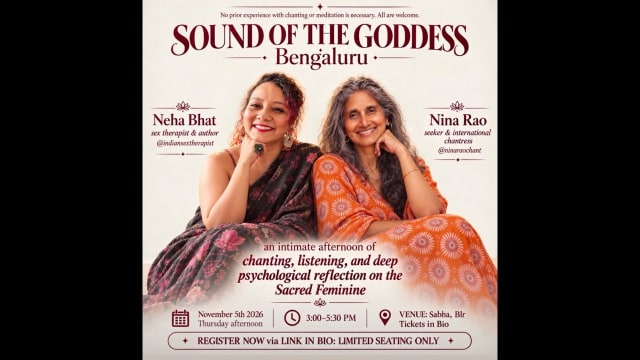
An in-person gathering in Bengaluru merges ancient devotional chanting with modern psychotherapy to explore how the Goddess archetype illumi…

8 min read
Medicine Buddha Practice: Healing Through Darkness and Grace
Inspire

Medicine Buddha Practice: Healing Through Darkness and Grace

Lama Rod Owens guides practitioners into seasonal darkness work and the felt sense of awakened beings through Medicine Buddha practice roote…

7 min read
See allYou might also like→

Continue your journey

More wisdom and gatherings from across the BrightStar directory.

More Articles

Browse the full library of teachings, interviews, and guides.

Back to all articles →

Teachers & Artists

Explore the lineages, musicians, and guides of the conscious world.

Explore artists →

Find an Event

Kirtan, retreats, sound baths, breathwork, festivals — happening soon.

Browse events →