BrightStar
BlogMy Tickets
BlogMy Tickets
Saved events
Help & contactSign UpLog in
Events
  • Browse All Events
  • For Seekers
  • Yoga
  • Meditation
  • Breathwork
  • Qigong
  • Sacred Music
  • World Music
  • Medicine Music
  • Sound Healing
  • Ecstatic Dance
  • Ceremony
  • Plant Medicine
  • Energy Healing
  • Satsang & Wisdom
  • Tantra
  • Retreats
  • All Categories →
Destinations
  • Bali
  • Sedona
  • Los Angeles
  • Costa Rica
  • Tulum
  • Byron Bay
  • San Francisco
  • Austin
  • New York
  • San Diego
  • Seattle
  • Portland
  • Miami
  • London
  • Maui
  • Boulder
  • Oakland
  • All Cities →
Platform
  • List Your Event Free
  • Autopilot
  • Join the Movement
  • Sell Globally
  • For Creators
  • For Teams
  • For Writers
  • For Teachers
  • For Kirtan Artists
  • For Studios
  • For Festivals
  • For Retreat Centers
  • For Nonprofits
  • Brand Ambassador
  • Free Ticketing
  • Elevate
  • Amplify
  • The Ecosystem
Features

Ticketing and checkout

  • Ticket categories
  • Assigned seating
  • Custom questions
  • Coupon codes
  • Smart pricing
  • Ticket sharing
  • Waitlist
  • Flexible refunds
  • Digital waivers
  • Tip jar
  • Donations and sliding scale
  • Embed widget
  • Mindful checkout
  • Recurring events
  • Private sessions
  • Online courses
  • Summits
  • Rooms and stays
  • Ticket scanner

Marketing and growth

  • Abandoned cart recovery
  • Visitor recovery
  • Upsells and add-ons
  • Affiliate engine
  • Upsell affiliate network
  • Brand ambassador
  • Meta retargeting
  • Verified buyer network
  • Outbound email marketing
  • Email sequences
  • SMS and WhatsApp
  • Event upsell network
  • Direct mail campaigns
  • SEO engine
  • Syndication
  • Event sharing
  • Custom event pages
  • Artist profiles
  • Link in bio
  • Event blog
  • Blog newsletter

Payments

  • Payments, powered by Stripe
  • Buy now, pay later
  • Apple Wallet
  • Multi currency

Data and operations

  • Team access
  • Message center
  • Reports
  • Analytics reporting
  • Performance reporting
  • Customer data
  • Integrations
  • Switch from another platform

AI

  • Maestro
  • AI FAQ assistant
  • All Features →
Company
  • About
  • FAQ
  • Contact
  • Blog
  • Glossary
  • Inspiration
  • Help Center
  • API Docs
  • Brand Assets
  • Press
  • Terms of Service
  • Privacy Policy

Events

  • Browse All Events
  • For Seekers
  • Yoga
  • Meditation
  • Breathwork
  • Qigong
  • Sacred Music
  • World Music

Destinations

  • Bali
  • Sedona
  • Los Angeles
  • Costa Rica
  • Tulum
  • Byron Bay
  • San Francisco
  • Austin

Platform

  • List Your Event Free
  • Autopilot
  • Join the Movement
  • Sell Globally
  • For Creators
  • For Teams
  • For Writers
  • For Teachers

Features

  • Community Network
  • Abandoned Cart Recovery
  • Ticket Categories
  • Recurring Events
  • Assigned Seating
  • Affiliate Engine
  • Waitlist / Notify
  • All Features →

Company

  • About
  • FAQ
  • Contact
  • Blog
  • Glossary
  • Inspiration
  • Terms of Service
  • Privacy Policy
Read more

Events

  • Medicine Music
  • Sound Healing
  • Ecstatic Dance
  • Ceremony
  • Plant Medicine
  • Energy Healing
  • Satsang & Wisdom
  • Tantra
  • Retreats
  • All Categories →

Destinations

  • New York
  • San Diego
  • Seattle
  • Portland
  • Miami
  • London
  • Maui
  • Boulder
  • Oakland
  • All Cities →

Platform

  • For Kirtan Artists
  • For Studios
  • For Festivals
  • For Retreat Centers
  • For Nonprofits
  • Brand Ambassador
  • Free Ticketing
  • Elevate
  • Amplify
  • The Ecosystem

Company

  • Help Center
  • API Docs
  • Brand Assets
  • Press

Ticketing and checkout

  • Ticket categories
  • Assigned seating
  • Custom questions
  • Coupon codes
  • Smart pricing
  • Ticket sharing
  • Waitlist
  • Flexible refunds
  • Digital waivers
  • Tip jar
  • Donations and sliding scale
  • Embed widget
  • Mindful checkout
  • Recurring events
  • Private sessions
  • Online courses
  • Summits
  • Rooms and stays
  • Ticket scanner

Marketing and growth

  • Abandoned cart recovery
  • Visitor recovery
  • Upsells and add-ons
  • Affiliate engine
  • Upsell affiliate network
  • Brand ambassador
  • Meta retargeting
  • Verified buyer network
  • Outbound email marketing
  • Email sequences
  • SMS and WhatsApp
  • Event upsell network
  • Direct mail campaigns
  • SEO engine
  • Syndication
  • Event sharing
  • Custom event pages
  • Artist profiles
  • Link in bio
  • Event blog
  • Blog newsletter

Payments

  • Payments, powered by Stripe
  • Buy now, pay later
  • Apple Wallet
  • Multi currency

Data and operations

  • Team access
  • Message center
  • Reports
  • Analytics reporting
  • Performance reporting
  • Customer data
  • Integrations
  • Switch from another platform

AI

  • Maestro
  • AI FAQ assistant
Get the app
Download on theApp StoreGet it onGoogle Play
© 2026 BrightStar. All rights reserved. Photo credits ·
Inspiration

Hanuman Chalisa: Devotion Through Sacred Chant

Jai Uttal
Jai Uttal
Dec 11, 2016
7 min read

From Jai Uttal

Watch · 4

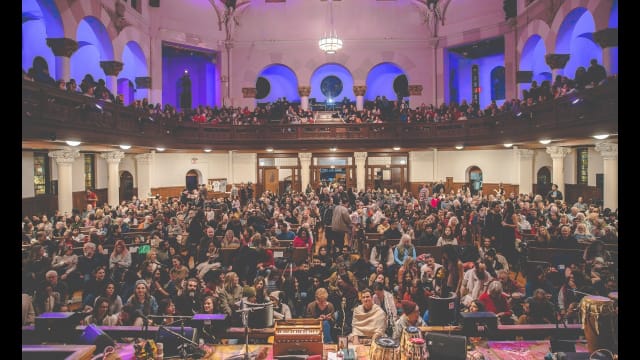
This live performance captures Jai Uttal singing the Hanuman Chalisa, a classical 40-verse Sanskrit hymn of devotion to Hanuman, the monkey deity revered across Hindu tradition. The video documents the chant in its full ceremonial form, with audience participation and traditional musical accompaniment, offering an accessible entry point to one of Hinduism's most widely recited devotional texts. Understanding the Chalisa requires knowing both its theological significance—Hanuman as a symbol of courage, loyalty, and surrender to the divine—and its practical use as a meditation and protection practice across centuries and cultures.

Read · 6 sections

What is the Hanuman Chalisa and why is it chanted?

The Hanuman Chalisa is a 40-verse Sanskrit devotional hymn composed in the 16th century by the poet Tulsidas. The word "Chalisa" comes from the Hindi word "chalis," meaning forty, referring to the exact number of verses in the text. It is structured as a series of prayers and praises addressing Hanuman, the monkey deity known in Hindu mythology as the devoted follower of Rama and an embodiment of unwavering faith, courage, and strength.

Chanting the Chalisa serves multiple spiritual purposes. Devotees recite it as a form of worship, meditation, and protection practice. In Hindu tradition, Hanuman is believed to remove obstacles, grant courage, and protect against negative forces. The recitation is practiced both individually for personal spiritual development and communally in temples, homes, and ashrams. The rhythmic nature of the Sanskrit verses, combined with the melodic quality when sung, makes the practice accessible to practitioners of varying skill levels while maintaining profound spiritual significance.

Who was Hanuman and what does he represent in Hindu theology?

Hanuman is one of the most beloved figures in the Hindu pantheon, appearing prominently in the Ramayana epic. Born as the son of Anjana and Kesari, he is depicted as a monkey with extraordinary strength, intelligence, and unwavering devotion to Rama, the seventh incarnation of Vishnu and central figure of the Ramayana.

In theological terms, Hanuman represents several core spiritual principles. First, he embodies bhakti—pure, selfless devotion. His relationship with Rama is characterized by complete surrender and unconditional service without expectation of reward. Second, he symbolizes courage and strength deployed in service of righteousness. In the epic, Hanuman performs seemingly impossible feats—leaping across oceans, battling demons, and moving mountains—all in service of dharma (righteous duty). Third, Hanuman represents the triumph of mind and spirit over physical limitations. Despite being depicted as an animal, he is portrayed as intellectually superior to many human and divine beings, teaching practitioners that physical form does not limit spiritual achievement.

His celibacy, discipline, and focus on a single purpose—service to Rama—make him an ideal for renunciates and spiritual seekers. In modern Hindu practice, Hanuman is also invoked for protection, strength during difficulty, and removal of obstacles.

What is the structure and content of the 40 verses?

The Hanuman Chalisa follows a classical devotional structure. It opens with invocations and salutations, then proceeds through descriptions of Hanuman's origins, his physical prowess, his deeds in the Ramayana, and his spiritual qualities. The verses describe his physical form, his loyalty to Rama, his courage in battle, his intelligence, and his spiritual attainments.

Key themes woven throughout include:

  • Divine lineage: Verses describe Hanuman's parentage and birth as a blessing from celestial beings.
  • Physical power: Repeated reference to his strength, speed, and physical capabilities as metaphors for overcoming obstacles.
  • Devotional perfection: Extensive praise of his singular focus on Rama, presented as the highest spiritual achievement.
  • Loyalty and service: Detailed accounts of Hanuman's deeds in service of Rama, particularly his role in the Rama-Ravana war.
  • Protection and grace: Verses assert that recitation of the Chalisa grants protection from harm, fear, and spiritual ignorance.
  • Humility despite power: A central paradox—Hanuman is shown as supremely powerful yet entirely humble, serving without ego.

The final verses typically include closing prayers and affirmations of the benefits of recitation, often stating that those who remember Hanuman with devotion are freed from all suffering and obstacles.

How does chanting the Hanuman Chalisa function as a spiritual practice?

The Chalisa operates on multiple levels as a spiritual technology. At the most basic level, the regular recitation of Sanskrit verses serves as a form of mental discipline and focus. The rhythmic structure and melodic patterns, especially when sung as in Jai Uttal's rendition, create a natural meditative state. The repetition of devotional language gradually rewires the mind's habitual patterns, training attention and intention.

On a deeper level, chanting the Chalisa is believed to invoke Hanuman's presence and blessing. In Hindu theology, sound (mantra) carries vibrational power; the correct pronunciation and feeling-tone of Sanskrit syllables is thought to create specific spiritual effects. Practitioners report that consistent chanting reduces anxiety, increases courage, and creates a felt sense of protection.

Psychologically, the practice anchors awareness in qualities that Hanuman represents—courage, loyalty, single-pointed focus, and selfless service. By repeatedly meditating on these qualities through the verses, the practitioner gradually embodies them. The Chalisa also provides a container for devotional feeling; rather than attempting to generate bhakti (devotion) through will alone, the verses provide the form and focus for devotional energy to flow naturally.

In the context of Jai Uttal's live performance, the communal singing amplifies these effects. Chanting together in a group creates a collective field of intention and emotional attunement. The presence of an experienced kirtan artist serves as an anchor, allowing participants to relax into the practice without needing to manage technical details like pronunciation or melody.

What is Jai Uttal's role in the kirtan tradition and how does he approach the Chalisa?

Jai Uttal is one of the most respected contemporary kirtan artists, having dedicated decades to the Hindu devotional music tradition. Kirtan is a participatory form of call-and-response chanting, typically accompanied by instruments like the harmonium, tabla, and cymbals. Rather than a performance where the audience passively listens, kirtan is interactive—the artist leads, and the community joins in singing, creating a shared devotional experience.

Uttal's approach to the Hanuman Chalisa in this December 2016 performance emphasizes accessibility and authentic transmission. By singing the Chalisa in its traditional Sanskrit form with clear melodic structure, Uttal makes the practice available to participants regardless of their prior knowledge of Hindu traditions or Sanskrit. His decades of training in both Hindu bhakti music and contemporary musical contexts allow him to hold the sacred integrity of the practice while making it emotionally resonant for a modern, often Western audience.

The live setting amplifies what is unique about kirtan as spiritual practice: it is not about perfect individual performance, but about the collective raising of devotional consciousness. Uttal's role is to serve as a guide and focal point, allowing the gathered community to access states of joy, connection, and spiritual opening through participatory song.

Where to go from here

If this introduction to the Hanuman Chalisa resonates, consider exploring the practice in several directions. First, listen to the full recording repeatedly to familiarize yourself with the melody and Sanskrit pronunciation. Many contemporary recordings are available, including other kirtan artists' versions; finding a rendering that speaks to your heart matters more than technical perfection.

Second, if you feel drawn, begin a personal practice of reciting or chanting the Chalisa. Tradition suggests chanting 40 days consecutively for maximum benefit, though even occasional practice is valuable. Some practitioners recite it daily as part of their morning or evening meditation. Written translations are readily available; reading the English meaning alongside the Sanskrit deepens understanding and devotional quality.

Third, consider attending live kirtan events in your area or online. The communal dimension of chanting activates aspects of the practice that solo recitation cannot fully access. Many ashrams, yoga studios, and spiritual centers offer regular kirtan gatherings.

Finally, explore the broader context of Hanuman devotion by reading sections of the Ramayana that feature Hanuman prominently, or by studying Hindu theology more broadly. Understanding the character and mythology deepens your relationship to the practice. The Hanuman Chalisa is not merely a prayer to an external deity, but an invocation of qualities and capacities within yourself—courage, loyalty, strength, and selfless service—that the practice gradually awakens and embodies.

Comments

Loading the conversation…

Transcript

[0:01] [Music]

[0:24] m

[0:29] [Music]

[0:59] spee

[1:02] [Music]

[1:13] [Music]

[1:29] for

[1:35] [Music]

[1:53] [Music]

[1:59] for

[2:12] [Music]

[2:29] for

[2:31] [Music]

[2:37] [Music]

[2:46] [Music]

[2:52] [Applause]

[2:59] forra for

[3:16] [Music]

[3:22] [Music]

[3:31] [Music]

[3:37] [Music]

[3:46] [Music]

[3:59] l

[4:07] [Music]

[4:15] [Music]

[4:24] [Music]

[4:29] for

[4:32] [Music]

[4:39] [Music]

[4:49] [Music]

[4:57] [Music]

[4:59] for

[5:08] [Music]

[5:29] for

[5:32] [Music]

[5:46] [Music]

[5:53] [Music]

[5:59] for

[6:10] [Music]

[6:22] [Music]

[6:29] for

[6:33] [Music]

[6:50] [Music]

[6:59] for for

[7:10] [Music]

[7:55] J shuru

[7:58] Maharaj J

[8:00] [Music]

[8:10] [Music]

[8:15] J

[8:21] [Music]

[8:42] J

[8:43] [Music]

[8:47] [Applause]

[8:48] [Music]

[8:56] [Music]

[9:10] [Music]

[9:29] sh

[9:31] [Music]

[9:35] J

[9:40] [Music]

[10:03] [Music]

[10:12] J

[10:15] [Music]

The Artist in This Story

Jai Uttal

Jai Uttal

Kirtan Artist

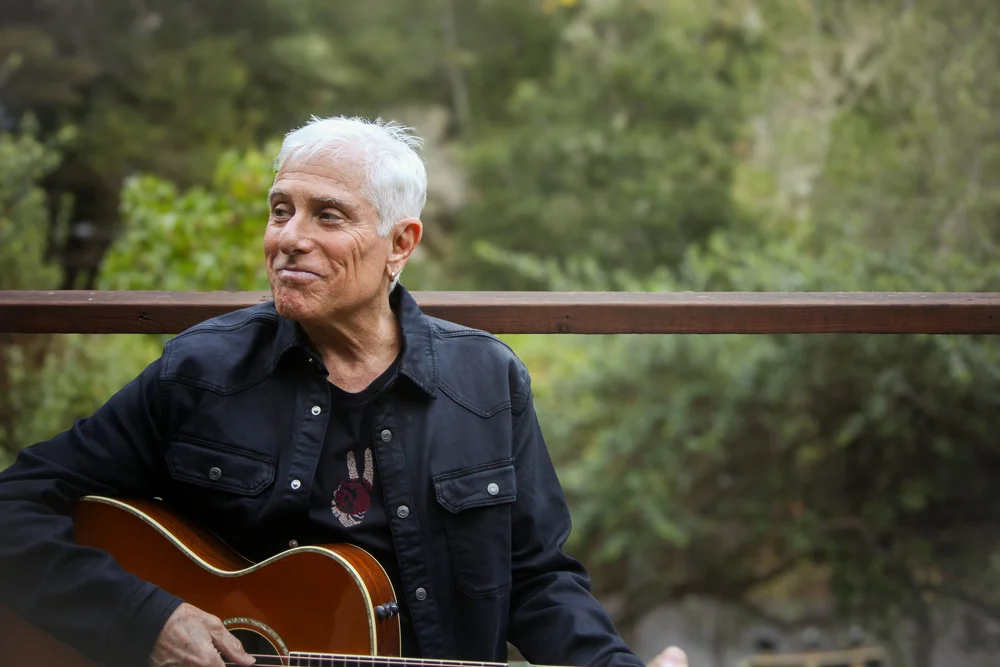
Grammy-nominated kirtan artist who pioneered the fusion of Indian devotional chanting with Western rock, jazz, and reggae. A disciple of Neem Karoli Baba, he has led kirtan worldwide for nearly five decades.

View profile
Explore Topics
Hanuman chalisaKirtanSanskrit chantBhakti yogaDevotional practice
Frequently Asked Questions

Frequently Asked Questions

The Hanuman Chalisa is a 40-verse Sanskrit devotional hymn composed by the poet Tulsidas in the 16th century. It is a structured prayer and praise addressed to Hanuman, the monkey deity from Hindu mythology known for his unwavering devotion to Rama, and is one of the most widely recited devotional texts in Hinduism.

Practitioners chant the Chalisa as a form of worship, meditation, and protection practice. In Hindu tradition, Hanuman is believed to remove obstacles, grant courage, and protect against negative forces. The rhythmic Sanskrit verses induce a meditative state while invoking qualities like courage, loyalty, and selfless service that practitioners aim to embody through regular recitation.

Hanuman is a deity depicted as a monkey in the Hindu epic Ramayana, known for his complete devotion to Rama. He symbolizes pure bhakti (devotion), courage, strength in service of righteousness, and the triumph of mind and spirit over physical limitations. His unwavering loyalty and selfless service make him an ideal for spiritual seekers.

Chanting Sanskrit verses creates mental discipline and focus through rhythmic repetition. The melodic patterns induce a natural meditative state, while the devotional language gradually retrains habitual thought patterns. In Hindu philosophy, Sanskrit sound carries vibrational power believed to invoke specific spiritual effects and states of consciousness.

Kirtan is participatory call-and-response chanting led by an artist and joined by the community. Unlike passive music listening, kirtan is interactive and collective—the shared singing creates a group field of intention and allows participants to access states of joy and spiritual opening through communal devotion.

Yes. The Chalisa is accessible to practitioners of any background. Many contemporary recordings with clear melodic lines make it easy to learn, and written translations are readily available. Regular listening and recitation, even without perfect Sanskrit pronunciation, activates the meditative and protective benefits of the practice.

Tradition suggests chanting 40 days consecutively for maximum benefit, though even occasional practice is valuable. Many practitioners recite it daily as part of morning or evening meditation. Consistency matters more than duration; even short daily practice creates cumulative spiritual effects over time.

You might also like

View All
Where Souls Meet: Shiva, Self-Concept, and Sacred Chanting
Inspire

Where Souls Meet: Shiva, Self-Concept, and Sacred Chanting

Ram Dass explores how devotional chanting transforms ego-based identity into soul awareness, merging with the Divine through bhakti practice…

8 min read
Hanuman Chalisa for World Peace: Ancient Chant for Modern Times
Inspire

Hanuman Chalisa for World Peace: Ancient Chant for Modern Times

Jai Uttal leads a devotional rendering of the Hanuman Chalisa, a 40-verse Sanskrit hymn invoking strength, clarity, and peace through kirtan…

9 min read
Kirtan as Mourning: Grief and Presence in Devotional Practice
Inspire

Kirtan as Mourning: Grief and Presence in Devotional Practice

A live kirtan honoring Shyam Das explores how chanting the Maha Mantra holds both longing and presence—the dual nature of bhakti when rememb…

8 min read
Kirtan Deepens: NYC Urban Retreat Explores Chant Practice
Inspire

Kirtan Deepens: NYC Urban Retreat Explores Chant Practice

An immersive weekend of live-streamed kirtan and dharma teaching from Krishna Das, the Kirtan Wallah Foundation, and guest artists—freely of…

6 min read
See allYou might also like→

Continue your journey

More wisdom and gatherings from across the BrightStar directory.

More Articles

Browse the full library of teachings, interviews, and guides.

Back to all articles →

Teachers & Artists

Explore the lineages, musicians, and guides of the conscious world.

Explore artists →

Find an Event

Kirtan, retreats, sound baths, breathwork, festivals — happening soon.

Browse events →