BrightStar
BlogMy Tickets
BlogMy Tickets
Saved events
Help & contactSign UpLog in
Events
  • Browse All Events
  • For Seekers
  • Yoga
  • Meditation
  • Breathwork
  • Qigong
  • Sacred Music
  • World Music
  • Medicine Music
  • Sound Healing
  • Ecstatic Dance
  • Ceremony
  • Plant Medicine
  • Energy Healing
  • Satsang & Wisdom
  • Tantra
  • Retreats
  • All Categories →
Destinations
  • Bali
  • Sedona
  • Los Angeles
  • Costa Rica
  • Tulum
  • Byron Bay
  • San Francisco
  • Austin
  • New York
  • San Diego
  • Seattle
  • Portland
  • Miami
  • London
  • Maui
  • Boulder
  • Oakland
  • All Cities →
Platform
  • For organizers
  • Join the Movement
  • Sell Globally
  • For Creators
  • For Teams
  • For Writers
  • For Teachers
  • For Kirtan Artists
  • For Studios
  • For Festivals
  • For Retreat Centers
  • For Nonprofits
  • Brand Ambassador
  • Free Ticketing
  • Elevate
  • Amplify
  • The Ecosystem
Features

Ticketing and checkout

  • Ticket categories
  • Assigned seating
  • Custom questions
  • Coupon codes
  • Smart pricing
  • Ticket sharing
  • Waitlist
  • Flexible refunds
  • Digital waivers
  • Tip jar
  • Donations and sliding scale
  • Embed widget
  • Mindful checkout
  • Recurring events
  • Private sessions
  • Online courses
  • Summits
  • Rooms and stays
  • Ticket scanner

Marketing and growth

  • Abandoned cart recovery
  • Visitor recovery
  • Upsells and add-ons
  • Affiliate engine
  • Upsell affiliate network
  • Brand ambassador
  • Meta retargeting
  • Verified buyer network
  • Outbound email marketing
  • Email sequences
  • SMS and WhatsApp
  • Event upsell network
  • Direct mail campaigns
  • SEO engine
  • Syndication
  • Event sharing
  • Custom event pages
  • Artist profiles
  • Link in bio
  • Event blog
  • Blog newsletter

Payments

  • Payments, powered by Stripe
  • Buy now, pay later
  • Apple Wallet
  • Multi currency

Data and operations

  • Team access
  • Message center
  • Reports
  • Analytics reporting
  • Performance reporting
  • Customer data
  • Integrations
  • Switch from another platform

AI

  • Assistant
  • AI FAQ assistant
  • All Features →
Company
  • About
  • FAQ
  • Contact
  • Blog
  • Glossary
  • Guides
  • Inspiration
  • Help Center
  • API Docs
  • Brand Assets
  • Press
  • Terms of Service
  • Privacy Policy

Events

  • Browse All Events
  • For Seekers
  • Yoga
  • Meditation
  • Breathwork
  • Qigong
  • Sacred Music
  • World Music

Destinations

  • Bali
  • Sedona
  • Los Angeles
  • Costa Rica
  • Tulum
  • Byron Bay
  • San Francisco
  • Austin

Platform

  • For organizers
  • Join the Movement
  • Sell Globally
  • For Creators
  • For Teams
  • For Writers
  • For Teachers
  • For Kirtan Artists

Features

  • Community Network
  • Abandoned Cart Recovery
  • Ticket Categories
  • Recurring Events
  • Assigned Seating
  • Affiliate Engine
  • Waitlist / Notify
  • All Features →

Company

  • About
  • FAQ
  • Contact
  • Blog
  • Glossary
  • Guides
  • Terms of Service
  • Privacy Policy
Read more

Events

  • Medicine Music
  • Sound Healing
  • Ecstatic Dance
  • Ceremony
  • Plant Medicine
  • Energy Healing
  • Satsang & Wisdom
  • Tantra
  • Retreats
  • All Categories →

Destinations

  • New York
  • San Diego
  • Seattle
  • Portland
  • Miami
  • London
  • Maui
  • Boulder
  • Oakland
  • All Cities →

Platform

  • For Studios
  • For Festivals
  • For Retreat Centers
  • For Nonprofits
  • Brand Ambassador
  • Free Ticketing
  • Elevate
  • Amplify
  • The Ecosystem

Company

  • Inspiration
  • Help Center
  • API Docs
  • Brand Assets
  • Press

Ticketing and checkout

  • Ticket categories
  • Assigned seating
  • Custom questions
  • Coupon codes
  • Smart pricing
  • Ticket sharing
  • Waitlist
  • Flexible refunds
  • Digital waivers
  • Tip jar
  • Donations and sliding scale
  • Embed widget
  • Mindful checkout
  • Recurring events
  • Private sessions
  • Online courses
  • Summits
  • Rooms and stays
  • Ticket scanner

Marketing and growth

  • Abandoned cart recovery
  • Visitor recovery
  • Upsells and add-ons
  • Affiliate engine
  • Upsell affiliate network
  • Brand ambassador
  • Meta retargeting
  • Verified buyer network
  • Outbound email marketing
  • Email sequences
  • SMS and WhatsApp
  • Event upsell network
  • Direct mail campaigns
  • SEO engine
  • Syndication
  • Event sharing
  • Custom event pages
  • Artist profiles
  • Link in bio
  • Event blog
  • Blog newsletter

Payments

  • Payments, powered by Stripe
  • Buy now, pay later
  • Apple Wallet
  • Multi currency

Data and operations

  • Team access
  • Message center
  • Reports
  • Analytics reporting
  • Performance reporting
  • Customer data
  • Integrations
  • Switch from another platform

AI

  • Assistant
  • AI FAQ assistant
Get the app
Download on theApp StoreGet it onGoogle Play
© 2026 BrightStar. All rights reserved. The BrightStar Guide · Photo credits · Changelog ·
Inspiration

Climate Change Solutions Beyond Wind and Solar

Jack Kornfield
Jack Kornfield
Oct 11, 2025
6 min read

From Be Here Now Network

Jack Kornfield, a pioneering Western Buddhist teacher, reframes the climate crisis by arguing that systemic social interventions—specifically the empowerment of women and education of children, supported at the community level—may address root causes of environmental degradation more effectively than technological solutions like wind and solar power alone. This approach shifts climate action from infrastructure-focused policy to human-centered values and structural equity.

Read · 6 sections

Why Isn't Technology Enough to Solve Climate Change?

The dominant narrative around climate change emphasizes clean energy technology—expanding solar installations, building wind farms, transitioning to electric vehicles. These approaches assume that swapping carbon-intensive infrastructure for renewable alternatives will solve the crisis. However, Kornfield's observation suggests a deeper limitation: technological solutions, while necessary, may not address the underlying behaviors, systems, and inequities that drive environmental destruction.

The renewable energy framing treats climate as primarily a technical problem. Yet renewable energy capacity has expanded globally over the past two decades while consumption patterns, resource extraction, and population growth have accelerated in many regions. This paradox hints at what Kornfield identifies: the real driver of unsustainable behavior lies not in the tools we use, but in the structures of power and access that shape human choices.

What Does Women's Empowerment Have to Do With Climate?

Kornfield's emphasis on women's empowerment connects to measurable environmental outcomes documented in global research. When women have control over resources, education, and decision-making power within families and communities, consumption patterns shift. Women who have economic independence and agency tend to have smaller families, invest more in child education and health, and participate in community governance—factors that correlate with lower population growth and more sustainable resource use.

Beyond demography, empowered women are often the primary stewards of water, agriculture, and local ecosystems in many cultures. When they have voice and authority in decisions about land use, forestry, and resource management, environmental outcomes improve. Kornfield's point is not that women are inherently more environmentally conscious, but that their historical exclusion from power has meant that environmental stewardship—tied to daily survival and community welfare—has been deprioritized in policy and resource allocation.

In many parts of the world, women bear the burden of climate impacts first: water scarcity, crop failure, and resource depletion affect their roles as caregivers and food providers. Empowering them to shape responses to these challenges creates a feedback loop where those most affected by environmental degradation become agents of restoration.

How Does Education of Children Connect to Climate Action?

Kornfield's second element—the education of children—operates on a different timescale but equally profound logic. Education, particularly for girls, is one of the strongest predictors of reduced population growth and improved economic stability. Beyond demographics, education changes worldview. A child educated to understand systems thinking, ecological interdependence, and long-term consequence develops different values and decision-making capacity than one without such knowledge.

Education also breaks cycles of poverty and resource desperation that drive unsustainable extraction. When communities lack economic opportunity, they are forced to exploit immediate resources—forests, fisheries, minerals—for survival. Education creates pathways to economic stability that don't depend on liquidating natural capital. It also enables critical thinking about the narratives of progress, consumption, and development that underlie climate-destroying behavior.

From a Buddhist perspective, which informs Kornfield's teaching, education is also about cultivating wisdom and ethical understanding. An educated child can question inherited assumptions about what constitutes wellbeing, success, and a meaningful life—questions that cut to the root of overconsumption and competitive resource extraction.

What Does Community Support Add to This Picture?

Kornfield emphasizes that empowerment and education are not individual projects; they require community support. This reflects a core insight from Buddhist social analysis: individual change, while important, is insufficient without structural and communal shifts. Community support means infrastructure—schools, hospitals, credit systems, local governance—that sustains and protects gains in women's agency and educational access.

Without community backing, individual empowerment remains fragile and vulnerable to patriarchal backlash or economic pressure. With it, women's agency and educated youth become self-reinforcing assets that reshape local economies and cultures. A community that prioritizes education and gender equity develops different relationships with resources, time, and future planning than one organized around extraction and hierarchy.

How Does This Reframe the Climate Conversation?

Kornfield's framing suggests that asking "How do we stop climate change?" by focusing on renewable energy capacity misses the question beneath it: "What values, structures, and power arrangements drive us to consume and destroy at unsustainable rates?" The answer points not to engineering but to justice, equity, and human flourishing.

This is not an argument against renewable energy. Rather, it's a claim about priorities and leverage points. If we implement wind and solar power while leaving patriarchal structures, poverty, and educational inequality intact, we may reduce carbon emissions at the margins while the underlying drivers of unsustainability persist. Conversely, if we shift power, knowledge, and agency toward the majority of humanity that has historically been excluded from both—women and future generations—we change the foundation on which all other climate solutions rest.

The dream Kornfield invokes is one "of what it means to be truly uplifting and empowering"—a vision where climate action is inseparable from human dignity, gender justice, and the cultivation of wisdom in communities. This is neither purely technical nor purely spiritual; it is practical recognition that the systems destroying the climate are the same systems that concentrate power, limit knowledge, and treat both nature and marginalized people as expendable resources.

Where to go from here

Exploring this perspective invites several directions for further inquiry. One is to examine case studies of communities where women's empowerment and educational investment have preceded or accompanied environmental restoration—the data increasingly shows measurable outcomes. Another is to question your own assumptions about climate solutions: where do you instinctively look for answers, and what might that reveal about whose voices and expertise you habitually trust?

For practitioners of meditation or contemplative practice, Kornfield's teaching also suggests an inward turn: how do the patterns of domination, consumption, and fear that shape climate-destroying systems also operate in your own mind and relationships? What does empowerment—of women, of children, of the marginalized within your own sphere—actually look like in practice? And how might that ripple outward into the structures you inhabit?

Comments

Loading the conversation…

The Artist in This Story

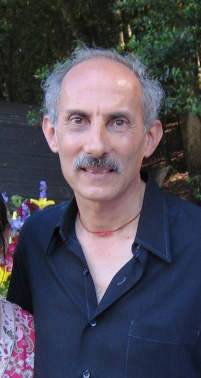
Jack Kornfield

Jack Kornfield

Meditation Teacher

Jack Kornfield, Ph.D.

View profile
Explore Topics
Climate changeWomens empowermentEducation childrenSocial justiceEnvironmental ethics
Frequently Asked Questions

Frequently Asked Questions

Kornfield argues that empowered women tend to make different choices about family size, resource use, and community governance that correlate with lower environmental impact. While renewable energy is necessary, it doesn't address the root drivers—poverty, inequality, and lack of agency—that perpetuate unsustainable behavior and consumption patterns.

Education, particularly for girls, reduces population growth and creates economic stability that doesn't depend on resource extraction. It also cultivates critical thinking and wisdom, allowing people to question narratives of endless consumption and develop values aligned with ecological interdependence rather than exploitation.

No—Kornfield is not arguing against wind and solar power, but rather reframing priorities. He suggests that without addressing the underlying structures of inequality and poverty that drive consumption, renewable energy alone may reduce emissions at the margins without changing the foundation of unsustainable behavior.

Community support means schools, healthcare, credit systems, and local governance that sustain and protect women's agency. Without it, individual empowerment remains fragile; with it, shifts in gender equity and education become self-reinforcing and reshape local economies and cultures.

Kornfield treats it as both. He frames climate solutions within Buddhist analysis of justice and equity while emphasizing practical outcomes—measurable improvements in resource use, population stability, and environmental governance that result from structural changes in power and access.

He's articulating a vision where climate action is inseparable from human dignity and justice—where solving environmental destruction also means redistributing power, knowledge, and agency toward women and future generations rather than treating them as resources to be exploited.

You might also like

View All
Creating Inner Peace During Conflict and War
Inspire

Creating Inner Peace During Conflict and War

Learn how to maintain an open heart and inner peace even amid external war and suffering. A Buddhist teacher's guidance on compassion and re…

7 min read
Buddhist Psychology: Awareness as the Foundation of Mind
Inspire

Buddhist Psychology: Awareness as the Foundation of Mind

Buddhist psychology teaches that awareness is ever-present and foundational to our experience. By quieting the mind and opening the heart, w…

8 min read
Medicine Buddha Practice: Healing Through Darkness and Grace
Inspire

Medicine Buddha Practice: Healing Through Darkness and Grace

Lama Rod Owens guides practitioners into seasonal darkness work and the felt sense of awakened beings through Medicine Buddha practice roote…

7 min read
Forgiveness, Injustice & the Awakened Heart
Inspire

Forgiveness, Injustice & the Awakened Heart

How to keep your heart open through deep hurt, injustice, and conflict. Tara Brach explores forgiveness, activism, and compassionate parenti…

11 min read
See allYou might also like→

Continue your journey

More wisdom and gatherings from across the BrightStar directory.

More Articles

Browse the full library of teachings, interviews, and guides.

Back to all articles →

Teachers & Artists

Explore the lineages, musicians, and guides of the conscious world.

Explore artists →

Find an Event

Kirtan, retreats, sound baths, breathwork, festivals — happening soon.

Browse events →