BrightStar
BlogMy Tickets
BlogMy Tickets
Saved events
Help & contactSign UpLog in
Events
  • Browse All Events
  • Yoga
  • Meditation
  • Breathwork
  • Qigong
  • Sacred Music
  • World Music
  • Medicine Music
  • Sound Healing
  • Ecstatic Dance
  • Ceremony
  • Plant Medicine
  • Energy Healing
  • Satsang & Wisdom
  • Tantra
  • Retreats
  • All Categories →
Destinations
  • Bali
  • Sedona
  • Los Angeles
  • Costa Rica
  • Tulum
  • Byron Bay
  • San Francisco
  • Austin
  • New York
  • San Diego
  • Denver
  • Seattle
  • Portland
  • Miami
  • London
  • Maui
  • Boulder
  • All Cities →
Platform
  • For organizers
  • Join the Movement
  • Sell Globally
  • For Creators
  • For Teams
  • For Writers
  • For Teachers
  • For Kirtan Artists
  • For Studios
  • For Festivals
  • For Retreat Centers
  • For Nonprofits
  • Brand Ambassador
  • Free Ticketing
  • Pro
  • Amplify
  • The Ecosystem
Features

Ticketing and checkout

  • Ticket categories
  • Assigned seating
  • Custom questions
  • Coupon codes
  • Smart pricing
  • Ticket sharing
  • Waitlist
  • Flexible refunds
  • Digital waivers
  • Tip jar
  • Donations and sliding scale
  • Embed widget
  • Mindful checkout
  • Recurring events
  • Private sessions
  • Online courses
  • Summits
  • Rooms and stays
  • Ticket scanner

Marketing and growth

  • Abandoned cart recovery
  • Visitor recovery
  • Upsells and add-ons
  • Affiliate engine
  • Upsell affiliate network
  • Brand ambassador
  • Meta retargeting
  • Verified buyer network
  • Outbound email marketing
  • Email sequences
  • SMS and WhatsApp
  • Event upsell network
  • Direct mail campaigns
  • SEO engine
  • Syndication
  • Event sharing
  • Custom event pages
  • Artist profiles
  • Link in bio
  • Event blog
  • Blog newsletter

Payments

  • Payments, powered by Stripe
  • Buy now, pay later
  • Apple Wallet
  • Multi currency

Data and operations

  • Team access
  • Message center
  • Reports
  • Analytics reporting
  • Performance reporting
  • Customer data
  • Integrations
  • Switch from another platform

AI

  • Assistant
  • AI FAQ assistant
  • All Features →
Company
  • About
  • FAQ
  • Contact
  • Blog
  • Glossary
  • Guides
  • Inspiration
  • Help Center
  • API Docs
  • Brand Assets
  • Press
  • Terms of Service
  • Privacy Policy

Events

  • Browse All Events
  • Yoga
  • Meditation
  • Breathwork
  • Qigong
  • Sacred Music
  • World Music
  • Medicine Music

Destinations

  • Bali
  • Sedona
  • Los Angeles
  • Costa Rica
  • Tulum
  • Byron Bay
  • San Francisco
  • Austin

Platform

  • For organizers
  • Join the Movement
  • Sell Globally
  • For Creators
  • For Teams
  • For Writers
  • For Teachers
  • For Kirtan Artists

Features

  • Community Network
  • Abandoned Cart Recovery
  • Ticket Categories
  • Recurring Events
  • Assigned Seating
  • Affiliate Engine
  • Waitlist / Notify
  • All Features →

Company

  • About
  • FAQ
  • Contact
  • Blog
  • Glossary
  • Guides
  • Terms of Service
  • Privacy Policy
Read more

Events

  • Sound Healing
  • Ecstatic Dance
  • Ceremony
  • Plant Medicine
  • Energy Healing
  • Satsang & Wisdom
  • Tantra
  • Retreats
  • All Categories →

Destinations

  • New York
  • San Diego
  • Denver
  • Seattle
  • Portland
  • Miami
  • London
  • Maui
  • Boulder
  • All Cities →

Platform

  • For Studios
  • For Festivals
  • For Retreat Centers
  • For Nonprofits
  • Brand Ambassador
  • Free Ticketing
  • Pro
  • Amplify
  • The Ecosystem

Company

  • Inspiration
  • Help Center
  • API Docs
  • Brand Assets
  • Press

Ticketing and checkout

  • Ticket categories
  • Assigned seating
  • Custom questions
  • Coupon codes
  • Smart pricing
  • Ticket sharing
  • Waitlist
  • Flexible refunds
  • Digital waivers
  • Tip jar
  • Donations and sliding scale
  • Embed widget
  • Mindful checkout
  • Recurring events
  • Private sessions
  • Online courses
  • Summits
  • Rooms and stays
  • Ticket scanner

Marketing and growth

  • Abandoned cart recovery
  • Visitor recovery
  • Upsells and add-ons
  • Affiliate engine
  • Upsell affiliate network
  • Brand ambassador
  • Meta retargeting
  • Verified buyer network
  • Outbound email marketing
  • Email sequences
  • SMS and WhatsApp
  • Event upsell network
  • Direct mail campaigns
  • SEO engine
  • Syndication
  • Event sharing
  • Custom event pages
  • Artist profiles
  • Link in bio
  • Event blog
  • Blog newsletter

Payments

  • Payments, powered by Stripe
  • Buy now, pay later
  • Apple Wallet
  • Multi currency

Data and operations

  • Team access
  • Message center
  • Reports
  • Analytics reporting
  • Performance reporting
  • Customer data
  • Integrations
  • Switch from another platform

AI

  • Assistant
  • AI FAQ assistant
Get the app
Download on theApp StoreGet it onGoogle Play
© 2026 BrightStar. All rights reserved. BrightStar Selection · Photo credits · Changelog ·
Inspiration

Aad Guray Nameh: Kundalini Protection Mantra Explained

Snatam Kaur
Snatam Kaur
Nov 26, 2012
7 min read

From 𝔸ℝ𝔼𝕏

Aad Guray Nameh is the Mangala Charn Mantra, a four-line Kundalini yoga chant traditionally recited for spiritual protection. Each of its four lines invokes a different aspect of divine creation—the primal source, the eternal presence throughout time, true wisdom, and enduring divine glory—and together they create a protective boundary around the magnetic field of the body and aura. This practice is rooted in the Sikh tradition and forms a cornerstone of protective Kundalini work, creating what practitioners describe as protective light surrounding the practitioner's energetic body.

Read · 8 sections

What Is the Aad Guray Nameh Mantra?

The Aad Guray Nameh is a protective chant composed of four distinct lines, each bowing to or honoring a different dimension of divine creation. In Kundalini yoga tradition, this mantra is classified as the Mangala Charn Mantra—literally "mangala" meaning auspicious blessing and "charn" meaning feet. It is traditionally chanted to invoke protection and to create a sacred container around the practitioner's energetic body.

The full mantra reads:

Aad Guray Nameh (I bow to the Primal Source of Creation)
Jugaad Guray Nameh (I bow to Creation woven throughout time)
Sat Guray Nameh (I bow to the True Source of Creation, the true identity of self)
Siri Guru Devay Nameh (I bow to Creation whose Great Glory will always be)

The structure of this mantra reflects a progression through layers of divine consciousness—from the primordial beginning, through the eternal present, into truth itself, and finally into the infinite glory that persists beyond time. Each invocation is not merely poetic; according to Kundalini yoga teaching, each has a specific vibrational frequency that acts upon the practitioner's consciousness and energetic body.

Why Is This Mantra Called "Protective"?

In Kundalini yoga and Sikh spiritual practice, the Aad Guray Nameh is specifically used to surround the magnetic field with protective light. The concept of the magnetic field here refers to the aura or energetic body—the subtle electromagnetic field that extends beyond the physical form. Chanting this mantra is understood to strengthen and clarify this field, acting as a kind of spiritual boundary against unwanted or chaotic energy.

The protective function operates on the principle that sound vibration—particularly sacred sound or naad in Sanskrit—carries consciousness and has the power to reshape the energetic environment. By invoking the highest sources of creation through this mantra, the practitioner calls upon those same protective forces to establish a field of order, clarity, and sanctity around themselves.

Understanding the Word "Guru" in This Context

Central to understanding this mantra is the definition of the word "Guru," which appears in each of the four lines. In the Kundalini tradition, "Guru" is understood not as a person but as a principle: that which brings us from darkness (Gu) to light (Ru). This etymology reveals the esoteric meaning embedded in the mantra—each invocation is calling upon different expressions of the force that removes ignorance and illuminates consciousness.

This shifts the entire practice away from deity worship or external supplication toward an activation of an internal principle. The mantra becomes a way of aligning the practitioner's own consciousness with the transformative power that moves from obscurity toward clarity. The bows (Nameh) are acknowledgments of this power wherever it manifests—in creation's origin, in time, in truth, and in eternal glory.

Breaking Down Each Line of the Mantra

Aad Guray Nameh translates as "I bow to the Primal Source of Creation." The word "Aad" means the beginning or the primordial state—the source from which all manifest reality emerges. This invocation calls upon the fundamental creative principle at the root of existence.

Jugaad Guray Nameh means "I bow to Creation woven throughout time." "Jugaad" refers to that which spans all of time and all ages—the eternal presence of the creative principle. Where the first line addresses the origin, this line addresses the continuity and omnipresence of creation through all moments.

Sat Guray Nameh translates as "I bow to the True Source of Creation, the true identity of self." "Sat" means truth or reality. This line deepens the invocation by pointing to the ultimate truth of creation and, significantly, to the true identity of the self. The mantra here suggests that the practitioner's deepest essence is aligned with and rooted in this truth.

Siri Guru Devay Nameh means "I bow to Creation whose Great Glory will always be." "Siri" conveys greatness, and "Devay" refers to divinity. This final line invokes the eternal, unchanging glory of creation—the aspect that transcends all change and limitation.

How Does Chanting This Mantra Create Protection?

In practice, the Aad Guray Nameh is typically chanted aloud or silently as a form of daily protection. The mechanism of protection, according to Kundalini teaching, involves several dimensions:

  • Vibrational Frequency: Each syllable carries a specific frequency. The consonants and vowels activate different parts of the palate and brain, creating neural pathways that organize consciousness and strengthen the nervous system.
  • Magnetic Field Coherence: The mantra's rhythmic repetition is said to organize the body's electromagnetic field into a coherent, orderly pattern—what practitioners experience as a sense of being "held" or bounded by light.
  • Consciousness Alignment: By invoking the highest principles of creation repeatedly, the practitioner's mind becomes attuned to those frequencies, naturally repelling lower, chaotic, or destructive vibrations.
  • Intention and Belief: The act of consciously bowing to protective forces, even symbolically through sound, orients the mind and nervous system toward a state of safety and trust.

Many practitioners report that regular chanting of this mantra creates a palpable sense of being protected—a felt sense that persists even after the chanting ends. This is sometimes described as a "protective light" or a feeling of being enclosed in a boundary that does not feel limiting but rather containing and safe.

The Mangala Charn Mantra Tradition

The designation of Aad Guray Nameh as the Mangala Charn Mantra places it within a specific Kundalini yoga lineage and practice structure. In Sikh tradition, this mantra has been used for centuries as a daily protective practice, often chanted first thing in the morning or at the beginning of spiritual work to establish a protected space.

The "Mangala Charn" classification suggests that this mantra serves an auspicious protective function—it is a blessing invoked at the threshold, setting conditions for the day or the meditation to follow. In this sense, it is similar to opening a door with a key, or drawing a circle around one's energetic space.

Practical Integration Into Daily Practice

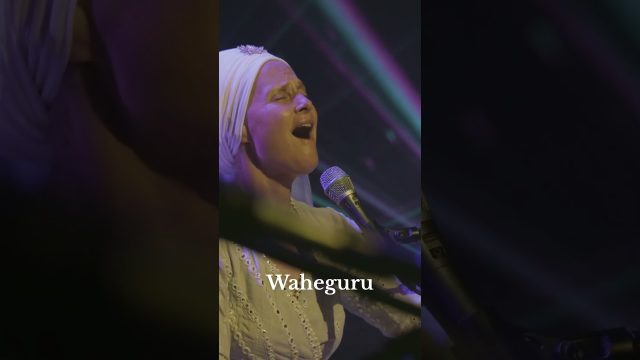
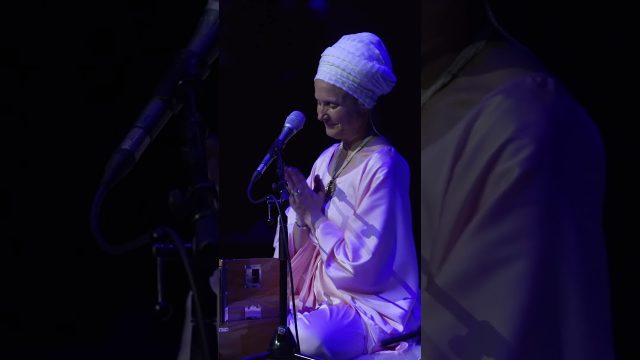
The Aad Guray Nameh can be integrated into daily life in several ways. Many practitioners recite it silently or aloud upon waking, either as a standalone practice or as the opening to a longer Kundalini yoga sadhana (spiritual discipline). The mantra can also be sung, as Snatam Kaur's rendition demonstrates, and many recordings exist to support practitioners in embodying the vibrational frequency of the chant.

Some practitioners use the mantra before entering challenging situations—social gatherings, work environments, or interactions with people or circumstances that might be energetically draining. Others keep the mantra as a kind of mental touchstone, returning to it throughout the day as a reminder of the protective forces available to them.

The practice works best when performed with attention and intention—not as mere repetition, but as a genuine invocation, a conscious turning toward the protective principles embedded in the syllables and meaning of the words.

Where to Go From Here

Those interested in deepening their relationship with this mantra might explore recordings by Snatam Kaur and other Kundalini musicians, who often sing versions specifically designed to align the listener's frequency with the mantra's protective intent. Exploring the wider tradition of Kundalini yoga—particularly practices related to aura and magnetic field work—will deepen understanding of how sound and intention reshape energetic reality. Additionally, studying the etymology and meaning of Gurmukhi (the Sikh sacred script in which the mantra originates) reveals layers of meaning compressed into each syllable, enriching both intellectual understanding and lived practice.

Comments

Loading the conversation…

The Artist in This Story

Snatam Kaur

Snatam Kaur

Kirtan

Snatam Kaur is a world-renowned, Grammy-nominated devotional singer, touring musician, teacher, and author known for her luminous voice and the heartfelt depth

View profile
Explore Topics
Protective mantraKundalini yogaAad guray namehMagnetic fieldSacred sound
Frequently Asked Questions

Frequently Asked Questions

Aad Guray Nameh is a four-line protective mantra from Kundalini yoga that translates as bowing to the Primal Source of Creation and its eternal, truthful, and glorious manifestations. It is chanted to surround the magnetic field with protective light and to establish a spiritual boundary against chaotic or unwanted energy.

Many practitioners chant this mantra daily upon waking or at the beginning of spiritual practice, though some use it situationally before challenging encounters or interactions. The practice works best with conscious intention rather than mere repetition, so consistency with awareness is more important than frequency alone.

In this context, Guru means the principle that brings us from darkness (Gu) to light (Ru)—not a person, but a transformative force that removes ignorance and illuminates consciousness. Each line of the mantra invokes this principle in different dimensions of creation.

The mantra can be practiced either silently or aloud; both approaches work. Singing or chanting aloud activates specific parts of the palate and brain, while silent repetition focuses the mind. Many practitioners use recordings by artists like Snatam Kaur to support their practice with the vibrational frequency.

Mangala Charn Mantra means an auspicious protective blessing or blessing at the threshold. This classification indicates that Aad Guray Nameh serves a protective function at the beginning of the day or spiritual practice, setting conditions for safety and clarity.

According to Kundalini teaching, each syllable carries a specific vibrational frequency that activates neural pathways and organizes the body's electromagnetic field into a coherent pattern. The repeated invocation of the highest protective principles aligns the practitioner's consciousness with those frequencies, naturally repelling chaotic vibrations.

You might also like

View All
Ong Namo: How a Sacred Mantra Grows With Us
Inspire

Ong Namo: How a Sacred Mantra Grows With Us

Snatam Kaur releases her Barcelona live performance of "Ong Namo," a foundational mantra that evolves alongside the people who sing it.…

2 min read
Guru Ram Das Live in Gdańsk: A Mantra Returns After 15 Years
Inspire

Guru Ram Das Live in Gdańsk: A Mantra Returns After 15 Years

Snatam Kaur's live recording of "Guru Ram Das" in Gdańsk, Poland, revives a melody she set aside for about fifteen years. The story behind i…

3 min read
Kirtan as Sacred Thirst: A Closing Ceremony with Krishna Das
Inspire

Kirtan as Sacred Thirst: A Closing Ceremony with Krishna Das

Krishna Das closes NYC's annual kirtan weekend with a final ceremony of devotional chanting, blending musical innovation with timeless Hindu…

6 min read
Jai Sita Ram: The Mantra at the Heart of Devotion
Inspire

Jai Sita Ram: The Mantra at the Heart of Devotion

A brief kirtan invoking Sita and Ram, celebrating the divine couple at the center of Hindu devotional practice and the Ramayana.…

2 min read
See allYou might also like→

Continue your journey

More wisdom and gatherings from across the BrightStar directory.

More Articles

Browse the full library of teachings, interviews, and guides.

Back to all articles →

Teachers & Artists

Explore the lineages, musicians, and guides of the conscious world.

Explore artists →

Find an Event

Kirtan, retreats, sound baths, breathwork, festivals — happening soon.

Browse events →