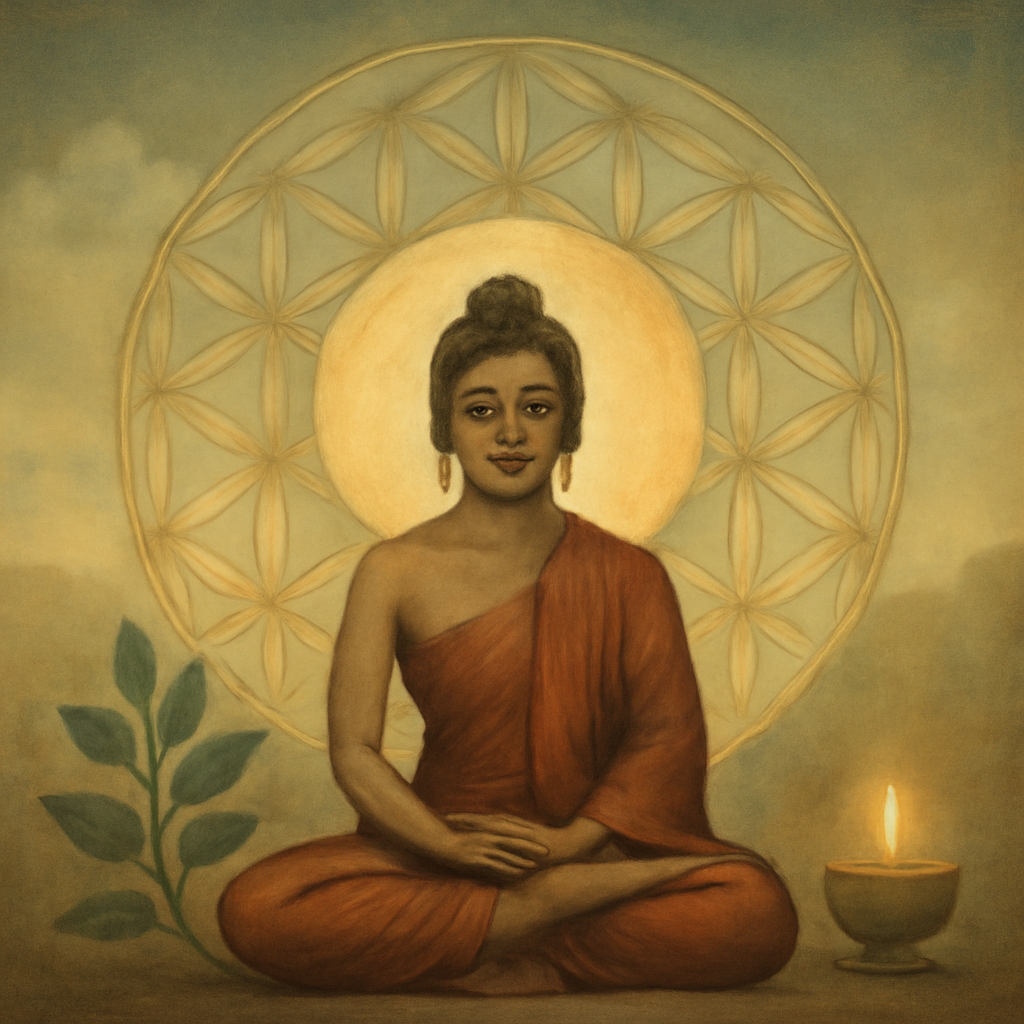
Upaya Zen Center is a Zen Buddhist practice, service and training center and monastery in Santa Fe, New Mexico. It offers daily Zen meditation, weekly dharma talks, and programs on Buddhist teachings, Buddhist art, neuroscience and social engagement. It also runs professional trainings for end-of-life care and Buddhist chaplaincy.
Roshi Joan Halifax founded the center and has guided it since 1990. She is a Buddhist teacher, social activist and author, and the Founder, Head Teacher and Abbot of Upaya. Her early career was in anthropology, at Columbia University from 1964 to 1968 and at the University of Miami School of Medicine from 1970 to 1972. She is a pioneer in the field of end-of-life care. The name comes from the Sanskrit upaya, "skillful means," which has also been translated as "the craft of compassion." The center's logo carries a single character, 如, read as suchness. Upaya describes its work as the unity of skillful means and suchness. Its Ethics Code is patterned on the work of the Berkeley Zen Center and other communities of the Western Zen Mahasangha.
Practice at Upaya is daily. Zazen, or sitting meditation, takes place in the zendo at 7:00 a.m. and 5:30 p.m. Mountain Time. A 40-minute midday sit at 12:20 p.m. runs Wednesday through Sunday. On Monday and Tuesday mornings the sitting is 25 minutes of zazen, 10 minutes of kinhin (walking meditation) and another 25 minutes of zazen. Wednesday through Sunday mornings begin with 40 minutes of zazen followed by service. On Wednesday evenings a dharma talk takes the place of zazen. The talks and sits are also livestreamed on Upaya's YouTube channel and on Zoom. Chants include the Heart Sutra and the Great Compassionate Heart Dharani, and the Gate of Sweet Nectar ceremony is typically held at the new moon. Longer intensives include sesshin and practice periods, and Upaya also offers a priest and lay path, with jukai, the receiving of the Bodhisattva precepts.
The Residential Zen Training program is a committed residency, not a retreat or a vacation. Residents follow a rhythm of three sitting periods a day, samu (work practice), talks and seminars, meals and noble silence. The minimum stay is three months. Residents also take part in socially engaged Buddhism, such as cooking and serving food for unsheltered neighbors and teaching meditation in shelters and prisons. People come from many starting points, from recent graduates to long-time Zen practitioners, and some go on to postulancy and ordination.
Social action is, in the center's words, the heart of its practice. Upaya's Socially Engaged Buddhism work links contemplative practice with social and environmental action and with direct service to dying people, the incarcerated, the homeless, refugees and those who are materially impoverished. Its projects include the Prison Outreach Project, the Street Ministry Project and the Nepal Nomads Clinic. The Chaplaincy Training Program and the clinician trainings carry the same commitment into care for the dying.
Roshi Joan Halifax guides the community together with Upaya's guiding teachers: Monshin Nannette Overley, James Fushin Bristol, Wendy Dainin Lau and Noah Kodo Roen, who is also Director of Upaya. Affiliated groups keep practitioners at a distance connected: Open Gate Zen Collective in Chula Vista, California, Upaya Sangha of Tucson, Arizona, and Zen Spirit in the Netherlands.
Upaya stands at 1404 Cerro Gordo Road in Santa Fe, New Mexico, at the Cerro Gordo temple in Santa Fe Canyon. Its site has pages on the history of the canyon, the Cerro Gordo stupa and the rewilding of the land. Most programs are open to everyone regardless of experience, and all are welcome to join the zendo practice without being formally part of the sangha.